Building a successful small business takes more than offering good products or services. Customers also need to recognize your brand, remember your name, and develop trust in what you offer. From your logo and packaging to your staff uniforms and promotional products, every detail contributes to the image people have of your business. One simple way to create a consistent and professional appearance is by using custom patches.
Custom patches have become a popular branding option for clothing companies, local businesses, independent designers, sports teams, and many other organizations. They can be added to jackets, hats, shirts, bags, uniforms, and accessories to display a company logo or unique design. Whether you are launching a new clothing line or trying to make your existing products more recognizable, custom patches provide a flexible way to represent your brand.
For small businesses working with limited budgets, patches can also offer an affordable alternative to more complicated branding methods. You can choose different materials, sizes, colors, and backing options according to your needs. With the right design, even a small patch can make a noticeable difference in how your products look and feel.
Why Custom Patches Matter for Small Businesses
When customers come across your business for the first time, they often notice its visual identity before learning much about its products. A clear logo, consistent colors, and professional presentation can help create a positive first impression.
Custom patches make it easier to display your branding across different products. For example, a small clothing brand can use the same logo patch on denim jackets, hoodies, caps, and backpacks. A landscaping company might add embroidered patches to employee uniforms, while a local café could use branded patches on aprons or merchandise.
This consistency helps customers become familiar with your business. When people repeatedly see the same logo and design, they may find it easier to recognize your products in the future.
Custom patches can also help smaller companies compete visually with established brands. You do not need an enormous marketing budget to create products that look carefully designed. A well-made patch, placed thoughtfully on a garment, can give an ordinary item a more finished appearance.
Another advantage is flexibility. Instead of creating an entirely new garment for every branding update, you may be able to use patches on suitable products you already have. This can be particularly helpful for businesses that want to test new designs or introduce limited-edition merchandise.
Choose the Right Custom Patch Style for Your Brand
Not every patch style suits every business. The best option depends on your logo, the products you sell, your budget, and the appearance you want to create.
Some businesses prefer traditional embroidered patches because of their textured stitching. Others choose woven patches for detailed logos or leather patches for premium-looking headwear. Understanding the available options can help you select a design that supports your brand identity.
Custom Embroidered Logo Patches for Professional Branding
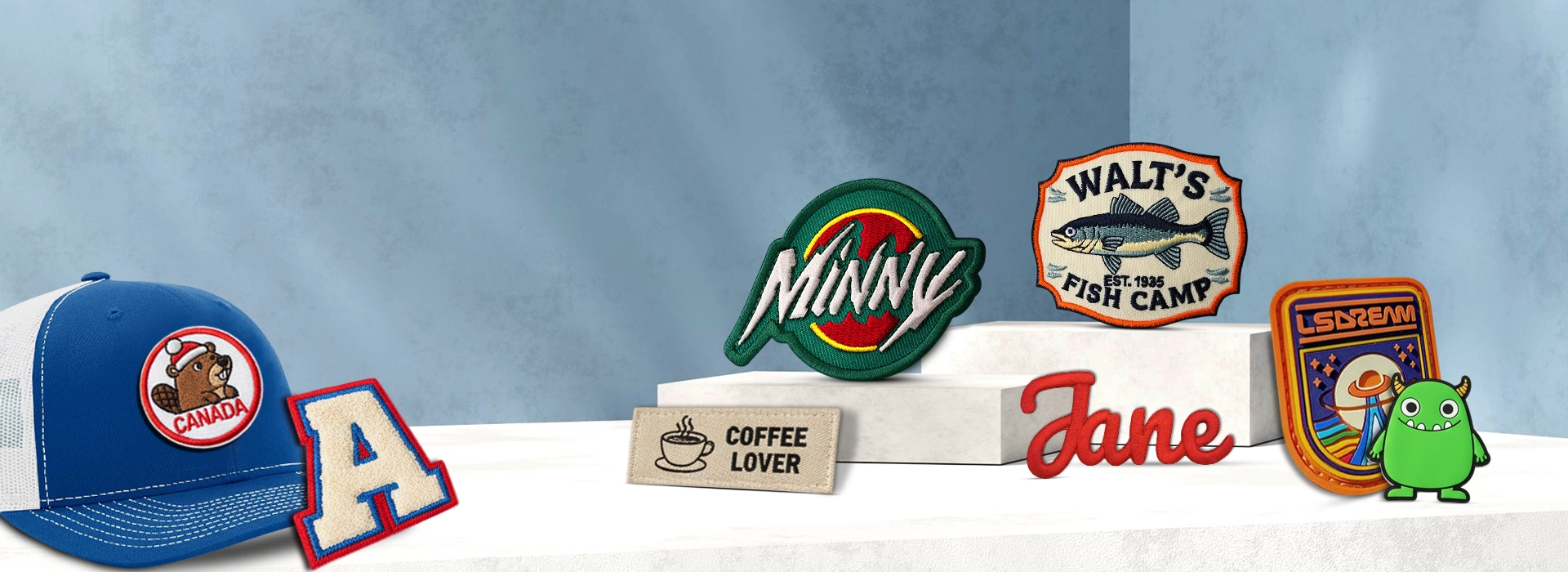
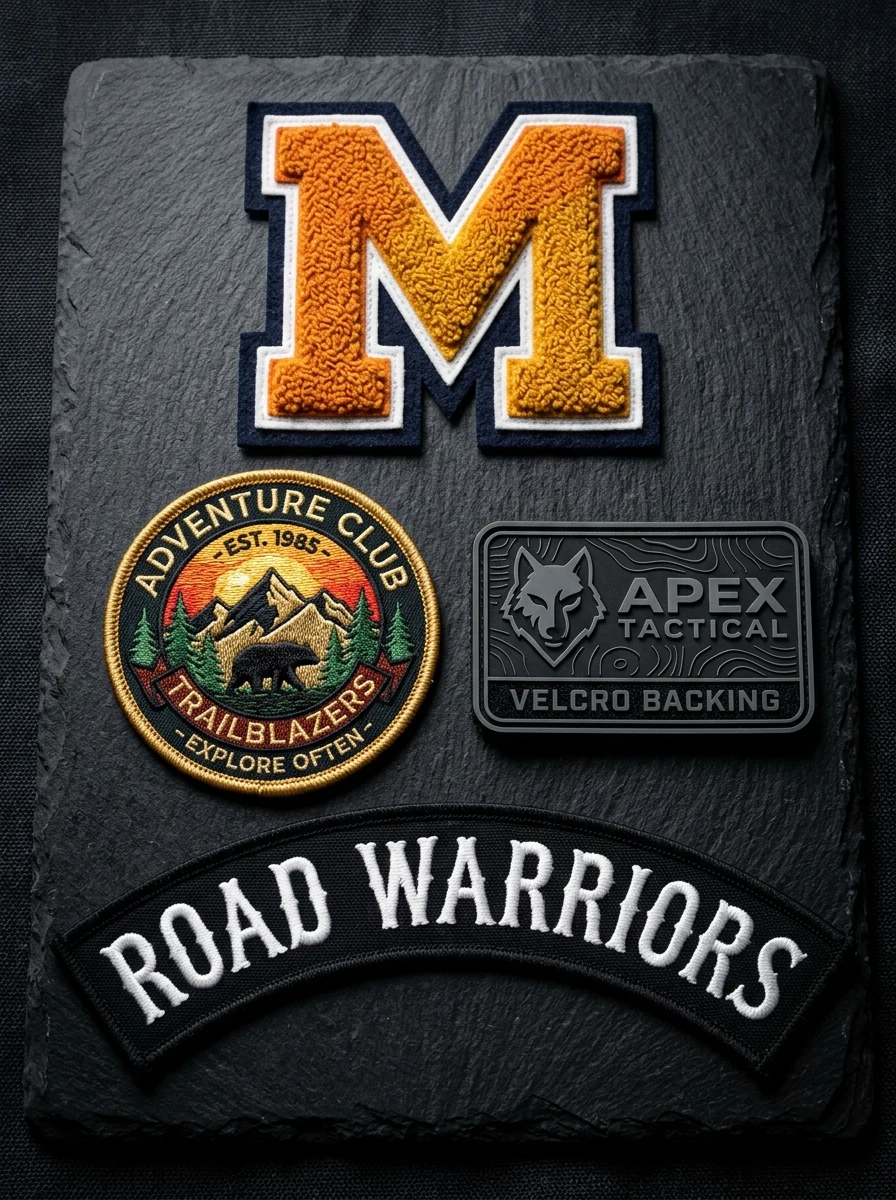
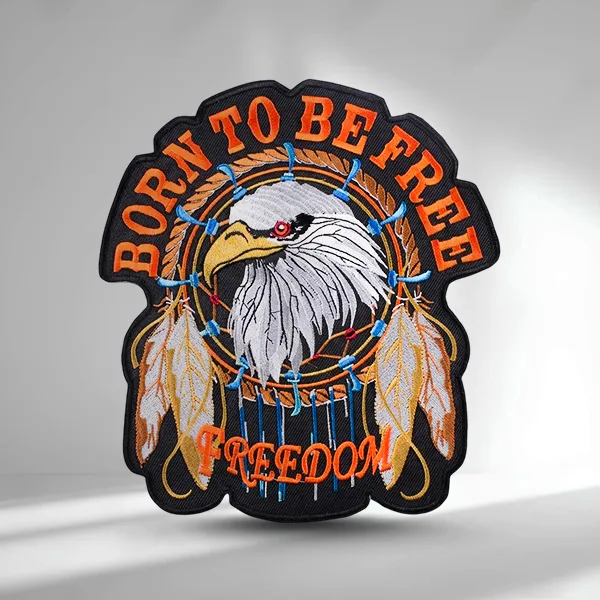
A custom embroidered logo patch is a popular choice for businesses that want a classic and recognizable finish. Embroidery uses stitched threads to create a design with texture and dimension, making it suitable for many types of clothing and accessories.
These patches work well on staff uniforms, jackets, polo shirts, hats, and promotional apparel. They are particularly effective for logos that use bold lettering, simple symbols, and clearly defined shapes.
For example, a maintenance company might add an embroidered logo to employee jackets to create a coordinated appearance. A fitness studio could use branded patches on staff clothing or merchandise, while a clothing business might add them to denim jackets and casual shirts.
Custom embroidered patches are available in different shapes, sizes, thread colors, and border styles. This gives businesses room to create a design that matches their existing branding.
However, the artwork should be suitable for embroidery. Extremely small text and very fine details can be difficult to reproduce clearly, especially on smaller patches. Simplifying the logo where necessary can help improve the final result.
Custom Woven Logo Patches for Clothing Brands
Woven patches are another useful option, particularly for businesses that need detailed artwork. They are produced using fine threads woven together to form the design, creating a flatter surface than traditional embroidery.
Custom woven logo patches for clothing brands are often used on shirts, jackets, streetwear, accessories, and other retail products. Their clean appearance makes them suitable for businesses that prefer subtle branding rather than heavily textured designs.
If your logo includes small lettering, thin lines, or intricate details, woven patches may be worth considering. They can help preserve elements that might be difficult to reproduce with thicker embroidery threads.
Fashion brands can also use woven patches as an alternative to conventional garment labels. A carefully designed patch can communicate the brand name while adding a decorative element to the product.
Before choosing this option, discuss your artwork with the manufacturer. The final level of detail depends on the design, patch dimensions, and production method.
Custom Leather Patches for Hats and Accessories
Leather patches offer a distinctive appearance that works especially well with casual, outdoor-inspired, and premium-style products. Their surface and texture can give hats, bags, denim jackets, and workwear a more substantial look.
Custom leather patches for trucker hats are particularly popular among clothing brands, outdoor businesses, and companies selling promotional headwear. They can feature a business name, simple logo, slogan, or graphic.
For small businesses, branded hats can become useful merchandise because customers may wear them in different settings. A leather-style patch helps create a consistent appearance across a collection of caps.
You can explore different shapes, colors, engraved designs, and finishes depending on the available materials. Some products use genuine leather, while others use synthetic or leather-like materials. Make sure you understand which material the supplier offers before placing an order.
If you plan to sell these products, consider how the patch complements the hat itself. The size, color, placement, and finish should work together rather than compete for attention.
Custom PVC Patches for Modern Products
Custom PVC patches provide a different look from fabric-based options. Made from flexible, rubber-like material, they can feature raised details, bold shapes, and clearly separated colors.
They are commonly used on bags, outdoor equipment, accessories, and products inspired by tactical or adventure gear. Businesses that want a distinctive appearance may find PVC patches useful for selected product lines.
Custom PVC morale patches can be suitable for outdoor brands, recreational groups, and organizations that want recognizable designs with a modern finish.
PVC patches are not necessarily the best choice for every garment, so consider the product before making a decision. Compare their flexibility, weight, attachment method, and overall appearance with the other materials you are considering.
How Custom Patches Help Build Brand Recognition
Brand recognition develops when customers become familiar with your business and can identify it through its visual features. A consistent logo and recognizable design can support this process over time.
Custom patches allow you to repeat those visual elements across several products without redesigning your branding for every item.
For example, a small apparel company might use an embroidered logo patch on jackets, a woven patch on shirts, and a leather-style patch on hats. Although the materials differ, the consistent logo and colors help connect the products to the same brand.
This approach can also help businesses create coordinated merchandise. If your company sells clothing, accessories, and promotional products, patches can provide a shared visual detail across the collection.
Another benefit is that patches can make products feel more distinctive. A plain jacket may look similar to many other jackets on the market, but adding an original logo or carefully designed patch can give it a more recognizable identity.
Of course, a patch alone cannot guarantee customer loyalty or increased sales. Product quality, customer service, pricing, and the overall shopping experience remain important. However, thoughtful branding can support these efforts by helping your business present itself consistently.
Custom Patches for Small Clothing Businesses
Independent clothing brands often need to balance creativity with practical production costs. They may not have the resources to develop complicated custom garments for every new collection, especially when testing an idea for the first time.
Custom patches for small clothing businesses provide an opportunity to personalize existing products and introduce distinctive design elements without changing the entire garment.
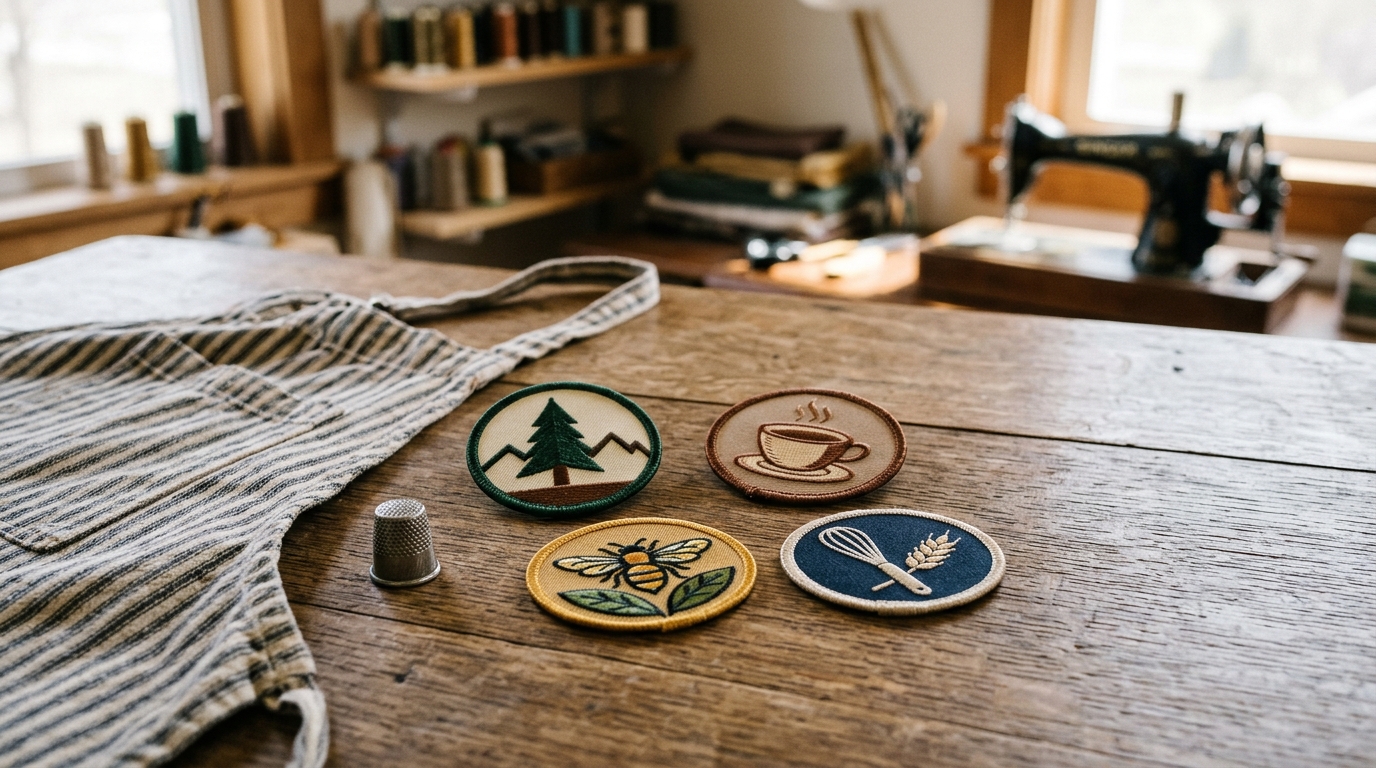
For example, a small streetwear label might add embroidered patches to hoodies and denim jackets. A handmade accessories business could use woven patches on tote bags, while a casual headwear brand might choose leather patches for caps.
Patches can also help create limited-edition collections. A business could introduce a special patch for a seasonal release, collaboration, local event, or anniversary collection. This allows the brand to experiment with different designs while maintaining a recognizable identity.
If you sell products online, photographs of the patch can help show customers the details of your design. Include close-up images that display the texture, stitching, colors, and placement so buyers can understand what makes the product different.
Before launching a new collection, consider ordering samples or a small batch if your supplier offers that option. Testing the design on an actual garment can reveal details that may not be obvious in a digital mock-up.
Custom Patches for Work Uniforms and Business Teams
Branding is not limited to products sold in stores. Businesses that provide services can also use custom patches to create a coordinated and professional appearance for employees.
Custom embroidered patches for work uniforms are suitable for many industries, including construction, hospitality, maintenance, delivery services, and retail. They can display company logos, department names, or other relevant identifiers.
When employees wear consistent uniforms, customers may find it easier to identify staff members. A visible logo can also help create a more organized appearance at customer locations, trade shows, and business events.
Custom security uniform patches can be designed to display appropriate company branding and staff identification. Similarly, custom fire department patches may represent a department, station, or team, depending on the organization's requirements.
For professional applications, accuracy and readability are especially important. Check spelling, color contrast, logo placement, and any applicable uniform guidelines before approving production.
Some organizations may need patches that can be removed or replaced. Custom military patches with hook and loop backing are an example of a removable attachment style. Custom Velcro name patches can also help teams change names or identifiers without replacing an entire uniform.
The attachment method should match the garment and the conditions in which it will be worn. Discuss the intended use with your supplier to choose a suitable option.
Affordable Custom Patches for Different Budgets
Cost is an important consideration for small businesses, particularly when every purchase must support a clear business goal.
The price of custom patches can vary depending on several factors, including material, size, quantity, design complexity, backing, and production requirements. Comparing these details can help you understand which option offers the best value for your business.
Some suppliers offer custom patches with no minimum quantity. This can be helpful for independent designers, new businesses, and customers who only need a few pieces for a personal project.
Other suppliers specialize in larger orders and may provide lower per-patch pricing at higher quantities. Custom chenille letter patches wholesale orders, for example, may suit clothing retailers or businesses producing varsity-style apparel.
However, ordering more patches simply to reduce the unit price is not always the best decision. If you are unsure whether a design will sell, purchasing a smaller quantity may reduce the risk of having unused stock.
When comparing quotations, ask whether the price includes artwork preparation, setup costs, backing, packaging, and delivery. A low advertised price may not represent the total amount you will pay.
It is also worth considering how long the patches are expected to remain useful. A well-planned design that works across several products may offer better value than a design that only suits one short-term campaign.
How to Design Custom Patches That Look Professional
A strong patch design should represent your brand while remaining clear and visually balanced. It does not need to be complicated to make an impression.
Start by identifying the most important element of your design. This might be your business name, logo, initials, or a recognizable symbol. Avoid adding too many decorative elements if they make the main design harder to understand.
Keep Your Logo Simple and Readable
Patch designs are often reproduced at relatively small sizes, so clarity matters. Tiny lettering, narrow lines, and complicated illustrations may not translate well into every material.
If your current logo contains many details, ask your supplier whether a simplified version would work better for the patch. You can maintain your main brand identity while adjusting the artwork for the production method.
For example, a business may use its complete logo on a website but use a simplified symbol on a small cap patch. Both designs can support the same brand when they share recognizable visual elements.
Choose Colors That Work Together
Colors influence the appearance of a patch and how easily its design can be recognized. High contrast between the background and lettering can make the logo easier to read.
Try to use colors that already appear in your branding. This helps keep your patches consistent with your website, packaging, uniforms, and other marketing materials.
You should also consider the garment color. A dark patch on a dark jacket may not stand out clearly, while a contrasting border or background could improve visibility.
Select the Right Size and Placement
The patch should fit naturally on the product. A large design may work on the back of a jacket, while a smaller logo is usually more suitable for a shirt pocket or cap front.
Before approving production, confirm the exact dimensions and ask to see how the patch will look in its intended location.
Placement can influence the overall design just as much as the patch itself. A well-sized patch in a balanced position can look polished, while a design that is too large or poorly positioned may distract from the garment.
Choose the Best Backing for Your Products
The backing determines how a patch attaches to a garment or accessory. Choosing the right option helps ensure the patch is practical for its intended use.
Sew-on patches are a common choice for jackets, bags, uniforms, and other fabric products. They can be suitable when you want a stitched attachment, although the final result depends on the garment and stitching quality.
Iron-on patches may be convenient for certain fabrics, but heat-sensitive materials require extra care. Always follow the manufacturer's instructions and check the garment's care label before applying heat.
Hook-and-loop backing is useful when patches need to be removed, replaced, or transferred between compatible items. This option can work well for selected uniforms, bags, and equipment.
Adhesive backings may suit some temporary or decorative applications, but their suitability depends on the surface and intended use.
Before ordering, explain how the patch will be used and how often the garment will be washed or exposed to outdoor conditions. Your supplier can help you compare the available options.
Ordering Custom Patches in Bulk
As your business grows, you may need more patches for new products, staff uniforms, or promotional campaigns. Ordering in bulk can make sense when you already have a design that meets your requirements.
Before placing a large order, request a quotation that clearly explains the price, quantity, production schedule, and delivery costs. Confirm whether the supplier can reproduce the same design consistently across the order.
If possible, review a sample or digital proof before production begins. This gives you an opportunity to catch problems with the artwork, spelling, dimensions, or color selection.
For businesses selling clothing, it can also be useful to test the patch on the actual garment before committing to a large quantity. A design may look good on a computer screen but appear different when attached to a particular fabric.
Keep your approved artwork and order specifications for future reference. If you need to reorder the same design, these details may help simplify communication with the supplier.
Bulk ordering can reduce the cost per patch in some cases, but the savings should be balanced against storage space, available cash, and expected demand.
What Small Businesses Should Know About Rush Orders
Sometimes a business needs patches sooner than expected. An upcoming trade show, product launch, staff event, or promotional campaign may create a tight deadline.
Rush order custom embroidered patches may be available from some manufacturers, but not every design can be completed quickly. Production time depends on the material, artwork, order size, supplier capacity, and shipping arrangements.
If your deadline is important, contact the supplier as early as possible. Provide the final artwork, quantity, patch dimensions, backing preference, and delivery location so the supplier can assess the request accurately.
Ask for confirmation of both production time and estimated shipping time. A patch may be completed quickly but still arrive too late if delivery is not planned properly.
Avoid approving artwork before checking all the details. Changes made after production begins can create delays and additional costs.
Whenever possible, order important branding materials in advance. Planning ahead usually gives you more flexibility in choosing materials and comparing suppliers.
Common Mistakes to Avoid When Buying Custom Patches
A little preparation can prevent unnecessary expenses and disappointing results. Small businesses should pay attention to a few common mistakes when ordering patches.
One mistake is choosing a design that contains too much detail for its size. Small text and complicated artwork may be difficult to reproduce clearly, depending on the material and production method.
Another mistake is selecting a patch based only on its appearance without considering the garment. A patch that looks attractive on a sample may not be suitable for a lightweight shirt, delicate fabric, or frequently washed uniform.
Some businesses also overlook the backing. Choosing the wrong attachment method can make application difficult or reduce the patch's suitability for the intended use.
Ordering a large quantity before testing the design can create unnecessary financial pressure, especially for a new business. When possible, review a sample or start with a manageable quantity.
Finally, do not assume that all suppliers offer the same materials, quality, or production times. Ask questions, review examples of previous work, and confirm the order details before making a commitment.
How Custom Patches Can Support Long-Term Business Growth
Custom patches are most useful when they form part of a broader branding strategy. They can help create consistency across your products, uniforms, and merchandise while giving you flexibility as your business develops.
A small company might begin with logo patches for employee uniforms and later introduce branded caps or jackets for customers. A clothing business may start with embroidered patches and eventually add woven labels or leather-style designs to different collections.
Patches can also support collaborations and special releases. A business working with another local brand could develop a shared design for a limited collection, while an event organizer might create patches to commemorate a particular occasion.
The key is to maintain a clear connection between the design and your brand. Use recognizable colors, consistent logos, and suitable materials so that new products still feel connected to your business.
It is also helpful to gather customer feedback. Pay attention to which products people enjoy wearing, which designs receive positive comments, and which items sell consistently. This information can guide future decisions about patch styles and quantities.
Although branding results take time, small improvements in product presentation can contribute to a more professional and memorable customer experience.
Conclusion
Custom patches offer small businesses a flexible way to strengthen their brand identity without making every product from scratch. They can personalize clothing, improve the appearance of staff uniforms, add distinctive details to merchandise, and help customers recognize a business across different products.
From custom embroidered logo patches and woven labels to leather patches for hats and modern PVC designs, there are options to suit many industries, budgets, and creative goals.
The best results come from choosing a patch style that matches your brand, preparing clear artwork, selecting the right backing, and working with a supplier who explains the production process. It is also important to compare total costs, consider order quantities carefully, and review a proof before approving production.
Whether you are starting a clothing label, managing a local service business, or expanding an existing product range, custom patches can be a practical addition to your branding strategy. With thoughtful planning and a consistent design, they can help your business look more professional, make your products more distinctive, and build a visual identity that customers remember.