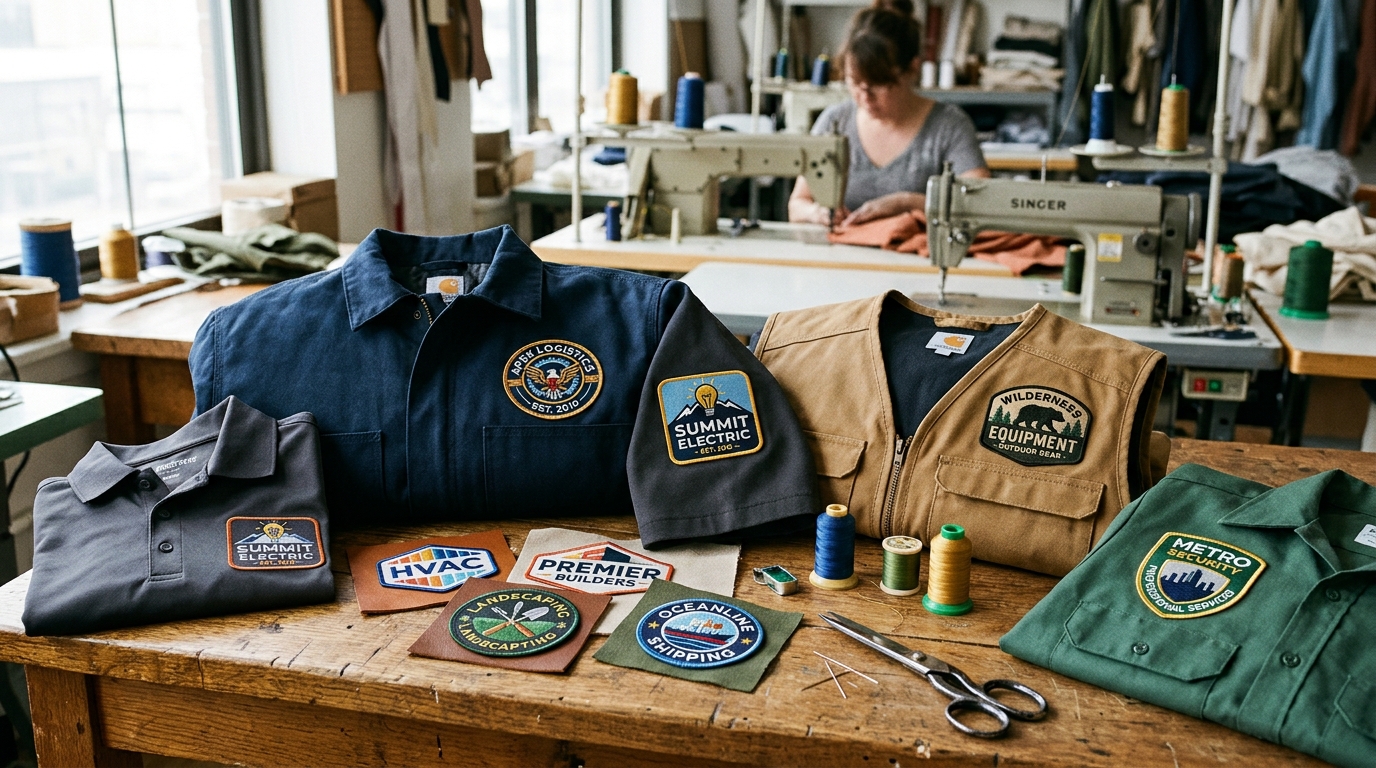
A company uniform says a lot about a business before an employee even speaks to a customer. A clear logo, matching colors, and neatly finished clothing help create a recognizable appearance. For businesses that want their teams to look consistent, embroidered uniform patches offer a practical way to display company branding across different types of workwear.
Business logo patches can be attached to shirts, jackets, hats, aprons, and other employee clothing. Unlike printing directly onto garments, patches can be produced separately and used across different uniform styles. This makes them a convenient choice for companies that regularly purchase new workwear or need matching branding for several departments.
From small shops and restaurants to construction companies and larger organizations, businesses can choose patches that suit their logo, clothing, and everyday requirements.
The important part is getting the details right. Material, embroidery, lettering, size, and backing all affect how a patch looks once it is attached to a uniform.
Make Your Company Logo Part of Every Uniform
When customers visit a business, they should be able to recognize employees without having to guess who works there. A company logo displayed on clothing makes staff easier to identify and gives uniforms a more consistent appearance.
Embroidered company logo patches are a simple way to achieve this across different garments. The same design can be used on office shirts, work jackets, caps, and other employee clothing without changing the company's visual identity.
For example, a retail business might use smaller logo patches on shirts and larger versions on jackets. A restaurant may prefer embroidered branding on aprons and staff uniforms, while a maintenance company might need patches for heavier workwear.
Whatever the industry, the logo should remain clear and recognizable.
When preparing a company logo patch, pay attention to:
Accurate logo artwork
Readable lettering
Matching brand colors
Suitable patch dimensions
Neatly finished borders
Materials that work with the garment
These details help maintain the same appearance across different uniforms and make future purchases easier.
Give Your Employees a More Professional Uniform
Employees represent your company whenever they interact with customers, clients, or visitors. Their clothing is part of the overall impression people form about your business.
Business uniform patches help bring different garments together by giving employees a consistent company logo or identifying design.
A retail team might wear matching patches on shirts, while warehouse staff may need larger versions on work jackets. Restaurants, cleaning companies, delivery services, and maintenance teams can also use embroidered patches to keep their uniforms recognizable.
The advantage is that one approved logo design can be reproduced in different sizes to suit different garments.
You can also include department names or employee roles where appropriate. The main company branding stays consistent while smaller details help identify different teams.
Give Your Company Logo a Clean Embroidered Finish
Embroidery is a popular choice for company branding because it adds texture and gives a logo a stitched appearance.
Business logo embroidered patches can feature company names, symbols, lettering, and other recognizable design elements. The raised stitching creates a finish that looks different from ordinary printed graphics.
The final result depends on the artwork, thread quality, fabric base, and stitching technique.
Logos with bold lettering and simple shapes generally work well with embroidery. Designs containing very small text or fine details may need adjustments before production so that everything remains clear.
For a better result, prepare your logo carefully and consider the following:
Choose thread colors that match your brand.
Use clear and accurate artwork.
Keep lettering large enough to read.
Avoid unnecessary details in small designs.
Select dimensions that suit the garment.
Review the embroidery proof before production.
If your business uses the same logo across several locations, keep an approved artwork file. This gives the manufacturer a consistent reference for future purchases.
Find Uniform Patches That Suit Your Industry
Not every business uses the same type of clothing. An office shirt has different requirements from a construction jacket, restaurant apron, or warehouse uniform.
Work uniform patches should be selected according to the garment, working environment, and intended use.
Some common applications include:
Company shirts and polo shirts
Work jackets and coats
Restaurant uniforms and aprons
Security clothing
Maintenance and workshop garments
Delivery team clothing
Warehouse uniforms
Company caps and hats
The size and placement of a patch matter just as much as its appearance.
A smaller logo may look better on the chest of a shirt, while a larger design could suit the back of a jacket. Sleeve placement can also work well for secondary branding or department identification.
Before production, check the available space on each garment. This helps prevent patches from looking oversized or getting lost on the clothing.
Keep Every Employee Uniform Looking Consistent
Businesses with several employees often use different garments for different roles. Even when the clothing varies, the company branding should remain recognizable.
Employee uniform patches make it easier to maintain that consistency.
For example, a hospitality business may use the same logo on shirts, aprons, and jackets. A maintenance company might keep its main branding consistent while adding separate role labels for technicians and supervisors.
The important thing is to use the same approved logo, colors, and general placement wherever possible.
If your company regularly replaces uniforms, think about future requirements before choosing a design. A logo that works across several garment styles is easier to reproduce when new employees join the team.
Help a Small Business Build a Recognizable Identity
Professional-looking uniforms aren't only for large organizations. Small businesses can also benefit from displaying their name and logo on employee clothing.
A local café, repair shop, beauty salon, independent retailer, or delivery service can use embroidered business patches to give everyday uniforms a more recognizable appearance.
For smaller companies, flexibility is particularly useful. Instead of creating separate designs for every garment, you can use the same main logo patch in different sizes.
This keeps branding consistent without making uniform purchases unnecessarily complicated.
It's also worth choosing a design that can grow with the business. A clean logo with readable lettering is easier to reproduce if the company later needs more patches for additional employees or new locations.
Choose an Embroidery Style That Works With Your Logo
The right patch style depends on the appearance of your company logo and the amount of detail it contains.
Some businesses prefer traditional embroidery, while others need a finish that can reproduce smaller lettering or more complicated artwork.
Common choices include:
Fully embroidered patches
These feature stitching across most of the design. They work well for many company logos, bold lettering, and traditional uniform branding.
Woven patches
Woven designs can reproduce finer details and smaller lettering. They may be worth considering when the logo contains elements that are difficult to capture with thicker embroidery.
Printed patches
Printed designs can be useful for artwork with gradients, photographic details, or colors that are difficult to reproduce through ordinary embroidery.
Embroidered lettering patches
These are suitable for displaying a business name, department, job title, or short company message.
Each option has different production requirements. Comparing finished examples before making a decision can help you choose a style that suits your branding.
Get the Size and Shape Right for Your Uniform
A company logo needs enough space to remain clear without making the uniform look crowded.
If a patch is too small, the lettering may become difficult to read. If it's too large, it may look out of place on the garment.
Business patches can be made in different shapes to suit the artwork and available placement area.
Rectangular patches often work well for longer company names. Circular and oval designs can suit compact logos or emblems, while square patches may be appropriate for simpler artwork.
If your company logo has an unusual outline, a custom-cut shape may provide a closer match.
Before approving the dimensions, measure the area where the patch will be attached. It's also helpful to review a digital preview alongside the actual uniform to get a better idea of the finished size.
Match the Patch Colors to Your Company Branding
Color is an important part of a recognizable company identity. If the thread shades vary between uniforms, the logo may look different from one garment to another.
Whenever possible, use your existing brand guidelines when selecting embroidery colors.
If your logo includes several main colors, ask the manufacturer to show the available thread shades before production. This helps you choose the closest match.
The background fabric matters too. Light lettering can disappear against a pale background, while dark thread may be difficult to see on darker clothing.
A good color combination should make the logo easy to recognize without overwhelming the rest of the uniform.
For larger purchases, keep a record of the approved thread colors so future batches can follow the same specifications.
Choose Backing That Works With Your Workwear
The backing determines how a patch attaches to a garment. The right choice depends on the fabric, how the uniform is used, and whether the patch needs to be removed later.
Sew-on backing is a common choice for business uniforms. It provides a stitched attachment and can be suitable for shirts, jackets, workwear, and many other garments.
Iron-on backing may be available for certain materials. However, the garment must be able to tolerate the heat required for application.
Hook and loop backing is useful when patches need to be removed or replaced. It can suit uniforms where employee names or department labels change regularly.
Before choosing, consider:
The thickness and type of fabric
How frequently the garment is washed
The manufacturer's care instructions
Whether the patch needs to be removable
The working conditions in which the uniform will be worn
If you're unsure which backing is suitable, ask the manufacturer for advice before production.
Save on Larger Orders of Company Uniform Patches
Businesses that need matching patches for several employees often find bulk purchasing more convenient than buying small quantities repeatedly.
Bulk company uniform patches can help maintain the same branding across departments, branches, and different types of workwear.
Before requesting a quotation, work out how many patches are needed and whether different garment sizes require different patch dimensions.
It's also useful to have the logo artwork and production details finalized before discussing quantities.
When comparing bulk pricing, ask about:
Total quantity and available price breaks
Different patch sizes within one purchase
Embroidery coverage and thread colors
Material and backing options
Sample availability
Production and delivery times
A sample is particularly useful for a large purchase. It gives you a chance to check the stitching, lettering, colors, and finished dimensions before the entire batch is made.
Find a Wholesale Supplier for Business Patches
Companies that regularly purchase uniforms may prefer working with a wholesale patch supplier.
Wholesale business patches can be a practical option for organizations that replace employee clothing, open new branches, or bring additional staff into their teams.
However, choosing a supplier shouldn't come down to unit price alone.
Look for a manufacturer who can reproduce the approved design accurately and maintain the same specifications across future purchases.
Ask about minimum quantities, repeat-order arrangements, artwork storage, available materials, and production times.
For businesses with multiple locations, consistency is especially important. The company logo should look the same whether the uniform is worn in one office or another branch.
Keeping an approved design file and written production details can make future purchases much simpler.
Keep Your Branding Consistent as Your Business Grows
As a company expands, its uniform requirements often change. New employees need clothing, additional departments may be introduced, and existing teams may move to different garment styles.
Having an established patch design makes it easier to manage these changes.
Branded patches purchased in wholesale quantities can help businesses maintain a consistent appearance while meeting growing uniform requirements.
For example, a company that initially needs patches for a small team may later require a larger quantity for additional employees.
Rather than creating new artwork every time, the business can use its existing approved design and adjust the patch dimensions where necessary.
Keep a record of the logo, thread colors, fabric, backing, and finished measurements. This information helps prevent differences between older and newer uniform batches.
For companies with regular demand, discussing repeat-order pricing with the manufacturer may also be worthwhile.
Put Your Company Name Where Customers Can See It
A logo isn't the only way to identify a business. Some companies also want their full name displayed on employee clothing.
Business name patches are useful when you want the company name to be clearly visible without placing a large design directly onto the garment.
A rectangular shape can work well for longer names, while smaller designs may suit initials or shorter business names.
Companies can also use separate name patches for employee identification, departments, and specific job roles.
When choosing a lettering style, focus on readability. The text should have enough space and shouldn't be squeezed into a patch that's too small.
Check spelling and capitalization carefully before production. A small mistake can make an entire batch unsuitable for the intended uniforms.
Give Different Departments a Matching Uniform Style
A company with several departments may need different clothing for office staff, warehouse employees, sales representatives, and field workers.
The garments may vary, but the main company branding can remain the same.
For example, the business could use its standard logo on every uniform while adding smaller department labels where needed.
Different patch sizes can also be used to suit shirts, jackets, and other garments.
The goal is to make every team recognizable without making the uniforms look unrelated.
Matching logo placement, thread colors, and embroidery finishes help bring the different clothing styles together.
Choose a Manufacturer Who Understands Your Requirements
The manufacturer you choose has a direct influence on the finished patches.
A suitable supplier should be able to discuss your artwork, explain the available materials, and provide clear information about production and delivery.
Before making a decision, look at examples of completed work. Pay attention to the stitching, lettering, borders, and fabric finish.
It's also worth asking whether artwork assistance is available. Some company logos contain fine lines or small lettering that may need adjustments before embroidery.
Other things to discuss include:
Communication: You should receive clear answers about the design, quotation, and production process.
Artwork approval: The supplier should provide an opportunity to review the design before manufacturing begins.
Material choices: Available fabrics, threads, and backing options should be explained clearly.
Consistent production: The manufacturer should be able to reproduce the same approved design for future purchases.
Delivery arrangements: Confirm estimated production and shipping times before completing the purchase.
Taking time to compare these details can help you find a supplier that understands your business requirements.
Prepare Your Company Logo Before Sending It to Production
Clear artwork makes the production process easier and helps prevent mistakes in the finished patch.
Start with a high-quality version of your company logo. A vector file is generally useful, although a high-resolution image may also work depending on the manufacturer's requirements.
Avoid sending blurry photographs or small screenshots if better artwork is available.
The manufacturer can review the design and let you know whether any changes are needed for embroidery.
Some logos contain fine lines, small lettering, or complicated shapes. These details may need slight adjustments so they remain recognizable at the selected patch size.
Before approving the final proof, check:
Company name and spelling
Logo proportions
Lettering size and spacing
Thread colors
Background fabric
Border finish
Final patch dimensions
For larger purchases, have the final design checked by the person responsible for company branding.
This helps make sure the correct artwork is used throughout the production run.
Understand What Goes Into the Price of Business Patches
The cost of business patches depends on the design and the work required to produce them.
Size is one of the main factors. Larger patches generally need more fabric and stitching time, while detailed artwork may require additional production work.
Other pricing factors include embroidery coverage, thread colors, patch shape, backing type, and order quantity.
When requesting a quotation, provide the manufacturer with the actual design and measurements rather than asking for a general price.
Include the logo artwork, preferred materials, backing, and total quantity.
Also ask whether the quoted amount covers artwork adjustments, setup fees, packaging, and shipping.
Comparing complete quotations gives you a better understanding of what you're paying for. A slightly higher price may be worthwhile if it includes better stitching, suitable materials, and consistent production.
Keep Your Company Uniform Patches Looking Good
Business uniforms are worn regularly and often need frequent cleaning. Choosing suitable materials and backing can help patches maintain their appearance through everyday use.
Always follow the care instructions provided by the garment and patch manufacturer.
Avoid cleaning products that could damage the embroidery or affect the fabric. If uniforms need frequent washing, confirm that the selected patch and attachment method are suitable for the recommended cleaning process.
Check the edges occasionally to make sure the stitching remains secure. If a patch starts to loosen, have it repaired before the damage becomes more noticeable.
For businesses managing uniforms across several employees, keeping a few replacement patches available can also be useful.
This makes it easier to replace damaged patches and maintain a consistent appearance across the team.
Make Future Uniform Purchases Easier to Manage
Once your company has approved a patch design, keep the production details organized.
Save the final artwork along with the measurements, thread colors, backing choice, and material specifications.
It's also useful to record the supplier and the quantity purchased.
When new employees join or additional uniforms are needed, these details provide a clear reference for the next purchase.
This is particularly helpful for businesses with several locations or departments that regularly need replacement clothing.
A consistent purchasing process reduces unnecessary design changes and makes it easier to compare new quotations with previous purchases.
If your company expects regular demand, discuss repeat-order arrangements with the manufacturer in advance.
Give Your Team a Uniform That Represents Your Business
Company uniforms are part of the way customers experience your business. A clearly displayed logo, matching colors, and neatly finished patches can help employees look organized and make your brand easier to recognize.
Embroidered business patches give companies a flexible way to display their identity across shirts, jackets, hats, aprons, and other workwear.
Whether you run a small local business or manage uniforms for a larger organization, the right design can make everyday clothing feel more connected to your brand.
Think about the logo, garment, embroidery style, dimensions, and backing before choosing a supplier. For larger purchases, check a sample and make sure the approved artwork can be reproduced consistently.
Conclusion
Business uniform patches are a practical way to bring company branding into everyday workwear. They allow businesses to display their logos and names across different garments while keeping employees looking consistent.
From embroidered company logo patches to bulk uniform supplies and wholesale purchases, the right choice depends on your clothing requirements, design, and budget.
Take time to prepare accurate artwork, choose suitable materials, and review the finished design before production begins. A manufacturer who understands your requirements can also make repeat purchases easier as your business grows.
With the right patches in place, your employees can wear a uniform that looks professional and represents your company clearly.
Tags:#BusinessUniformPatches #CustomLogoPatches #EmbroideredUniformPatches #CompanyLogoPatches #WholesalePatches #PatchedCustom


Discussion & Feedback 0
Write a CommentNo comments yet
Have a question or feedback regarding this topic? Be the first to share your thoughts below!
Leave a Reply
Your email address will not be published. Required fields are marked *