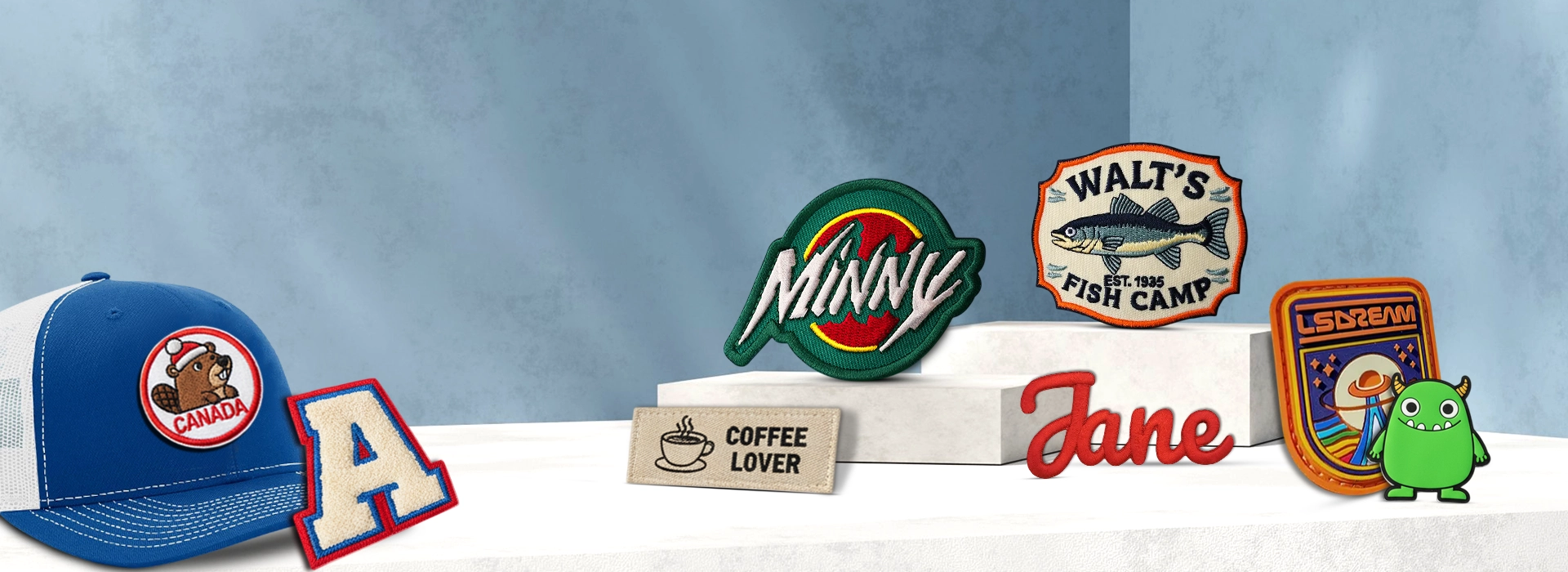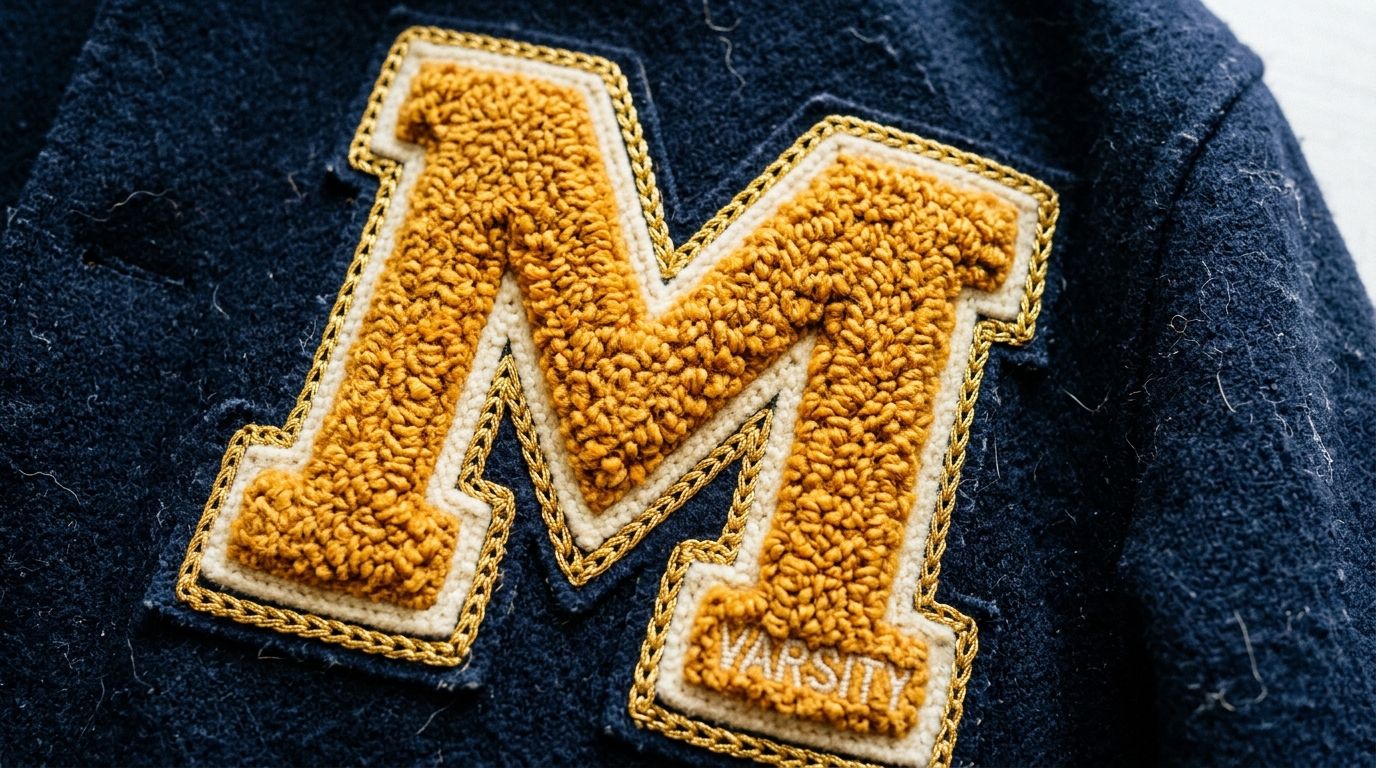
Few fabric emblems evoke such deep nostalgia, collegiate prestige, and athletic tradition as the iconic custom chenille patch. From high school varsity letterman jackets and championship wool coats to elite cheer uniforms and vintage-inspired luxury streetwear, chenille delivers a luxurious, fluffy tactile texture that stands completely apart from flat needlework.
Originally derived from the French word for "caterpillar" (describing its fuzzy, tufted pile), chenille embroidery utilizes specialized looper machines that weave thick acrylic or wool yarn into thousands of raised, plush loops. Framed by crisp chain stitching and mounted on heavy colored wool felt substrates, custom chenille patches represent the timeless crowning jewel of academic and athletic achievement.
In this comprehensive manufacturing guide by Patched Custom, we uncover the mechanical architecture of chenille embroidery, single vs. double felt layering, traditional letter sizing protocols, and jacket placement rules.
The Anatomy of a Chenille Patch: 4 Essential Crafting Layers
Unlike standard embroidery machines that use thin 40-weight polyester thread and rapid back-and-forth needle oscillations, chenille is produced on specialized moss-stitch machines (such as Cornely or specialized Tajima chenille heads). A genuine custom chenille emblem consists of four integrated layers:
- The Tufted Chenille Pile (Moss Stitch): Thick, spun acrylic or wool-blend yarn is driven up through the bottom of the fabric and hooked into thousands of dense standing yarn loops (the "moss stitch"). This creates the plush, fuzzy carpet-like pillow that defines chenille.
- The Chain Stitch Accent & Detail: Because thick chenille yarn cannot render sharp fine lines or letters smaller than 1 inch, detail work is completed using a tight "chain stitch" (resembling a delicate jewelry chain). This sharp outline frames letters, creates mascot facial features, and adds division lines.
- The Scrim & Foundation Felt Base: The chenille pile is anchored into a primary layer of dense wool/rayon blend felt. High-end varsity patches feature a double-felt base—a top felt layer trimmed close to the embroidery, stacked onto a wider contrasting base felt layer to create a bold two-tone perimeter border.
- The Rear Backing Layer: Chenille patches can be backed with industrial heat-seal adhesive, peel-and-stick adhesive, or left with clean scrim for direct tailoring onto heavy melton wool jackets.
Single Felt vs. Double Felt: Elevating Visual Contrast
When customizing chenille letters and school mascots, the choice of felt border dramatically affects the emblem’s visual impact on jacket wool:
Standard Sizing Guidelines for Letterman Jacket Patches
Varsity jackets follow traditional dimensional standards developed over a century of American high school and collegiate sports. Using the correct size ensures balanced visual proportions on standard jacket cuts:
Incorporating Inserts: Combining Chenille with Direct Embroidery
One of the hallmark features of custom letterman patches is the integration of athletic and academic inserts. Because chenille yarn is too thick to stitch a miniature baseball or musical note directly, master manufacturers employ two specialized techniques:
- Embroidered Sub-Patches (Embroidery Inserts): The specific activity icon (such as crossed tennis racquets, a band trumpet, or cheer megaphone) is embroidered onto twill with ultra-fine thread, laser-cut to exact shape, and machine-appliquéd into the center of the chenille letter.
- Die-Cast Metal Activity Pins: Solid antiqued gold, silver, or bronze metal pins with clutch backs are pierced directly through the chenille felt to represent championship titles, captain stars, and state honors.
Attachment & Care: Preserving Vintage Chenille Loops
Chenille patches require specialized handling to preserve their three-dimensional yarn pile over decades of wear:
While iron-on backings can be applied to chenille patches, traditional letterman jackets feature heavy 24oz melton wool and genuine leather sleeves—both of which can be ruined by high-temperature heat presses. Therefore, varsity jacket patches are almost always sewn directly onto the jacket wool using an industrial zig-zag or straight lock-stitch machine running along the outer felt edge.
- Dry Clean Only (Specialized Wool Care): Letterman jackets and wool chenille patches should never be submerged in household washing machines. Agitation will unravel wool fibers and tangle chenille yarn loops.
- Steam, Never Iron: Never touch a hot iron soleplate directly to the face of a chenille patch! High heat will permanently melt or crush the acrylic yarn loops flat. To remove wrinkles, hover a handheld garment steamer 2 inches away and gently brush the pile with your fingers.
- Pilling Maintenance: Over years of friction, acrylic loops may develop small surface pills. Gently trim surface fuzz using a fabric sweater shaver or sharp embroidery snips without cutting the foundational chain stitches.
Historical Heritage: The Harvard 1865 Varsity Letter Tradition
The practice of awarding varsity letter patches originated in 1865 at Harvard University. The Harvard varsity baseball team embroidered a large Old English "H" onto the center of their flannel team sweaters. Only players who participated in the championship games against Yale were permitted to keep the letter sweaters at the end of the season; bench reserves were required to return theirs.
By the early 1900s, this tradition expanded into the iconic melton wool letterman jacket with leather sleeves. Chenille embroidery was chosen because its thick, plush moss-stitch loops mimicked the warmth and bulk of heavy winter sweaters, creating an unmistakable badge of athletic honor that remains universally recognized over 160 years later.
Engineering Cornely Moss-Stitch Machinery
Unlike standard embroidery heads where upper thread is looped by a rotating bobbin hook beneath the bedplate, a dedicated chenille head (such as Cornely Type A or Tajima TCX series) operates using a single continuous yarn thread fed from overhead cones through a hollow needle and rotating looper:
- The Needle & Drop Looper Dance: The needle pierces the wool felt base, and an overhead rotary hook wraps the thick acrylic yarn around the needle shaft. As the needle retracts, it pulls a loop of yarn through the felt without piercing the yarn strand itself.
- Loop Pile Height Calibration: Pile height is calibrated between 2.0mm and 4.5mm. High-pile chenille (3.5mm+) yields that luxurious, pillow-soft varsity feel, while lower pile (2.0mm) is utilized when fine detail chain stitching borders are integrated.
- Chain Stitch Outlining: The same machine head can mechanically shift into chain-stitch mode, where the rotary hook forms interlocking single-thread loops that frame letters, creating sharp 1-point border definition.
Melton Wool Jacket Restoration & Chenille Maintenance
Because genuine varsity letterman jackets combine heavy 24oz wool bodies, cowhide leather sleeves, and plush chenille patches, standard cleaning procedures will destroy the garment: