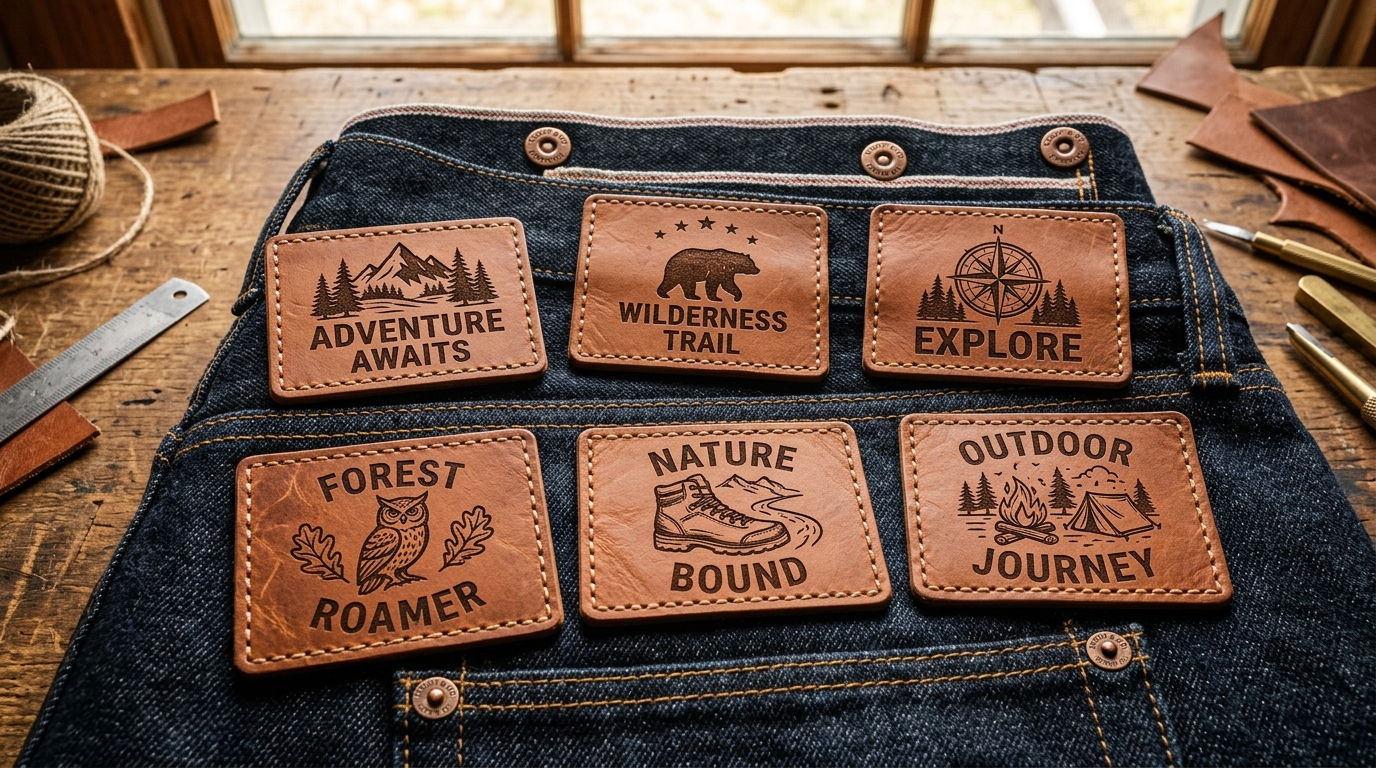
In an era of mass-produced synthetic merchandise, custom leather patches communicate an immediate sense of rugged authenticity, artisanal craftsmanship, and enduring heritage. Whether adorning classic Richardson trucker hats, raw selvedge denim jeans, waxed canvas duffel bags, or heavy flannel overshirts, leather patches develop a rich, one-of-a-kind patina that only grows more beautiful with age.
However, engineering high-end leather patches requires balancing the organic physics of natural cowhide with modern precision manufacturing: vegetable-tanned full-grain hides versus synthetic polyurethane leatherette, CO2 laser ablation versus heated metal blind debossing, and heat-seal thermal adhesives versus perimeter saddle stitching.
In this comprehensive manufacturing guide from Patched Custom, our leather artisans and laser engineers walk you through leather grades, engraving chemistry, edge burnishing, and attachment techniques to ensure your custom leather emblems stand out in any retail showroom.
Leather Grades: Genuine Full-Grain Cowhide vs. Faux PU Leatherette
The foundation of every custom leather patch is the substrate. Choosing the right material determines longevity, washing performance, and aesthetic appearance:
Leather Colors & Finishing Aesthetics
At Patched Custom, we source sustainably tanned hides finished in classic heritage colorways:
- Natural Raw Vachetta: Pale cream tan leather with zero artificial dyes. Under UV sunlight and skin contact, it gradually darkens into a deep amber caramel over months of wear.
- Saddle Brown & Cognac: The quintessential western and outdoor trucker hat color. Displays striking chocolate-brown burnishing when laser ablated.
- Antique Whiskey: Rich hand-rubbed oil pull-up leather that reveals lighter tones when flexed, creating an immediate broken-in vintage aura.
- Distressed Charcoal & Jet Black: Ultra-modern tactical and streetwear finish. Black leather patches engraved with deep matte debossing yield sleek tone-on-tone stealth branding.
Edge Finishing: Burnishing, Laser Sealing & Perimeter Stitch Grooves
An unfinished leather edge looks frayed and amateurish. Professional custom leather patches incorporate three critical edge treatments:
- Perimeter Stitch Groove (Debossed Border): A continuous 1.5mm recessed groove stamped 1/8" inward from the edge. This protects stitching threads from external abrasive friction.
- Laser-Cut Beveling: The laser cutting focal beam seals the outer perimeter, preventing fiber separation and creating a clean, dark framed perimeter.
- Hand-Waxed Tokonole Burnishing: On luxury full-grain patches, edges are hand-treated with organic tragacanth or beeswax burnishing compounds and polished with hardwood slickers to produce a glassy, moisture-resistant edge.
How to Attach Custom Leather Patches to Hats & Apparel
Heat Press Application (With Thermal Buffer Pad)
Commercial leather patches from Patched Custom can be ordered with specialized low-temperature, high-tack heat-seal backings. However, direct high heat can dry out or curl natural cowhide.
- Temperature: 300°F – 315°F (149°C – 157°C).
- Dwell Time: 18 to 22 seconds under medium pressure (45 PSI).
- Crucial Step: Always place a 1/8-inch silicone rubber pad over the leather face to distribute heat evenly and prevent direct metal platen scorch.
Machine Sewing Through Pre-Punched Holes
For lifetime durability on workwear jackets, denim, and heavy caps, sewing is the premier method. Patched Custom can laser-cut microscopic 1.0mm stitching holes spaced precisely 3.5mm apart around the entire patch perimeter. This allows tailors or hobbyists to sew thick bonded nylon or waxed polyester thread through heavy leather without breaking sewing needles.
Solid Brass & Antique Copper Rivets
For backpacks, tool aprons, and raw denim waistbands, leather patches can be anchored using four corner metal rivets. Brass, copper, or matte black rivets add an industrial workwear aesthetic that never fails.
Tanning Chemistry: Vegetable Tannins vs. Chrome Tanning
The secret to how a leather patch ages, smells, and engraves lies in the tanning process used to preserve the natural animal hide:
At Patched Custom, our premium genuine leather patches are crafted exclusively from Grade-A Vegetable-Tanned Full-Grain Bovine Cowhide. This ensures that every laser-burned logo possesses rich organic contrast and develops a stunning personalized patina as your customers wear their gear outdoors.
Precision Laser Ablation Physics: 10.6um CO2 Beam Dynamics
During the laser engraving process, a focused carbon dioxide (CO2) laser beam operating at a 10.6-micrometer infrared wavelength concentrates hundreds of watts of optical energy into a microscopic 0.15mm focal spot:
- Cellular Vaporization: The thermal energy instantly vaporizes the top cellular layer of the leather without charring the surrounding hide.
- Air Assist Nitrogen Shielding: High-pressure compressed air (or inert nitrogen) is blasted through the laser nozzle coaxial to the beam. This instantly blows away vaporized smoke, extinguishing micro-flames and keeping the margins razor-sharp.
- Depth Regulation: Our CNC systems maintain a precise ablation depth between 0.35mm and 0.50mm. This provides dramatic tactile debossing depth without weakening the tensile tear strength of the leather hide.
Full-Grain Leather Care & Conditioning Protocols
To keep genuine leather patch hats and jackets looking luxurious over years of outdoor exposure, educate your customers on proper leather maintenance:
- Natural Oil Conditioning: Every 6 to 12 months, apply a pea-sized dab of 100% pure neatsfoot oil or beeswax-based leather balm (such as Smith’s Leather Balm) to the patch using a soft microfiber cloth. This restores natural moisture and enriches dark burnished tones.
- Drying After Rainstorms: If your leather patch hat is caught in heavy rainfall, let it dry naturally at room temperature. Never place it next to a furnace, heater, or hair dryer, which dries out leather collagen fibers and causes cracking.