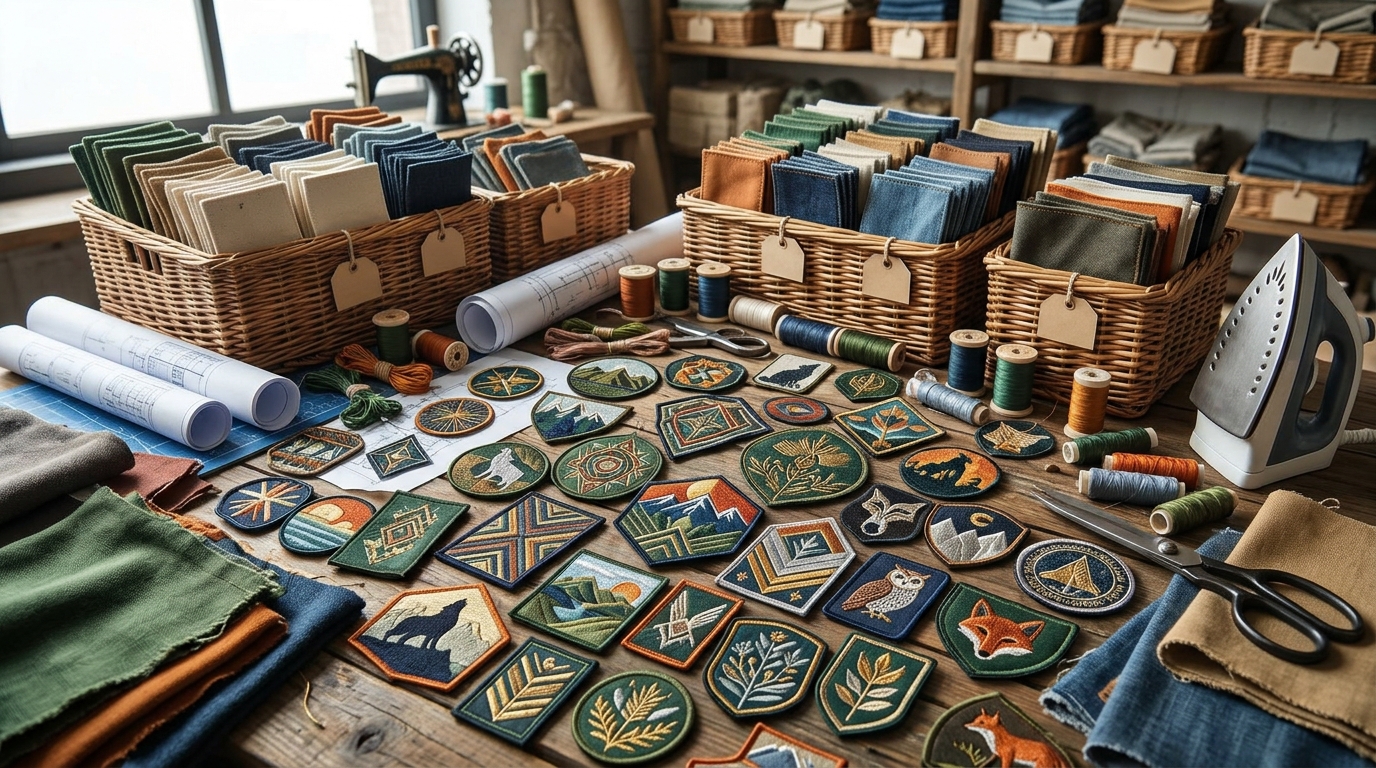
Custom patches have become an increasingly popular choice for businesses, clothing brands, organizations, sports teams, and individuals who want to create something unique. They offer an effective way to display logos, represent groups, personalize clothing, and promote brands through attractive designs. Whether you need a few personalized patches or thousands of products for commercial purposes, customized patches provide flexibility in terms of materials, sizes, colors, shapes, and finishing options.
Today, customers can explore countless possibilities when creating personalized patches. From traditional embroidered designs to modern PVC styles, manufacturers offer different solutions for various applications. These products can be attached to jackets, uniforms, hats, backpacks, shirts, bags, and promotional accessories.
Many buyers search for custom patches online because they want convenient ordering, competitive pricing, and access to professional manufacturers. Others look for local suppliers who can provide personalized assistance and physical samples. Regardless of where you purchase, selecting the right manufacturing partner is essential for achieving the desired quality.
Understanding different patch styles, production methods, order requirements, and pricing factors can help you make an informed decision. With the right planning, you can turn your artwork into professional patches that represent your brand or personal style.
Why Custom Patches Are an Excellent Choice for Personalization
Personalization has become an important part of modern fashion and business branding. Customers increasingly prefer products that reflect their identity, interests, and creative ideas. Custom patches make this possible by allowing people to create designs according to their specific requirements.
Businesses can use branded patches to improve the appearance of employee uniforms. Clothing companies can add decorative elements to their collections. Sports organizations can create team identification patches, while schools and clubs can develop designs that represent their communities.
One major advantage of customized patches is their versatility. They can be manufactured in different sizes and shapes and produced using various materials. Customers can select simple designs or complicated artwork depending on their preferences.
Another benefit is their ability to enhance ordinary products. A plain jacket can become more distinctive with an embroidered logo, while a backpack can feature a personalized patch that reflects an individual's interests.
Patches are also suitable for promotional activities. Businesses can distribute them at exhibitions, corporate events, product launches, and marketing campaigns.
Their combination of durability, flexibility, and visual appeal makes them a practical choice for both personal and commercial applications.
Find High Quality Custom Patches Online
Searching for custom patches online gives customers access to a wide selection of manufacturers and suppliers. Online purchasing makes it easier to compare production techniques, customization options, and available services without visiting multiple physical locations.
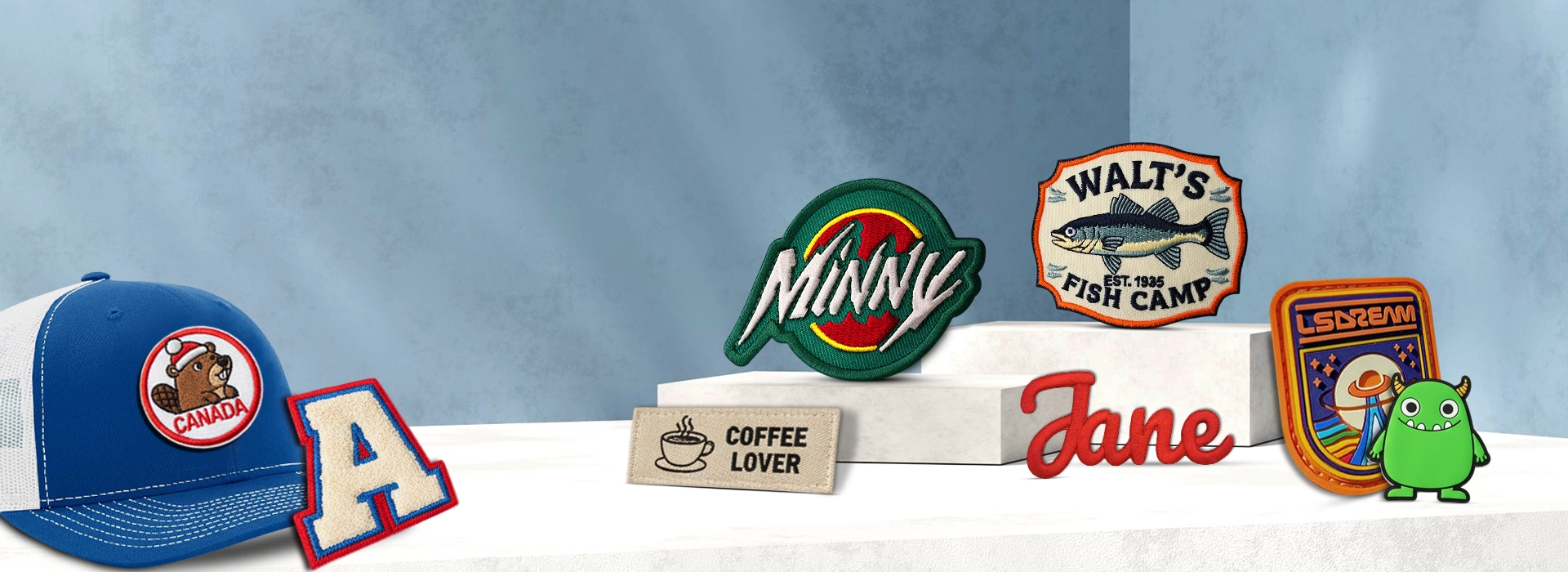
Many manufacturers provide online galleries featuring different patch styles. These examples help customers understand how embroidery, weaving, printing, and PVC production affect the finished appearance.
Before choosing a supplier, examine its previous work. Look for clear product photographs that demonstrate stitching quality, border finishing, color accuracy, and material consistency.
It is also important to review customer feedback. Previous buyers can provide useful information about communication, production quality, packaging, and delivery experiences.
Check whether the supplier offers artwork assistance and digital design proofs. A digital proof allows you to review your design before manufacturing begins.
You should also understand the ordering process. Some companies allow customers to upload their artwork and receive an online estimate, while others require direct communication with their sales representatives.
A reliable online supplier should provide clear information about minimum quantities, payment requirements, production schedules, and shipping arrangements.
Comparing these factors can help you identify a manufacturer that offers a convenient purchasing experience and dependable products.
How to Order Custom Patches for Your Requirements
When you decide to order custom patches, preparing your specifications in advance can make the process much easier.
Start by identifying the purpose of your patches. Consider whether they will be used for clothing, business uniforms, promotional products, sports equipment, or personal accessories.
Next, prepare your artwork. You can provide a company logo, digital illustration, existing graphic, or original concept. Clear artwork helps manufacturers understand your expectations.
The dimensions should also be selected carefully. A patch intended for a jacket back may require a larger design than one created for a cap or shirt pocket.
After deciding the dimensions, select the production style. Embroidered patches provide a textured finish, woven patches reproduce fine details, and printed patches are suitable for complicated artwork.
Backing is another important consideration. Sew on backing provides a permanent attachment method, while iron on backing offers convenience for compatible fabrics. Hook and loop backing is useful when patches need to be removed or replaced.
Once your specifications are ready, contact the supplier and request a quotation.
Review the price, production schedule, and digital proof before approving the order. Clear communication throughout the process can help prevent mistakes and ensure that the final products match your requirements.
Selecting a Professional Custom Patch Maker
Choosing an experienced custom patch maker is one of the most important steps when purchasing personalized patches.
A professional manufacturer understands different production techniques and can recommend suitable materials based on your design.
Start by reviewing the company's portfolio. Previous projects can help you evaluate its experience with different styles, shapes, and artwork requirements.
Look closely at the finishing quality. Clean stitching, accurate colors, smooth borders, and properly attached backing are important characteristics of professionally manufactured patches.
Communication should also influence your decision. A dependable patch maker should answer questions, explain available options, and provide realistic information about production schedules.
Ask whether the company offers digital proofs before starting manufacturing. This allows you to check the design and request corrections when necessary.
If you are ordering a complicated design, ask about artwork preparation services. Some manufacturers can adjust small details to improve clarity without changing the overall appearance.
For larger projects, discuss sample approval and quality inspection procedures.
Working with a knowledgeable manufacturer can make the entire purchasing process more organized and help you achieve a better final product.
Work With an Experienced Custom Patch Manufacturer
A custom patch manufacturer converts your approved artwork into finished products through specialized manufacturing techniques.
Different manufacturers have different capabilities. Some focus on embroidered patches, while others offer woven, printed, PVC, chenille, and other customized designs.
Understanding these capabilities is important when selecting a production partner.
For example, embroidered patches are created using stitching techniques that produce a textured surface. Woven patches use finer threads to reproduce detailed artwork. Printed patches use printing methods to reproduce complex images, while PVC patches are manufactured using flexible materials and molding processes.
Ask the manufacturer about its available production methods and material options.
Quality control is another important consideration. Finished products should be inspected for uneven stitching, incorrect colors, damaged borders, and other visible defects.
If your project involves substantial quantities, request a sample before approving full production.
You should also discuss repeat orders. Businesses that regularly purchase branded patches may benefit from working with a manufacturer that can maintain consistent artwork and production specifications.
A reliable manufacturing partner should understand your current requirements and be capable of supporting future projects.
Compare Reliable Custom Patch Suppliers
Professional custom patch suppliers help customers select appropriate materials, designs, and manufacturing options.
Some suppliers focus on personalized products for individuals and small businesses, while others specialize in wholesale and commercial production.
When comparing suppliers, consider their manufacturing experience, product quality, customization services, and communication standards.
Ask about minimum order quantities before submitting your design. This is particularly important if you only need a few patches.
You should also check whether artwork preparation is included in the quoted price.
Another useful consideration is the availability of samples. Physical samples can help you assess material quality, stitching, and overall finishing before making a larger investment.
If you are planning repeat purchases, discuss whether the supplier can reproduce the same design in future orders.
Do not make your decision based entirely on the lowest quotation. A slightly higher price may provide better materials, more reliable production, and improved customer support.
Selecting a dependable supplier can save time and help maintain consistent product quality.
Custom Patches Wholesale for Commercial Projects
Businesses that require large quantities often explore custom patches wholesale services.
Wholesale purchasing is suitable for clothing brands, uniform manufacturers, promotional agencies, retailers, schools, and sports organizations.
Ordering multiple patches in one production run can reduce the average cost per unit because manufacturing setup expenses are distributed across a larger quantity.
For example, a clothing company may require matching logo patches for hundreds of jackets. A corporate organization may need branded patches for employees across several locations.
Wholesale production makes it easier to maintain a consistent appearance across these products.
Before requesting wholesale pricing, prepare your artwork and quantity estimates. Include the dimensions, production style, backing type, and any special finishing requirements.
Ask whether the manufacturer can accommodate multiple designs within the same order.
It is also important to understand production schedules and delivery arrangements.
If you expect to place repeat orders, discuss long term pricing and artwork storage.
Choosing a manufacturer with suitable production capacity can help your business manage wholesale purchasing more efficiently.
Custom Patches No Minimum for Small Orders
Not every customer needs hundreds or thousands of patches. Individuals, independent designers, startups, and small businesses may only require a limited quantity.
Custom patches no minimum services provide flexibility for buyers who want smaller production runs.
Some manufacturers accept individual orders, while others require a minimum quantity because of manufacturing setup expenses.
Before placing an order, confirm the supplier's minimum quantity policy.
Ask about sample production and small batch pricing. You should also check whether additional charges apply to limited orders.
Although smaller quantities may have a higher per unit price, they can be useful for testing a design before investing in large scale production.
For example, an independent clothing designer may want to test customer interest in a new patch design. A startup may need a small quantity of branded patches for an initial product launch.
Low quantity ordering helps customers avoid purchasing unnecessary inventory while exploring their customization ideas.
Custom Patches Bulk for Large Quantity Requirements
Organizations with substantial purchasing needs can benefit from custom patches bulk manufacturing.
Bulk production is commonly used for employee uniforms, sports merchandise, school clothing, promotional campaigns, and retail collections.
Ordering in larger quantities can improve purchasing efficiency and may reduce the average price of each patch.
However, large orders require careful preparation.
Before manufacturing begins, confirm the approved artwork, dimensions, colors, materials, backing, and finishing details.
Request a digital proof and consider approving a physical sample when appropriate.
You should also discuss the manufacturer's production capacity. Make sure the company can complete the required quantity within your expected timeframe.
For orders involving several designs, discuss whether products can be separated into clearly labeled batches.
Packaging and shipping arrangements should also be confirmed before approving production.
A well organized bulk order can help businesses maintain product consistency and reduce purchasing complications.
Custom Patches With Logo for Professional Branding
Custom patches with logo designs provide an effective way to display a business identity on clothing and accessories.
Companies can use logo patches on uniforms, jackets, hats, backpacks, workwear, and promotional merchandise.
A professionally designed patch can make branded clothing more recognizable and create a consistent appearance across different products.
When preparing a logo for manufacturing, consider its size and complexity.
Small lettering, thin lines, and complicated symbols may require adjustments to remain clear after production.
Provide your manufacturer with high quality artwork and official brand color references.
Color consistency is particularly important for businesses that use the same logo across different marketing materials and products.
You should also think about placement. A patch designed for a jacket sleeve may need different proportions from one intended for a cap or chest area.
Embroidery is a popular choice for traditional company logos, while woven production may be suitable for designs containing finer details.
Selecting the right material and dimensions can help your logo maintain a professional appearance.
Finding Custom Patches Near Me
Searching for custom patches near me can help you discover local embroidery businesses, promotional product suppliers, and patch manufacturers.
Local suppliers may provide the advantage of direct communication and physical sample inspections.
This can be useful when you are unfamiliar with different materials or want to discuss your design in person.
However, not every nearby embroidery shop manufactures specialized patches. Some businesses outsource production to other manufacturers.
Before choosing a local supplier, ask whether production takes place in-house and which patch styles are available.
Check whether the company offers embroidered, woven, printed, PVC, and chenille options.
Compare quotations and ask about minimum quantities, production schedules, and collection or delivery arrangements.
Local purchasing can be convenient, but online manufacturers may provide a wider range of specialized products.
The best choice depends on your project requirements, budget, and preferred level of customer support.
Understand Custom Patch Pricing Before Ordering
Custom patch pricing depends on several manufacturing and design factors.
Patch dimensions are one of the most important considerations. Larger designs generally require more materials and production resources.
The production technique also influences cost. Embroidered, woven, printed, and PVC patches involve different manufacturing processes.
Quantity can significantly affect the per unit price. Larger orders may receive better rates because setup expenses are distributed across more products.
Artwork complexity is another factor. Detailed graphics, multiple colors, and specialized finishing may require additional production work.
Backing options can also influence the quotation. Sew on, iron on, adhesive, and hook and loop backings may have different costs.
Shipping and packaging should be included when calculating the total purchasing budget.
Because every design has different requirements, there is no single price that applies to all custom patches.
The best approach is to request quotations using identical specifications from multiple manufacturers.
Compare the quality, services, production schedules, and total costs rather than selecting a supplier based only on the lowest advertised price.
Request a Custom Patches Free Quote
A custom patches free quote allows customers to understand the expected production cost before placing an order.
To receive an accurate estimate, provide the manufacturer with complete project information.
Include your artwork, preferred dimensions, patch style, order quantity, and backing requirements.
If you have a specific deadline, communicate it before production begins.
Ask whether the quotation includes artwork preparation, digital proofs, sample production, packaging, and shipping.
Some suppliers provide online quotation forms, while others review artwork before calculating the final price.
Review the quotation carefully and clarify any additional charges.
You should also confirm the payment terms and expected manufacturing schedule.
Requesting quotations from several manufacturers can help you compare available services and select an option that meets your budget.
A detailed quotation also makes it easier to understand which customization features are included in the final price.
Different Types of Custom Patches for Every Application
Selecting the right patch style is important because different production techniques create different appearances.
Embroidered Patches
Embroidered patches are popular because of their traditional stitched appearance. They are suitable for company logos, uniforms, jackets, hats, and club clothing.
The raised thread creates texture and makes simple designs stand out.
Woven Patches
Woven patches use finer threads to reproduce detailed artwork. Their smoother surface makes them suitable for small lettering, thin lines, and intricate logos.
Printed Patches
Printed patches are useful for photographs, gradients, complicated illustrations, and designs containing numerous colors.
They offer greater flexibility when traditional stitching cannot reproduce the required details.
PVC Patches
PVC patches are manufactured using flexible rubber like material. They can feature raised elements, recessed details, and distinctive dimensional designs.
They are commonly used for outdoor accessories, backpacks, and specialized clothing.
Chenille Patches
Chenille patches have a soft and textured appearance. They are especially popular for varsity jackets, sports clothing, and decorative fashion products.
Understanding these options helps customers select a production method that matches their artwork and intended application.
Improve Your Custom Patch Design
A successful patch starts with a clear and practical design.
Before manufacturing, review your artwork and identify the most important visual elements.
Avoid unnecessary details that may become difficult to reproduce at smaller dimensions.
Choose colors that create sufficient contrast and make the design easy to recognize.
Pay attention to lettering because very small text can become unclear during embroidery.
Select a shape that complements the artwork. Circles, rectangles, shields, and custom outlines are common choices.
Consider the intended placement as well. A patch for a small cap should have different proportions from a large design intended for the back of a jacket.
If your artwork requires technical adjustments, ask the manufacturer whether design assistance is available.
Always review the digital proof before approving production.
Check spelling, dimensions, colors, borders, and placement carefully.
Taking time to improve your artwork before manufacturing can help prevent unnecessary corrections and produce a better final result.
Choose the Right Backing for Your Custom Patches
Backing plays an important role in how a patch attaches to clothing and accessories.
Sew on backing is a traditional option for permanent attachment. It is suitable for uniforms, jackets, bags, and workwear.
Iron on backing contains a heat activated adhesive that can be applied to compatible fabrics according to the manufacturer's instructions.
Hook and loop backing allows patches to be attached and removed easily. This option is useful for interchangeable identification and certain types of uniforms.
Adhesive backing may be suitable for temporary applications and promotional products.
Before selecting a backing, consider the fabric type, washing requirements, and intended use.
If you are unsure which option is suitable, ask your supplier for a recommendation.
Choosing the correct attachment method can improve convenience and help your patches remain securely attached.
Custom Patches for Fashion and Clothing Brands
Fashion brands frequently use patches to make their products more distinctive.
An embroidered logo on a jacket can create a professional appearance, while a large chenille design can add a bold decorative feature to varsity clothing.
Patches can also be used on jeans, shirts, hats, sweatshirts, backpacks, and other accessories.
For clothing manufacturers, consistent branding is important.
The same logo should maintain its colors, proportions, and overall appearance across different products.
Before production, provide the manufacturer with approved artwork and clear specifications.
You should also consider material quality and attachment methods because clothing products may be washed and worn regularly.
Selecting suitable patches can help fashion businesses develop recognizable collections and create products that stand out in a competitive market.
Conclusion
Custom patches provide an effective solution for businesses, clothing brands, sports teams, organizations, and individuals who want personalized designs and professional branding. Their versatility makes them suitable for uniforms, jackets, hats, backpacks, promotional merchandise, and many other applications.
Whether you are looking to buy custom patches online, searching for a professional custom patch maker, or comparing experienced custom patch manufacturers, selecting the right supplier is essential.
Customers with smaller requirements can explore custom patches no minimum options, while businesses can benefit from custom patches wholesale and custom patches bulk production.
Understanding custom patch pricing, choosing suitable materials, and requesting a custom patches free quote can also help you plan your purchase more effectively.
Take time to review artwork, compare suppliers, and confirm production specifications before placing an order. With a reliable manufacturing partner and proper planning, you can create custom patches that represent your identity, strengthen your brand, and deliver a professional appearance.
Discussion & Feedback 0
Write a CommentNo comments yet
Have a question or feedback regarding this topic? Be the first to share your thoughts below!
Leave a Reply
Your email address will not be published. Required fields are marked *