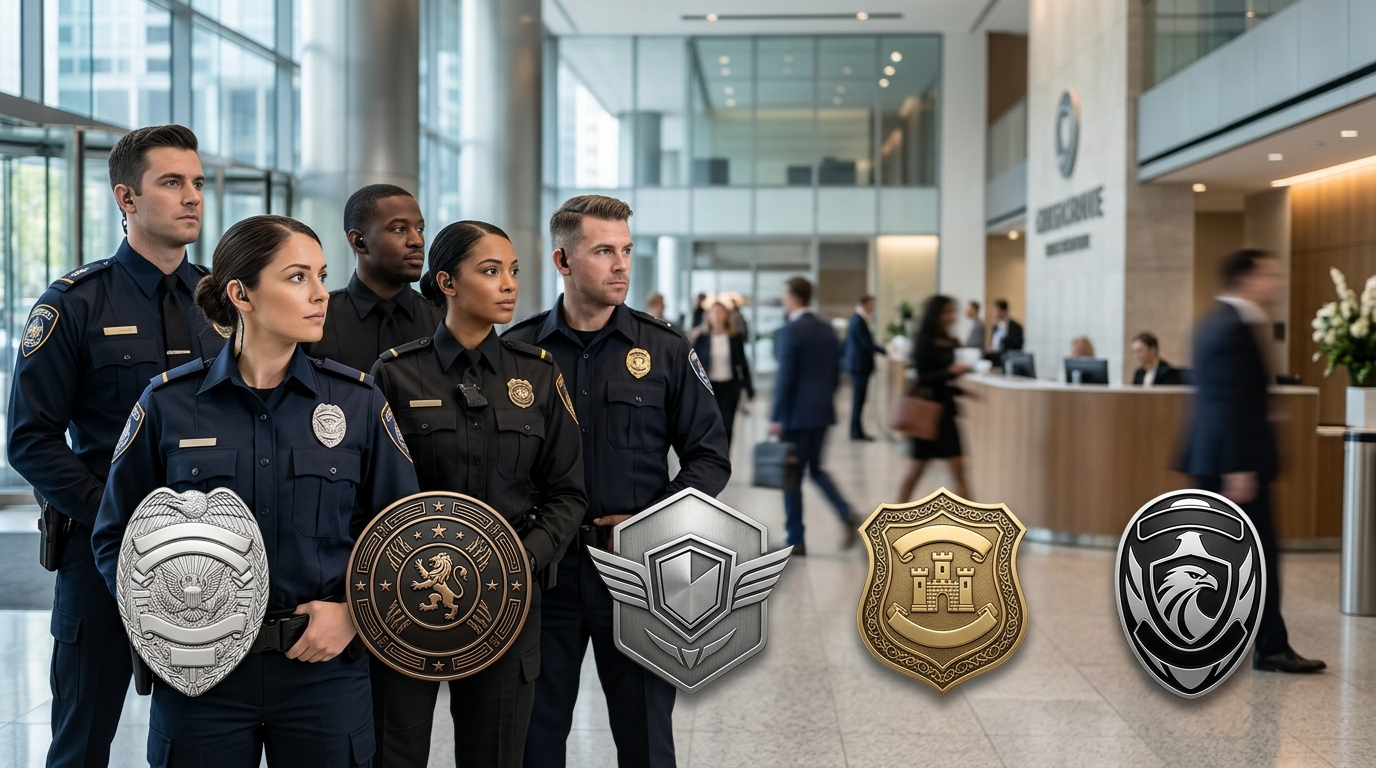
Security patches are a practical way to display identity, improve team recognition, and create a consistent appearance for security professionals. Whether used by private security companies, event security teams, facility management staff, patrol officers, or protection services, custom patches help distinguish personnel and give uniforms a professional finish. A well-designed patch can display a company logo, department name, staff designation, or other approved identification details in a clear and recognizable format.
For security businesses, appearance matters. Employees often represent their organization while working in public spaces, commercial buildings, residential communities, events, and private facilities. A clean, professionally made uniform helps create a consistent image and makes it easier for people to recognize authorized personnel. Custom security patches support this purpose by adding visible branding and identification to uniforms, jackets, shirts, hats, and tactical clothing.
Choosing the right custom security patches is about more than selecting a design. Material, stitching, size, backing, color, and overall durability all affect the final result. Some companies need traditional embroidered patches for uniforms, while others prefer PVC patches for tactical equipment or hook-and-loop patches that can be removed and replaced when required.
Working with an experienced manufacturer makes it easier to create patches that match the organization's branding and practical requirements. From small orders for independent security professionals to large security patches wholesale orders for established companies, customized production provides flexibility in design and application.
What Are Custom Security Patches?
Custom security patches are personalized badges or emblems designed for security personnel, private security companies, safety teams, and related organizations. They are commonly attached to uniforms, shirts, jackets, caps, vests, and equipment to display a company's name, logo, department, or staff identification.
Unlike generic patches, custom designs are produced according to the customer's specifications. This means businesses can select their preferred colors, shapes, lettering, materials, and attachment methods.
A security patch can feature a simple company name or include a more detailed design with a logo, shield, border, and additional text. The layout depends on where the patch will be worn and what information needs to be visible.
For example, a patch attached to a uniform sleeve may focus on the company logo, while a chest patch may display the word SECURITY or an employee's name. Both designs serve different purposes but contribute to a consistent professional appearance.
Custom security patches are useful for organizations that want their employees to look organized and easily identifiable. They also provide an affordable way to maintain consistent branding across different uniform styles.
Why Security Companies Use Custom Patches
Security companies operate in environments where identification and professional presentation are important. Employees may interact with customers, visitors, residents, event organizers, and members of the public throughout their shifts.
A recognizable uniform helps people understand who is responsible for security-related duties. Custom patches make this identification more straightforward by displaying relevant company or department information.
They also help businesses maintain a consistent visual identity. When every team member wears matching patches, uniforms look more organized, regardless of the location or assignment.
Another benefit is flexibility. Security companies can create different patches for supervisors, patrol teams, event staff, control room personnel, and other departments. Each design can follow the same branding style while including the information relevant to that role.
Custom patches can also support employee identification and team recognition. A company logo, department name, or staff designation gives uniforms a more personalized appearance.
For growing businesses, ordering patches in larger quantities can make it easier to outfit new employees while maintaining the same uniform standards.
Custom Security Uniform Patches
Security uniform patches are among the most common types of custom patches used by private security organizations. They are designed to fit specific areas of a uniform, including the chest, shoulder, sleeve, or upper arm.
The design should be clear and suitable for the garment. A patch that looks good on a large jacket may not work as effectively on a smaller shirt sleeve.
Embroidered patches are a popular option for security uniforms because they offer a traditional appearance with raised stitching. They can display company names, shield designs, logos, and department information.
The color combination should also complement the uniform. Some organizations prefer high-contrast designs that are easy to recognize, while others choose understated colors that match their existing clothing.
Size is another important consideration. A patch should be large enough to display its information without making the uniform look overcrowded.
When ordering custom security uniform patches, companies should provide the intended placement and garment details. This helps the manufacturer recommend suitable dimensions and backing.
Custom Embroidered Security Patches
Custom embroidered security patches are a popular choice for businesses looking for a professional and traditional finish. They are produced by stitching colored threads onto a fabric base to create logos, lettering, symbols, and decorative borders.
The raised texture of embroidery gives patches a distinctive appearance. It also works well with common security uniform designs, particularly those featuring shield shapes, company names, and bold lettering.
One of the main advantages of embroidered patches is their design flexibility. Customers can choose different thread colors, shapes, sizes, and border styles to match their company branding.
Embroidered patches can be used on shirts, jackets, uniforms, caps, and bags. Their appearance makes them suitable for both everyday staff uniforms and special security team clothing.
The amount of embroidery coverage affects the final look. A design with more stitching may appear fuller, while a design with less coverage can allow the background fabric to remain visible.
For security patches with small lettering, the artwork should be checked before production. Text that is too small may not remain readable when converted into embroidery.
An experienced manufacturer can help adjust the artwork while keeping the original design recognizable.
Custom PVC Security Patches
Custom PVC security patches are made from flexible polyvinyl chloride material. Instead of using stitched threads, the design is molded into the patch, creating raised and recessed details.
This gives PVC patches a clean, modern appearance. They are often selected for tactical clothing, security vests, backpacks, outdoor equipment, and other accessories.
One advantage of PVC is that its surface can be cleaned easily. This makes it useful for products that may come into contact with dust, dirt, or moisture during regular use.
PVC patches also provide good flexibility when creating bold logos, lettering, and distinctive shapes. Different colors and raised design elements can help separate individual parts of the artwork.
Security teams that use tactical-style equipment may prefer PVC because it offers a different appearance from traditional embroidered patches.
These patches can also be produced with hook-and-loop backing, making them convenient for garments and bags that have compatible attachment panels.
When preparing a PVC design, it is important to keep very small details manageable. Clear lettering, suitable spacing, and well-defined shapes help produce a better finished patch.
Custom Security Velcro Patches
Custom security Velcro patches are designed for uniforms and equipment that use hook-and-loop attachment panels. They allow employees to remove or replace patches without permanently stitching them to the garment.
This is useful for security companies with multiple teams, different assignments, or uniforms that require interchangeable identification.
For example, a company may use one patch design for general security personnel and another for supervisors or event teams. With hook-and-loop backing, authorized employees can change compatible patches as needed.
These patches are available in different materials, including embroidered, woven, and PVC options. The customer can select the front material according to the preferred appearance and practical requirements.
Backing quality is particularly important. The hook side should attach securely to a compatible loop surface and should be produced according to the intended patch dimensions.
Custom Velcro security patches are suitable for tactical vests, security jackets, backpacks, and other clothing designed with attachment panels.
Before ordering, companies should confirm the dimensions of the existing loop area. This helps avoid patches that are too large or too small for the garment.
Security Company Logo Patches
A company logo is an important part of business identity. It helps customers recognize a brand and gives employees a consistent appearance when representing the organization.
Custom security company logo patches allow businesses to place their branding directly on uniforms and equipment. Instead of using plain clothing, companies can create a professional look that reflects their visual identity.
The logo can include a symbol, company name, initials, or a combination of design elements. The manufacturer then adapts the artwork to the selected patch material and size.
Embroidered patches are suitable for traditional logos with bold shapes and lettering. Woven patches may work better when the logo contains finer details, while PVC can create a modern raised finish.
For a consistent appearance, companies should use approved brand colors and provide a clear logo file. This helps maintain the same visual identity across multiple orders.
Logo patches can be produced for employee uniforms, jackets, caps, bags, and other branded accessories.
Custom Security Name Patches
Name patches are commonly used by security personnel to provide individual identification. They may display an employee's name, initials, or approved staff information.
A well-designed name patch should be simple and easy to read. Clear lettering is more important than unnecessary decoration, especially when the patch is worn on a uniform.
Businesses can choose from different fonts, thread colors, shapes, and materials. Embroidery provides a classic appearance, while woven material can be suitable for smaller lettering.
Some companies prefer name patches with a simple rectangular shape, while others use designs that match their existing uniform branding.
For bulk orders, accurate employee information is essential. Companies should prepare a final list of names and carefully review spelling before approving production.
This is particularly important when ordering patches for a large security team, as individual name errors can create unnecessary delays and replacement costs.
Custom name patches can also include a small company logo when there is enough space to maintain readability.
Security Shoulder Patches
Shoulder patches are commonly attached to the upper sleeve of security uniforms. Their position makes them a useful location for displaying company branding, department information, or other approved identification details.
Shield-shaped designs are popular because they provide enough space for a company name, emblem, and additional text. Circular and rectangular shapes are also suitable, depending on the organization's branding.
The patch should be sized according to the uniform sleeve. A design that is too large can interfere with the appearance of the garment, while a patch that is too small may make important text difficult to read.
Embroidered shoulder patches offer a traditional finish and work well for many professional security uniforms. PVC and woven options provide alternatives for companies with different design preferences.
When creating shoulder patches, organizations should consider how the design looks from a normal viewing distance. Clear lettering and a recognizable logo help improve visibility.
The attachment method should also be selected according to the uniform material and expected use.
Security Chest Patches
Chest patches are designed to display identification on the front of a uniform. They are often used for company names, employee names, department labels, or the word SECURITY.
Because chest patches are positioned in a prominent area, the layout should be balanced and easy to read.
A simple rectangular design is commonly used for name and department patches. Some businesses prefer embroidered lettering, while others choose woven or PVC styles depending on their uniform design.
Chest patches should not be overcrowded with too much information. A clear company name or employee designation usually creates a more professional appearance than a design with too many small elements.
The final size should fit the available area on the shirt, jacket, or vest. It is helpful to provide the garment measurements before production.
Custom Tactical Security Patches
Tactical security patches are designed for security professionals who work with tactical clothing, equipment, and specialized gear. They are commonly used by authorized security teams, private protection services, training organizations, and outdoor security groups.
These patches often feature bold lettering, simplified symbols, and practical designs that fit tactical garments.
PVC is a popular material for this style because it provides raised details and a durable-looking finish. Embroidered patches are also suitable for teams that prefer a more traditional appearance.
Hook-and-loop backing is particularly useful for tactical equipment. It allows employees to attach and remove compatible patches when changing clothing or equipment.
Some tactical designs use subdued color combinations, while others use stronger contrast to improve visibility. The correct choice depends on the organization's uniform standards and intended application.
When designing tactical security patches, the main goal should be clear identification and a practical layout. Decorative details should not make the important information difficult to recognize.
Custom Event Security Patches
Event security teams work in different environments, including concerts, exhibitions, conferences, sporting events, private functions, and public gatherings.
Custom event security patches can help distinguish event personnel from general staff and visitors. They can also support consistent branding for the event organizer or security company.
These patches may include the word SECURITY, an approved event logo, or the name of the organizing company.
For short-term assignments, companies may prefer patches that are easy to attach and remove. Hook-and-loop backing can be a convenient option when the uniform includes compatible panels.
For recurring events, organizations may choose reusable designs that can be used for future assignments.
The patch should be designed with the event's uniform requirements in mind. Readable lettering and appropriate placement help create a clear visual distinction between security staff and other personnel.
Private Security Patches
Private security patches are designed for companies and professionals providing security services to businesses, residential communities, commercial properties, and private clients.
These organizations often need branded uniforms that reflect their business identity. Custom patches provide a simple way to add company names, logos, and approved employee designations.
The design should look professional and remain consistent with the organization's overall branding.
Some companies use a traditional embroidered shield, while others prefer a modern rectangular logo patch. The best style depends on the uniform and the image the business wants to present.
Private security companies may also require different patches for supervisors, patrol personnel, event staff, and other departments. Using a consistent design style helps keep the entire uniform range coordinated.
Any wording, badge design, or symbol that could imply official government or law enforcement authority should only be used where legally authorized.
Choosing the Right Material for Security Patches
The material used for a custom security patch affects its texture, appearance, level of detail, and suitability for different applications.
Embroidered fabric is a common choice for traditional uniforms. It creates a raised surface and gives logos and lettering a recognizable stitched appearance.
Woven fabric is suitable for designs that require finer details. Because the artwork is created through weaving, it can provide a smoother finish with clearer small elements.
PVC is useful for tactical-style designs and accessories. Its molded surface allows manufacturers to create raised lettering, recessed areas, and defined shapes.
Leather can provide a distinctive appearance for jackets, caps, and branded accessories. It is generally chosen for style rather than standard identification requirements.
Chenille is another material that may be suitable for larger decorative designs, particularly for jackets and special apparel.
The right material depends on the design, garment, and intended use. Companies should discuss their requirements with the manufacturer before choosing a production method.
Selecting the Best Backing for Security Patches
Backing is the part of the patch that determines how it attaches to clothing or equipment. It is important to choose an option that works with the garment and the way employees use it.
Sew-on backing
Sew-on backing is suitable for patches that need a permanent attachment. It is commonly used on shirts, jackets, and uniforms that will keep the same patch for an extended period.
It provides a traditional finish and does not depend on adhesive for attachment.
Iron-on backing
Iron-on patches use heat-activated adhesive to attach to compatible fabrics. They can be convenient for certain uniform applications, but not every garment can withstand the required heat.
Customers should confirm material compatibility before selecting this option.
Hook-and-loop backing
Hook-and-loop backing allows patches to be attached and removed from compatible panels. It is a practical choice for tactical uniforms, security vests, and equipment that requires interchangeable identification.
Adhesive backing
Adhesive backing may be suitable for temporary applications and specific promotional uses. It is not always appropriate for garments exposed to regular movement, washing, or outdoor conditions.
Selecting the right backing helps ensure that the patch remains suitable for its intended application.
Custom Security Patches Wholesale
Security companies with multiple employees often need matching patches in larger quantities. Ordering custom security patches wholesale can make it easier to maintain consistent branding across an entire workforce.
Bulk production is particularly useful for businesses supplying uniforms to different locations or departments. Instead of arranging individual orders, companies can organize their requirements in one production request.
Wholesale orders can include company logo patches, shoulder patches, chest patches, name patches, and other approved designs.
The main advantage is consistency. When patches are produced using the same approved artwork and specifications, they are more likely to match in color, size, and finishing.
Before placing a bulk order, companies should confirm the required quantity and prepare accurate artwork. It is also helpful to specify which patch designs belong to each department or employee group.
A clear production plan helps reduce mistakes and makes it easier to coordinate deliveries.
Custom Security Patches No Minimum Order
Small security companies and independent professionals may not need a large quantity of patches. They may only require a few pieces for new uniforms, replacement clothing, or a small team.
Custom security patches with no minimum order can be useful for these requirements. Smaller orders allow customers to create personalized designs without purchasing more patches than necessary.
They are also useful when testing a new logo or reviewing the appearance of a design before ordering in larger quantities.
However, minimum order requirements can depend on the manufacturing process. PVC patches may involve mold setup, while embroidery and woven production may have different production requirements.
It is best to discuss the required quantity with the manufacturer before confirming an order.
How to Design Professional Security Patches
A professional security patch should be easy to recognize and visually consistent with the organization's uniform.
Start by deciding what information needs to appear on the patch. This could be a company logo, business name, department, employee designation, or the word SECURITY.
Avoid including too much text. A crowded design can make important information difficult to read, particularly when the patch is small.
Choose colors that work with the uniform. High-contrast combinations can help make lettering stand out, while matching colors may create a more subtle appearance.
The shape should suit the artwork. Shields, circles, rectangles, and custom outlines are all possible options.
It is also important to select the right font. Thick, clear lettering is often easier to reproduce than extremely thin or decorative text.
Think about the final placement before approving the design. A chest patch may need different dimensions from a shoulder patch.
Finally, review the artwork carefully. Check the spelling, logo proportions, colors, and overall layout. A clear approved design makes the production process more straightforward.
How Custom Security Patches Are Manufactured
The manufacturing process begins with the customer's design or artwork. This may be an existing company logo, a uniform badge concept, or a new design prepared for the security team.
The manufacturer reviews the artwork and determines which production method is most suitable. Some designs work well with embroidery, while others may be better suited to woven fabric or PVC.
Once the production method is selected, the material and dimensions are confirmed. The customer also chooses the backing type and border finish.
For embroidered patches, the design is converted into a stitch pattern. Woven patches are produced by weaving threads to create the artwork, while PVC patches are molded into the required shape.
After production, finishing work is completed. This may include adding a border, trimming the edges, and applying the selected backing.
The final patches should be inspected for stitching quality, color consistency, dimensions, and overall appearance.
For bulk orders, checking the finished products against the approved design is particularly important. It helps ensure that the entire order follows the same specifications.
What Makes a Reliable Security Patches Manufacturer?
Finding the right security patches manufacturer can make a noticeable difference in the final product. A reliable manufacturer should understand different materials, patch construction methods, and finishing options.
Experience is useful because security companies may require several types of patches for different uniform placements and departments.
Design assistance is another important factor. Manufacturers should be able to explain when a logo needs adjustments to improve readability or suit the selected material.
Consistent production quality also matters. Companies ordering patches for multiple employees need products that match in shape, color, and dimensions.
Customers should also look at the available backing options. A manufacturer offering sew-on, iron-on, and hook-and-loop backing provides more flexibility for different uniform requirements.
Clear communication is essential throughout the process. The company should understand the artwork, quantity, material, and delivery expectations before production begins.
Reviewing samples or examples of previous work can also help customers evaluate the manufacturer's quality.
For organizations using official insignia or regulated security identification, it is important to confirm authorization and comply with applicable laws and uniform policies.
Factors That Affect Security Patch Pricing
The cost of custom security patches depends on the specifications of each order. There is no single price that applies to every design because materials, dimensions, and production requirements can vary.
Patch size is one important factor. Larger patches usually require more material and may involve additional production work.
The selected material also affects pricing. Embroidered, woven, PVC, and leather patches have different manufacturing processes.
Design complexity can influence the cost as well. Multiple colors, detailed artwork, specialized borders, and small lettering may require additional work.
Backing selection is another consideration. Sew-on, iron-on, and hook-and-loop options may have different production costs.
Quantity can also affect the price per patch. Larger orders may offer different pricing because the manufacturer can organize production more efficiently.
Delivery requirements and production timelines may influence the final quotation, particularly when an order requires special scheduling.
To receive an accurate price, provide the manufacturer with your artwork, dimensions, material preference, backing type, and required quantity.
Security Patches for Different Work Environments
Security professionals work in many different settings, and their patch requirements can change depending on the environment.
Commercial buildings may require simple company logo patches that create a professional appearance for reception security and facility staff.
Residential security teams may prefer matching shoulder and chest patches that help residents recognize authorized personnel.
Event security companies often need patches that clearly distinguish their employees during busy public gatherings.
Mobile patrol teams may require patches that work well with jackets, vests, and other uniform equipment.
Industrial facilities can have different uniform requirements depending on their internal safety and identification policies.
The design should always match the working environment. A patch used on a formal uniform may need a different appearance from one attached to tactical equipment.
Considering the intended application before production helps companies select the right material, size, and attachment method.
Caring for Custom Security Patches
Taking care of security patches can help maintain their appearance over time. The correct cleaning method depends on the patch material and the garment to which it is attached.
Embroidered patches should be cleaned according to the clothing manufacturer's care instructions. Gentle washing can help protect the stitching and prevent unnecessary wear.
Woven patches should also be handled carefully, particularly when the design includes fine details.
PVC patches can generally be wiped with a damp cloth to remove surface dirt. Avoid using unsuitable cleaning chemicals that could affect the material.
Leather patches need more specialized care. Excessive moisture and harsh products can damage the surface or change its appearance.
Hook-and-loop backing should be kept free from lint and debris. Dirt buildup can reduce the attachment strength over time.
It is also helpful to check patch edges occasionally. If a sew-on patch begins to loosen, repairing the stitching early can help prevent further damage.
Common Mistakes to Avoid When Ordering Security Patches
A common mistake is choosing a design that contains too much information. Small patches have limited space, and excessive text can make the finished product difficult to read.
Another issue is selecting a material without considering the uniform. A traditional embroidered patch may suit a company shirt, while a PVC patch may be more appropriate for tactical equipment.
Choosing unsuitable backing can also create problems. For example, a sew-on patch may not be convenient when employees need to change identification regularly.
Customers sometimes approve artwork without checking the spelling or dimensions. This can lead to errors across an entire production order.
Not providing accurate garment measurements can also result in patches that do not fit properly.
For bulk orders, failing to organize employee names and department details can create unnecessary confusion.
The best way to avoid these issues is to prepare the specifications carefully and review the final artwork before approving production.
Order Custom Security Patches Online
Ordering custom security patches online gives companies a convenient way to create branded uniform accessories. Customers can submit their logo, discuss design preferences, and select suitable production options without visiting a physical location.
The process usually starts with the artwork. If a company already has a logo, it can provide the file to the manufacturer. If the design needs adjustment, the customer can discuss the required changes before production.
Next, the patch specifications are confirmed. These include the size, shape, material, colors, backing, and quantity.
Once the design and specifications are approved, the manufacturer can provide a quotation and production details.
Online ordering works for both small and large requirements. Independent security professionals can order a limited number of patches, while established businesses can arrange wholesale production for their employees.
Before confirming an order, review the artwork and make sure all information is correct. It is also helpful to confirm the delivery arrangements and expected production schedule.
Conclusion
Custom security patches help security companies create a professional uniform appearance while making employee identification and company branding more consistent. Whether a business needs embroidered uniform patches, PVC tactical designs, company logo patches, name patches, or removable Velcro options, customized production provides the flexibility to meet different requirements.
Choosing the right material, backing, size, and design is essential for getting a patch that suits its intended use. Embroidered patches offer a traditional stitched appearance, woven patches provide finer details, and PVC patches create a modern molded finish. Each option has its own advantages, so the decision should be based on the uniform, working environment, and design requirements.
For companies ordering in larger quantities, custom security patches wholesale can help maintain consistency across employees and departments. Smaller businesses and individual professionals can also explore limited-order options according to the manufacturer's production capabilities.
Most importantly, a successful patch begins with a clear design and a reliable manufacturing process. By focusing on readable artwork, suitable materials, accurate specifications, and professional finishing, security organizations can create patches that represent their business identity and support a consistent appearance across their teams.

Discussion & Feedback 0
Write a CommentNo comments yet
Have a question or feedback regarding this topic? Be the first to share your thoughts below!
Leave a Reply
Your email address will not be published. Required fields are marked *