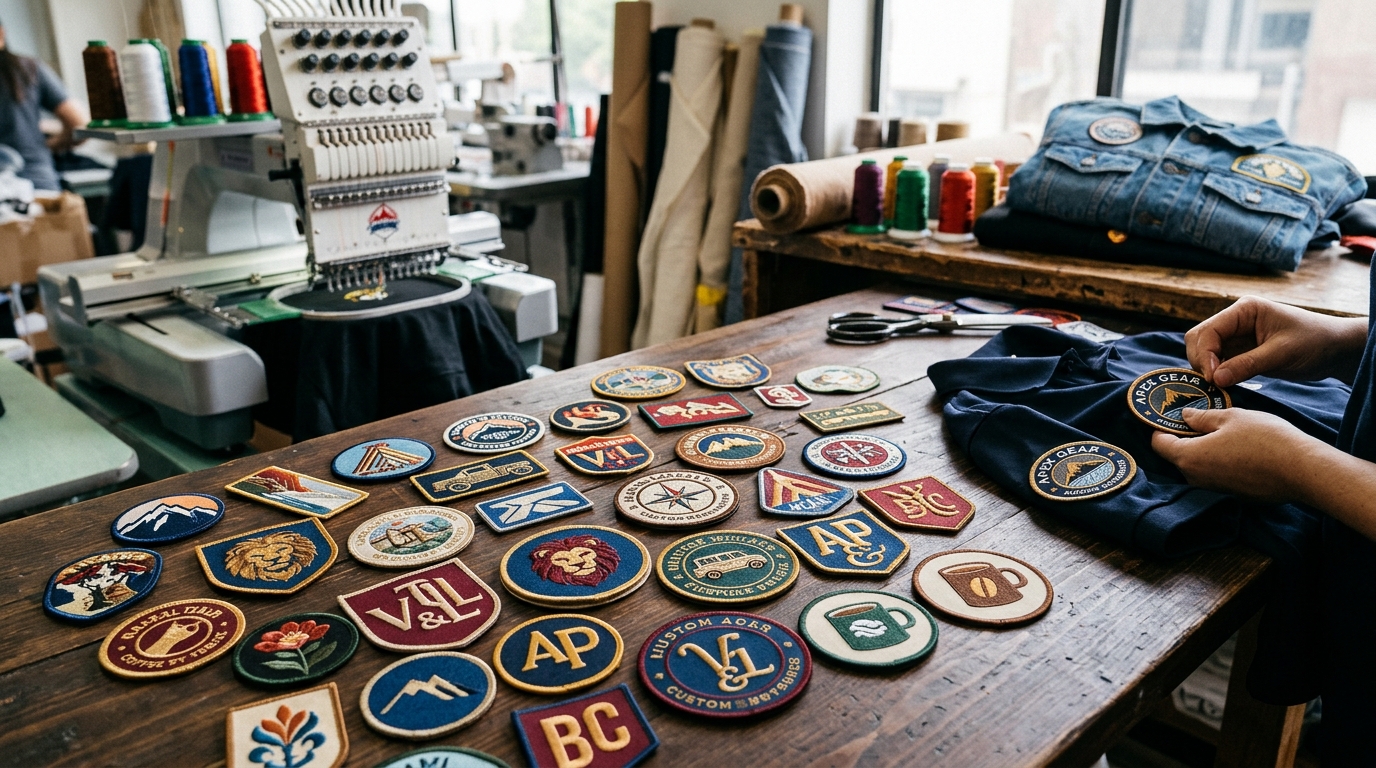
Custom embroidered patches are a practical way to add character and clear branding to clothing, uniforms, bags, and accessories. Whether you run a clothing brand, manage a business, organize a team, or create merchandise, a well-designed patch can give your products a recognizable look. You can turn a company logo, brand name, piece of artwork, or personal design into a stitched patch made to suit your needs.
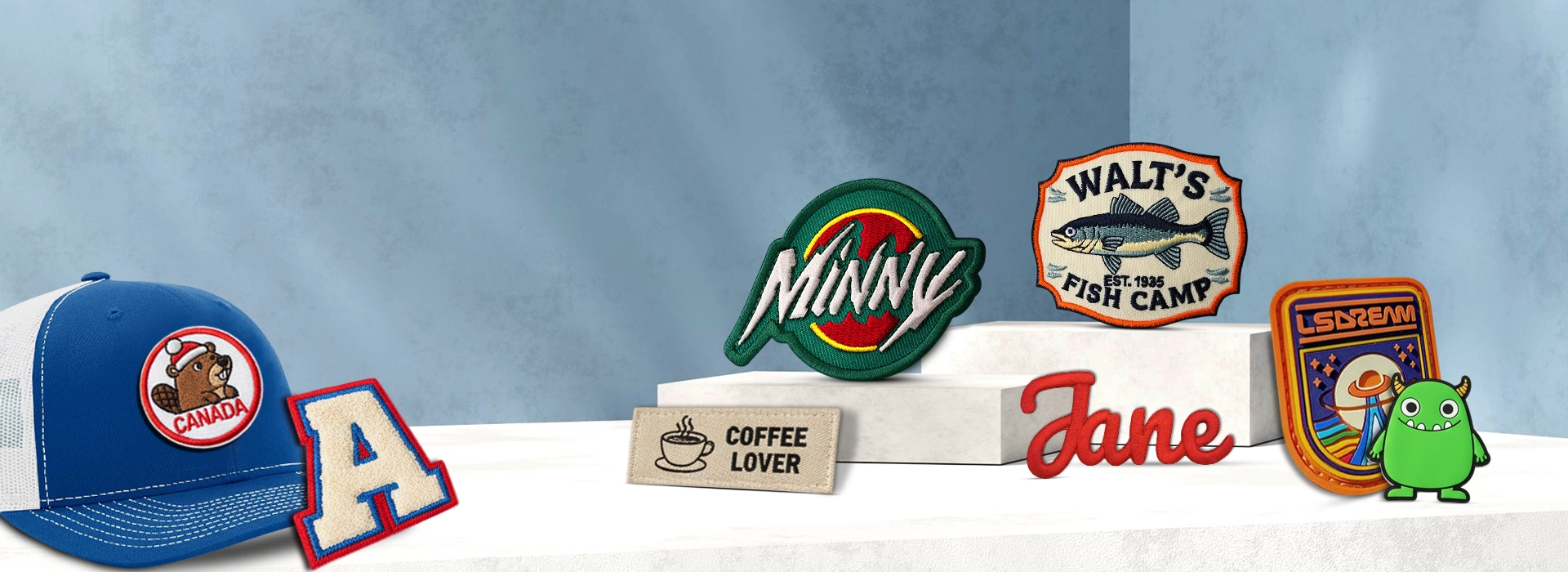
From simple logo designs to detailed artwork for jackets and caps, embroidered patches work across a wide range of products. They offer a textured finish, plenty of thread color choices, and different backing options for attaching them to fabric.
Businesses often choose custom embroidered patches with logos to keep their branding consistent across products and uniforms. Clothing brands add them to hats, jackets, and hoodies, while companies use embroidered uniform patches to identify employees and teams.
Whether you need a small batch for a new design or custom embroidered patches wholesale for regular production, it is worth taking time to choose the right size, stitching, backing, and manufacturer. Knowing what to look for before placing an order can help you avoid unnecessary costs and get patches that match your expectations.
Why Businesses and Clothing Brands Choose Embroidered Patches
Embroidered patches have remained a popular choice for clothing and accessories because they combine a traditional stitched look with plenty of design flexibility. They can be used on everyday clothing, workwear, uniforms, sportswear, and promotional products.
Unlike printed designs, embroidered patches are made with thread stitched into a fabric base. This gives the artwork a raised texture that works especially well for logos, lettering, symbols, and decorative details.
For businesses, embroidered logo patches offer a straightforward way to display a brand. A clothing label might add its logo to a jacket sleeve or cap, while a restaurant may use embroidered name patches on staff uniforms. Sports clubs, schools, outdoor groups, and local organizations also use patches to show team identity and membership.
Another reason buyers choose embroidered patches is the range of customization options. You can select the shape, dimensions, thread colors, border, and backing to suit the product. Designs can be kept simple or made more detailed, depending on the artwork and available space.
When the materials and stitching are chosen carefully, an embroidered patch can become a useful finishing detail that gives a product its own identity.
Turn Your Brand Logo Into a Custom Embroidered Patch
A good patch should look like a natural part of your product, not an afterthought. Custom embroidered patches allow you to use your own logo, brand name, initials, or artwork instead of choosing a design that does not match your business.
You can have patches made for caps, jackets, shirts, hoodies, backpacks, and many other fabric products. The design can follow your existing brand style or introduce a new detail for a particular clothing collection.
For example, a small embroidered logo on the front of a cap can give it a clean branded finish. A larger design on the back of a denim jacket can make the garment stand out without changing its overall style.
Before sending your artwork to a manufacturer, think about how much detail will fit into the finished patch. Very small lettering and thin lines can be difficult to reproduce clearly with thread. Some designs may need slight adjustments so the important details remain visible.
It is also helpful to provide your brand's color references. This gives the manufacturer a clearer idea of the thread shades you want and helps keep the finished patches closer to your existing branding.
Where Custom Embroidered Patches Can Be Used
Embroidered patches are not limited to clothing labels or uniforms. Their flexible designs make them suitable for businesses, organizations, teams, and personal projects.
Clothing brands use personalized embroidered patches on denim jackets, sweatshirts, hoodies, caps, and bags. A well-placed patch can add a recognizable detail to a new collection.
Corporate businesses often order embroidered name patches and company logos for staff uniforms. These help customers identify employees while giving the team a consistent appearance.
Sports clubs and schools use patches for team logos, club names, event clothing, sportswear, and group uniforms. They can also be used on bags and jackets given to team members.
Outdoor and lifestyle brands add embroidered patches to backpacks, hats, jackets, and other accessories. The stitched finish works well with products designed for regular use.
Retailers and promotional companies may order patches to sell as merchandise, include in product packages, or distribute at events.
The best design depends on where the patch will be used. A small logo for a cap has different requirements from a large decorative patch for the back of a jacket.
Pick an Embroidery Style That Suits Your Artwork
The embroidery style has a direct effect on how your patch looks. Stitch coverage, thread density, border finishing, and fabric choice all contribute to the final result.
Traditional embroidery is a common choice for company logos, names, symbols, and decorative artwork. The thread creates a raised surface that gives the design its familiar stitched appearance.
Some patches use full embroidery coverage, while others leave parts of the background fabric visible. Full coverage can work well for designs that need a solid stitched appearance. Leaving some fabric exposed may be a better choice when the background is part of the design.
The amount of detail also matters. If your artwork contains tiny text, narrow lines, or closely spaced elements, the manufacturer may suggest simplifying certain areas or adjusting the stitch density. These changes can make the finished design easier to read.
You can also choose a border to suit the shape and style of the patch. A merrowed border gives many patches a traditional finished edge, while a heat-cut edge is useful for designs with unusual shapes.
Before ordering custom embroidered patches online, ask the supplier to explain the available options. Looking at samples of similar designs can help you decide which finish works best.
Iron On Embroidered Patches for Quick Application
Iron-on embroidered patches are a convenient choice when you want to attach a patch without sewing it onto the garment. They have a heat-activated adhesive on the back that bonds with compatible fabrics when the correct heat and pressure are applied.
These patches are commonly used on jackets, jeans, shirts, bags, and other fabric items. Clothing businesses may also choose iron-on backing when adding patches during the final stages of product preparation.
However, heat application is not suitable for every material. Delicate fabrics and some synthetic materials can be damaged by high temperatures. The adhesive may also perform differently depending on the fabric and how the garment is used.
Before choosing iron-on backing, tell your manufacturer what type of fabric you plan to use. They can advise whether it is suitable or whether sew-on backing would be a better option.
Follow the application instructions supplied with the patches. The correct temperature, pressing time, and pressure all affect how well the adhesive holds.
Sew On Embroidered Patches for Long Term Attachment
Sew-on embroidered patches are a reliable option when you prefer to attach a design directly to the fabric. They are commonly used on workwear, uniforms, denim jackets, hats, backpacks, and other clothing items.
One advantage of sew-on backing is that it does not rely on a heat-activated adhesive. This makes it useful for fabrics that should not be exposed to high temperatures. It can also be a suitable choice for garments that are washed regularly, provided the stitching and fabric are properly cared for.
The patch can be sewn around its edge or secured with a suitable stitching pattern. The best method depends on its size, shape, and the fabric underneath.
If you are ordering custom embroidered patches for jackets or uniforms, consider how often the garments will be worn and washed. Sew-on backing may be worth choosing when you want a direct stitched attachment.
Your manufacturer can help you decide which backing will work best for the material and intended use.
Custom Embroidered Patches for Hats and Jackets
Hats and jackets provide some of the most common places to display embroidered patches. They offer useful areas for company logos, names, club designs, and decorative artwork.
Embroidered patches for hats can be placed on the front panel, side, or back of a cap. Baseball caps, trucker hats, snapbacks, and promotional headwear can all be customized with stitched designs.
Size is important when creating a patch for a hat. A design that is too large may not fit the available space, while a very small logo could lose some of its detail. The shape of the cap should also be considered before the patch is made.
Jackets offer more room for larger designs. Embroidered patches can be attached to the chest, sleeves, shoulders, or back. Denim jackets are often used for decorative patches, while work jackets and company uniforms may feature smaller brand logos.
Fabric thickness and garment shape can affect the attachment process. Share details about the hat or jacket with your embroidered patches supplier so they can recommend suitable dimensions and backing.
Personalized Embroidered Patches for Names and Gifts
Custom patches are not only for businesses. Personalized embroidered patches are also a popular choice for individuals, clubs, events, and special gifts.
A patch can feature a person's name, initials, meaningful date, symbol, or original artwork. This makes it easy to create something that feels personal and suits a particular garment or accessory.
Embroidered name patches are especially useful for workwear, school clothing, uniforms, and group activities. Each person can have an individual name patch while the overall design remains consistent across the team.
For personal projects, there is plenty of room to experiment with shapes, lettering, and thread colors. Some buyers prefer a simple rectangular patch, while others choose a custom outline that follows the shape of their artwork.
If your design includes text, make sure the patch is large enough to keep the lettering readable. A manufacturer can suggest suitable font sizes and stitching options before production begins.
Personalized patches can also be made for club clothing, family events, celebrations, and limited-edition merchandise.
What to Prepare Before Ordering Custom Embroidered Patches Online
Ordering custom embroidered patches online is usually straightforward when you have the main design details ready. Most manufacturers will ask for artwork and a few specifications before preparing a quotation.
Start with your logo or design file. A clear digital image gives the manufacturer a better idea of the artwork, although vector files are often useful for preparing production-ready designs.
Next, decide how large the patch should be. Think about where it will be attached and how much space is available on the garment, bag, or accessory.
Choose thread colors that match your artwork. If your brand already uses specific colors, provide the relevant color references to help the manufacturer select suitable thread shades.
You will also need to choose the backing. Iron-on and sew-on options are common, while hook and loop backing may be available if you need patches that can be removed and replaced.
Once the main details are ready, ask for a quotation. The manufacturer should explain the expected price, production time, and any available customization options.
If a digital proof is provided, check it carefully before approving production. Look at the spelling, proportions, colors, and placement of each design element. For a large order, ask whether you can approve a physical sample before the full batch is made.
A little preparation at this stage can prevent avoidable changes later.
Wholesale Embroidered Patches for Clothing and Uniform Businesses
If your business uses patches regularly, ordering custom embroidered patches wholesale may be more practical than placing several small orders.
Wholesale embroidered patches are commonly purchased by clothing brands, uniform suppliers, retailers, promotional merchandise companies, and organizations that need matching designs in larger quantities.
Ordering more pieces at once can lower the average cost per patch because some preparation and setup expenses are shared across the order. The actual price will depend on the design, size, quantity, materials, and production requirements.
For clothing manufacturers, wholesale orders make it easier to prepare collections with matching logos. Retailers can also keep branded patches in stock for customers who want to customize their clothing and accessories.
Before confirming a wholesale order, check the artwork, dimensions, thread colors, border, and backing. If you need more than one design, provide a clear quantity breakdown for each version.
It is also worth discussing packaging and delivery, particularly if the patches will be sent to different locations. Businesses that expect to reorder should ask whether the manufacturer can keep the approved artwork and specifications on file.
Using the same approved details for repeat orders can make future production easier and help maintain a consistent look.
Planning a Large Custom Embroidered Patches Order
Bulk orders need a little more planning than smaller projects. Schools, sports clubs, fashion companies, uniform suppliers, and promotional businesses may need hundreds or even thousands of matching patches.
Start by approving the final artwork. Check the logo proportions, lettering, thread colors, and border details before production begins. If the order includes several sizes or design variations, label each version clearly.
Quantity is another important part of the quotation. Ask the supplier how the price changes at different order levels and whether any setup charges apply.
For a large embroidered patches bulk order, sample approval can be especially useful. A sample gives you the chance to review the stitching, colors, materials, and overall finish before the complete batch is produced.
Make sure you also agree on a delivery schedule. Detailed artwork, multiple designs, and large quantities can affect production time, so confirm the expected completion date before placing the order.
Clear instructions and an approved sample help keep a large order organized and reduce the chance of receiving patches that do not match your requirements.
How to Find a Manufacturer You Can Rely On
The manufacturer you choose can make a real difference to the quality of your custom patches. A suitable embroidered patches manufacturer should understand artwork preparation, stitching methods, thread selection, backing options, and finishing.
Start by looking at examples of previous work. Check whether the stitching is neat, the borders are even, and the colors look consistent. Pay attention to lettering and small details, as these can show how carefully the artwork has been reproduced.
Communication matters too. A good manufacturer should be able to review your design, explain any production limits, and suggest practical changes when needed.
Before placing an order, ask about artwork digitizing, sample availability, minimum quantities, quality checks, production times, and shipping. If you expect to order regularly, find out whether the supplier can maintain the same specifications for future batches.
It is also useful to understand who will handle production. Some suppliers manufacture patches themselves, while others work with separate production facilities.
Taking time to check these details can help you find a production partner that understands your needs and can deliver consistent results.
Choosing an Embroidered Patches Supplier for Repeat Orders
A reliable custom embroidered patches supplier should make the ordering process clear from the first conversation to final delivery. Attractive samples are important, but pricing, communication, and production standards matter just as much.
Some suppliers focus mainly on traditional embroidery, while others also offer woven patches, PVC designs, and different backing options. Check that the supplier can produce the style and finish you need.
Ask how artwork is submitted, whether you will receive a digital proof, and how design changes are handled before production. You should also understand the payment terms, production schedule, shipping arrangements, and any additional charges.
For businesses ordering wholesale embroidered patches, consistency is especially important. The logo should retain the same proportions, colors, and overall appearance across different batches.
When comparing quotations, make sure each supplier is pricing the same patch size, quantity, backing, border, and material. This gives you a fairer basis for comparing costs.
The right supplier will explain the available options clearly and help you make decisions that suit your product and budget.
Can You Order Custom Embroidered Patches With No Minimum
Not every project requires a large production run. Independent designers, small clothing labels, clubs, and individuals may only need a handful of patches.
Custom embroidered patches with no minimum order requirements can be useful for testing a new design, making a sample collection, preparing a gift, or creating merchandise for a small event.
However, small orders may cost more per patch than larger batches. Artwork digitizing, machine setup, and other preparation work can still be required, even when you only need a few pieces.
Some manufacturers accept individual orders or short production runs, while others work with a minimum quantity. Ask about this before sending your design for production.
If you are testing a patch before launching a larger collection, check whether the manufacturer can use the same approved artwork for a future wholesale order. This can make it easier to move from a small test batch to regular production.
What Affects the Price of Custom Embroidered Patches
The price of custom embroidered patches depends on more than the number of pieces you order. Size, artwork, stitch count, thread colors, backing, and finishing can all affect the final quotation.
Larger patches generally use more fabric and thread. They may also take longer to stitch, particularly when the design contains detailed artwork.
Complex designs can require more preparation and digitizing work than simple logos. Small lettering, fine lines, and multiple design elements may also need extra attention to reproduce clearly.
Quantity can influence the cost per patch. Larger orders may offer a lower unit price because setup expenses are spread across more pieces.
Backing and border choices can also affect the quotation. For example, iron-on backing, sew-on backing, and hook and loop options may have different production costs.
When comparing prices, check that each supplier is quoting for the same specifications. A cheaper offer may include a different backing, smaller dimensions, or fewer finishing options.
For a useful comparison, ask for the complete cost rather than choosing a manufacturer based only on the lowest price.
How to Request an Accurate Custom Embroidered Patches Quote
A clear quotation request helps the manufacturer understand what you need and calculate the expected cost more accurately.
Start by sharing your artwork in the best available quality. A vector file is often helpful for production preparation, although a high-resolution image may be enough for an initial review.
Include the patch dimensions and total quantity. If you have several designs, explain how many pieces you need for each one.
You should also mention your preferred thread colors, embroidery style, border, and backing. If the patches will be attached to a particular type of fabric, include that information as well.
Before sending your request, make sure you have covered these details:
Your logo or artwork
Required patch size and shape
Total quantity
Thread colors
Preferred embroidery style
Backing type
Border and finishing preferences
Intended fabric or product
Delivery location
For larger orders, ask about sample production and quality checks. For smaller orders, confirm the minimum quantity and any setup fees.
The more clearly you explain your requirements, the easier it will be for the manufacturer to provide a quotation that reflects the finished product you have in mind.
Simple Ways to Care for Embroidered Patches
A little care can help embroidered patches keep their appearance. The best cleaning method depends on the garment, fabric, thread, and backing, so always check the care instructions for the item.
For jackets and shirts with embroidered patches, turning the garment inside out before washing can reduce rubbing against the stitched surface. Use a suitable washing method for the fabric and avoid scrubbing directly over the embroidery.
If a patch has iron-on backing, follow the manufacturer's instructions when applying it. Excessive heat or incorrect pressing can affect the adhesive and may damage the garment.
Bags and accessories may only need gentle cleaning to remove everyday dust and dirt. Avoid harsh treatment that could pull at the stitching or damage the patch.
If the patches will be used on garments that need frequent washing, mention this before ordering. The manufacturer can help you choose an attachment method that suits the product.
Thinking about care from the beginning makes it easier to choose patches that are suitable for their intended use.
Keep Your Branding Consistent Across Every Product
When a business uses its logo on different products, consistency helps customers recognize the brand. The same design may appear on a jacket, cap, uniform, backpack, or promotional bag, but it should still look like part of the same brand.
Custom embroidered patches make it possible to use one approved design across several products. The size and placement can change to suit each item while the main logo, lettering, and thread colors remain consistent.
For example, a clothing brand might use a larger patch on the back of a jacket and a smaller version on the front of a cap. A company may place its main logo on work jackets and use embroidered name patches on employee uniforms.
Some artwork may need small adjustments for different patch sizes. Make sure the important parts of the logo remain clear, especially when a design is reduced for smaller products.
An experienced manufacturer can help prepare different versions of your artwork while keeping the overall design recognizable.
Conclusion
Custom embroidered patches are a useful way to bring branding and personality to clothing, uniforms, and accessories. They can feature company logos, names, original artwork, and decorative designs, with options such as iron-on and sew-on backing to suit different products.
Whether you need a few personalized patches or a wholesale order for your business, the finished quality depends on choosing suitable materials, clear artwork, the right dimensions, and an appropriate attachment method.
Before placing your order, review your design, compare the available options, and request a detailed quotation. Take time to check the manufacturer's previous work and make sure the supplier understands your requirements.
With careful planning and a dependable production partner, embroidered patches can give your products a distinctive finish and help your brand maintain a consistent look.
Discussion & Feedback 0
Write a CommentNo comments yet
Have a question or feedback regarding this topic? Be the first to share your thoughts below!
Leave a Reply
Your email address will not be published. Required fields are marked *