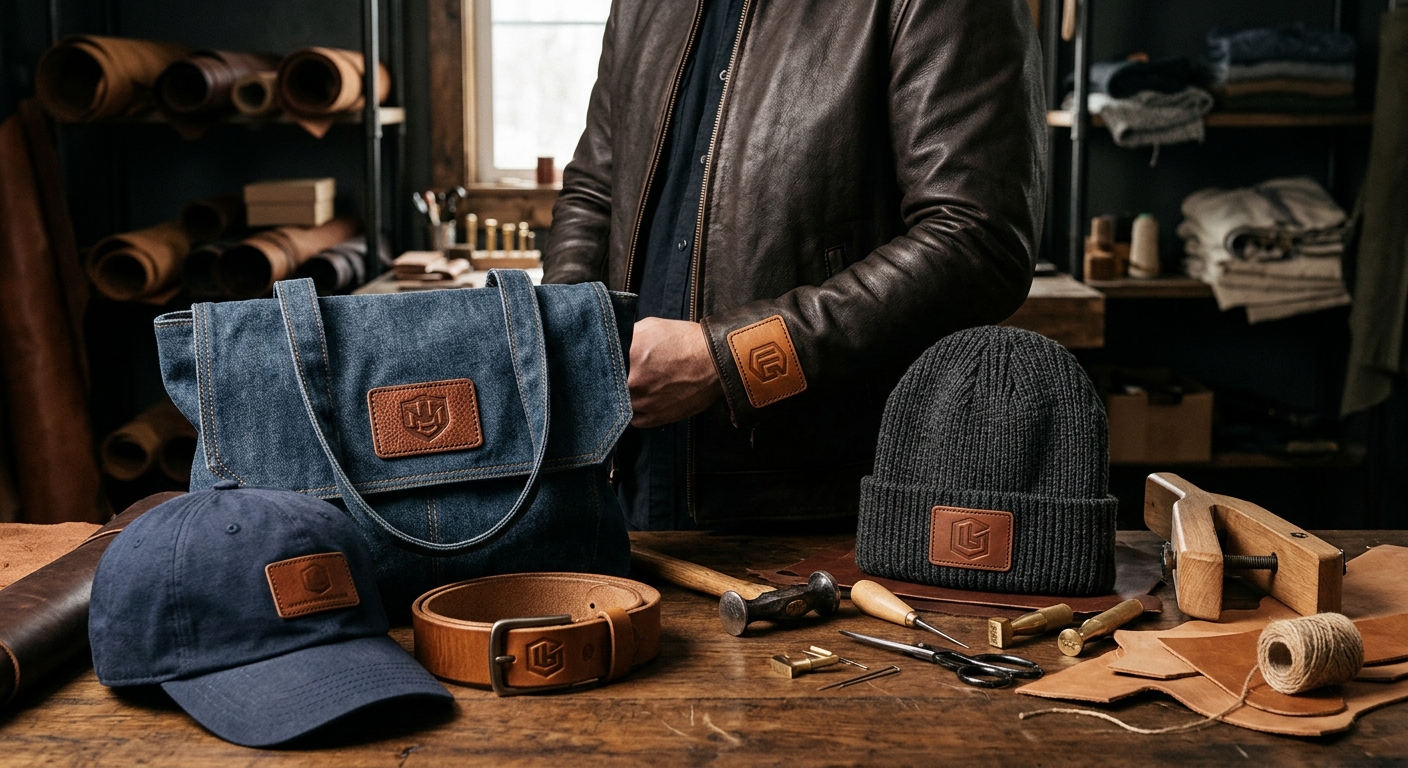
Custom leather patches are an excellent way to add a premium, stylish, and professional appearance to clothing, hats, jackets, bags, and accessories. Known for their distinctive texture, durability, and timeless appeal, leather patches have become a popular choice for fashion brands, clothing manufacturers, businesses, outdoor companies, and individuals who want to create personalized products.
Whether you want to display a company logo, add a brand name to a hat, personalize a denim jacket, or create a unique design for a clothing collection, leather patches offer an attractive solution. They can be customized with different shapes, colors, sizes, textures, lettering styles, and finishing techniques to match your requirements.
Modern manufacturing methods make it possible to create detailed designs using genuine leather, faux leather, suede, and other leather-like materials. Customers can choose embossed, debossed, engraved, printed, or stitched designs depending on the appearance they want to achieve.
Today, ordering custom patches online is a convenient way to turn creative ideas into finished products. From individual personalized designs to large wholesale orders, customers can work with professional manufacturers to develop patches that represent their brand identity.
What Are Custom Leather Patches
Custom leather patches are personalized decorative pieces made from genuine or synthetic leather materials. They are designed to display logos, names, symbols, lettering, artwork, and other branding elements.
These patches are commonly attached to clothing and accessories using stitching, adhesive, heat application, or other suitable backing methods.
Leather patches are particularly popular in the fashion industry because they provide a sophisticated and premium appearance. Denim brands frequently use them on the back waistbands of jeans, while hat manufacturers add leather patches to baseball caps, trucker hats, and outdoor headwear.
Businesses also use leather patches on jackets, bags, uniforms, and promotional merchandise.
One of the biggest advantages of leather patches is their versatility. They can be produced in different shapes and finishes, allowing customers to create designs that match their products.
For example, a clothing brand may choose a rectangular embossed leather patch featuring its logo, while an outdoor company may prefer a circular design with engraved lettering.
The final appearance depends on the selected material, manufacturing technique, color, and finishing details.
Why Are Leather Patches Popular?
Leather patches have become increasingly popular because they combine durability, attractive texture, and timeless design.
Unlike ordinary printed labels, leather patches provide a distinctive surface that can make clothing and accessories look more premium. Their natural or textured appearance works particularly well with denim, canvas, cotton, and other fabric materials.
Fashion brands use leather patches to create recognizable branding on jeans, jackets, hats, and bags. Small businesses use them to personalize merchandise, while individuals choose them for custom gifts and personal projects.
Another reason for their popularity is the range of customization options. Customers can select different leather types, colors, thicknesses, borders, shapes, and artwork techniques.
Leather patches can also develop an attractive appearance as they age, particularly when genuine leather is used. Natural leather may develop a patina through regular handling and exposure, giving each product a distinctive character.
For businesses looking to create a consistent brand identity, leather patches offer an effective way to make products recognizable.
Custom Patches Online: Order Personalized Leather Designs
Ordering custom patches online makes it easier for individuals and businesses to create personalized leather products.
Customers can explore available materials, compare different patch styles, submit artwork, and request quotations without visiting a physical manufacturing facility.
The process usually begins with choosing the leather material. Customers can select genuine leather, synthetic leather, suede, or other available alternatives depending on their budget and intended application.
After selecting the material, the next step is preparing the design. This may include a company logo, brand name, initials, slogan, symbol, or custom artwork.
Customers can then choose the shape, dimensions, color, border, and finishing technique.
A professional manufacturer may prepare a digital proof to show how the final patch will look. This allows customers to review the artwork, lettering, alignment, and overall appearance before production begins.
Once the design is approved, manufacturing can start according to the selected specifications.
Online ordering is particularly useful for clothing businesses that need consistent branding across different product collections.
Custom Leather Logo Patches for Professional Branding
A strong logo helps businesses establish a recognizable identity. Custom leather logo patches allow companies to display their branding on products in an attractive and professional way.
Instead of using ordinary printed labels, businesses can incorporate leather patches to create a more premium appearance.
These patches are particularly popular among denim manufacturers, fashion brands, hat companies, outdoor clothing businesses, and accessory designers.
A leather logo patch can feature an embossed company name, an engraved symbol, or a combination of text and artwork.
For example, a denim brand may place a rectangular leather patch on the back waistband of its jeans. A hat manufacturer may use a small circular leather logo on the front of a cap.
Businesses can choose colors and finishing techniques that match their existing brand guidelines.
For the best results, the logo should be clear and appropriately sized. Very small lettering and intricate artwork may require adjustments depending on the material and manufacturing process.
Custom Leather Patches for Hats
Leather patches for hats are among the most popular applications in modern fashion and promotional merchandise.
Baseball caps, trucker hats, snapbacks, outdoor hats, and casual headwear can all feature personalized leather designs.
A leather patch on a hat creates a distinctive appearance that works well with casual, outdoor, and premium clothing styles.
Customers can select different shapes, including rectangular, circular, oval, shield-shaped, and custom-cut designs.
The patch can feature a company logo, brand name, initials, outdoor illustration, or personalized message.
Embossed leather designs are particularly popular because they create raised or recessed details without relying entirely on printed artwork.
Hat manufacturers and clothing brands can also choose different leather colors to complement their hat materials.
For example, a brown leather patch can provide a traditional look on a neutral-colored trucker hat, while a black leather patch can create a more modern appearance.
When ordering patches for hats, customers should consider the available front-panel space and the attachment method.
Custom Leather Patches for Clothing Brands
Clothing brands use leather patches to create a distinctive and consistent appearance across their products.
Denim jeans, jackets, hoodies, shirts, and casual apparel can all benefit from personalized leather branding.
Leather patches are particularly associated with denim products. Many clothing manufacturers place them on the back waistband of jeans to display their company logo, brand name, and other information.
Jackets and outerwear can feature larger leather designs that provide a bold decorative element.
Fashion businesses can also use leather patches on limited-edition collections to create a premium appearance.
The material, shape, and finishing method should match the overall clothing design. For example, a rustic leather patch may work well with vintage denim, while a smooth and minimal design may be more suitable for contemporary fashion.
Businesses should also consider consistency across product collections. Using the same logo placement, color, and dimensions can help establish recognizable branding.
Custom Leather Patches No Minimum
Not every customer needs a large quantity of leather patches. Individuals, startups, small clothing brands, and independent designers may only require a limited number.
Custom leather patches no minimum options can be useful for customers who want to test a new design or order a small batch without purchasing unnecessary inventory.
For example, an independent fashion designer may need a few leather patches for a sample collection. A small business may want personalized branding for a limited merchandise launch, while an individual may need a single patch for a personal project.
However, minimum order requirements depend on the manufacturer and production technique.
Some suppliers accept individual orders, while others require a minimum quantity because of material preparation, engraving, embossing, or setup costs.
Before placing an order, customers should confirm whether small-quantity production is available and whether additional setup charges apply.
Flexible ordering is especially helpful for new businesses that want to test customer interest before investing in larger production quantities.
Custom Leather Patches Made to Order
Made-to-order manufacturing allows customers to develop leather patches according to their exact design requirements.
Instead of selecting only from standard products, customers can choose the material, thickness, shape, color, size, and finishing technique.
For example, a clothing manufacturer may request a rectangular leather patch with an embossed logo. A hat company may want a circular patch featuring engraved artwork, while a fashion designer may need a custom-shaped design for a limited collection.
Made-to-order patches can also include decorative borders, stitching, special textures, and personalized lettering.
The manufacturing process generally begins with artwork preparation and material selection.
The manufacturer then creates a design proof or production sample, depending on the supplier's process. Once the customer approves the specifications, manufacturing begins.
This approach is particularly useful for businesses that want their patches to match their existing products and branding.
Genuine Leather vs. Faux Leather Patches
One of the most important decisions when ordering leather patches is choosing between genuine and synthetic leather.
Both options offer different benefits, and the right choice depends on the desired appearance, budget, and intended application.
Genuine leather patches
Genuine leather is made from animal hide and is valued for its natural texture, distinctive appearance, and traditional feel.
Each piece can have slightly different grain patterns, making genuine leather patches visually unique.
These patches are popular among premium clothing brands, denim manufacturers, leather goods companies, and businesses looking for a traditional finish.
Genuine leather can also develop a patina over time, which may add character to the finished product.
Faux leather patches
Faux leather is a synthetic alternative designed to resemble genuine leather.
It is available in different colors, textures, and finishes, allowing manufacturers to create consistent designs across larger production runs.
Faux leather can be suitable for promotional products, fashion accessories, and businesses looking for an alternative to animal-derived materials.
It may also provide more predictable material appearance across multiple patches.
When choosing between these materials, consider the final product, budget, desired texture, and brand values.
Embossed and Debossed Leather Patches
Embossing and debossing are popular techniques for adding lettering and artwork to leather patches.
Although the terms are sometimes used together, they create different visual effects.
Embossed leather patches feature raised designs that stand above the surrounding surface. This technique can make logos, symbols, and lettering more noticeable.
Debossed leather patches feature recessed designs pressed into the leather surface. The result is a subtle and elegant appearance that works particularly well for premium branding.
Both techniques can create attractive designs without relying entirely on printed colors.
Embossed patches are often used on hats, bags, jackets, and promotional products, while debossed designs are popular for minimalist fashion labels and leather accessories.
The final result depends on the material thickness, design complexity, and manufacturing equipment.
Customers should provide clear artwork so the manufacturer can determine whether the design is suitable for embossing or debossing.
Laser Engraved Leather Patches
Laser engraving is another popular method for creating detailed leather designs.
This technique uses a laser to mark or remove material from the surface, producing lettering, symbols, and artwork.
Laser-engraved patches can feature company logos, names, decorative patterns, and detailed graphics.
The technique is especially useful when customers want a precise design with clear lines and defined details.
Different leather materials may respond differently to laser engraving, so the manufacturer should confirm that the selected material is suitable.
Customers can also choose different engraving depths and design arrangements according to the desired appearance.
Laser engraving is commonly used for leather hats, bags, jackets, wallets, and promotional merchandise.
Custom Leather Patches Wholesale for Businesses
Wholesale purchasing is a practical option for businesses that require larger quantities of personalized leather patches.
Custom leather patches wholesale orders are particularly useful for clothing manufacturers, fashion brands, hat suppliers, promotional companies, and retailers.
Instead of purchasing small quantities repeatedly, businesses can arrange larger production runs according to their inventory requirements.
Wholesale ordering may also reduce the average manufacturing cost per patch, depending on the design, quantity, and supplier.
Businesses can use wholesale leather patches for jeans, jackets, caps, backpacks, and other branded products.
Before confirming a wholesale order, buyers should review the material specifications, dimensions, artwork, finishing, and backing method.
It is also important to request information about production capacity and delivery schedules.
For companies that regularly reorder the same design, keeping approved artwork and material specifications can make future production easier.
Custom Leather Patches Bulk for Large Orders
Bulk production is useful for businesses that need a large number of identical leather patches.
Custom leather patches bulk orders can support clothing launches, retail inventory, promotional campaigns, and large manufacturing projects.
For example, a denim manufacturer may require leather waistband labels for an entire production collection. A hat company may need thousands of logo patches for different cap styles.
Bulk manufacturing can simplify purchasing and help businesses maintain consistent branding across multiple products.
However, larger orders require careful planning.
Customers should confirm the approved design, material type, dimensions, color, and finishing technique before manufacturing begins.
If different products require different designs, each specification should be clearly documented.
A reliable manufacturer should also explain how quality checks are performed to maintain consistency throughout the production process.
Custom Leather Patches With Logo
Custom leather patches with logo designs are an effective way to combine product decoration with business branding.
A logo can be incorporated using embossing, debossing, engraving, printing, or other available manufacturing techniques.
The choice depends on the complexity of the artwork and the selected leather material.
For simple logos with bold lettering, embossing and debossing can produce attractive results.
For detailed artwork, laser engraving or suitable printing methods may provide greater flexibility.
Businesses should consider the size of their logo and the available patch dimensions. If the design contains small lettering, it may need to be simplified to remain readable.
A professional manufacturer can review the artwork and recommend the most appropriate production method.
Custom Leather Patches Free Design Proof
A digital design proof is an important part of the ordering process.
Manufacturers offering custom leather patches free design proof services allow customers to review their proposed design before production begins.
A proof generally shows the patch shape, dimensions, logo placement, lettering, and selected colors.
This helps customers identify potential issues before the product is manufactured.
For example, a customer may notice that the logo is too large, the text needs adjustment, or the border should be changed.
Reviewing the proof is especially important for wholesale and bulk orders because mistakes can affect a large number of products.
Customers should confirm whether free design preparation and revisions are included in the supplier's service.
They should also carefully check the final artwork before giving production approval.
Custom Leather Patches Fast Turnaround
Fast production can be important for businesses working with product launch dates, retail deadlines, promotional campaigns, and seasonal collections.
Custom leather patches fast turnaround services may help customers receive their products within a shorter period.
However, the production schedule depends on the material, design complexity, order quantity, manufacturing technique, and shipping destination.
Simple embossed designs may require a different production process from complicated engraved or stitched patches.
Customers can help avoid unnecessary delays by submitting high-quality artwork and confirming all specifications before production.
Approving design proofs promptly is also useful.
Before placing an urgent order, request an estimated production and delivery schedule.
It is important to confirm whether expedited manufacturing is available and whether additional charges apply.
Custom Leather Patches USA: Finding a Reliable Supplier
Customers searching for custom leather patches USA suppliers often want convenient communication, dependable quality, and suitable delivery options.
Choosing the right supplier involves evaluating several important factors.
Material quality is essential. Customers should understand whether the patches are made from genuine leather, synthetic leather, or another material.
Manufacturing capabilities are equally important. A professional supplier should be able to explain embossing, debossing, laser engraving, printing, and stitching options.
Buyers should also review product examples and customer feedback to understand the supplier's workmanship.
Pricing transparency is another consideration. A quotation should clearly explain production costs, setup charges, customization, packaging, and shipping.
Customers should also confirm where the products are manufactured. A company serving customers in the United States may produce patches domestically or use overseas manufacturing facilities.
Understanding the manufacturing location can help buyers make informed decisions about production time, shipping, and overall cost.
Custom Leather Patches Cheap Bulk: How to Save Money
Businesses often look for affordable ways to purchase leather patches without sacrificing quality.
Custom leather patches cheap bulk options can help companies manage their budgets when ordering larger quantities.
However, the final price depends on several manufacturing factors.
Patch dimensions are important because larger products generally require more material.
The selected leather type can also affect pricing. Genuine leather and synthetic alternatives may have different material costs.
Manufacturing methods such as embossing, debossing, engraving, and printing can also influence the quotation.
Customers can manage costs by choosing practical dimensions, simplifying unnecessary design details, and selecting materials that match their intended application.
Comparing quotations from different suppliers is another useful approach.
However, buyers should ensure that each quotation includes similar specifications. A lower price may not represent better value if it involves thinner materials, inconsistent finishing, or additional charges.
The goal should be to find a manufacturer that offers a suitable balance between affordability, quality, and reliability.
Choosing the Right Shape and Size
The shape and size of a leather patch have a significant impact on its overall appearance.
Rectangular patches are commonly used on jeans, jackets, and hats because they provide enough space for logos and lettering.
Circular patches are popular for outdoor brands, sports merchandise, and decorative applications.
Oval designs offer a softer appearance and work well with different types of clothing.
Shield-shaped patches are often used for team branding, club merchandise, and organizational logos.
Custom-cut patches allow customers to create unique outlines that follow the shape of their artwork.
When choosing dimensions, consider the garment or accessory where the patch will be attached.
A patch that is too large may overwhelm a hat or small accessory, while a design that is too small may make the lettering difficult to read.
The manufacturer can help recommend suitable dimensions based on the artwork and intended application.
Backing Options for Leather Patches
The backing determines how a leather patch will be attached to a garment or accessory.
Different applications require different attachment methods.
Sew-on backing: Sewing is a traditional and secure method for attaching leather patches. It is commonly used on jeans, jackets, bags, and other fabric products.
Iron-on backing: Some leather-like patches can be manufactured with heat-activated adhesive. However, genuine leather may not be suitable for every heat-application method. Customers should confirm compatibility before ordering.
Adhesive backing: Certain products use pressure-sensitive adhesive for temporary or specialized applications. Its suitability depends on the material and surface.
Velcro backing: Hook-and-loop fastening allows patches to be attached and removed easily. This is useful for interchangeable identification and tactical applications.
Direct stitching: Some leather patches are designed with stitching around their edges, allowing them to be securely attached to the finished product.
The right option depends on the leather material, garment type, intended use, and maintenance requirements.
Applications of Custom Leather Patches
Leather patches are used in many industries because they combine decorative appeal with practical branding.
Denim jeans: Clothing manufacturers commonly use leather waistband patches to display company names and logos.
Baseball caps and trucker hats: Leather logo patches create a premium appearance on casual and outdoor headwear.
Jackets: Leather patches can add distinctive branding to denim, workwear, and fashion jackets.
Backpacks and bags: Businesses use personalized leather patches to identify brands and create decorative details.
Fashion accessories: Wallets, travel products, and other accessories can feature engraved or embossed leather labels.
Outdoor clothing: Outdoor brands use leather patches to create a recognizable appearance across apparel and equipment.
Promotional merchandise: Companies can create personalized leather products for marketing campaigns, gifts, and special events.
The wide range of available materials and finishing techniques makes leather patches suitable for both commercial and personal applications.
How to Care for Leather Patches
Proper maintenance can help preserve the appearance and quality of leather patches.
Genuine leather should generally be protected from excessive moisture, harsh chemicals, and unnecessary friction.
Cleaning should be performed using products suitable for the specific leather type.
Avoid using strong detergents or aggressive cleaning methods that may affect the surface finish.
For synthetic leather, follow the manufacturer's cleaning recommendations because different materials can have different care requirements.
When leather patches are attached to clothing, follow the garment's washing instructions.
If the patch is stitched onto jeans or jackets, inspect the edges occasionally to ensure that the stitching remains secure.
For products used outdoors, regular cleaning and appropriate storage can help maintain their appearance.
Leather patches may naturally change in appearance over time, particularly when genuine leather develops a patina. This is often considered part of the material's character.
What to Look for in a Professional Leather Patch Manufacturer
Choosing a reliable manufacturer is essential for obtaining high-quality leather patches.
Customers should begin by reviewing the supplier's material options. A professional manufacturer should clearly explain the differences between genuine leather, faux leather, and other available alternatives.
Manufacturing experience is another important factor. Suppliers should understand different techniques such as embossing, debossing, laser engraving, printing, and edge finishing.
Artwork support is equally valuable. A manufacturer should be able to review customer designs and recommend adjustments when necessary.
Customers should also evaluate the supplier's communication, pricing, production capacity, and delivery arrangements.
Reviewing previous projects can provide useful information about the quality of finished products.
For businesses ordering large quantities, consistent manufacturing is particularly important. The supplier should be capable of maintaining the same dimensions, material specifications, and logo placement across different production batches.
A reliable manufacturer should also provide clear information about quality checks, revisions, and reorder arrangements.
Conclusion
Custom leather patches are an excellent choice for businesses, clothing manufacturers, fashion brands, and individuals who want to create distinctive and premium-looking products. Their natural texture, attractive finishing, and versatile customization options make them suitable for hats, jeans, jackets, bags, backpacks, and accessories.
Whether you need embossed leather logo patches, engraved designs, personalized labels, or wholesale production, selecting the right material and manufacturing technique is essential.
Customers can order custom patches online, explore no-minimum options, request made-to-order designs, and compare wholesale and bulk pricing according to their requirements. Services such as free design proofs and fast turnaround may also be available depending on the manufacturer.
For the best results, work with a supplier that offers quality materials, accurate artwork preparation, professional finishing, and reliable customer support. A well-designed leather patch can strengthen brand recognition, improve product presentation, and add a premium touch to almost any garment or accessory.
By focusing on material quality, design accuracy, production standards, and the right finishing method, you can create leather patches that represent your brand and provide lasting visual appeal.

Discussion & Feedback 0
Write a CommentNo comments yet
Have a question or feedback regarding this topic? Be the first to share your thoughts below!
Leave a Reply
Your email address will not be published. Required fields are marked *