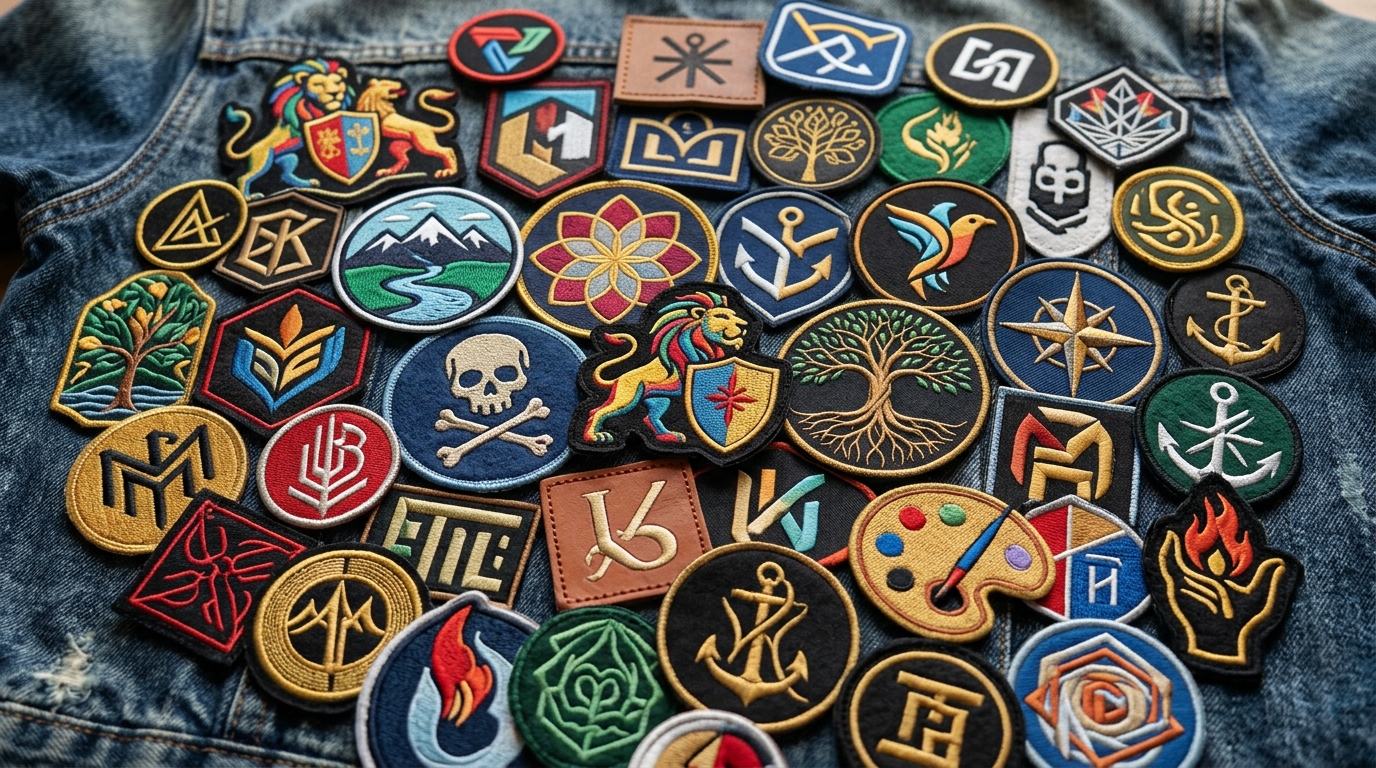
Custom patches have become an important part of modern fashion, business branding, uniforms, promotional products, and personal creativity. From clothing brands and sports teams to schools, clubs, businesses, and individual customers, people use custom patches to represent their identity and communicate a message through attractive designs. A well-made patch can transform an ordinary garment into something memorable while providing a practical way to display a logo, name, symbol, or unique artwork.
As the demand for personalized products continues to grow, customers are looking for reliable ways to design and purchase patches that match their requirements. Some customers need a few patches for a personal project, while others require hundreds or thousands for commercial production. This is why professional patch suppliers offer different materials, designs, quantities, and production options to serve a wide range of needs.
Whether you want to buy custom patches for clothing, create branded merchandise, or order a large quantity for your company, choosing the right supplier can make a significant difference. Understanding the available patch styles, customization possibilities, production methods, and pricing factors can help you make a confident decision.
Why Custom Patches Are an Effective Choice for Personal and Business Branding
Custom patches offer a simple yet powerful way to communicate identity. Unlike ordinary printed graphics, patches add texture, dimension, and a professional appearance to clothing and accessories. They can be attached to jackets, shirts, hats, backpacks, uniforms, bags, and many other products.
For businesses, patches provide an opportunity to display a brand logo consistently across different products. Companies can use them on employee uniforms, promotional clothing, event merchandise, and branded accessories. A recognizable patch helps customers identify a business and creates a more coordinated appearance for employees.
Fashion brands also benefit from personalized patches because they can use distinctive artwork to make their products stand out. A carefully designed embroidered patch can become a recognizable feature of a clothing collection. It can communicate a brand's personality without requiring a large printed design.
Individuals can also use custom patches to express personal interests, celebrate special occasions, or customize their favorite clothing. Whether the design represents a hobby, a team, a memorable event, or an original illustration, patches make personalization accessible and versatile.
Explore Different Styles Before You Buy Custom Patches
Before selecting a patch, it is important to understand that different styles offer different visual effects. The right option depends on the design, intended use, fabric, budget, and appearance you want to achieve.
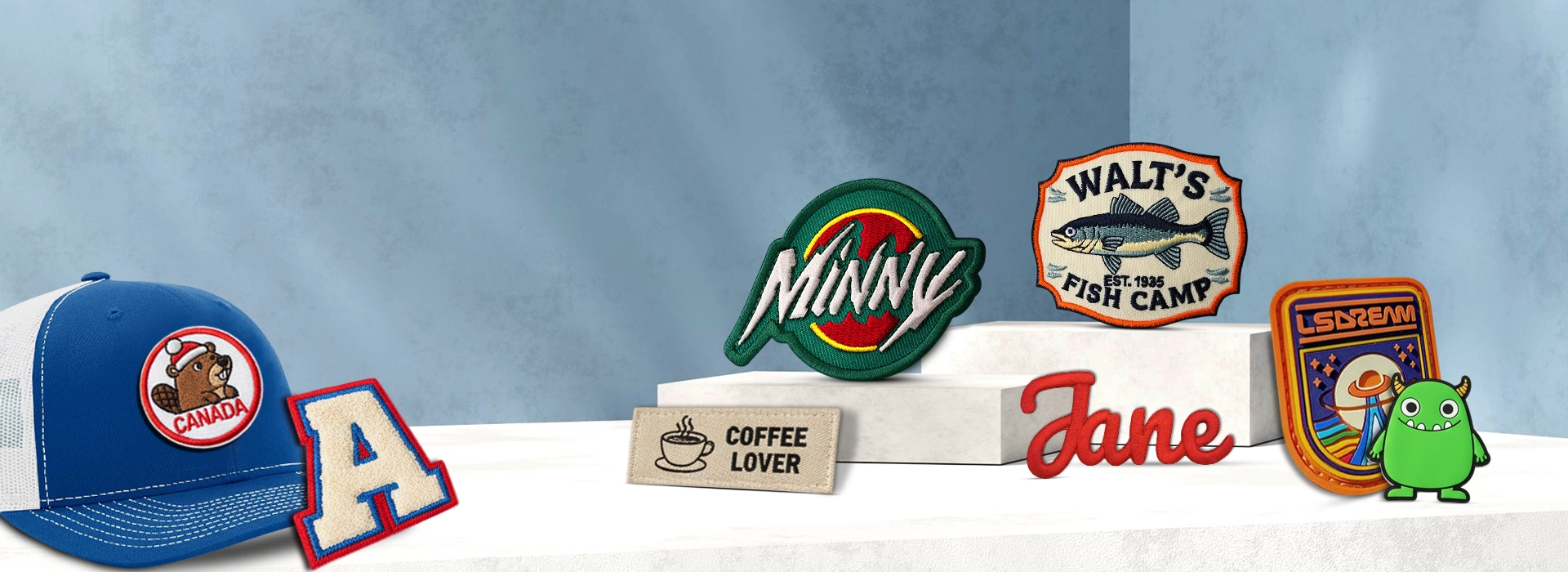
Embroidered patches are among the most popular choices. They use colored threads stitched onto a fabric backing to create a textured design. Their raised appearance makes them suitable for logos, lettering, symbols, and traditional branding. They are frequently used on uniforms, jackets, caps, and promotional clothing.
Woven patches are another useful option. They are produced with finer threads that allow more detailed artwork and smaller lettering. Customers who need a clean appearance or intricate design details may prefer woven patches. They are especially useful when the artwork contains thin lines or smaller text that may not translate well into traditional embroidery.
Printed patches are suitable for designs that include gradients, photographs, complex illustrations, or multiple colors. Because the artwork is printed onto the patch surface, this style can reproduce details that may be difficult to achieve with stitching.
PVC patches provide a different appearance through flexible, molded material. They are often selected for outdoor clothing, bags, tactical accessories, and products that require a modern three-dimensional look. Their material and construction make them suitable for applications where a traditional fabric patch may not be the preferred option.
Leather and faux leather patches are commonly used by clothing brands that want a premium or rustic appearance. These patches are popular on denim jackets, jeans, caps, bags, and lifestyle products. They can feature engraved, embossed, or printed designs depending on the production method.
Understanding these options makes it easier to choose a patch that matches your design and practical requirements.
How to Buy Custom Patches Online With Confidence
Shopping online gives customers access to a wider range of customization options. Instead of visiting multiple physical stores, buyers can review patch styles, discuss artwork requirements, compare suppliers, and request production details from one place.
When you buy custom patches online, start by preparing your design. A clear logo or artwork file helps the supplier understand what you want to produce. Vector files are often useful for professional production because they can be resized without losing image quality. However, many suppliers can also work with common image formats and help prepare artwork for manufacturing.
Next, decide the approximate dimensions of the patch. A small patch for a cap may require a different layout from a large design intended for the back of a jacket. The size should provide enough space for important details while maintaining a balanced appearance.
You should also select the desired shape. Standard shapes such as circles, rectangles, squares, and shields are widely used, but custom-cut shapes can follow the outline of a particular logo or illustration.
Backing is another important consideration. Sew-on backing is a traditional option that provides a permanent attachment when properly stitched. Iron-on backing offers convenience for suitable fabrics, while hook-and-loop backing allows patches to be attached and removed from compatible surfaces. Adhesive backing may be useful for temporary applications, depending on the product and intended use.
Before placing an order, review the supplier's artwork approval process, production timeline, shipping arrangements, and quality standards. A reliable supplier should explain what is included in the quote and clarify any additional charges.
Why Choosing the Right Custom Patch Maker Matters
A professional custom patch maker does more than manufacture a design. The supplier helps turn an idea into a finished product that looks attractive, works for its intended application, and meets the customer's expectations.
The design preparation stage is especially important. Some logos contain very small lettering, thin outlines, or complicated details. These elements may need adjustments to work effectively with embroidery, weaving, printing, or another production technique.
An experienced supplier can identify possible production challenges and suggest suitable alternatives. For example, a design with fine details may be better suited to woven or printed production rather than dense embroidery. Similarly, a customer looking for a textured and traditional appearance may prefer embroidered construction.
Communication is another important part of the process. Customers should be able to explain their requirements, receive clear information about available materials, and review the artwork before production begins.
A dependable supplier also understands the importance of consistency. If a business orders patches for multiple locations or future product collections, maintaining similar colors, dimensions, and construction standards becomes essential.
Working With a Professional Custom Patch Manufacturer
The manufacturer plays a central role in the quality of the finished product. Different manufacturing techniques require different equipment, materials, and production processes. Selecting a suitable custom patch manufacturer can help ensure that the chosen design is produced according to the intended specifications.
Manufacturing usually begins with artwork preparation. The design is reviewed and converted into a format suitable for the selected production technique. For embroidered patches, this may involve creating a stitch file that controls the placement and direction of the threads.
Material selection follows the design stage. Fabric, thread, backing, and other components are selected according to the patch style and application. The production process then creates the patch using the appropriate machinery or manufacturing method.
After production, patches may undergo finishing processes such as trimming, edge treatment, backing application, and inspection. These steps help create a neat appearance and prepare the product for delivery.
Quality control is particularly important for business orders. Differences in thread colors, shape, dimensions, or finishing can affect the appearance of an entire batch. A professional manufacturing partner should have a process for checking finished products before they are packed and shipped.
Custom Patches With Logo Designs That Strengthen Brand Identity
A logo is often one of the most recognizable parts of a business. Using custom patches with logo artwork allows companies to display their identity on uniforms, jackets, hats, bags, and promotional merchandise.
For businesses with customer-facing employees, branded patches can create a coordinated and professional appearance. Staff members wearing consistent uniforms help customers recognize employees more easily and strengthen the visual identity of the company.
Clothing brands can use logo patches as a signature design element. A small patch on a sleeve, chest, pocket, or waistband can make a garment recognizable without covering the entire fabric with printed artwork.
Sports organizations can also benefit from logo patches. Team names, symbols, and sponsor branding can be displayed on jerseys, training apparel, equipment bags, and fan merchandise.
When creating logo patches, it is important to consider readability. The logo should remain recognizable at the selected size. Colors should provide enough contrast, and small details should be adjusted when necessary. A professional supplier can help prepare artwork that maintains the essential features of the original logo.
Custom Patches Wholesale for Retailers and Growing Brands
Businesses that sell clothing, accessories, promotional products, or branded merchandise often need larger quantities. Custom patches wholesale orders can help retailers and brands maintain a consistent supply while organizing production around their commercial requirements.
Wholesale purchasing can be useful for clothing manufacturers, fashion labels, uniform suppliers, promotional agencies, event organizers, and merchandise businesses. Instead of placing small orders repeatedly, these customers can plan production according to expected demand.
Before placing a wholesale order, consider the quantity required, patch dimensions, selected materials, backing type, and packaging preferences. It is also helpful to estimate future demand so that the order quantity supports business needs without creating unnecessary inventory.
Wholesale production may offer a lower unit price at higher quantities because setup and production costs can be distributed across more pieces. However, the final pricing depends on the manufacturing method, design complexity, materials, finishing, and order specifications.
A reliable supplier should explain quantity-based pricing clearly. Customers should understand whether artwork preparation, samples, shipping, and other services are included in the quoted amount.
Planning Custom Patches Bulk Orders for Large Projects
Large organizations often require patches in substantial quantities. Custom patches bulk orders are suitable for companies, schools, sports clubs, event organizers, government-approved organizations, and clothing manufacturers that need consistent products for multiple users or locations.
Bulk production requires careful planning. Customers should confirm the final artwork, colors, dimensions, backing, and quantity before manufacturing begins. Changes made after production starts may create delays or additional costs.
For organizations with several departments or teams, it may be useful to prepare different patch designs within the same order. Each design should have clear specifications so that the manufacturer can distinguish between versions.
Bulk orders also benefit from organized packaging. If patches are being distributed to different branches, departments, or retail locations, labeling and packing arrangements can make delivery and inventory management easier.
Production timelines should be discussed in advance. Large orders may require additional manufacturing time, particularly when the design involves multiple colors, special materials, or detailed finishing.
Custom Patches No Minimum for Personal Projects and Small Businesses
Not every customer needs hundreds of patches. Individual buyers, independent designers, startups, and small businesses may only require a limited quantity. Custom patches no minimum ordering options can make personalized products more accessible to these customers.
Small orders are useful for testing a new design before investing in a larger production run. A clothing brand may want to evaluate how a patch looks on an actual garment before adding it to a full collection. An artist may need a small batch for a creative project, while a local organization may only need a limited number for its members.
When ordering smaller quantities, customers should check whether the supplier has minimum setup charges or other production requirements. Some manufacturing processes involve fixed preparation costs, which can affect the price per patch when only a few pieces are ordered.
Small-order flexibility can also help customers experiment with different materials, shapes, and designs. Instead of committing to a large quantity immediately, they can begin with a manageable order and make improvements based on the finished product.
Finding Custom Patches Near Me and Choosing a Local Supplier
Searching for custom patches near me can be helpful when you prefer to communicate with a nearby supplier or discuss your requirements in person. Local suppliers may provide convenient consultation, easier sample discussions, and direct communication about delivery arrangements.
However, choosing a supplier should involve more than distance. A nearby business may be convenient, but it is still important to review its production capabilities, experience, quality standards, and customization options.
Customers should ask whether the supplier can produce their preferred patch style and whether it offers suitable backing, finishing, and packaging. It is also useful to request examples of previous work so that you can evaluate the quality of the stitching, printing, materials, and edge finishing.
Online suppliers can also be a practical choice when local options are limited. Many professional manufacturers accept digital artwork, provide online consultations, and ship completed orders to customers in different locations.
Whether you choose a local business or an online supplier, clear communication and transparent pricing should remain important parts of your decision.
Understanding Custom Patch Pricing Before Placing an Order
Custom patch pricing depends on several factors. There is no single price that applies to every patch because each order may involve different dimensions, materials, production methods, quantities, and finishing requirements.
Size is one of the most important factors. Larger patches generally require more material and production work than smaller designs. Complex shapes may also require additional cutting or finishing.
The selected manufacturing technique can influence the total cost. Embroidered patches, woven patches, printed patches, PVC patches, and leather patches each involve different materials and processes. The most affordable option depends on the design and the supplier's production setup.
Quantity is another major factor. Larger orders may reduce the cost per piece because production expenses can be spread across more patches. Smaller orders may have a higher unit cost due to setup requirements.
Backing and special features can also affect the quote. Iron-on, hook-and-loop, adhesive, and sew-on options may have different costs. Metallic threads, unusual materials, special borders, and custom packaging can further influence the final price.
Customers should compare complete quotes rather than looking only at the lowest advertised price. A quote should clearly explain the product specifications, included services, estimated production time, and shipping costs.
Request Custom Patches Free Quote for Your Design Requirements
Before committing to production, requesting custom patches free quote information is a practical way to understand the expected cost and available options.
To receive an accurate quote, provide the supplier with as much useful information as possible. Include the artwork or logo, estimated dimensions, desired quantity, patch style, backing preference, and delivery location.
If you are unsure which material or production method is best, explain how the patches will be used. For example, a patch intended for a work uniform may have different requirements from one designed for a fashion accessory or promotional giveaway.
You can also ask whether artwork preparation is included, whether a digital proof is available, and whether physical samples can be arranged. These details help you understand the complete service before confirming the order.
A clear quote makes it easier to compare suppliers and select an option that balances quality, appearance, and budget.
Designing Patches for Clothing Brands and Fashion Collections
Fashion brands use patches to add character to their products. A thoughtfully placed patch can make a simple garment look more distinctive and create a recognizable feature across a clothing collection.
Denim jackets are a popular application because patches complement the texture and style of denim. They can be placed on the chest, sleeves, back, or pocket areas. Hoodies and sweatshirts also provide suitable surfaces for embroidered or woven designs.
Caps and beanies are another common choice. Small patches can display a brand symbol, initials, or short text while keeping the overall design simple. Bags and backpacks can also feature patches that support the identity of a fashion label.
When developing patches for a collection, consistency matters. The same logo colors, dimensions, and finishing details should be maintained across products whenever possible. This creates a more organized appearance and helps customers recognize the brand.
Designers should also consider the fabric and attachment method. The patch should be suitable for the garment's material and expected use. Testing a sample can help identify any issues before a larger production order is placed.
Custom Patches for Uniforms, Teams, and Organizations
Uniform patches serve both practical and visual purposes. They can identify employees, departments, team members, or organizational roles. This makes them useful for schools, sports clubs, hospitality businesses, security companies, service providers, and community organizations.
For workwear, durability and readability are important. The patch should remain recognizable during normal use and should be attached securely to the garment. The design should also be easy to identify from a reasonable distance.
Sports teams may use patches to display team logos, player groups, competition details, or commemorative artwork. Clubs and associations can create membership patches that represent shared interests and achievements.
Schools and educational organizations can use patches on uniforms, bags, and activity clothing. They may include school symbols, department names, or special event designs.
Before ordering patches for an organization, confirm the approved artwork and spelling of all text. This is particularly important for large orders where correcting an error could require replacing many finished pieces.
How to Prepare Artwork for Better Manufacturing Results
Good artwork preparation helps create a better finished patch. A design may look excellent on a computer screen but require adjustments before it can be produced using embroidery, weaving, or another technique.
Start with a high-quality version of the logo or illustration. If possible, provide a vector file or a clear, high-resolution image. Avoid using artwork that is blurry, stretched, or heavily compressed.
Keep small text readable. If the patch is very small, long phrases and tiny lettering may not reproduce clearly. Simplifying the design can improve the final result without losing its main identity.
Color selection should also be considered carefully. Some production techniques use specific thread or material colors, so exact screen colors may not always be reproduced identically. Discuss color matching with the supplier when brand consistency is important.
The outline and shape should be clearly defined. If you want a custom-cut patch, make sure the intended border is visible in the artwork or explained in your production instructions.
Finally, review the digital proof before approving production. Check spelling, colors, proportions, dimensions, and placement of all design elements.
Choosing a Supplier for Long-Term Patch Production
For businesses that regularly purchase patches, finding a dependable supplier can be more valuable than selecting a different manufacturer for every order.
A long-term supplier can become familiar with your brand artwork, preferred materials, standard dimensions, and quality expectations. This can make repeat ordering more efficient and help maintain consistency across different product collections.
Look for a supplier that communicates clearly and provides realistic production information. Ask how artwork approvals work, what quality checks are performed, and how repeat orders are handled.
It is also worth discussing production capacity. A supplier that can handle both small orders and larger quantities may provide flexibility as your business grows.
Reliable communication is essential when unexpected changes occur. If an order requires an updated delivery date or an artwork adjustment, the supplier should explain the available options rather than leaving important details unclear.
The right production partner should understand that patches are part of a larger product or branding strategy. Their work should support your goals through suitable materials, consistent manufacturing, and dependable service.
Conclusion
Custom patches provide an effective way to personalize clothing, strengthen brand identity, support organizations, and create distinctive merchandise. Their flexibility makes them suitable for individual projects, small businesses, fashion labels, sports teams, and large commercial operations.
Customers can choose from embroidered, woven, printed, PVC, leather, and other patch styles depending on their design and application. They can also select suitable shapes, dimensions, colors, and backing options to create products that match their requirements.
Whether you want to buy custom patches online, work with a professional custom patch maker, or find a dependable custom patch manufacturer, it is important to review quality, production methods, communication, and pricing before placing an order.
Wholesale and bulk purchasing can support larger projects, while custom patches no minimum options can help individuals and smaller businesses access personalized products. Understanding custom patch pricing and requesting a detailed quote can also make the buying process more transparent.
By preparing clear artwork, selecting appropriate materials, and working with a reliable supplier, you can create patches that represent your ideas professionally. A well-designed patch is more than a decorative accessory. It is a practical branding tool and a lasting way to make clothing, merchandise, and personal projects stand out.
Discussion & Feedback 0
Write a CommentNo comments yet
Have a question or feedback regarding this topic? Be the first to share your thoughts below!
Leave a Reply
Your email address will not be published. Required fields are marked *