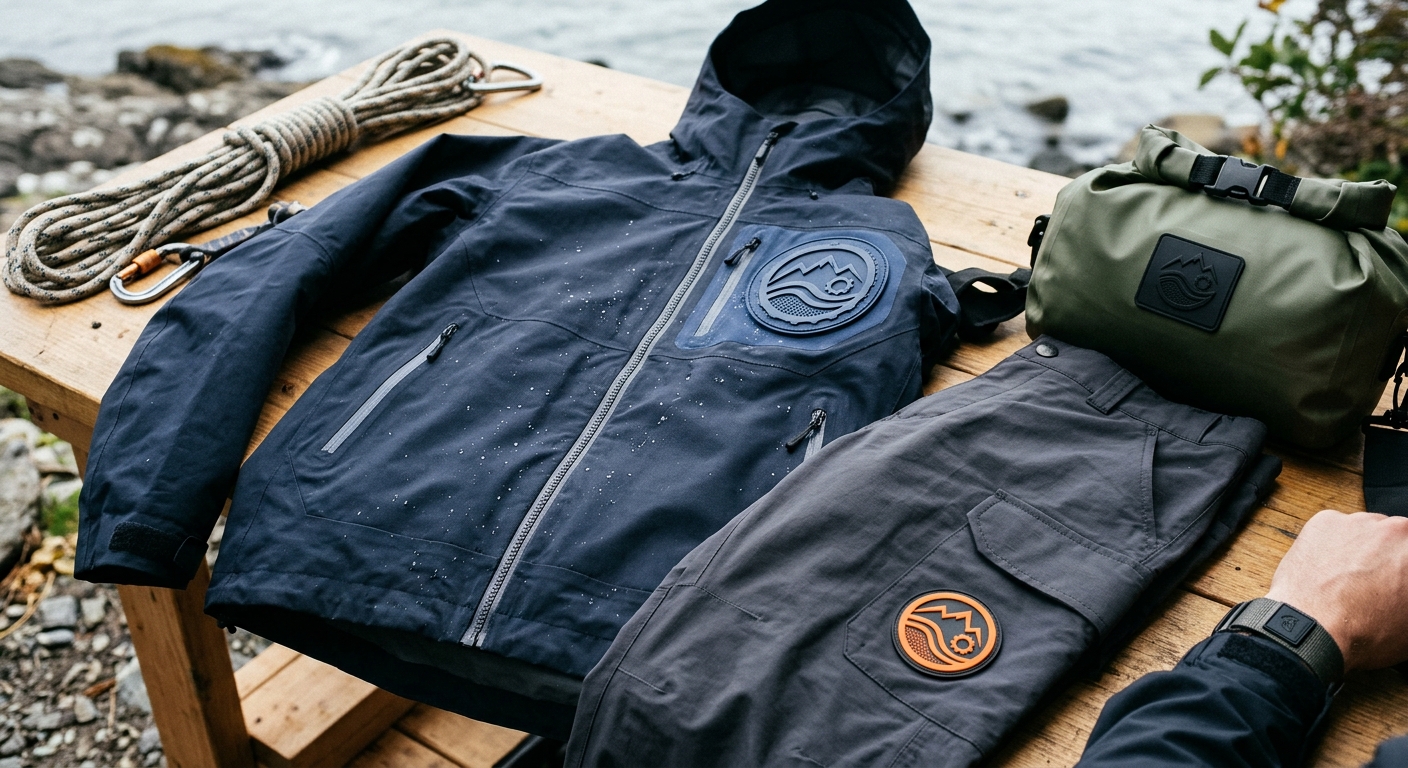
PVC patches have become a popular choice for businesses, clothing brands, outdoor enthusiasts, sports teams, military-style apparel, and organizations looking for durable and eye-catching branding solutions. Made from flexible polyvinyl chloride material, these patches offer a distinctive appearance that is different from traditional embroidered and woven patches. Their raised designs, vibrant colors, smooth surfaces, and resistance to moisture make them suitable for a wide range of clothing and accessories.
One of the biggest advantages of PVC patches is their ability to display detailed designs with a bold, three-dimensional appearance. Unlike fabric patches that rely on threads and stitching, PVC patches are manufactured using flexible rubber-like material. This allows manufacturers to create raised lettering, recessed backgrounds, layered shapes, and clearly defined borders. The result is a modern patch that can make logos, symbols, and artwork stand out.
PVC patches are especially useful for products exposed to outdoor conditions. They are commonly attached to backpacks, jackets, tactical gear, caps, uniforms, sports bags, and outdoor equipment. Their water-resistant construction makes them a practical option for applications where ordinary fabric patches may absorb moisture or become difficult to maintain.
Whether you need branded patches for a clothing company, identification patches for uniforms, promotional designs for an event, or personalized badges for personal use, PVC patches provide plenty of customization possibilities. Different colors, shapes, sizes, thicknesses, and backing options allow you to create a patch that matches your requirements.
What Are PVC Patches?
PVC patches are custom-made badges manufactured from polyvinyl chloride, a flexible synthetic material commonly used in products that require durability and resistance to moisture. The material can be molded into different shapes and designs, making it suitable for creating detailed logos, lettering, symbols, and decorative artwork.
These patches are different from embroidered patches because they do not use fabric and thread to form the main design. Instead, PVC material is molded into layers to produce raised and recessed areas. This gives the finished patch a distinctive three-dimensional appearance.
The flexibility of PVC allows manufacturers to create both simple and complex designs. A patch can feature multiple colors, raised text, textured backgrounds, and detailed outlines. This makes PVC a popular option for businesses and organizations that want their branding to look bold and recognizable.
PVC patches are widely used on clothing, uniforms, backpacks, caps, jackets, tactical equipment, outdoor accessories, and promotional merchandise. They are suitable for both personal customization and commercial production.
The Manufacturing Process of PVC Patches
PVC patches are produced through a molding process that allows the material to take the shape of a specific design. The manufacturing process usually begins with digital artwork. The design is reviewed and converted into a mold layout that defines the different sections, layers, and raised elements of the patch.
Once the artwork is approved, a mold is prepared according to the required shape and dimensions. Flexible PVC material is then added to the mold in selected colors. Different layers can be used to create raised lettering, backgrounds, borders, and decorative details.
The material is processed under controlled conditions so that it forms the required shape. After molding, the patch is removed and inspected. Any finishing work is completed before the selected backing is attached.
The main production stages include:
Artwork preparation: The original logo, illustration, lettering, or design is prepared for PVC production. Fine details are reviewed to ensure they can be molded clearly.
Mold creation: A mold is developed according to the patch shape, size, and design structure. The mold determines the raised and recessed sections.
PVC material selection: Suitable PVC material and colors are selected according to the artwork and desired appearance.
Color molding: Different colored sections are added to create the design. Multiple layers may be used to produce a dimensional effect.
Curing and finishing: The PVC material is processed to form the finished patch. The edges and surface are checked for consistency.
Backing application: The selected attachment system, such as sew-on, adhesive, or hook-and-loop backing, is added.
Quality inspection: Finished patches are checked for shape, color, thickness, surface quality, and overall design accuracy.
Each stage contributes to the final appearance and performance of the patch. A properly prepared design and suitable mold are especially important for achieving clean details and consistent production quality.
Main Benefits of PVC Patches
PVC patches offer several advantages that make them suitable for clothing, accessories, outdoor equipment, and business branding. Their material, appearance, and customization options provide benefits that traditional fabric patches may not offer.
Waterproof and Water-Resistant Construction
One of the most recognized features of PVC patches is their resistance to moisture. Unlike ordinary fabric patches that can absorb water, PVC material does not absorb moisture in the same way.
This makes PVC patches useful for backpacks, rain jackets, outdoor equipment, sports bags, and other products that may be exposed to wet conditions.
Although PVC patches are water-resistant, the attachment area and the garment itself may not be waterproof. The complete product's performance depends on the material and construction of the item to which the patch is attached.
Flexible and Comfortable Material
PVC patches are made from flexible material that can bend without having the rigid feel of some hard plastic badges. This flexibility allows them to work well on many clothing products and accessories.
They can be attached to curved or slightly flexible surfaces, depending on the patch thickness and design. This makes them suitable for caps, backpacks, jackets, and equipment bags.
Raised Three-Dimensional Appearance
PVC patches are popular because they can create raised lettering, recessed backgrounds, and layered designs. This three-dimensional effect gives logos and artwork a distinctive appearance.
Raised elements can help important parts of a design stand out. For example, a company name or central symbol can be molded at a higher level than the background.
Vibrant and Multiple Colors
PVC material allows manufacturers to create designs using different colors. This makes it possible to reproduce colorful logos, symbols, illustrations, and decorative artwork.
Color selection is important because it influences the overall appearance of the patch. Contrasting colors can make lettering easier to recognize, while matching shades can create a more subtle design.
Easy Maintenance
PVC patches are generally easy to clean because their surfaces do not absorb moisture like fabric. Light dirt can often be removed with a soft damp cloth.
This makes them practical for products that are regularly handled, including backpacks, caps, outdoor clothing, and equipment accessories.
Suitable for Outdoor Applications
Their resistance to moisture and flexible construction make PVC patches a popular option for outdoor products. They can be used on hiking backpacks, camping equipment, rainwear, sports accessories, and tactical-style gear.
For products exposed to regular outdoor use, the backing and attachment method should also be selected carefully.
Custom PVC Patches for Businesses and Brands
Custom PVC patches give businesses an opportunity to display their brand identity through a durable and distinctive product. Companies can turn their logos, names, symbols, and artwork into molded patches that can be attached to clothing and accessories.
Clothing brands can use custom PVC patches on jackets, hoodies, hats, and backpacks. Outdoor equipment companies can add branded patches to bags and accessories, while businesses can use them on staff uniforms and promotional merchandise.
The customization process allows customers to choose the patch dimensions, shape, colors, thickness, raised details, border style, and backing.
PVC patches are particularly useful for brands that want their logos to have a bold and modern appearance. The molded surface creates a visual effect that is different from ordinary printed or embroidered branding.
For a professional result, the original artwork should be clear and suitable for molding. Very small lettering and complicated details may need adjustments before production.
Custom PVC Logo Patches
PVC logo patches are widely used by companies, clothing brands, sports organizations, clubs, and outdoor product manufacturers. They allow a business to display its identity in a durable and visually distinctive format.
A PVC logo patch can include company names, brand symbols, product logos, slogans, team emblems, and decorative artwork.
The raised design makes it possible to highlight important parts of a logo. For example, the main symbol may be raised while the background remains recessed. This creates depth and makes the design more noticeable.
Businesses can use PVC logo patches on uniforms, caps, jackets, backpacks, bags, and promotional products.
When preparing a logo for PVC production, it is important to consider the size of each design element. Thin lines and very small text may not mold clearly if the patch is too small. A professional design review can help identify adjustments that may improve the finished result.
PVC Patches for Clothing and Fashion
PVC patches are increasingly used in modern clothing because they offer a different appearance from traditional embroidery and fabric labels. Their smooth surfaces and raised details make them suitable for fashion products that need a distinctive branding element.
Streetwear companies can use PVC patches on hoodies, jackets, shirts, and caps. Outdoor clothing brands can add them to technical jackets, backpacks, and sportswear.
They can also be used as decorative details on casual clothing. A small PVC badge on a sleeve or chest can create a recognizable feature without requiring a large printed graphic.
The color, shape, and thickness should complement the garment. For lightweight clothing, a smaller and thinner patch may be more appropriate than a large, heavy design.
PVC Patches for Jackets and Outerwear
Jackets are one of the most common applications for PVC patches. They provide a suitable surface for displaying logos, symbols, team designs, and decorative artwork.
PVC patches can be placed on the chest, sleeve, shoulder, or back depending on the jacket style. They are frequently used on outdoor jackets, tactical-style clothing, workwear, varsity jackets, and casual outerwear.
Outdoor clothing brands may use them to display product logos, while sports teams and clubs can create identification badges for their members.
Their resistance to moisture makes them particularly useful for jackets designed for outdoor activities. However, the attachment method should match the fabric and intended use.
Sew-on backing is often a practical option for jackets that receive regular wear. Hook-and-loop backing may be more suitable when patches need to be removed or replaced.
PVC Patches for Hats and Caps
PVC patches are a popular choice for hats and caps because their raised designs create a bold and recognizable appearance. They can be used on baseball caps, trucker hats, snapbacks, beanies, outdoor hats, and promotional headwear.
A PVC patch on the front of a cap can display a company logo, brand name, outdoor symbol, or custom illustration. Raised lettering and contrasting colors can make the design stand out.
Outdoor brands often use PVC patches on caps because the material is suitable for products exposed to different weather conditions.
When designing a PVC patch for a hat, it is important to consider the available surface area. The design should fit comfortably on the front panel without covering unnecessary portions of the cap.
Rectangular, circular, oval, and custom-shaped patches can all work depending on the artwork and hat style.
PVC Patches for Backpacks and Bags
Backpacks and bags are ideal products for PVC patch customization. They are regularly used for travel, school, sports, hiking, and outdoor activities, making them suitable for durable branding elements.
A PVC patch can display a company logo, outdoor symbol, personal artwork, school name, or decorative design. It can also help make a backpack more recognizable.
Outdoor brands frequently use PVC patches on hiking bags, camping equipment, and travel accessories. Sports companies may add them to gym bags and team backpacks, while fashion brands can use them to create matching product collections.
For backpacks that experience frequent handling, the patch should have a suitable attachment method. Sew-on backing is commonly used for permanent applications, while hook-and-loop backing is useful for interchangeable designs.
PVC Patches for Tactical Gear and Uniforms
PVC patches are widely associated with tactical-style clothing and equipment because they offer a durable and distinctive appearance. They are commonly used on tactical backpacks, utility bags, outdoor jackets, uniforms, and equipment accessories.
Organizations can use them to display identification symbols, department names, team logos, and other approved design elements.
Hook-and-loop backing is especially useful for tactical applications because it allows users to remove or replace patches without permanently altering the garment.
For example, a uniform may use interchangeable patches to display different names, roles, or identification details. This makes the system practical for teams and organizations that need flexible identification.
The patch design should be clear and readable. Strong color contrast and suitable lettering can improve visibility, especially when the patch is relatively small.
Different Shapes and Sizes of PVC Patches
PVC patches can be manufactured in many shapes and sizes. The shape should complement the artwork and fit the product where the patch will be attached.
Rectangular PVC patches are commonly used for company names, text-based logos, and identification designs. Their shape provides space for lettering and simple symbols.
Circular patches are suitable for emblems, team logos, badges, and outdoor branding. Square patches work well for compact designs and geometric symbols, while oval patches provide another option for decorative logos and name designs.
Custom-shaped PVC patches allow manufacturers to follow the outline of a logo, character, symbol, or illustration. This can create a more distinctive appearance than a standard geometric shape.
The dimensions should be selected according to the placement. A small cap patch may require a compact design, while a backpack or jacket can accommodate a larger badge.
Thickness is also important. A thicker patch can create more noticeable raised details, while a thinner design may be better for lightweight clothing and smaller accessories.
PVC Patch Backing Options
The backing determines how the PVC patch is attached to clothing, bags, or equipment. Choosing the right backing is important for achieving a secure and practical attachment.
Sew-On PVC Patches
Sew-on PVC patches are attached directly to the garment using stitching. This option is suitable for jackets, backpacks, uniforms, workwear, and other products that require permanent attachment.
The stitching should follow the patch edges carefully to keep the design secure. Sew-on backing is often useful for products that receive regular use or washing.
Hook-and-Loop PVC Patches
Hook-and-loop backing allows PVC patches to be removed and replaced whenever needed. One side of the fastening system is attached to the patch, while the matching side is fixed to the garment or equipment.
This option is commonly used for tactical gear, uniforms, backpacks, and equipment bags.
It is especially useful for organizations that need interchangeable identification designs. Users can replace one patch with another without removing permanent stitching from the garment.
Adhesive PVC Patches
Adhesive backing may be available for temporary or light-duty applications. It can be useful for certain promotional projects, decorative surfaces, and products that do not require repeated washing or heavy handling.
The adhesive performance depends on the surface and material. It may not be suitable for every fabric or outdoor application.
Iron-On PVC Patches
Some PVC patch products may be offered with heat-activated attachment options, depending on the material and construction. However, PVC itself can be sensitive to high temperatures.
For this reason, users should never assume that an ordinary iron-on process is suitable for every PVC patch. Always follow the manufacturer's specific application instructions and confirm that the patch and garment are designed for heat application.
Sew-on or hook-and-loop backing may be more appropriate for many PVC applications.
2D and 3D PVC Patches
PVC patches are commonly produced with different levels of depth and raised detailing. Two popular styles are 2D and 3D PVC patches.
2D PVC Patches
A 2D PVC patch uses different levels to create a defined design, but the main elements generally have a flatter appearance. Raised and recessed sections help separate the artwork and background.
This style is suitable for simple logos, text, symbols, and designs that require a clean and organized layout.
A 2D patch can display multiple colors while maintaining a relatively smooth surface. It is often selected by businesses that want a professional logo patch without too much visual depth.
3D PVC Patches
A 3D PVC patch features more noticeable raised elements that create a stronger dimensional effect. Different sections of the design can be molded at varying heights, giving the patch a more textured appearance.
This style works well for bold logos, symbols, characters, and artwork that benefits from extra depth.
Raised lettering can make brand names more prominent, while layered design elements can create a distinctive visual effect.
The choice between 2D and 3D construction depends on the artwork, desired appearance, and intended application.
Custom Colors and Detailed PVC Designs
One of the advantages of PVC material is its ability to support different colors and molded sections. Manufacturers can use multiple colors to reproduce company logos, illustrations, symbols, and decorative artwork.
A design may feature a dark background with bright lettering, contrasting borders, or several colored layers. Raised and recessed sections can also help separate different parts of the artwork.
Color selection should consider both the original design and the product where the patch will be used. A patch intended for a black backpack may require different color contrast from one designed for a light-colored jacket.
It is important to understand that final color appearance may vary slightly depending on material and production conditions. Reviewing a digital proof and confirming available color options can help avoid misunderstandings.
PVC Patches for Sports Teams and Clubs
Sports teams and clubs can use PVC patches to display team logos, names, symbols, and membership designs. They can be attached to jackets, caps, sports bags, uniforms, and fan merchandise.
PVC patches provide a bold appearance that can help team branding stand out. Their flexible material also makes them suitable for many sports accessories and outdoor products.
Clubs can create different designs for players, coaches, staff members, supporters, and special events. These patches can help establish a consistent identity across team clothing and equipment.
For sports applications, consider the level of handling and washing the products will experience. The backing should be selected according to the fabric and intended use.
Wholesale PVC Patches for Bulk Orders
Wholesale PVC patches are a practical choice for businesses, clothing brands, uniform suppliers, promotional merchandise companies, and organizations that require larger quantities.
Bulk orders can be useful for product launches, uniform programs, promotional campaigns, sports teams, and retail merchandise.
The cost of wholesale PVC patches depends on several factors, including patch dimensions, mold requirements, design complexity, number of colors, thickness, backing type, and order quantity.
Businesses should prepare their artwork and production specifications before requesting a quotation. This makes it easier to compare manufacturers and understand the total project cost.
It is also important to confirm production timelines, minimum order quantities, packaging, and delivery arrangements. If the patches are needed for a specific launch or event, ordering early can help prevent delays.
Affordable PVC Patches Without Compromising Quality
Affordable PVC patches can provide good value when the design, material, and manufacturing quality are balanced properly.
The total price may vary according to the size of the patch, mold complexity, number of colors, raised details, thickness, backing, and order quantity.
Businesses working with a limited budget can consider simplifying the design or reducing unnecessary molded layers. Choosing a suitable patch size and ordering an appropriate quantity may also help control costs.
However, quality should not be ignored. Poor molding, uneven surfaces, inaccurate colors, and weak backing can affect the finished product.
Before approving an order, review the artwork proof and confirm the specifications. If possible, examine samples or examples of the manufacturer's previous work to understand the expected quality.
Designing High-Quality PVC Patches
A successful PVC patch begins with artwork that can be converted into a molded design. Although PVC production supports raised details and multiple colors, the artwork may need adjustments to achieve a clean result.
Start with a clear logo or illustration. Vector artwork is often helpful because it can be resized without losing sharpness. High-resolution images can also be used as a starting point.
Avoid extremely thin lines and tiny lettering if the patch is small. Molded details need suitable spacing and thickness to remain clear after production.
Choose colors that create enough contrast between the background and the main design. This can make the patch easier to recognize from a distance.
Think about the raised and recessed areas of the design. Important symbols or lettering can be raised to create a more noticeable appearance, while background details can remain lower.
The patch shape should also match the artwork. A circular design may work well for an emblem, while a rectangular patch may be more suitable for a company name.
Before production begins, review the digital proof carefully. Check the spelling, colors, proportions, dimensions, raised details, and backing requirements.
PVC Patches for Promotional Products
Promotional PVC patches allow businesses to display their logos and messages on products that customers can use regularly.
They can be included with branded backpacks, caps, jackets, sports accessories, outdoor equipment, and event merchandise.
Companies can distribute PVC patches at trade shows, exhibitions, product launches, conferences, festivals, and promotional events.
Limited-edition designs can also be created for special campaigns or brand collaborations. Their distinctive molded appearance can make them attractive promotional items for customers and supporters.
For promotional projects, the design should be recognizable and consistent with the company's branding. A clear logo and suitable color combination are often more effective than an overcrowded design.
Maintaining and Cleaning PVC Patches
PVC patches are generally easy to maintain because their surfaces do not absorb water like ordinary fabric. Light dirt and dust can often be removed with a soft cloth and mild cleaning solution.
For regular cleaning, wipe the surface gently and allow it to dry naturally. Avoid harsh chemicals, abrasive brushes, and strong cleaning products that may damage the surface or affect its appearance.
Do not expose PVC patches to excessive heat. High temperatures may affect the material, shape, or surface finish.
For garments with PVC patches, follow the washing instructions provided by the clothing manufacturer. The garment's fabric and patch backing may have different care requirements.
It is also useful to inspect the attachment points occasionally. If stitching becomes loose or the backing starts separating, address the issue before the patch becomes detached.
PVC Patches for Outdoor and Adventure Products
Outdoor products often require branding elements that can handle moisture, regular handling, and changing conditions. PVC patches are frequently used on hiking backpacks, camping bags, rainwear, travel accessories, and outdoor equipment.
Their water-resistant surface makes them suitable for products that may encounter rain or damp environments. Their flexible construction also allows them to be used on many fabric accessories.
Outdoor brands can use PVC patches to display company logos, product collections, adventure symbols, and decorative designs.
For hiking and camping equipment, secure attachment is especially important. Sew-on and hook-and-loop backing can be selected according to whether the patch needs to remain permanently attached or be interchangeable.
PVC Patches and Modern Brand Identity
Brand identity depends on recognizable visual elements that help customers distinguish one business from another. PVC patches provide a practical way to display these elements on clothing and accessories.
Their raised designs, strong color options, and distinctive appearance make them useful for companies that want their branding to stand out.
A clothing brand can use the same PVC logo across jackets, caps, backpacks, and accessories. An outdoor company can incorporate branded patches into its equipment, while a sports organization can use them to create consistent team merchandise.
Using similar colors, logo proportions, and patch placements across different products helps build a recognizable brand image.
PVC patches can also support limited-edition merchandise and special product collections. A unique molded design can become a recognizable feature that customers associate with a particular release.
Important Considerations Before Ordering PVC Patches
Before placing an order, take time to prepare your artwork and confirm the product specifications. Clear requirements can make the production process easier and help prevent unnecessary changes.
Start by selecting a high-quality logo or design file. Check that the spelling, symbols, and colors are correct.
Decide on the patch dimensions and shape according to the product where it will be attached. A small cap patch may require a different layout from a larger backpack or jacket patch.
Choose between 2D and 3D construction depending on the desired appearance. Confirm the thickness and raised details with the manufacturer.
Select suitable backing according to the garment material and intended use. Sew-on backing may be appropriate for permanent attachment, while hook-and-loop backing can be useful for interchangeable patches.
Confirm the number of colors, border style, order quantity, production timeline, and packaging requirements.
Most importantly, review the final digital proof before approving production. Check every detail carefully, including artwork proportions, dimensions, colors, raised sections, and backing.
Conclusion
PVC patches are a durable, flexible, and visually distinctive solution for displaying logos, names, symbols, and custom artwork on clothing and accessories. Their water-resistant construction, vibrant colors, raised designs, and easy maintenance make them a popular choice for clothing brands, businesses, outdoor companies, sports teams, organizations, and individuals.
From custom PVC logo patches and 2D or 3D designs to tactical badges, cap patches, backpack branding, and promotional merchandise, these products offer a wide range of customization possibilities. Different shapes, sizes, thicknesses, colors, and backing options allow each patch to be designed according to its intended purpose.
Choosing the right PVC patch requires attention to artwork quality, design complexity, dimensions, material thickness, backing, and application. A well-prepared design and carefully reviewed proof can help ensure that the finished product meets your expectations.
Whether you need a small logo for a clothing collection, durable identification patches for uniforms, branded accessories for an outdoor business, or wholesale PVC patches for a large order, PVC patches provide an effective way to make products more recognizable. With suitable design and quality manufacturing, they can add lasting visual value to clothing, equipment, bags, and branded merchandise.
Discussion & Feedback 0
Write a CommentNo comments yet
Have a question or feedback regarding this topic? Be the first to share your thoughts below!
Leave a Reply
Your email address will not be published. Required fields are marked *