Introduction
Building a recognizable clothing brand requires more than choosing attractive fabrics and creating stylish garments. Our brand identity is shaped by the details customers notice, remember, and associate with our products. Custom logo patches offer a practical way to establish that identity while adding a distinctive finishing touch to our clothing and accessories.
Whether we are developing a new fashion label, expanding an existing collection, or creating branded merchandise, custom patches allow us to showcase our logo in a way that complements our product design. From embroidered emblems on jackets to woven labels on shirts and leather patches on denim, we can choose different styles to reflect our brand's personality.
A signature brand look develops when our visual identity remains recognizable across different products. Consistent logo designs, carefully selected materials, and thoughtful patch placement help connect our collections and create a unified appearance.
By choosing suitable custom logo patches, we can strengthen our branding, improve garment presentation, and create products that reflect our business identity.
Understanding the Role of Custom Logo Patches in Brand Identity
A brand identity includes the visual elements that distinguish our business from others. Our logo, colors, typography, garment designs, and finishing details all contribute to how customers recognize our products.
Custom logo patches provide an additional way to communicate that identity. Instead of relying only on printed graphics or standard labels, we can use patches to introduce texture, material variation, and distinctive shapes.
A well-designed patch can become a recognizable feature of our clothing. When customers see the same logo treatment across jackets, hoodies, caps, and accessories, they may begin associating that design with our brand.
The effectiveness of a patch depends on how well it fits our overall identity. A minimalist brand may choose a small woven logo with clean lettering, while a streetwear label may prefer a bold embroidered emblem.
We should consider our brand's visual direction before selecting a patch style. The design needs to complement our products rather than appear disconnected from the rest of the collection.
Creating a Consistent Signature Look
Consistency is an important part of building brand recognition. When we use similar visual elements across our products, we create a recognizable connection between individual garments and collections.
Custom logo patches can help us maintain that connection.
Establishing a Recognizable Logo Treatment
Our logo should remain identifiable when reproduced on different patch materials and in different sizes.
We can develop a consistent logo treatment by selecting suitable artwork, maintaining its proportions, and choosing a clear arrangement of colors and lettering.
For example, we may use an embroidered version of our logo on jackets and a woven version on shirts. Although the materials differ, the core design can remain consistent.
We should avoid making unnecessary changes to the logo between products. Keeping its essential features recognizable helps preserve our brand identity.
Maintaining Consistent Brand Colors
Colors contribute to the visual character of our clothing. We should select patch colors that align with our established brand palette.
If our brand uses a particular combination of colors, we can reproduce that combination through embroidery threads, woven materials, printed surfaces, or suitable molded designs.
We should provide color references to our manufacturer and review how the colors appear on the selected material.
Different production techniques may produce slightly different visual results. A thread color, for example, may appear different from a printed or molded color under certain lighting conditions.
Maintaining approved color specifications helps us create a more consistent appearance across our products.
Choosing a Distinctive Patch Shape
The shape of a patch can contribute to our brand's visual identity.
We can use traditional shapes such as circles, rectangles, and shields, or request a custom outline based on our logo.
A distinctive shape may help our patch stand out, especially when used consistently across a clothing collection.
However, the shape should remain practical for the garment. We should consider the available space, patch dimensions, border, and attachment method before finalizing the design.
Developing a Recognizable Placement Style
Placement is another detail that can contribute to our signature look.
We may choose a consistent chest position for jackets and hoodies, a front-panel placement for caps, or a waistband location for denim products.
Using a similar placement across related garments can help customers recognize our branding.
We should still adapt the dimensions and position to each product's construction. Consistency should support the design rather than interfere with comfort or functionality.
Choosing the Right Custom Patch Style for Our Brand
Different patch materials create different visual effects. We should select a style that complements our logo, garment, and intended brand image.
Embroidered Logo Patches
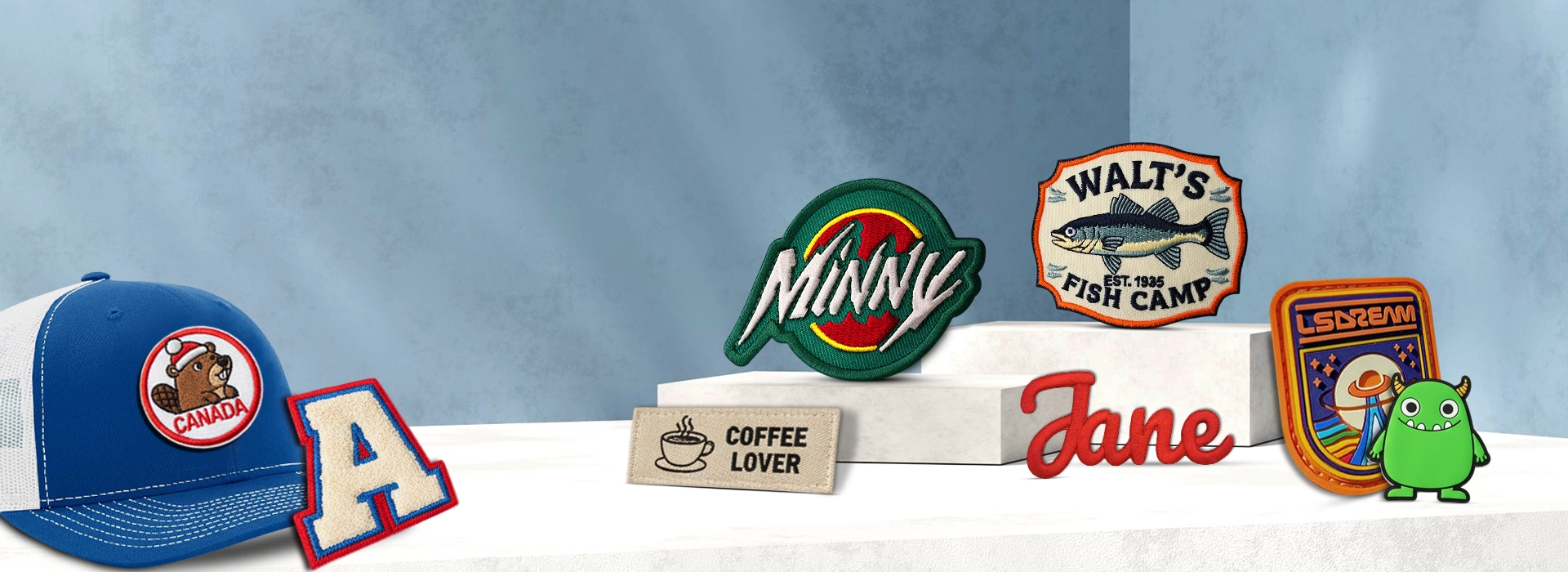
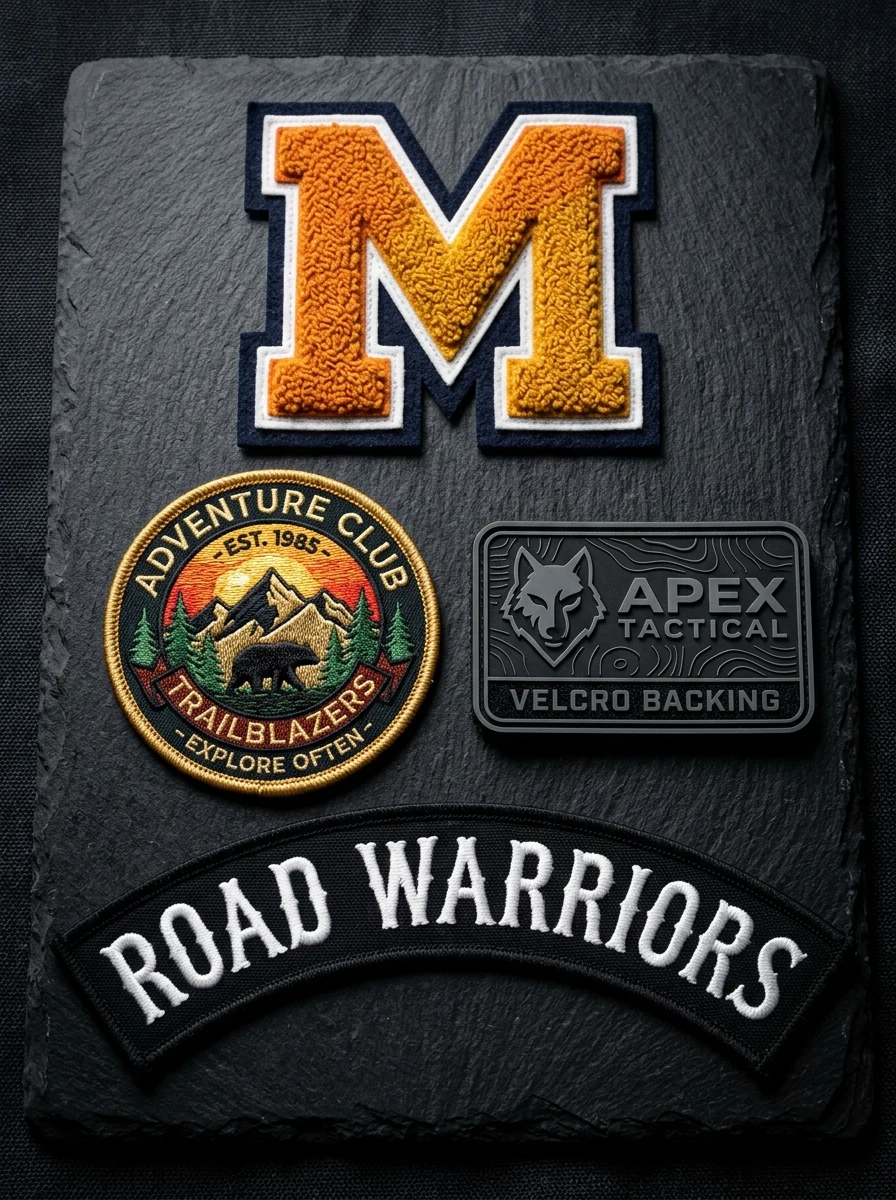
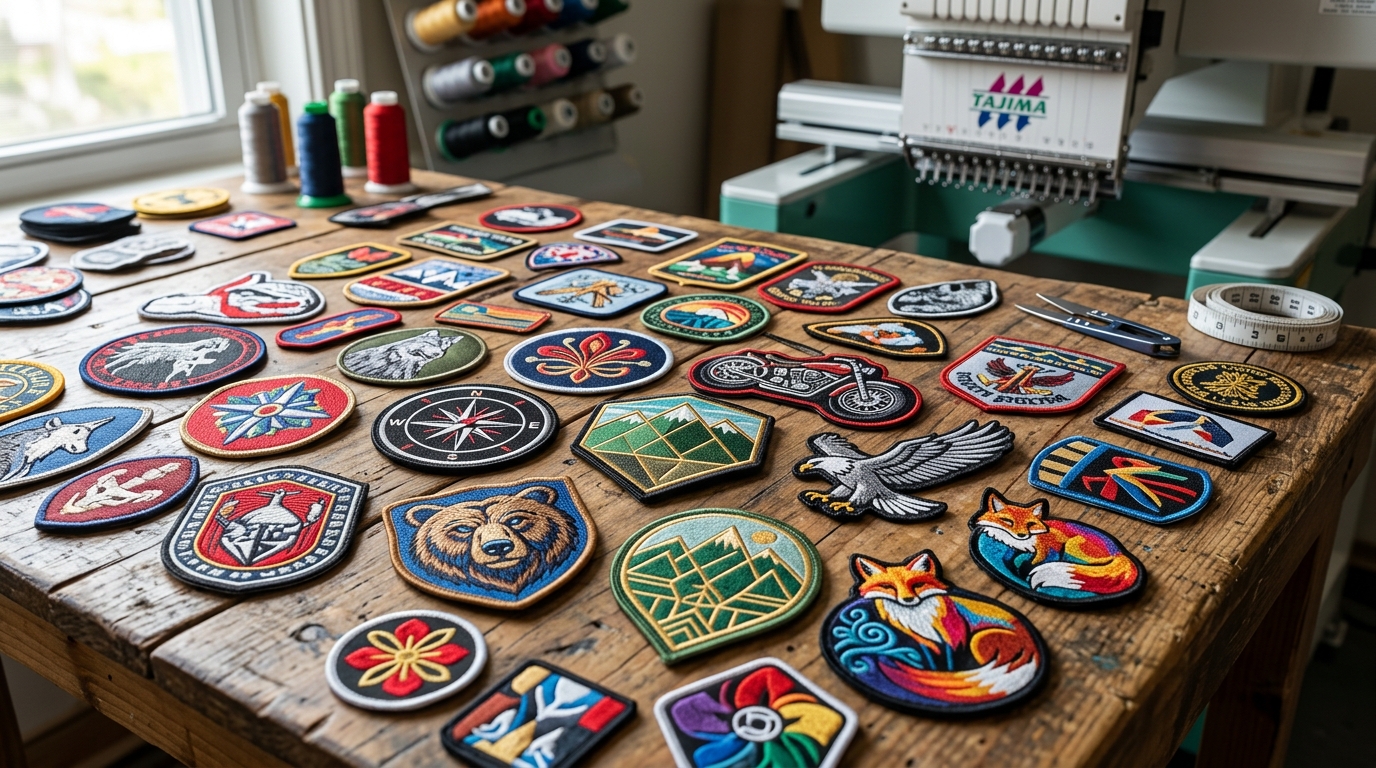
Embroidered patches are made by stitching colored threads onto a fabric base. They create a textured surface that can give our logo a traditional, dimensional appearance.
They are suitable for clothing brands that want a visible stitched finish on jackets, hoodies, caps, uniforms, and casualwear.
We can customize thread colors, stitch density, border styles, dimensions, and backing to match our design.
Embroidery works particularly well for bold logos, lettering, and symbols. However, very small details may require adjustments to remain clear.
If our signature look relies on a raised, stitched emblem, embroidered patches can provide an appropriate solution.
Woven Logo Patches
Woven patches are created by interlacing threads to form the artwork. Their construction can reproduce fine lettering and detailed designs with a relatively smooth finish.
They are suitable for clothing brands that prefer clean, compact logos or small labels.
Woven patches can be used on shirts, jackets, trousers, bags, and accessories. They can help us maintain a refined appearance without relying on a heavily textured surface.
If our logo includes small text or thin lines, we should discuss its suitability for weaving with our manufacturer.
Leather and Faux-Leather Patches
Leather patches can create a distinctive material-based identity for denim, jackets, trousers, and accessories.
We can choose genuine leather or suitable synthetic alternatives, depending on the product and our design requirements.
Logos may be embossed, debossed, engraved, or printed onto the material.
Leather patches can complement heritage-inspired, rugged, or premium clothing styles. Their appearance often works particularly well when paired with denim or heavier fabrics.
We should consider the material's care requirements and compatibility with the garment before choosing it for our collection.
PVC Logo Patches
PVC patches are manufactured using molded material that can create raised, recessed, or layered designs.
They offer a different appearance from traditional embroidered patches and can be useful for contemporary streetwear, outdoor apparel, utility clothing, and accessories.
We can customize the shape, colors, dimensions, and molded details according to our artwork.
If our brand identity includes bold symbols or dimensional graphics, PVC patches may provide a suitable way to reproduce that visual style.
We should confirm the patch's flexibility, attachment method, and suitability for the intended garment.
Chenille Patches
Chenille patches feature a soft, raised surface created using yarn. They are commonly used on varsity jackets, collegiate apparel, and sports-inspired collections.
Their texture can create a distinctive visual effect, particularly when combined with embroidered outlines or lettering.
We can consider chenille when developing a bold, statement-oriented brand identity.
The design should be appropriate for the technique, as large letters and simple symbols generally reproduce more clearly than intricate artwork.
Printed Logo Patches
Printed patches can reproduce colorful artwork, gradients, and illustrations that may be difficult to create through stitching.
Depending on the printing method and material, they can provide a smooth finish and detailed color reproduction.
They may be suitable for brands whose identity depends on complex illustrations or a broad color palette.
We should review the print quality, material, and intended application before choosing this option.
Designing Custom Logo Patches That Reflect Our Brand
A signature patch should represent our brand clearly while fitting naturally into our clothing designs. We should approach patch development as part of our product design process rather than treating it as an afterthought.
Preparing Our Logo Artwork
We should begin with a high-quality logo file. Vector formats such as AI, EPS, or SVG are useful because they allow artwork to be resized without losing sharpness. Depending on the manufacturer's requirements, a high-resolution PNG or another suitable format may also be accepted.
The artwork should contain clear shapes, readable lettering, and proportions that can be reproduced using the chosen patch technique.
If our logo includes fine details, we should discuss whether they can be maintained at the intended patch size. Some designs may require simplified lettering or adjusted line thickness.
We should approve any proposed modifications before production to ensure that the patch continues to represent our brand accurately.
Selecting the Right Dimensions
Patch size influences both visibility and the overall appearance of a garment.
A small logo patch can provide subtle branding on a shirt or hoodie. A larger emblem may work better on a jacket or bag, where the available space allows the design to stand out.
We should measure the intended placement area and consider the proportions of the garment.
The patch should be large enough for the logo to remain recognizable without overwhelming the product's design.
Balancing Simplicity and Detail
A clear logo is often easier to reproduce across different patch materials.
We should identify the essential elements of our design and avoid unnecessary details that may become unclear when the patch is manufactured.
For example, a detailed logo may work well as a larger printed patch but require simplification when embroidered at a smaller size.
The goal is to preserve our brand's recognizable features while adapting the artwork to the production technique.
Choosing Finishing Details
Borders, edges, and backing contribute to the patch's final appearance.
An embroidered border may complement a traditional stitched design, while a clean-cut edge may suit certain woven or printed patches. Leather and PVC patches require finishing appropriate to their materials.
We should select finishing details that support our intended brand image and remain practical for the garment.
Custom Logo Patches for Different Clothing Collections
A clothing brand may offer several product categories, each with different construction and design requirements. Custom patches allow us to maintain a recognizable identity while adapting the branding to individual garments.
Streetwear Collections
Streetwear designs often incorporate distinctive graphics, bold lettering, and visible branding.
We can use embroidered patches, PVC patches, or woven labels to complement hoodies, jackets, caps, and bags.
A larger patch may become a prominent design element, while a smaller logo can provide a more understated appearance.
We should consider how the patch interacts with the garment's colors, graphics, and overall proportions.
Premium and Minimalist Clothing
Brands with a refined visual identity may prefer smaller patches, subtle colors, and carefully selected materials.
A compact woven logo, understated embroidery, or a suitable leather patch can complement minimalist garments.
The patch should feel integrated into the product rather than competing with its design.
We should pay particular attention to material quality, edge finishing, and placement when developing this type of branding.
Denim and Casualwear
Denim jackets, jeans, and casual garments can accommodate several patch styles.
Leather patches are often used to complement denim, while embroidered emblems can provide additional detail on jackets and shirts.
We can maintain a consistent logo treatment across different denim products while adjusting the patch dimensions and placement to suit each garment.
The material and attachment method should be compatible with the garment's construction and care requirements.
Sportswear and Team Apparel
Sportswear brands and teams can use custom patches to display logos, names, and symbols.
Embroidered patches can provide a recognizable stitched appearance, while woven designs may be suitable for smaller details.
We should consider comfort, flexibility, and attachment when selecting patches for athletic clothing.
The design should also remain clear when viewed from the distances at which the garment is typically worn.
Accessories and Branded Merchandise
Caps, backpacks, tote bags, and other accessories offer additional opportunities to use custom patches.
We can extend our brand identity beyond clothing by applying compatible patch designs to these products.
The patch should suit the accessory's material and construction. For example, a cap may require a design that follows its curved front panel, while a bag may accommodate a larger or more structured patch.
Strategic Patch Placement for a Signature Brand Look
The location of a patch influences its visibility and how it contributes to the garment's appearance.
We should select placement based on the product's design, available space, and intended branding effect.
Chest Placement
Chest patches are commonly used on jackets, hoodies, shirts, and uniforms.
A small patch can create subtle branding, while a larger design may become a more prominent feature.
We should consider the garment's seams, pockets, and overall proportions when deciding on placement.
Sleeve Placement
Sleeve patches can complement jackets, outerwear, and selected uniforms.
They provide an additional branding location without requiring a large logo on the front of the garment.
We should ensure that the patch does not interfere with sleeve movement or sit awkwardly near seams.
Back Placement
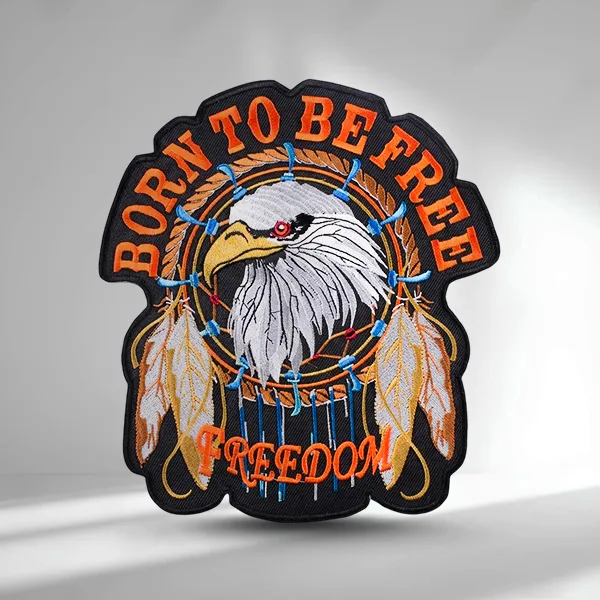
Larger patches on the back of a jacket or garment can create a distinctive visual feature.
This placement may suit statement designs, oversized emblems, or graphics that form part of the clothing's identity.
We should consider the available panel space and how the patch interacts with other design elements.
Cap and Accessory Placement
Caps often feature patches on the front panel, where the logo is visible.
Bags and accessories may accommodate patches on the front, pocket, or another suitable surface.
We should adapt the patch shape and attachment method to the product rather than using the same construction for every application.
Selecting a Reliable Custom Patch Manufacturer
A suitable manufacturer helps us turn our design into a finished product that meets our requirements.
We should look for a supplier with experience in the patch styles we need and the ability to explain the available production options.
Manufacturing Capabilities
We should confirm whether the manufacturer produces embroidered, woven, PVC, leather, or other patch styles relevant to our collection.
The supplier should understand our artwork and be able to recommend a suitable construction method.
We should also discuss the available dimensions, materials, borders, and backing options.
Sample Development
A sample allows us to assess the patch before approving a larger production order.
We should examine the logo clarity, material, dimensions, colors, finishing, and attachment method.
If the sample does not match our expectations, we should request changes before authorizing bulk manufacturing.
Quality Consistency
We should ask how the manufacturer checks patches during production and before shipment.
Quality requirements may include accurate dimensions, clear logo reproduction, consistent colors, clean finishing, and suitable backing.
Keeping an approved sample and written specifications can help us compare future orders.
Communication and Production Planning
Clear communication helps us avoid misunderstandings.
We should confirm the artwork, specifications, quantity, price, sample approval, production schedule, and delivery arrangements.
If our clothing collection has a planned launch date, we should allow enough time for sampling, manufacturing, inspection, and shipping.
Wholesale Custom Logo Patches and Cost Considerations
Wholesale purchasing can help us coordinate patch production with our clothing requirements.
The unit price depends on the material, dimensions, manufacturing technique, design complexity, order quantity, and finishing options.
Larger quantities may reduce the cost per patch because some production expenses can be distributed across more pieces. However, we should choose an order quantity that reflects our actual needs.
When requesting quotations, we should provide the same specifications to each manufacturer so that the prices can be compared fairly.
We should also account for sample charges, packaging, shipping, and any applicable additional expenses.
A suitable wholesale supplier should be able to explain the quotation and identify which features are included.
We should consider the overall value of the order, including product quality, production consistency, and the supplier's ability to meet our schedule.
Quality Control and Long-Term Brand Consistency
A signature brand look depends on more than the first production batch. We should maintain consistent patch quality as our clothing collection develops.
Before accepting an order, we should compare the finished patches with the approved design and specifications.
The logo should be accurate, the dimensions should match our requirements, and the materials and finishing should be appropriate for the selected patch style.
For embroidered patches, we should inspect stitching and borders. For PVC patches, we should examine molded details and surface finishing. Woven, leather, and printed patches should also be checked according to their construction.
We should confirm that the backing is suitable for the garment and that the patch can be attached as intended.
If we plan to reorder, we should retain the approved artwork, material specifications, color references, and sample.
This information provides a useful reference for future production and helps us maintain a consistent identity across our products.
We should communicate any design changes clearly and review revised samples when necessary.
Integrating Custom Patches Into Our Brand Development
Custom logo patches can become part of our broader product development strategy.
We should consider the patch during the garment design stage so that its dimensions, placement, and material complement the product.
For example, we can select a suitable embroidered patch for a jacket while planning the stitching and panel construction. For a denim product, we can coordinate a leather patch with the garment's finishing details.
This approach helps us create a cohesive design rather than adding branding after the garment is complete.
We should also consider how our patch designs will work across future collections. A recognizable logo treatment can be adapted to new colors, garments, and accessories while retaining the essential features of our brand.
By keeping our artwork and production specifications organized, we can make it easier to develop new products and maintain consistency.
Conclusion
Creating a signature brand look with custom logo patches begins with a clear understanding of our brand identity and the products we want to develop.
Embroidered, woven, leather, PVC, chenille, and printed patches offer different visual characteristics, allowing us to select materials and techniques that complement our clothing.
By maintaining consistent logo designs, colors, shapes, and placement, we can create a recognizable connection between our products.
We should prepare suitable artwork, choose appropriate patch dimensions, and work with a manufacturer that understands our requirements. Reviewing samples and establishing clear quality standards helps us achieve a finished product that reflects our intended design.
Custom logo patches can become an important part of our clothing identity when we select them thoughtfully and integrate them into our product development process. With consistent design choices and reliable manufacturing, we can create garments and accessories that express our brand's character and remain recognizable across our collections.