Introduction
Every brand begins with a vision. We may want to create clothing that reflects our creativity, build a recognizable business identity, launch a unique apparel collection, or help our team stand out with coordinated designs. Turning that vision into a recognizable brand requires thoughtful decisions about logos, colors, materials, product presentation, and the small details that make our products memorable. Custom patches give us a versatile way to bring these elements together and transform our ideas into distinctive designs.
Custom patches allow us to display our brand name, logo, slogan, or signature artwork on clothing and accessories. We can add them to jackets, hoodies, shirts, hats, backpacks, uniforms, and many other products. With different materials, shapes, sizes, textures, and attachment methods available, we can create patches that reflect our brand personality and complement the products we offer.
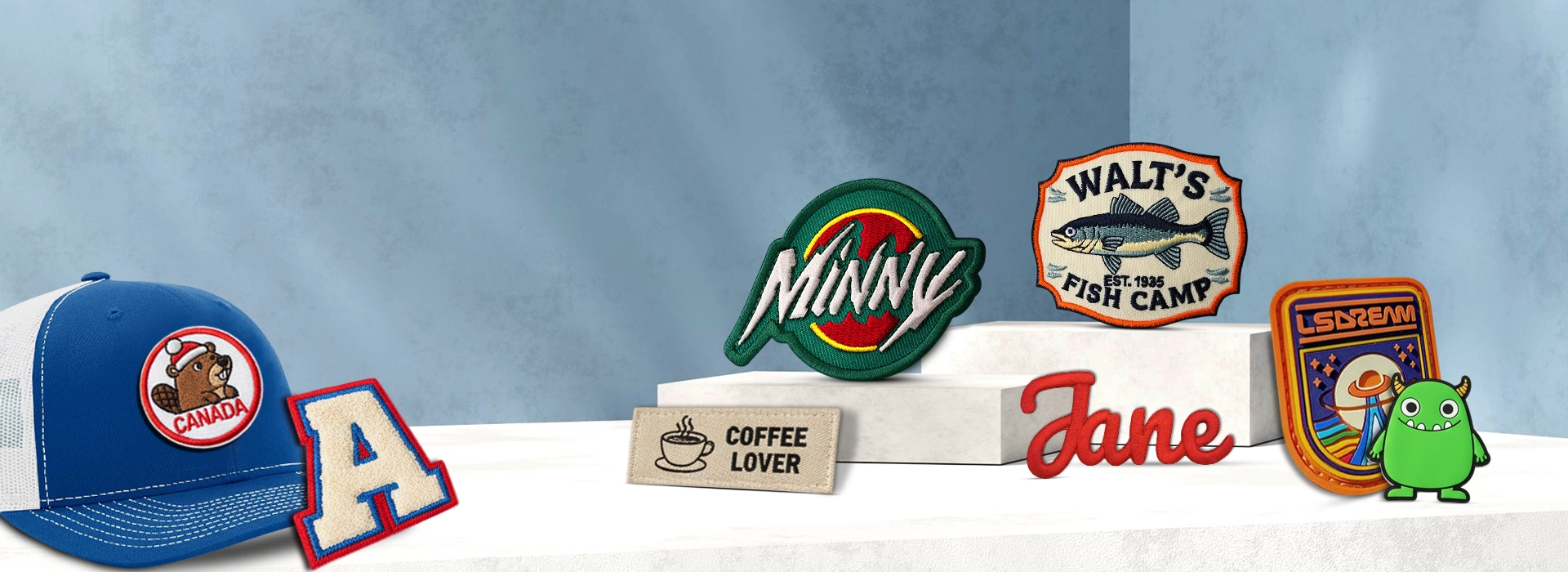
Whether we prefer the classic texture of embroidered patches, the precise details of woven patches, the colorful appearance of printed patches, or the dimensional finish of PVC patches, we can choose a style that supports our goals. The right design can help us create a consistent visual identity while giving our products an individual character.
However, creating custom patches that stand out requires more than selecting an attractive design. We need to understand our brand vision, choose appropriate materials, prepare clear artwork, consider the intended application, and maintain consistent quality. Each decision influences how our finished patches look and how effectively they represent our business.
In this guide, we will explore how we can turn our brand vision into custom patches that stand out, strengthen recognition, enhance clothing and accessories, and communicate our identity through thoughtful design.
Define Your Brand Vision Before Designing Custom Patches
Before we begin designing our custom patches, we should understand what we want our brand to communicate. A clear brand vision gives us direction and helps us make decisions that support our identity instead of choosing design elements randomly.
We should begin by identifying the main characteristics of our brand. Our business might focus on modern streetwear, premium fashion, outdoor clothing, sports apparel, workwear, or creative accessories. Each category has different visual expectations, and our patches should reflect the style we want customers to associate with our products.
For example, a streetwear brand may prefer bold lettering, strong contrast, and distinctive graphics. A premium clothing label may choose a minimal logo, refined typography, and a subtle patch design. An outdoor apparel brand might prefer recognizable symbols, durable materials, and colors that complement its products.
We should also consider our target audience. Understanding who will wear or use our products helps us choose designs that suit their preferences. If our customers appreciate simple and understated clothing, a small woven patch may be more appropriate than a large, brightly colored design. If our audience prefers expressive fashion, a prominent embroidered patch may help communicate our creative direction.
Our brand vision should guide the patch's shape, size, color palette, material, and placement. When these elements work together, the finished design feels intentional and consistent.
By defining our goals at the beginning, we can develop custom patches that communicate our identity clearly and support the overall direction of our brand.
Transform Your Logo into a Distinctive Patch Design
Our logo is often one of the most recognizable elements of our brand. Turning it into a custom patch allows us to carry that identity onto physical products in a textured or dimensional format.
We should begin with a clear, high-quality version of our logo. Vector artwork is particularly useful because it can be resized without losing its basic clarity. If we only have a raster image, we should ensure that its resolution is suitable for the intended patch dimensions.
Next, we need to consider how the logo will translate into the selected manufacturing method. A logo designed for a website or printed advertisement may contain thin lines, gradients, tiny lettering, or complicated details that are difficult to reproduce using thread.
We can simplify these elements when necessary without losing the logo's essential identity. For example, we might remove small decorative details, increase the thickness of narrow lines, or create a compact version of the logo for smaller patches.
The goal is not to change our brand beyond recognition. Instead, we should adapt the artwork to the physical format while preserving its most important features.
We should also decide whether the patch needs a border, background, or custom-cut outline. A contrasting border can help separate the design from the garment, while a simple background may create a cleaner appearance.
Before approving production, we should review the logo at its actual size. This helps us determine whether the lettering remains readable and whether the main design elements are sufficiently clear.
By adapting our logo carefully, we can create a patch that preserves our brand identity while giving it a distinctive physical presence.
Choose the Right Custom Patch Style for Your Vision
The patch style we choose influences its texture, appearance, level of detail, and suitability for different products. We should select a construction method that matches our artwork and the image we want our brand to communicate.
Embroidered Custom Patches
Embroidered patches are made by stitching colored threads onto a fabric base. Their raised texture creates a classic appearance that works well with logos, bold lettering, symbols, and simple illustrations.
We can use embroidered patches on jackets, hoodies, hats, uniforms, and casual clothing. They are especially suitable for brands that want a traditional, textured finish.
If our vision includes heritage-inspired fashion, sportswear, workwear, or casual apparel, embroidery may be an appropriate option. However, intricate details and very small lettering may require simplification to remain clear.
Woven Custom Patches
Woven patches are created using fine threads woven together to reproduce the design. They generally have a flatter surface than embroidered patches, allowing them to display smaller text and finer lines.
We can choose woven patches when our logo includes detailed typography or when we want a clean, refined finish. They are particularly useful for clothing labels, jackets, shirts, bags, and products that require precise branding.
Their relatively smooth surface also works well for compact designs that need to remain legible.
Printed Custom Patches
Printed patches are useful when our artwork contains multiple colors, gradients, complex illustrations, or photographic details.
Because the design is reproduced through printing rather than individual stitched elements, printed patches can accommodate visual features that may be difficult to achieve through embroidery.
We can use them for colorful fashion collections, artistic merchandise, promotional products, and brands that rely on detailed graphics.
We should confirm the printing method, expected color accuracy, material quality, and care requirements before choosing this option.
PVC Custom Patches
PVC patches are made from flexible synthetic material and can feature raised lettering, recessed details, and bold outlines.
They offer a distinctive dimensional appearance that can suit outdoor clothing, backpacks, hats, technical apparel, and brands that prefer a structured, contemporary look.
If our vision involves outdoor activities, adventure-inspired products, or technical accessories, PVC may be worth considering. We should still ensure that its texture and flexibility suit the intended product.
Chenille Custom Patches
Chenille patches feature a thick, soft texture that creates a bold and noticeable finish. They are commonly associated with varsity jackets, sports clothing, school apparel, and collegiate-inspired fashion.
We can use chenille for large letters, numbers, mascots, and simple symbols. This style can help us create a strong visual feature when the brand's identity emphasizes athletic or statement clothing.
Each patch style offers different advantages. By comparing them against our design, products, and brand vision, we can choose the construction that best supports our goals.
Select Brand Colors That Make Your Patches Stand Out
Color is one of the most important elements of our brand identity. It influences how customers recognize our products and how our patches look against different garments.
We should begin with our established brand colors whenever possible. Using the same primary colors across patches, clothing, packaging, and marketing materials helps create a recognizable visual identity.
However, we also need to consider contrast. A logo can lose visibility when its colors blend into the patch background or the garment beneath it. Dark lettering on a dark patch, for example, may be difficult to read, while a carefully selected contrasting border can improve separation.
We should consider the color of the clothing as well. A patch intended for a black jacket may require a different background treatment from one designed for a white shirt. We can preserve our main brand colors while adjusting the surrounding elements to maintain visibility.
Limiting the palette can also improve clarity. A simple combination of two or three complementary colors may create a cleaner result than a design containing too many competing shades. The appropriate number depends on our logo and the manufacturing method.
We should remember that thread, fabric, printing, and synthetic materials may reproduce colors differently from a digital screen. For this reason, we should review the manufacturer's color options and request a sample when accurate color matching is particularly important.
By selecting colors carefully, we can create custom patches that remain recognizable, complement our products, and reflect our brand vision.
Use Typography to Communicate Your Brand Personality
Typography helps us communicate our brand's personality through lettering, numbers, and written details. The fonts we choose for custom patches should match our visual identity while remaining readable at the intended size.
Bold fonts can work well for sports teams, streetwear labels, outdoor brands, and workwear. They create a strong visual impression and are often suitable for short names, initials, and slogans.
More refined typography may suit premium fashion labels, boutique businesses, and brands that prefer a subtle appearance. Simple lettering can also help create a clean and modern design.
Decorative fonts can add personality, but we should use them carefully. If a font contains complicated shapes or narrow strokes, the lettering may become difficult to reproduce on a small patch. Our brand name should remain recognizable rather than becoming lost among decorative details.
We should also consider the relationship between text and graphics. If our logo includes a symbol and a brand name, both elements should be balanced. One should not overpower the other unless we intentionally want to emphasize a particular feature.
For small patches, we may need to shorten a slogan or remove secondary text. This does not mean abandoning our original vision. Instead, we are adapting the design so that it works effectively within the available space.
We should review the typography at the final dimensions before approving production. Clear lettering helps our patch communicate its message and strengthens the visual connection to our brand.
Find the Ideal Patch Size, Shape, and Placement
The size, shape, and placement of our patches can determine whether they look balanced or distracting. We should consider these details in relation to the garment, the artwork, and the purpose of the product.
Small patches are suitable for subtle branding on shirts, sleeves, hats, and accessories. Medium-sized patches can display most logos clearly without dominating the garment. Large patches may be appropriate for jacket backs, backpacks, and statement pieces.
We should not choose dimensions based only on appearance. The design must have enough room for its lettering and details. If a logo contains several words or a complicated illustration, we may need a larger patch or a simplified version.
Shape also affects the overall impression. Rectangular patches can work well for brand names and wordmarks. Circular designs are suitable for emblems, while shield-shaped patches can create a traditional badge appearance. Custom-cut patches can follow the outline of a logo or symbol.
Placement should complement the garment's construction. A patch on the left chest can create a familiar branding position, while a sleeve patch may provide a secondary design feature. A larger back patch can become the main visual focus of a jacket.
We should measure the intended area before placing an order. Seams, pockets, curved surfaces, and garment proportions can affect how a patch fits.
When possible, we should use a realistic mock-up or sample to review the placement. This allows us to assess the dimensions and determine whether the patch works with the garment's overall design.
Match Custom Patches to Your Products and Materials
Our patches should complement the materials and construction of the products on which they will be used. A design that looks excellent on a heavy jacket may not work as well on a lightweight shirt.
Denim jackets, canvas bags, and sturdy cotton garments can often accommodate a wider range of patch styles. Lightweight fabrics may require smaller or lighter patches to avoid pulling, sagging, or distorting the material.
We should consider the product's intended use. A fashion jacket may prioritize appearance and texture, while workwear may require secure attachment and resistance to regular use. Outdoor products may need materials and finishes that suit their expected exposure to moisture, friction, and changing conditions.
The patch construction should also match the product's design. Embroidered patches can complement casual clothing, woven patches may suit detailed labels, and printed patches can reproduce colorful graphics. PVC patches may work well on certain outdoor accessories, provided the material and attachment method are compatible.
Before choosing the backing, we should check the garment's care instructions and fabric composition. Some fabrics are not suitable for heat application, while others may need specialized stitching or attachment methods.
We should also consider comfort. A thick or stiff patch placed in an area that bends frequently may affect how the garment feels during wear.
By matching our patch materials and construction to the intended product, we can create a more cohesive appearance and reduce the risk of application problems.
Create a Consistent Brand Identity Across Multiple Products
One of the most effective ways to use custom patches is to create a consistent visual identity across our product range.
When customers see the same recognizable logo, color palette, or design language on different items, they can more easily connect those products with our brand. Custom patches make this possible across clothing, hats, bags, uniforms, and accessories.
We should establish a clear set of branding guidelines. These can define the approved logo, color combinations, patch styles, minimum sizes, and preferred placement areas.
For example, we might use an embroidered logo on jackets, a woven version on shirts, and a smaller design on caps. Although the construction and dimensions may vary, the core visual elements should remain recognizable.
We can also develop a coordinated collection of patches for different product categories. A main logo patch can represent the entire brand, while secondary patches can identify specific collections, product lines, or special editions.
However, variation should not become inconsistency. If every patch uses unrelated colors, fonts, and symbols, customers may struggle to recognize the connection between products.
We should therefore decide which elements must remain consistent and which can change according to the product. This gives us room for creativity without weakening our identity.
A coordinated patch strategy helps our products look connected and makes it easier to maintain a recognizable brand presentation as our collection grows.
Focus on Quality to Make Your Custom Patches Last
A distinctive design is only part of a successful custom patch. We also need to consider the quality of the materials, manufacturing process, finishing, and attachment method.
We should work with a manufacturer that understands our specifications and can reproduce our artwork accurately. Before placing a large order, we can review examples of previous work and ask about available materials, production methods, and quality-control procedures.
If possible, requesting a sample allows us to examine the patch in person. We can assess the texture, stitching, colors, edges, thickness, and overall construction before committing to a larger quantity.
The finishing should match the selected patch style. Embroidered patches should have appropriate stitching and clean edges, while woven patches should reproduce the design clearly. Printed patches should display the artwork accurately, and PVC patches should have consistent molded details.
We should also check the backing method. A patch that detaches easily can damage the appearance of the garment and create unnecessary problems for customers. The attachment method must suit the fabric and the product's intended use.
Durability depends on the materials, construction, garment, and care routine. We should avoid assuming that every patch is suitable for frequent washing or heavy use without checking the manufacturer's recommendations.
For larger orders, we should agree on the approved design and specifications before production. This helps reduce the risk of receiving patches with inconsistent colors, dimensions, or finishing.
By prioritizing quality, we can create patches that support our brand image and provide a better experience for the people who use our products.
Choose the Right Backing for Reliable Application
The backing determines how our custom patches attach to clothing and accessories. Choosing the correct option helps us achieve a suitable finish for the garment and the intended use.
Sew-On Backing
Sew-on patches are attached with stitches around the edges or through suitable areas of the patch. This option is often useful for jackets, uniforms, workwear, bags, and garments that require a durable attachment.
We should ensure that the fabric can support the stitching and that the patch is positioned correctly before sewing. For frequently used products, the quality of the stitching and compatibility of the materials are important.
Iron-On Backing
Iron-on patches use heat-activated adhesive to attach to compatible fabrics. They can offer a convenient application method for suitable garments.
However, not every fabric can tolerate the required heat. We should check the garment's care label and follow the patch manufacturer's instructions carefully. Some applications may benefit from additional stitching, depending on the garment and expected use.
Hook-and-Loop Backing
Hook-and-loop backing allows a patch to be attached to a compatible surface and removed when necessary. It is particularly useful for certain uniforms, outdoor accessories, equipment, and products designed for interchangeable patches.
We should confirm that the garment or accessory has a compatible fastening surface and that the patch remains secure during normal use.
Adhesive Backing
Adhesive backing may suit temporary displays, promotional applications, or projects where simple attachment is preferred. Its performance varies depending on the adhesive, surface, and conditions.
We should confirm whether the adhesive is designed for fabric and whether it is suitable for the expected duration of use.
Selecting the right backing helps us balance convenience, durability, and compatibility. It also ensures that the finished patch performs as intended rather than serving only as a decorative element.
Make Custom Patches Part of Your Brand Marketing Strategy
Custom patches can support our marketing strategy by extending our visual identity beyond websites, advertisements, and packaging. They allow us to place recognizable brand elements directly on products that customers can wear or use.
For a clothing business, patches can help create a signature detail across a collection. We might feature our logo on jackets, use smaller patches on caps, or introduce a special design for a limited-edition release.
For promotional campaigns, we can develop patches that reflect a particular event, product launch, collaboration, or anniversary. These designs can retain our main brand elements while introducing artwork specific to the occasion.
Custom patches can also complement employee uniforms. Consistent branded patches help create a coordinated appearance and make the connection between staff clothing and the business more visible.
When developing merchandise, we should ensure that the patch design offers a clear connection to our brand. A patch should not rely on our name alone if a recognizable symbol or consistent color combination can strengthen the design.
We can also use coordinated patches to connect different product categories. For example, a matching design across bags, hats, and outerwear helps establish a shared visual theme.
The most effective approach is to treat patches as part of our wider branding system. Their colors, placement, and artwork should work with our other visual materials rather than feeling disconnected from them.
By incorporating custom patches thoughtfully, we can create a consistent brand presence across the products and materials our customers encounter.
Plan Your Custom Patch Order Carefully
A clear ordering process helps us turn our design vision into a finished product while managing costs, quantities, and production expectations.
We should begin by defining the required quantity. The number of patches may depend on our product range, team size, promotional campaign, or expected demand. Planning the quantity helps us avoid ordering too few or creating unnecessary excess stock.
Next, we should prepare the artwork and specifications. These should include the logo file, patch dimensions, shape, colors, construction method, backing type, and any special finishing requirements.
We should then request a quotation from the manufacturer. The quotation should explain the unit price, setup costs, minimum order quantity, sample charges, shipping fees, and estimated production time where applicable.
When comparing suppliers, we should compare equivalent specifications. A lower price may reflect different materials, construction, or finishing, so we should consider the complete value rather than focusing only on the initial cost.
Before approving production, we should review the digital proof carefully. We need to check spelling, proportions, colors, dimensions, and the placement of individual design elements.
If the order is large or the design is particularly important, a physical sample can help us confirm that the proposed construction matches our expectations.
We should also plan around any deadlines associated with product launches, events, or seasonal collections. Allowing enough time for production, shipping, and corrections helps us avoid unnecessary pressure.
A well-planned order gives us greater control over the final product and helps ensure that our custom patches reflect the vision we developed at the beginning.
Avoid Common Mistakes When Designing Custom Patches
Several common mistakes can reduce the effectiveness of custom patches, even when the original concept is strong. We can avoid many of these problems by reviewing our designs carefully before production.
One mistake is including too many details. Tiny text, thin lines, and complicated illustrations may become difficult to reproduce at smaller sizes. We should simplify the design when necessary and focus on the elements that communicate our identity most clearly.
Another mistake is choosing colors without checking contrast. If the logo blends into the background, it may lose visibility. We should evaluate the design against both the patch background and the garment color.
We should also avoid selecting a patch style without considering the artwork. Embroidery may suit bold graphics, while woven or printed patches may work better for finer details. Matching the construction method to the design helps us achieve a clearer result.
Incorrect sizing can create additional problems. A patch may look attractive in a digital mock-up but appear too large or too small when applied to the actual product. Measuring the available space helps us choose appropriate dimensions.
Ignoring fabric compatibility is another avoidable issue. Heavy patches can affect lightweight garments, and iron-on backing may not suit heat-sensitive materials. We should confirm that the patch and attachment method work with the intended fabric.
Finally, we should not skip the proofing stage. Spelling mistakes, inconsistent colors, distorted logos, and incorrect dimensions are easier to address before production begins.
By paying attention to these details, we can reduce avoidable errors and create custom patches that represent our brand professionally.
Maintain Your Custom Patches and Protect Your Brand Presentation
Once our custom patches are attached to clothing or accessories, proper care helps maintain their appearance and the quality of the finished product.
We should follow the care instructions supplied by the patch manufacturer and the garment brand. Different materials and backing methods may respond differently to washing, heat, and friction.
Turning clothing inside out before washing can help reduce direct rubbing against the patch. We should choose a washing method that suits the fabric and avoid unnecessarily harsh treatment that could damage stitching, printed surfaces, or adhesive backing.
We should also be careful with heat. Some adhesives and synthetic materials may be affected by high temperatures, so we should not iron directly over a patch unless the manufacturer confirms that it is appropriate.
After regular use, we can inspect patches for loose edges, frayed stitching, fading, or separation from the garment. If we notice a problem, addressing it early may help prevent further damage.
For businesses that use patches on staff uniforms or frequently worn products, regular inspection helps maintain a consistent appearance. Worn or damaged patches can make otherwise well-presented garments look neglected.
We should also provide customers with clear care instructions when relevant. This helps them understand how to look after their products and supports a better ownership experience.
By choosing suitable materials, applying patches correctly, and following appropriate care practices, we can help preserve their appearance and protect the presentation of our brand.
Conclusion
Turning our brand vision into custom patches that stand out begins with a clear understanding of our identity and the message we want our products to communicate. By combining thoughtful design, suitable materials, consistent colors, and appropriate placement, we can create patches that reflect our brand personality and make our products more recognizable.
Choosing the right patch style is an important part of the process. Embroidered patches offer a classic textured finish, woven patches support fine details, printed patches reproduce complex artwork, PVC patches provide a dimensional appearance, and chenille patches create a bold, soft texture. Each option gives us different opportunities to express our vision and complement our products.
We should also pay attention to typography, size, shape, backing, and fabric compatibility. These practical decisions help ensure that our patches look balanced, remain readable, and suit their intended applications. By maintaining consistent design elements across clothing, hats, bags, uniforms, and accessories, we can strengthen the visual connection between our products and our brand.
Quality and planning matter just as much as creativity. Preparing clear artwork, reviewing proofs, selecting reliable manufacturing partners, and checking finished samples can help us achieve the results we expect. Proper application and care further support the appearance and longevity of our patches.
Ultimately, custom patches allow us to bring our brand vision into the physical products that represent our business. When we approach the process with creativity, consistency, and attention to detail, we can develop distinctive patches that enhance our products, communicate our identity, and help our brand stand out in a competitive market.