Introduction
Custom logo patches are an important part of clothing brand identity. They help us make our garments recognizable, create a professional appearance, and give our products a distinctive style. Whether we are building a new fashion label or expanding an established clothing business, custom patches offer a practical way to showcase our brand across different products.
From denim jackets and hoodies to caps, jeans, uniforms, and bags, custom patches can be designed to complement almost any suitable garment. We can choose different materials, textures, colors, shapes, and attachment methods according to our brand's requirements.
Working with a wholesale custom logo patch manufacturer allows us to order patches in bulk, maintain consistent branding, and plan production more efficiently. By selecting the right manufacturing partner, we can create patches that match our artwork, suit our garments, and meet our quality expectations.
Understanding Custom Logo Patches
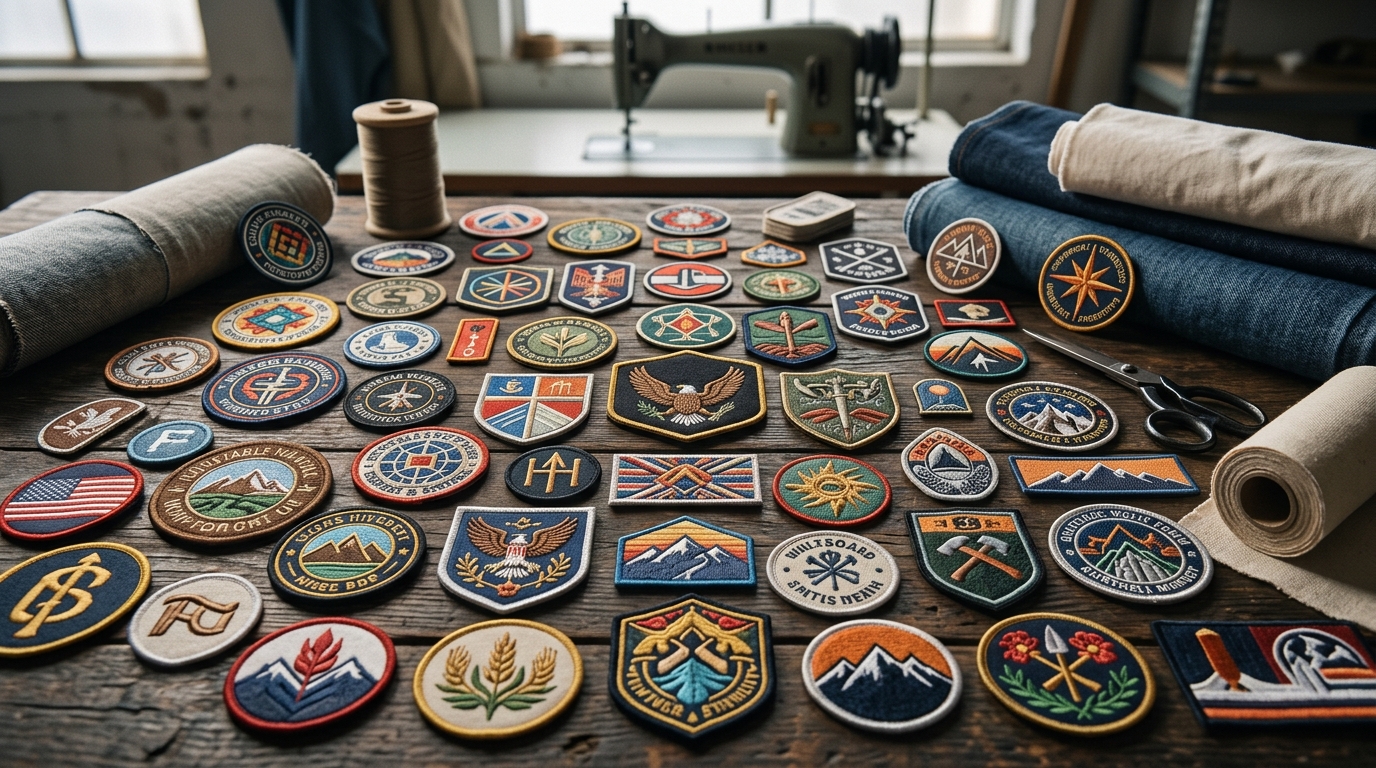
Custom logo patches are specially made pieces of material featuring a company's logo, name, symbol, or design. They are attached to garments and accessories through sewing, heat application, or other suitable methods.
Unlike ordinary printed labels, patches can provide additional texture, structure, and visual interest. Their appearance depends on the materials and manufacturing techniques used.
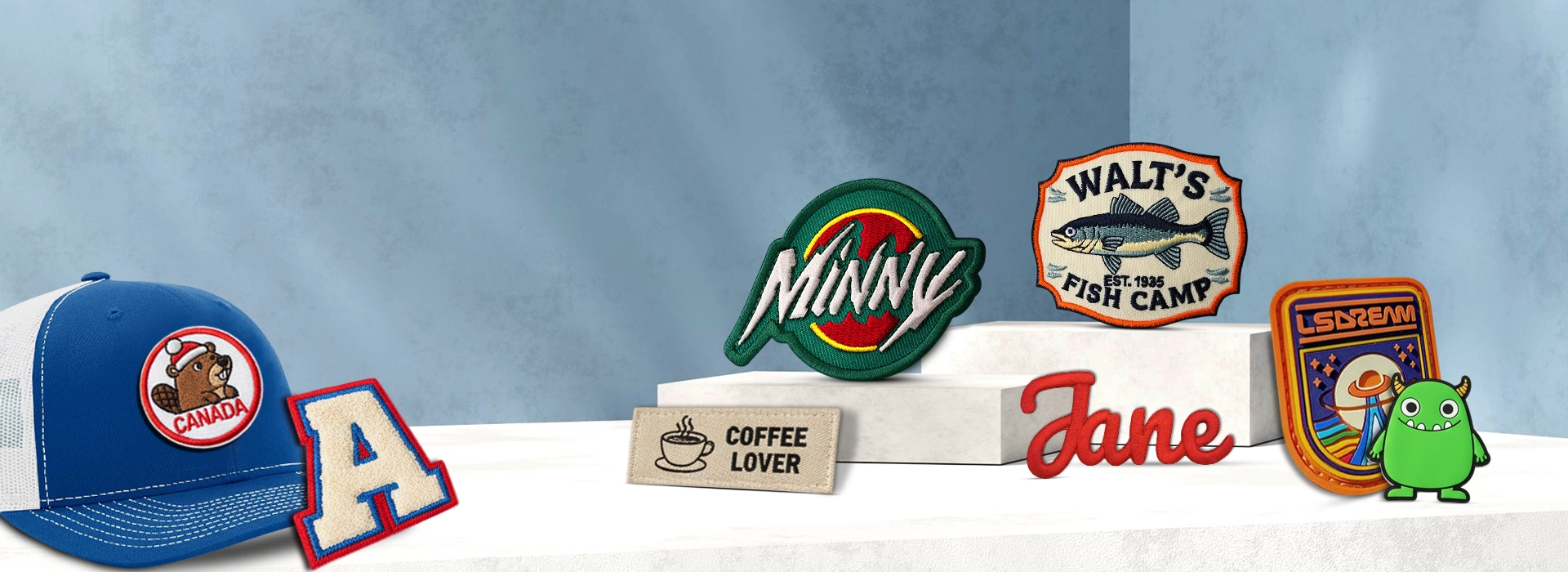
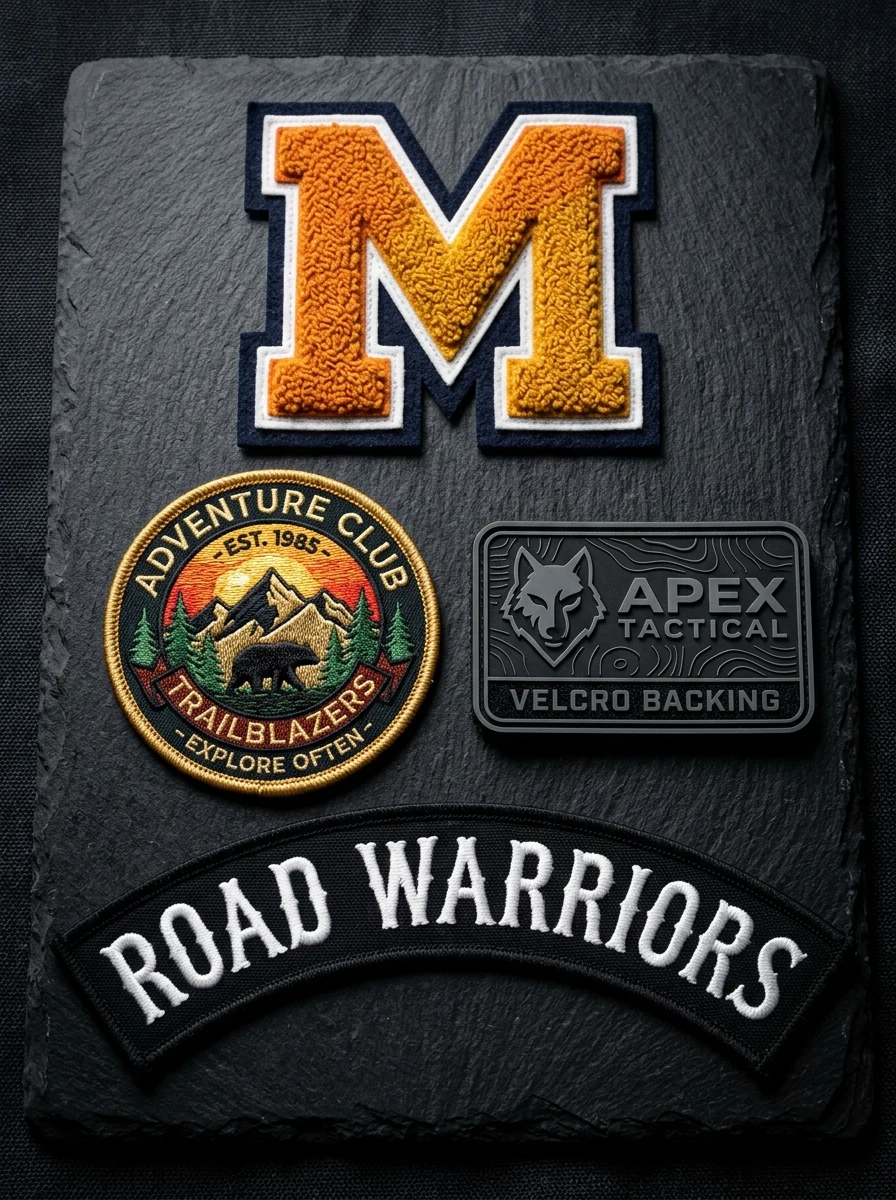
For example, embroidered patches create a raised, stitched effect, while woven patches offer a smoother surface that can reproduce fine details. Leather patches provide a distinctive material finish, and PVC patches can create molded designs with raised elements.
For clothing brands, patches serve both decorative and branding purposes. A carefully designed patch can help customers recognize our products while complementing the garment's overall appearance.
We can customize patches according to our preferred dimensions, artwork, colors, borders, and attachment requirements. This flexibility makes them suitable for different clothing collections and brand identities.
Why Clothing Brands Choose Custom Logo Patches
Custom logo patches offer several advantages for clothing businesses. They provide a flexible branding solution that can be adapted to different products while helping maintain a consistent visual identity.
Building Brand Recognition
A recognizable logo helps customers identify our products. When we use consistent branding across jackets, shirts, hoodies, and accessories, we create a visual connection between our collections.
A distinctive patch can become a recognizable feature of our clothing. Customers may associate its shape, colors, or material with our brand, particularly when we use it consistently.
Creating a Professional Appearance
Well-made patches can improve the presentation of a garment. Their stitching, finishing, material, and placement contribute to the overall design.
An embroidered patch can add texture to casualwear, while a leather patch can complement denim and premium-inspired clothing. The right patch helps us create a finished appearance that suits our product's style.
Supporting Different Clothing Collections
Clothing brands often produce several types of garments. Custom patches allow us to maintain a consistent identity across different categories without using exactly the same labeling method everywhere.
We can use embroidered patches on jackets, woven labels on shirts, leather patches on denim, and suitable molded patches on selected accessories.
Offering Flexible Branding Options
Custom patches are available in different shapes, sizes, colors, and materials. This flexibility allows us to develop designs that reflect our brand's personality.
We can create minimal logo patches for understated collections or more prominent designs for streetwear, sportswear, and statement garments.
Managing Wholesale Production
Ordering patches in bulk can help us coordinate branding with garment manufacturing. Wholesale pricing may also reduce the per-unit cost, depending on order quantity, material, complexity, and supplier terms.
We should compare complete quotations and consider quality, production requirements, and delivery costs before selecting a manufacturer.
Types of Custom Logo Patches
Choosing the right patch style is essential because each manufacturing technique creates a different appearance and serves different product requirements.
Embroidered Logo Patches
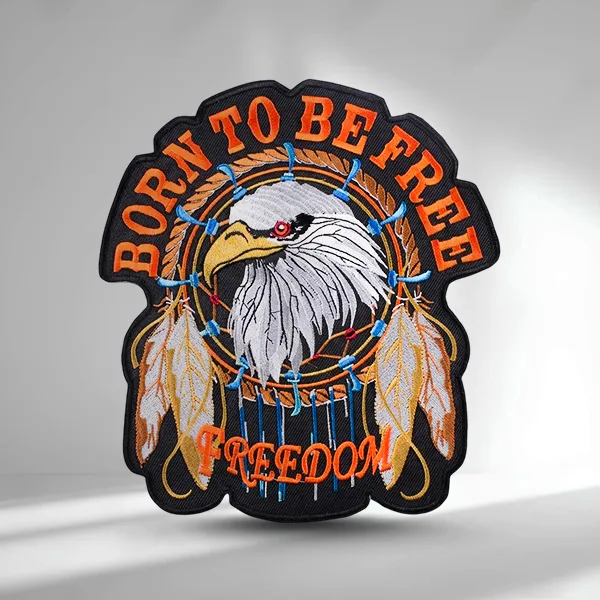
Embroidered patches are produced by stitching colored threads onto a fabric base. They create a textured, raised appearance and are widely used for clothing branding.
We can use embroidered patches on denim jackets, hoodies, caps, uniforms, varsity jackets, and casualwear. They are particularly suitable for bold logos, lettering, and symbols.
Different thread colors, stitch densities, and border finishes can be selected to complement our artwork.
However, very small lettering or intricate details may be difficult to reproduce clearly. We should discuss our design with the manufacturer and review a sample before approving bulk production.
Woven Logo Patches
Woven patches are created by interlacing threads to form the design. Their construction allows fine lettering and detailed artwork to appear relatively sharp.
They are suitable for minimalist logos, small brand names, and designs that require a smooth finish.
Clothing brands can use woven patches on shirts, jackets, trousers, bags, and other accessories. They are particularly useful when our logo includes smaller details that may not reproduce well through traditional embroidery.
We should confirm the manufacturer's minimum lettering size and available color options before production.
Leather and Faux-Leather Patches
Leather patches are commonly used on denim, jackets, trousers, and accessories. They provide a distinctive finish that can complement heritage-inspired, rugged, or premium clothing designs.
Manufacturers can create logos through embossing, debossing, engraving, or printing.
We can choose genuine leather or suitable synthetic alternatives according to our product requirements and budget.
Before ordering, we should confirm the material, finishing technique, care instructions, and suitability for the intended garment.
PVC and Rubber Patches
PVC patches are made from molded material that can create raised, recessed, or layered designs. They are often used for outdoor apparel, sportswear, utility clothing, and selected accessories.
These patches can provide a distinctive three-dimensional appearance and reproduce bold logo shapes effectively.
We should consider flexibility, material specifications, attachment methods, and garment compatibility before selecting PVC patches for our collection.
Chenille Patches
Chenille patches have a soft, textured surface created using yarn. They are often used on varsity jackets, collegiate apparel, and sports-inspired clothing.
We can combine chenille lettering with embroidered borders to create a layered appearance.
This style is generally suitable for bold letters and larger designs rather than very small details.
Printed Patches
Printed patches are useful when our logo contains gradients, multiple colors, or details that are difficult to reproduce through embroidery or weaving.
Depending on the printing process and fabric, they can create a smooth finish and reproduce colorful artwork.
We should confirm the printing technique, material, color reproduction, and durability requirements with our manufacturer.
Choosing the Right Patch for Our Garments
The best patch should complement the garment rather than simply look attractive on its own.
For heavy denim jackets, embroidered or leather patches may provide a suitable finish. Lightweight shirts may require smaller, softer patches that do not affect comfort or fabric movement.
Caps need patches that suit their shape and structure. Bags and accessories may accommodate different materials and attachment methods depending on how they are used.
We should also consider our logo. Bold lettering and simple symbols often work well with embroidery, while fine details may be better suited to woven or printed patches.
Our target audience and brand identity also influence the choice. A minimalist fashion label may prefer subtle branding, while a streetwear collection may use larger patches or distinctive textures.
Before finalizing the design, we should request a sample and evaluate how the patch looks and feels when attached to the actual garment.
Customization Options Offered by Wholesale Manufacturers
Wholesale manufacturers can customize several features to help us create patches that match our brand.
Size and Shape
Patches can be produced in circular, rectangular, square, oval, shield-shaped, and custom-cut designs.
We should provide exact dimensions and consider the available space on the garment. A small chest logo may require a compact patch, while a back design may need a larger format.
Colors and Artwork
We should provide a clear logo file and specify our preferred colors. Pantone references or other agreed color standards can help communicate brand colors.
The final appearance may vary depending on the material, thread, printing method, and production process. We should review a sample when color accuracy is important.
Borders and Finishing
Different border options can create different appearances. Embroidered borders, merrowed edges, and laser-cut edges may be suitable for different patch styles.
We should choose a finishing method that complements the artwork and intended application.
Backing and Attachment
The backing determines how the patch is attached to the garment.
Sew-on patches are suitable for many permanent applications. Heat-seal patches use adhesive activated through suitable heat and pressure. Hook-and-loop backing allows selected patches to be removed or replaced.
We should confirm that the backing is compatible with the garment fabric and care requirements.
Finding a Reliable Wholesale Patch Manufacturer
Choosing the right manufacturer is important for maintaining quality, controlling production costs, and receiving our order on time.
We should look for a supplier with experience producing the patch styles we need. A knowledgeable manufacturer can explain material options, artwork requirements, production limitations, and suitable attachment methods.
Samples are valuable because they allow us to evaluate the actual product before placing a larger order. We should examine the logo clarity, dimensions, materials, stitching, border, and backing.
Quality control should also be discussed in advance. We can ask how the manufacturer checks finished patches and handles defects, shortages, or differences from the approved sample.
Communication is another important consideration. Our supplier should clearly confirm the artwork, specifications, order quantity, pricing, production schedule, and shipping arrangements.
If we expect to reorder patches or expand our collection, we should also consider whether the manufacturer can support repeat production while maintaining consistent quality.
Wholesale Pricing and Minimum Order Quantities
The price of custom logo patches depends on several factors, including quantity, material, dimensions, design complexity, backing, and finishing.
Larger orders may reduce the unit cost because initial production expenses can be distributed across more patches. However, the most suitable order quantity depends on our business needs and expected garment production.
Different materials also have different cost structures. Embroidered, woven, leather, printed, and molded patches may require different manufacturing processes and setup expenses.
We should ask manufacturers about their minimum order quantity, sample charges, unit price, and additional costs.
A written quotation should clearly describe the specifications and quantity included in the price. We should also consider shipping, packaging, and any applicable import charges when comparing suppliers.
Rather than choosing a manufacturer based only on the lowest quotation, we should evaluate the total cost alongside product quality, communication, and production reliability.
The Custom Patch Manufacturing Process
The process usually begins when we provide our logo artwork, preferred patch style, dimensions, colors, and intended garment application.
The manufacturer reviews the design and prepares it for the selected production method. Embroidery may require digitizing, while other patch types require their own production-ready artwork or specifications.
A sample may then be produced so we can check the design, material, size, and finishing. If changes are necessary, we should request them before approving bulk production.
After sample approval, the manufacturer produces the agreed quantity. The finished patches should be inspected against our specifications before packaging and shipment.
Once the order arrives, we should check the quantity and quality and test the attachment method on the intended garment.
Planning each stage carefully helps us coordinate patch manufacturing with our clothing production schedule.
Best Placement Ideas for Custom Logo Patches
Patch placement influences the appearance of our clothing and how customers recognize our brand.
Jackets can feature patches on the chest, sleeve, pocket, or back panel. A small chest patch creates subtle branding, while a larger back design can become a central feature.
Hoodies may use patches on the chest, sleeve, or pocket area. We should avoid placing them where they interfere with seams, movement, or comfort.
For denim products, leather and woven patches can complement the waistband or pocket area. The patch should fit naturally with the garment's construction.
Caps commonly feature patches on the front panel. We should choose a suitable size and shape that follows the cap's structure.
Bags and accessories provide additional opportunities for consistent branding. A patch can connect our accessories with the rest of our clothing collection.
We should prepare a garment mockup or test sample to confirm that the patch's size and placement suit the finished product.
Quality Control for Wholesale Logo Patches
Quality control helps us maintain consistent branding across our garments. Before accepting a bulk order, we should compare the delivered patches with the approved sample and written specifications.
We should check that the logo, lettering, colors, and proportions are correct. Dimensions should match the agreed measurements, and the finishing should be appropriate for the selected material.
For embroidered patches, we should examine stitching, loose threads, and border quality. For leather, woven, printed, or PVC patches, we should inspect the surface, edges, and construction.
The backing should also match our order and suit the intended garment.
If the patches will be used on frequently washed clothing, we should conduct appropriate application and care tests. We should discuss the results and any relevant limitations with our manufacturer.
A clear agreement on quality requirements and defect handling helps us avoid confusion when the order is delivered.
Custom Logo Patches for Private-Label Clothing Brands
Private-label clothing brands can use custom patches to develop a consistent identity across their products.
We can provide our logo and specifications to a manufacturer that produces patches for our clothing collection. Depending on the supplier's services, we may also be able to coordinate patch production with garment manufacturing.
For example, a clothing brand may use embroidered patches on hoodies, woven labels on shirts, and leather patches on denim. Each option can complement the product while maintaining the brand's overall identity.
We should clarify whether our supplier manufactures patches only or also offers garment production.
It is also important to discuss artwork ownership, confidentiality, repeat orders, and packaging requirements. Keeping approved designs and production specifications on record helps us maintain consistency as our business grows.
Preparing a Wholesale Patch Order
Before requesting a quotation, we should prepare a clear description of our requirements.
Our order brief should include the logo artwork, patch style, dimensions, materials, colors, border, backing, quantity, sample requirements, packaging, and delivery destination.
We should also provide the intended garment application so the manufacturer can recommend suitable materials and attachment methods.
The quotation should specify the total cost, production schedule, sample charges, payment terms, shipping arrangements, and any additional fees.
If we plan to reorder the same design, we should retain the approved sample and specifications for future reference.
Conclusion
Custom logo patches provide clothing brands with a flexible way to build recognition, improve garment presentation, and maintain consistent branding across different products.
By selecting suitable materials, patch styles, dimensions, and attachment methods, we can create designs that complement our clothing and reflect our brand identity.
Working with a reliable wholesale manufacturer helps us coordinate sampling, bulk production, quality control, and repeat orders. We should compare suppliers based on their manufacturing capabilities, communication, product quality, and ability to meet our specifications.
Before placing an order, we should prepare our artwork, confirm the garment application, request a detailed quotation, and approve a sample when appropriate.
With careful planning and the right manufacturing partner, custom logo patches can become a valuable part of our clothing brand's identity and product development process.