Introduction
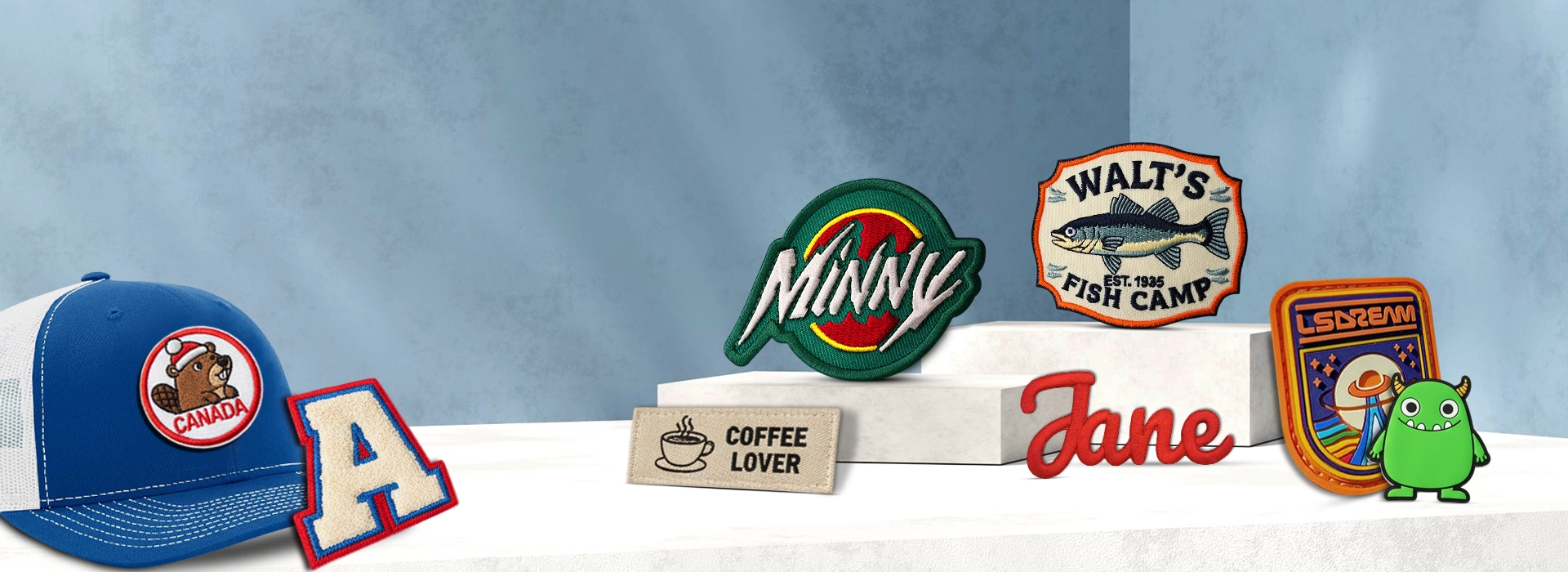
Custom patches have become an important branding element for clothing brands, businesses, and creative teams. They offer a practical way to display a logo, communicate a brand identity, and add a distinctive design to garments and accessories. Unlike ordinary printed graphics, patches can introduce texture, depth, and a professional finish to clothing. They can also be produced in different shapes, sizes, colors, and materials to suit the needs of a particular brand.
For clothing businesses, custom patches provide an opportunity to create recognizable products that reflect their design philosophy. For corporate businesses, they help present a consistent and professional appearance on uniforms and workwear. Creative teams can use personalized patches to express their ideas, represent their projects, and develop merchandise that connects with their audience.
The value of a custom patch depends on how effectively it supports the intended purpose. A well designed patch should complement the garment, represent the brand accurately, and maintain its appearance during regular use. Selecting the right material, design, size, and application method helps businesses create patches that are both attractive and practical.
How Custom Patches Support Clothing Brands
Clothing brands need recognizable details that help customers identify their products. A carefully designed patch can become a signature feature of a collection. It can display a brand name, symbol, logo, or original artwork in a way that feels integrated with the garment.
Custom patches are suitable for different clothing styles. Streetwear brands can use bold embroidered designs on hoodies and jackets. Denim brands can introduce patches on jeans and outerwear. Premium fashion labels may prefer understated designs that complement the quality and appearance of their garments.
The placement of a patch can influence how a product looks. A small patch on the chest can create a clean branding detail, while a larger patch on the back of a jacket can become a central design feature. Patches on sleeves, pockets, collars, and hems provide additional opportunities for thoughtful branding.
Clothing brands can also use patches to create consistency across their collections. When the same logo or design element appears on different products, customers can recognize the connection between them. This approach helps establish a visual identity without requiring every garment to use the same design.
Custom Patches for Business Branding
Businesses often need clothing that identifies employees while maintaining a professional appearance. Custom patches provide a useful solution for uniforms, workwear, promotional garments, and branded accessories.
A company logo patch can help employees present a consistent identity when interacting with customers. Businesses in hospitality, retail, construction, transportation, and customer service can incorporate patches into their uniforms according to their workplace requirements.
The design should remain clear and appropriate for the business. A simple logo with readable lettering is often more effective than an overly complicated design. The patch should also be positioned where customers and colleagues can easily recognize it.
Custom patches can support different uniform styles. A business may choose embroidered patches for traditional uniforms, woven patches for detailed logos, or durable rubber patches for garments used in demanding environments. The appropriate choice depends on the fabric, working conditions, and desired appearance.
Companies can also use patches on jackets, caps, bags, and other accessories. This creates opportunities to maintain consistent branding across different items while allowing each product to serve its own purpose.
Custom Patches for Creative Teams
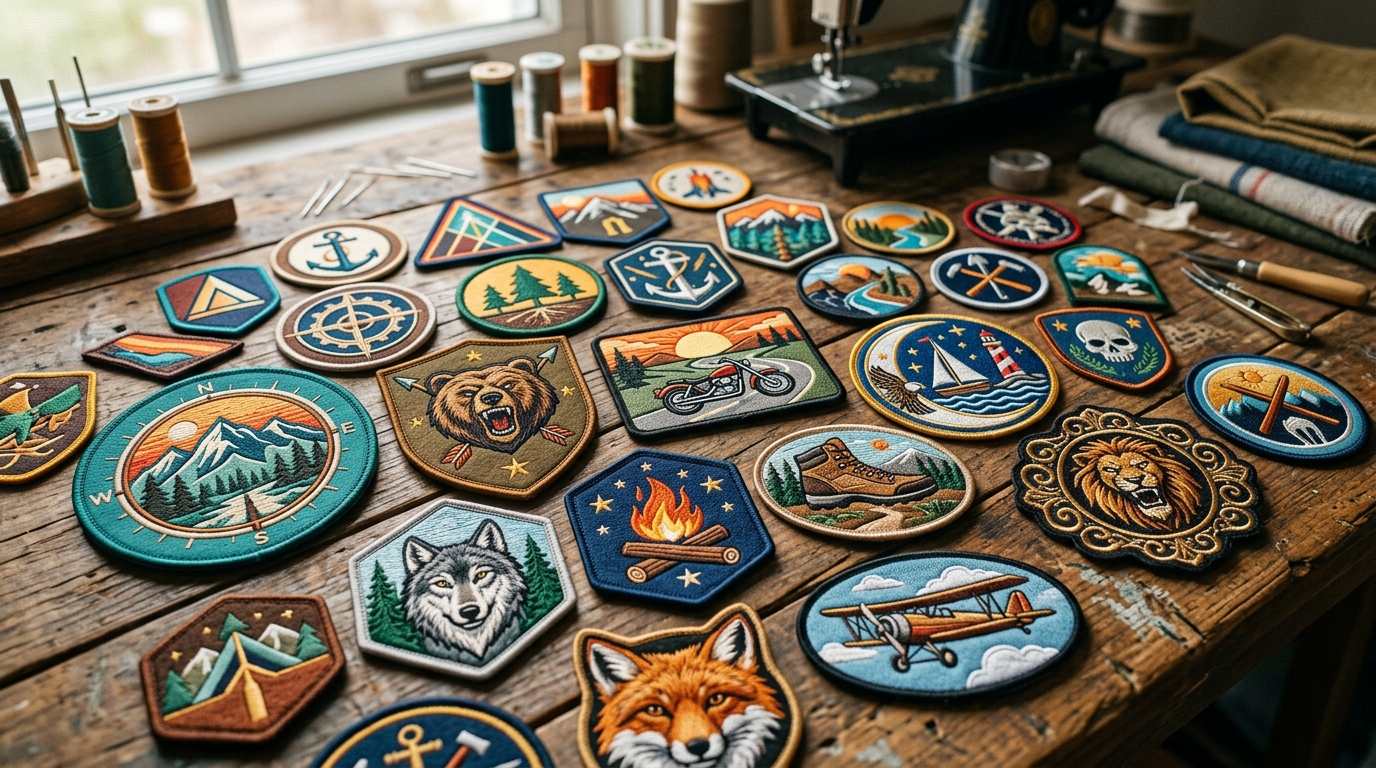
Creative teams frequently work with visual concepts that need to be represented through physical products. Custom patches allow designers, artists, musicians, photographers, and creative organizations to transform their ideas into wearable designs.
A creative team may develop a patch around an original illustration, project logo, artistic symbol, or distinctive typography. The finished patch can become part of a uniform, merchandise collection, event outfit, or personal accessory.
Patches are particularly useful when a team wants to communicate its identity without relying on large printed graphics. A carefully positioned patch can provide a subtle visual detail while maintaining the overall design of a garment.
Creative teams can also produce patches for limited merchandise collections. A design created for a particular project can be used on jackets, bags, caps, or other products. This makes it possible to offer merchandise that reflects the team's work and visual style.
When developing patches for creative projects, the original artwork should be adapted carefully. Fine lines, small lettering, and complicated shapes may require adjustments to remain clear during production. Choosing an appropriate patch technique helps preserve the important details of the design.
Choosing the Right Type of Custom Patch
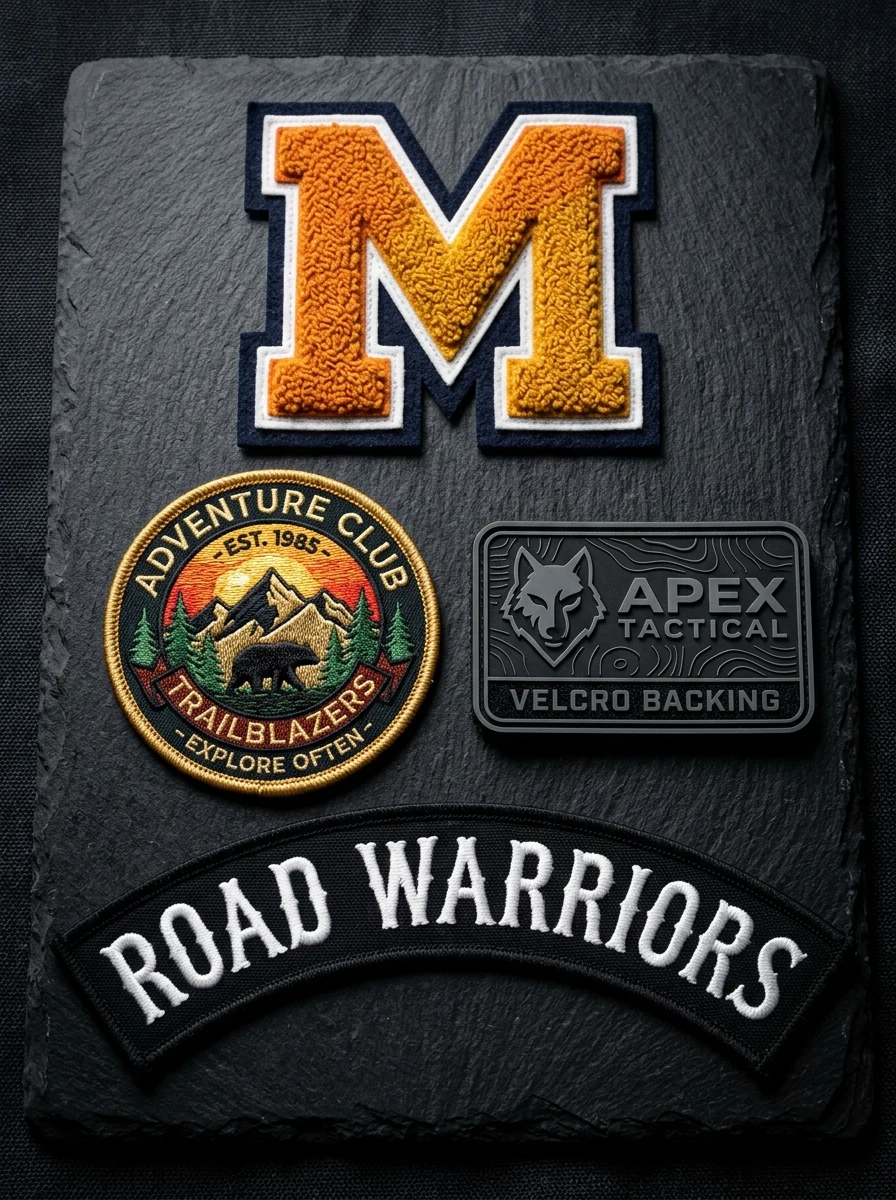
Different patch materials and production methods create different visual effects. Selecting the right type helps ensure that the finished patch suits the garment and the intended branding purpose.
Embroidered Patches
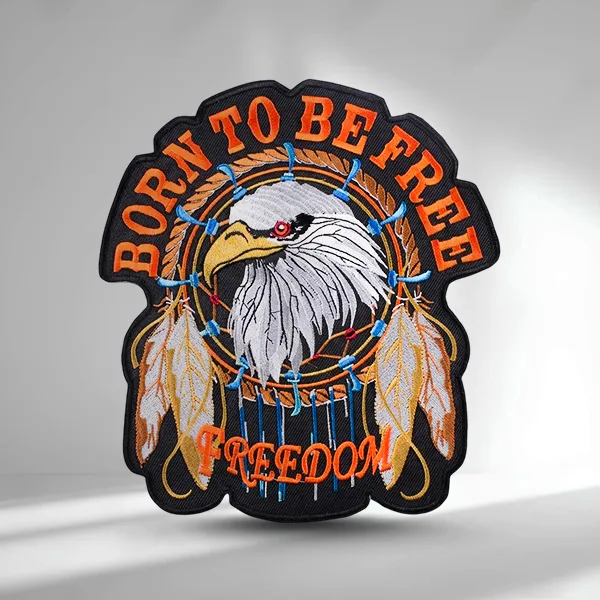
Embroidered patches use thread stitched onto a fabric base. They create a textured appearance that works well for logos, symbols, lettering, and bold artwork.
Clothing brands often choose embroidered patches for jackets, sweatshirts, caps, and casual apparel. Businesses can use them on uniforms, while creative teams can incorporate them into merchandise and project clothing.
Embroidery is particularly suitable for designs that benefit from visible stitching and a raised finish. However, extremely small lettering or complicated details may need to be simplified to maintain clarity.
Woven Patches
Woven patches are produced by weaving threads together to create the design. They are suitable for artwork that includes fine lines, small lettering, and detailed logos.
Fashion brands may prefer woven patches when their designs require a smooth surface and precise visual details. They can also be useful for garment labels and branding elements that need to remain clear at a smaller size.
Printed Patches
Printed patches allow designs to include multiple colors, gradients, and detailed illustrations. They can be suitable for creative projects and branding concepts that cannot easily be reproduced through embroidery.
The printing method and fabric should be selected according to the intended use. A patch designed for regular wear should have suitable materials and finishing to help preserve its appearance.
Chenille Patches
Chenille patches have a soft and raised texture that is commonly associated with varsity jackets and collegiate clothing. Their appearance makes them suitable for large letters, bold symbols, and traditional athletic designs.
Clothing brands can use chenille patches to create statement pieces. Creative teams can also use them when a project requires a distinctive textured appearance.
PVC and Rubber Patches
PVC and rubber patches provide a raised appearance and are often selected for products that need a durable surface. They can work well on outdoor clothing, bags, uniforms, and accessories.
Their suitability depends on the garment and the conditions in which it will be used. Businesses should consider flexibility, attachment method, and the overall appearance before selecting this material.
Designing Patches That Represent Your Brand
A successful custom patch begins with a design that communicates the intended identity. The logo, lettering, colors, and shape should work together to create a recognizable result.
The design should remain consistent with the brand's existing visual identity. If a clothing label uses a particular logo and color palette, the patch should reflect those elements rather than introducing unrelated details.
Simplicity can improve the effectiveness of a patch. A clear symbol or readable brand name may be more recognizable than a design containing too many small elements. The appropriate level of detail depends on the patch size and production method.
Color selection is another important consideration. Colors should complement the garment and maintain sufficient contrast for the design to remain visible. A patch intended for a dark jacket may require a different color arrangement from one designed for a light shirt.
The shape also contributes to the final appearance. Traditional rectangular and circular patches are suitable for many logos, while custom shaped patches can follow the outline of an illustration or symbol. The shape should support the design without making the patch difficult to attach.
Before production, the artwork should be reviewed at its actual intended size. This helps identify lettering that may be too small, details that may become unclear, and colors that may need adjustment.
Selecting the Best Patch Size and Placement
Patch size should be determined by the garment, the design, and the purpose of the branding. A patch that looks appropriate on a jacket may appear too large on a cap or shirt.
Small patches are useful for discreet branding. They can be positioned on the chest, sleeve, pocket, or lower edge of a garment. Larger patches may be more appropriate for the back of jackets, varsity clothing, and merchandise designed around prominent artwork.
Placement should also consider the garment's construction. Seams, pockets, zippers, and curved surfaces can affect how a patch sits. A patch should not interfere with movement or make the garment uncomfortable.
Clothing brands should evaluate the patch alongside the complete product design. The surrounding fabric, garment color, stitching, and other branding details should create a balanced appearance.
For business uniforms, placement should remain consistent across garments. This helps employees present a coordinated appearance and makes the company logo easier to recognize.
Creative teams may have greater freedom to experiment with placement. However, the patch should still be attached securely and positioned in a way that supports the design.
Choosing the Right Patch Backing
The backing determines how a patch is attached to clothing or accessories. Choosing an appropriate backing helps improve convenience, durability, and compatibility with the garment.
Sew on patches are attached with stitching. They are suitable for garments that require a secure and lasting attachment. Clothing brands may prefer them for jackets, denim, uniforms, and products intended for repeated use.
Iron on patches use heat activated adhesive. They can provide a convenient attachment method when the garment fabric is compatible with the adhesive and the application instructions are followed correctly.
Velcro patches allow patches to be removed and replaced. They can be useful for uniforms and equipment where identification needs to change. The hook and loop components should be selected according to the garment and expected conditions.
Adhesive backed patches may be suitable for temporary applications or specific materials. Their performance depends on the adhesive, surface, and intended use.
Businesses should confirm that the selected backing is compatible with the garment fabric. Delicate materials, heat sensitive fabrics, and products exposed to frequent washing may require a particular attachment method.
Maintaining Quality and Durability
Quality is important when custom patches are used on clothing that will be worn regularly. A patch should maintain its shape, color, and attachment during normal use.
Material selection influences durability. The fabric base, thread, adhesive, and backing should be suitable for the intended garment. A patch designed for a casual jacket may have different requirements from one used on workwear.
Production quality also matters. Clean stitching, accurate shapes, consistent colors, and properly finished edges contribute to a professional result.
Businesses should review a sample before placing a large order whenever possible. A sample provides an opportunity to assess the appearance, size, texture, and attachment method.
Care instructions should be considered as well. Garments with patches may require suitable washing and drying practices to protect both the patch and the surrounding fabric. Following the manufacturer's care guidance can help preserve the finished product.
Custom Patches for Merchandise and Special Collections
Custom patches can also be used to develop merchandise for clothing brands, businesses, and creative teams. They provide a way to turn a visual identity into a physical product that customers and team members can use.
A clothing brand may create patches featuring its logo, seasonal artwork, or a design associated with a particular collection. These patches can be attached to garments or offered separately for customers who want to personalize their clothing.
Businesses can use branded patches for promotional merchandise, employee clothing, and company events. The design should remain connected to the organization's identity and appropriate for the intended audience.
Creative teams can develop patches around an album, exhibition, design project, or community initiative. The artwork can reflect the project's visual direction while remaining suitable for everyday use.
When developing merchandise, it is important to consider how the patch will be presented. Packaging, garment placement, and overall product quality should support the intended brand image.
Planning a Custom Patch Order
A well planned patch order begins with a clear understanding of the design and intended application. Businesses should prepare the logo or artwork, decide on the desired dimensions, and identify the garment or accessory on which the patch will be used.
The next step is to select the production method and material. Embroidery may suit a textured logo, while woven or printed patches may be better for detailed artwork.
The backing and edge finish should be chosen according to the attachment requirements. If the patch will be used on several garment types, each application should be reviewed to ensure compatibility.
Order quantity is another important consideration. Clothing brands may need patches for a complete collection, while businesses may require patches for a uniform program. Creative teams may order smaller quantities for a project or merchandise release.
Before approving production, the artwork and sample should be checked for accuracy. Confirming the design, colors, dimensions, and attachment method helps reduce errors and ensures the final patches match the original requirements.
Conclusion
Custom patches provide clothing brands, businesses, and creative teams with a practical way to strengthen their visual identity. They can introduce recognizable logos, add texture to garments, support professional uniforms, and transform original artwork into wearable products.
The best results come from selecting a patch type that suits the design, choosing appropriate materials, and paying attention to size, placement, backing, and finishing. Each decision should support the intended use of the garment and the identity it represents.
For clothing brands, custom patches can become signature details that connect products across a collection. For businesses, they can help create coordinated uniforms and recognizable branded clothing. For creative teams, they offer a flexible way to express original ideas through physical merchandise.
With thoughtful design and careful production planning, custom patches can become an effective part of clothing and business branding. They combine visual appeal with practical use, allowing a logo, symbol, or creative concept to become a lasting detail on garments and accessories.