Introduction
Custom patches are a simple and creative way to add personality to clothing, accessories, uniforms,
and promotional products. Whether you want to display a company logo, represent a sports team, decorate a jacket, or create a unique fashion statement, custom patches offer a practical solution. They are available in different styles, materials, shapes, sizes, and colors, making it easy to find an option for almost any purpose.
Many people choose custom patches because they combine style with functionality. Businesses use them to make employee uniforms more professional, schools use them to represent teams and achievements, and clothing brands use them to create distinctive designs. Individuals also enjoy adding patches to denim jackets, backpacks, caps, and other everyday items.
However, choosing the right custom patch involves more than selecting an attractive design. You also need to consider the material, attachment method, durability, size, and intended use. A patch designed for a lightweight shirt may not be suitable for heavy-duty workwear, while a detailed logo may look better on a woven patch than on a thick embroidered one.
Understanding the different options makes the entire process easier. With the right information, you can choose a patch that looks good, meets your needs, and offers lasting value.
In this guide, we will explore the most popular custom patch styles, their materials, common uses, design options, and important factors to consider before placing an order.
What Are Custom Patches?
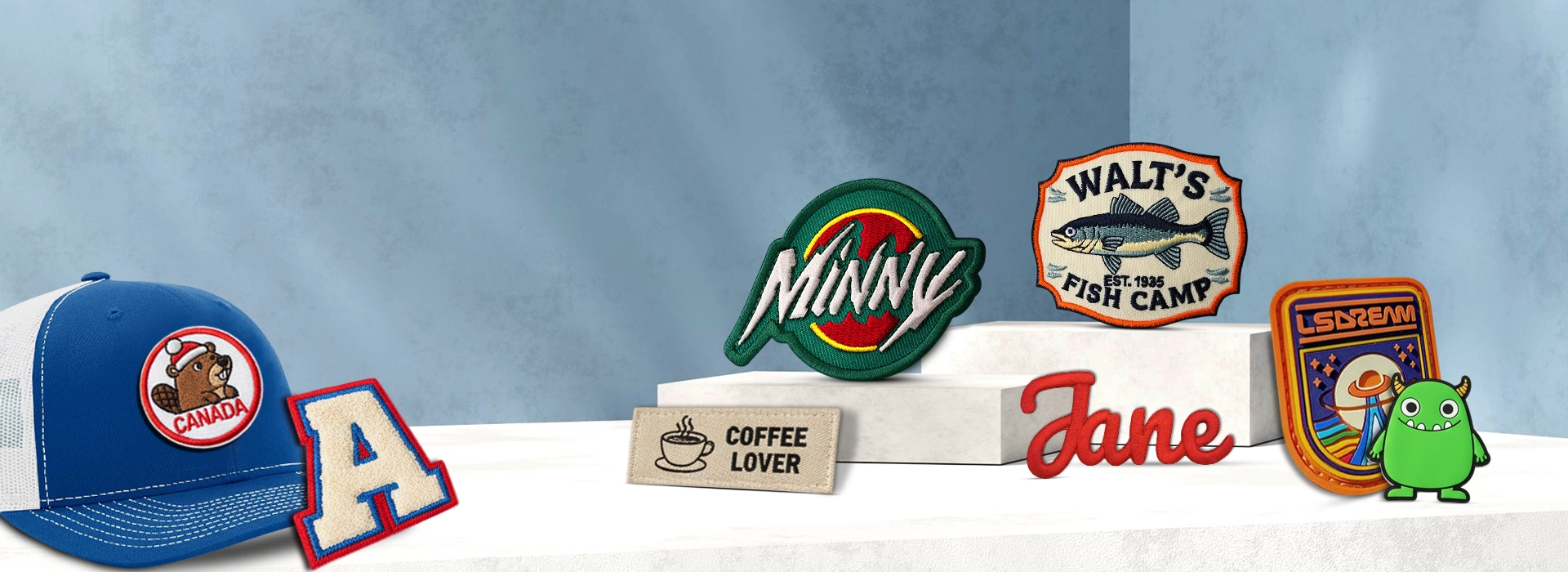
Custom patches are specially designed pieces of fabric or other materials that display logos, text, symbols, illustrations, or decorative patterns. They can be attached to clothing, bags, hats, uniforms, and various accessories.
Unlike ready-made patches, custom patches are created according to specific requirements. You can choose the design, shape, size, colors, border, material, and backing to match your preferences.
For example, a company might order embroidered patches featuring its logo for employee uniforms. A sports team could choose patches with its name and emblem, while a fashion brand might prefer woven or leather patches to create a recognizable identity.
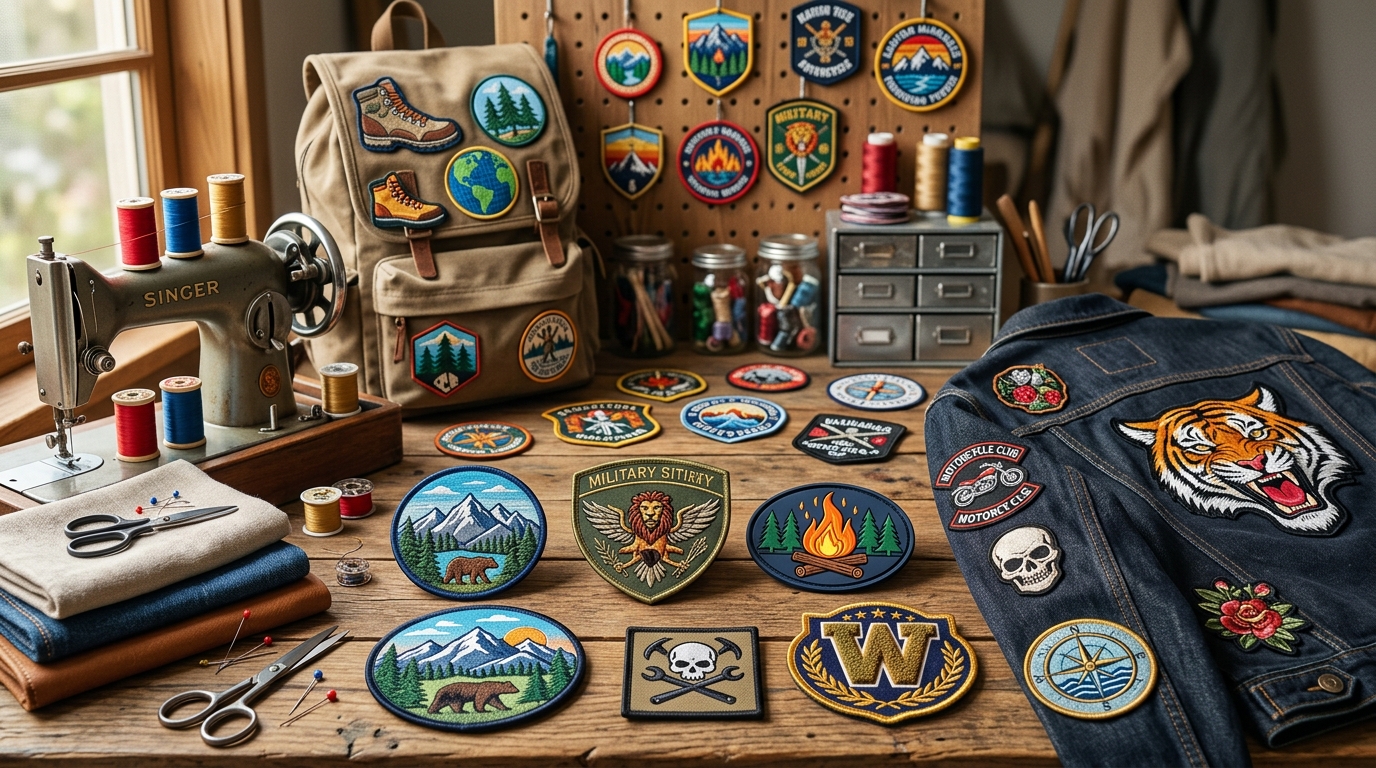
Custom patches are also useful for personal projects. Someone who enjoys traveling might collect patches from different destinations, while a motorcycle enthusiast may use patches to represent a club or hobby. Others use them to decorate old clothing or cover small areas of fabric damage.
Their versatility makes custom patches suitable for professional, personal, and decorative purposes. The key is selecting a style that matches the design and the way the patch will be used.
Embroidered Patches
Embroidered patches are one of the most recognizable and widely used types of custom patches. They are made by stitching colored threads onto a fabric backing to create a design. The stitching produces a raised texture that gives the patch a traditional and professional appearance.
These patches are commonly used on uniforms, jackets, caps, backpacks, and workwear. Businesses often choose embroidered patches for their logos because they create a consistent appearance across employee clothing. Schools, sports teams, clubs, and organizations also use them to display names, symbols, and membership details.
One of the main advantages of embroidered patches is their visual appeal. The raised stitching makes simple designs stand out, especially when they include bold lettering, recognizable symbols, or distinct shapes.
They are available in different colors, sizes, and finishes. You can choose a standard shape or create a custom outline that follows the design.
However, embroidered patches are not always ideal for artwork containing very small text or extremely fine details. Because the design is created with thread, narrow lines and complicated illustrations may lose clarity.
If your design includes a simple logo, bold text, or a traditional emblem, embroidered patches are an excellent option.
Woven Patches
Woven patches are designed for situations where fine details and clear lettering are important. Instead of using thick embroidery threads stitched onto a backing, they are produced by weaving thinner threads together to create the design.
This process creates a flatter surface and allows more detail to fit into a smaller area. As a result, woven patches are particularly suitable for detailed logos, small lettering, intricate symbols, and designs with narrow lines.
Clothing brands, promotional companies, businesses, and organizations often use woven patches on shirts, jackets, hats, and other garments. Their neat appearance also makes them suitable for modern branding and minimalist designs.
Another advantage is their relatively lightweight construction. Woven patches can be a good choice when you want a detailed design without the thicker texture associated with traditional embroidery.
The main difference between embroidered and woven patches is the appearance and level of detail. Embroidered patches have a more raised texture, while woven patches generally provide a smoother finish.
If your artwork contains small text or intricate elements, woven patches may be the better choice.
PVC Patches
PVC patches are made from polyvinyl chloride, a flexible material that creates a rubber-like appearance. They are popular for their bold designs, distinctive texture, and ability to display raised or recessed details.
These patches are commonly used on backpacks, outdoor clothing, tactical equipment, sports accessories, and other products that require a modern appearance. They are also popular among motorcycle clubs, outdoor enthusiasts, and organizations looking for an alternative to fabric patches.
PVC patches can include multiple colors, raised lettering, layered designs, and custom shapes. These features make them useful for logos that need to stand out clearly.
Another benefit is their resistance to moisture. PVC generally handles exposure to water better than many fabric materials and can often be cleaned easily with a suitable cloth.
However, PVC patches have a different appearance from traditional embroidered or woven designs. They may not suit every clothing style or brand identity. Their flexibility and overall performance also depend on the specific construction.
When choosing PVC patches, consider where they will be attached and how the finished product will be used.
For outdoor accessories, backpacks, and designs that benefit from a modern, three-dimensional appearance, PVC patches can be a practical choice.
Chenille Patches
Chenille patches are known for their thick, soft, and textured surface. They are commonly associated with varsity jackets, school apparel, sports teams, and retro-inspired fashion.
Their distinctive appearance comes from the yarn used to create a raised, fuzzy finish. Large letters, numbers, and simple symbols work particularly well because the texture makes them visually prominent.
Schools and universities often use chenille patches to represent achievements, team membership, graduation years, or school initials. Fashion brands also use them to create bold designs on jackets, sweatshirts, and other clothing.
One of the main advantages of chenille patches is their ability to make a design stand out without relying on complicated artwork. Their texture adds depth and character to otherwise simple shapes.
However, they are not the best option for every design. Small lettering, thin lines, and highly detailed illustrations may not reproduce clearly because of the thick yarn.
If you want a bold patch with a soft texture and a classic varsity appearance, chenille is worth considering.
Leather and Faux Leather Patches
Leather patches offer a clean and premium appearance that works particularly well with denim, jackets, hats, bags, and other fashion products.
They can be made from genuine leather or faux leather, depending on the desired look, budget, and material preferences. Designs may be engraved, embossed, debossed, or printed onto the surface.
Many clothing brands use leather patches on jeans and jackets to display their logos. Small businesses and handmade product makers also use them on canvas bags, aprons, wallets, and accessories.
Leather patches are especially suitable for simple logos, brand names, and minimalist designs. Their appearance can add a distinctive finishing touch without requiring bright colors or elaborate artwork.
Faux leather provides an alternative for those seeking a leather-like appearance with different material and cost considerations. The quality and durability of either option depend on the material and manufacturing process.
Before choosing leather patches, consider the garment's cleaning requirements and expected use. Some leather materials may not be suitable for repeated machine washing or high heat.
For fashion products that need a refined and understated finish, leather and faux leather patches can be an excellent option.
Printed Patches
Printed patches are useful when a design includes detailed illustrations, multiple colors, gradients, or artwork that would be difficult to reproduce with thread.
They are produced by transferring a design onto a suitable fabric or patch surface using a printing method. Depending on the production process, printed patches can reproduce fine lines, complex graphics, and a broad range of colors.
Businesses, event organizers, creative brands, and individuals often use printed patches for promotional products, commemorative designs, and personalized clothing.
One of their main advantages is design flexibility. You can create artwork with detailed color combinations and visual elements that might not work as well with embroidery.
Printed patches can also be suitable for travel souvenirs, event merchandise, and illustrations that need to retain a particular appearance.
However, the final quality depends on the printing technique, base material, ink, and finishing process. Some printed patches may require more careful maintenance than other types, particularly when exposed to repeated friction or washing.
If your design depends on detailed artwork or a wide color palette, printed patches may be the most suitable choice.
Choosing the Right Material
The material of a custom patch affects its appearance, texture, durability, and suitability for different applications. Choosing the right material helps ensure that the patch looks appropriate and performs as expected.
Embroidered patches are ideal for traditional logos and textured designs. Woven patches work well for small text and detailed artwork. PVC patches are useful for outdoor accessories and modern designs, while chenille patches suit bold varsity lettering.
Leather and faux leather patches are popular for premium fashion products, and printed patches offer flexibility for colorful illustrations.
When comparing materials, think about the item on which the patch will be used. A thick patch may not be comfortable on lightweight clothing, while a flexible option may be more suitable for bags or accessories that bend frequently.
You should also consider the environment. Work uniforms, outdoor equipment, school clothing, and decorative fashion items can have different requirements.
For example, a patch used on a backpack may need to withstand friction and regular handling. A patch used on a decorative jacket may be selected mainly for appearance.
Before placing an order, discuss your intended use with the manufacturer. This can help you select a material that matches your design, budget, and durability requirements.
Custom Patch Backing Options
The backing determines how a patch attaches to clothing or another surface. Different backing options offer different levels of convenience, flexibility, and attachment strength.
Sew-On Patches
Sew-on patches are attached using a needle and thread or a sewing machine. They are suitable for many types of clothing, including jackets, uniforms, bags, and workwear.
When properly attached, sewing provides a dependable connection. It is often a good option for garments that experience frequent movement or washing.
The strength of the attachment depends on the fabric, stitching quality, patch construction, and care routine.
Iron-On Patches
Iron-on patches feature a heat-activated adhesive that bonds to compatible fabrics. They are popular because they can be applied without professional sewing equipment.
However, not every fabric can tolerate the required heat. Delicate garments, some synthetic materials, and certain coated fabrics may be damaged during application.
Always follow the manufacturer's instructions and check whether the garment is suitable for heat application. Additional stitching may be useful for items that experience heavy wear, depending on the patch and fabric.
Hook-and-Loop Patches
Hook-and-loop patches are designed to be attached and removed easily. They are commonly used on uniforms, tactical equipment, bags, and accessories where the patch may need to be changed.
One part of the fastening system is attached to the patch, while the matching part is attached to the item.
This option is particularly useful when different designs need to be displayed on the same garment or piece of equipment.
Adhesive-Backed Patches
Adhesive-backed patches use a sticky layer to attach to a suitable surface. They may be useful for crafts, temporary displays, and decorative applications.
Their performance depends on the adhesive, surface material, temperature, and level of use. They may not be appropriate for garments that require frequent washing.
Before selecting a backing, consider whether the patch should be permanent, removable, or easy to apply at home.
Common Uses of Custom Patches
Custom patches are used across many industries and personal activities because they combine identification, decoration, and branding.
Business Uniforms
Businesses use patches to display logos, employee names, and department information on uniforms. Matching patches can create a consistent appearance and help customers identify staff members.
They are commonly used in hospitality, retail, maintenance, delivery services, and other workplaces.
Schools and Universities
Schools use patches on uniforms, jackets, sports clothing, and club apparel. They may represent school names, house symbols, team achievements, or special events.
Chenille patches are particularly popular for varsity jackets because of their thick texture and bold lettering.
Sports Teams
Sports teams use patches to represent team identities, championships, competitions, sponsors, and achievements.
The best patch type depends on the garment, design, and expected level of use. A detailed emblem may require woven construction, while a bold team logo may work well as an embroidered patch.
Fashion and Streetwear
Custom patches allow people to personalize jackets, jeans, caps, shirts, and backpacks. They can create a vintage appearance, add color, or help a clothing brand establish a recognizable style.
Designers can use patches to introduce logos, graphics, lettering, and decorative elements without redesigning an entire garment.
Clubs and Organizations
Clubs, community groups, motorcycle enthusiasts, and volunteer organizations often use patches to represent membership or shared interests.
Custom shapes, symbols, and colors can make each group's design distinctive.
Events and Promotions
Businesses and event organizers may distribute custom patches at exhibitions, festivals, conferences, fundraisers, and community events.
These patches can serve as souvenirs and help people remember an occasion after it has ended.
Personal Projects
Individuals use patches to decorate clothing, personalize bags, and refresh older garments. Patches can also cover small areas of fabric damage when the garment is otherwise in suitable condition.
The best results come from choosing a patch that complements the fabric and is attached securely.
How to Design the Perfect Custom Patch
A successful patch design should be attractive, readable, and suitable for its intended use. You do not need complicated artwork to create a professional result.
Start by deciding what the patch needs to communicate. A business logo may need to emphasize the company name, while a sports patch may focus on a team symbol.
Keep the design simple enough to reproduce clearly. Small patches have limited space, so too much text or too many decorative elements can make the final result difficult to read.
Choose colors that work well together and create sufficient contrast. If you are designing a patch for a business, using established brand colors can help maintain consistency.
Next, select the shape and dimensions. Circles, rectangles, squares, shields, and custom outlines are all common choices. The right shape depends on the artwork and the available space on the garment.
Consider the placement before finalizing the size. A patch intended for a cap may need a different design from one intended for the back of a jacket.
You should also select a suitable patch type. Detailed logos may work better with woven or printed patches, while bold designs can look attractive in embroidery or chenille.
Finally, review the artwork carefully. Check spelling, colors, proportions, and fine details before approving production. Request a digital proof and, when practical, a physical sample.
Taking time to review these details can help you avoid mistakes and achieve a better result.
Factors That Affect Custom Patch Prices
The cost of custom patches depends on several factors, including size, material, design complexity, quantity, backing, and finishing options.
Larger patches generally require more material and production work. Designs with intricate details, multiple colors, special borders, or unusual shapes may also require additional production steps.
The material can affect the price because different patch types use different manufacturing processes. Embroidered, woven, PVC, chenille, leather, and printed patches do not necessarily have the same production costs.
Order quantity is another important factor. Some manufacturers offer lower prices per patch for larger orders because setup costs are spread across more units. However, ordering more patches increases the overall amount you spend.
Additional expenses may include artwork preparation, samples, special backing, packaging, and shipping.
When comparing suppliers, ask for a clear quotation that includes the patch specifications and any extra charges. Confirm the minimum order quantity, production timeline, and delivery arrangements before making a decision.
The cheapest option is not always the best value. A patch should meet your expectations for appearance, attachment, and durability while staying within your budget.
Common Mistakes to Avoid
One common mistake is choosing artwork that contains too much small text. Fine lettering may become difficult to read when reproduced in thread or other materials.
Another mistake is selecting a patch based only on its appearance. A decorative patch may not be suitable for outdoor equipment or workwear that experiences regular friction and demanding conditions.
Choosing the wrong backing can also cause problems. An iron-on patch may not be suitable for every fabric, while an adhesive backing may not provide a lasting attachment on frequently washed clothing.
Some buyers overlook the final dimensions and approve artwork without considering how the patch will look on the actual garment. Always check the size and placement before production.
Spelling errors and incorrect colors are other issues worth avoiding. Carefully review the artwork and request a proof before approving the order.
It is also important to understand the manufacturer's care instructions. Not every patch is waterproof, heat-resistant, or suitable for machine washing.
Finally, do not compare suppliers on price alone. Review the material, construction, attachment method, production timeline, and overall quality before choosing a manufacturer.
How to Care for Custom Patches
Proper care can help maintain the appearance of custom patches and the clothing to which they are attached.
Start by checking the care instructions for both the patch and the garment. If machine washing is permitted, turning the garment inside out can help reduce friction during the washing process.
Use a suitable washing cycle and avoid excessive heat unless the manufacturer confirms that it is safe. Some patch materials and adhesives may be affected by high temperatures.
PVC patches can often be cleaned with a soft cloth, while leather and faux leather patches may require specific cleaning methods. Avoid using harsh chemicals or soaking materials unless the manufacturer recommends it.
Inspect patches regularly, especially on items that receive frequent use. If stitching becomes loose or an edge begins to lift, repairing the attachment early may prevent further damage.
Iron-on patches may gradually lose adhesion through repeated washing and wear. Depending on the fabric and patch construction, additional stitching can help secure them.
With suitable care, custom patches can remain attractive and useful for an extended period.
Conclusion
Custom patches provide a versatile way to personalize clothing, promote businesses, represent organizations, and create distinctive fashion designs. From embroidered and woven patches to PVC, chenille, leather, and printed options, each style offers different benefits.
The right choice depends on your design, material preferences, budget, attachment method, and intended use. Embroidered patches offer a classic textured appearance, woven patches reproduce fine details, and PVC patches provide a modern finish. Chenille is ideal for bold varsity designs, while leather and printed patches offer other creative possibilities.
Before ordering, take time to review your artwork, choose the appropriate backing, confirm the dimensions, and compare production quotations. These steps can help you avoid common mistakes and ensure that the finished patch meets your expectations.
Whether you need patches for uniforms, fashion, sports teams, promotional events, or personal projects, the process can be straightforward when you understand your options. With thoughtful planning and the right material, custom patches can turn ordinary items into distinctive products that communicate identity, creativity, and style.