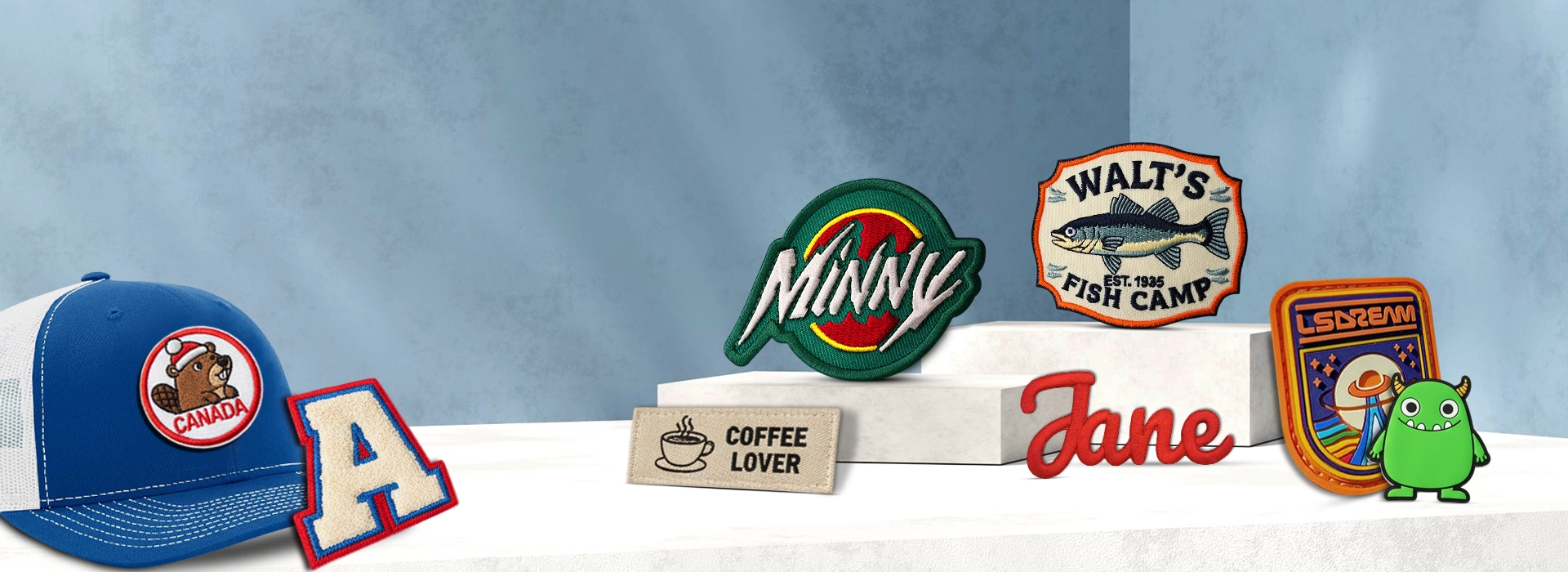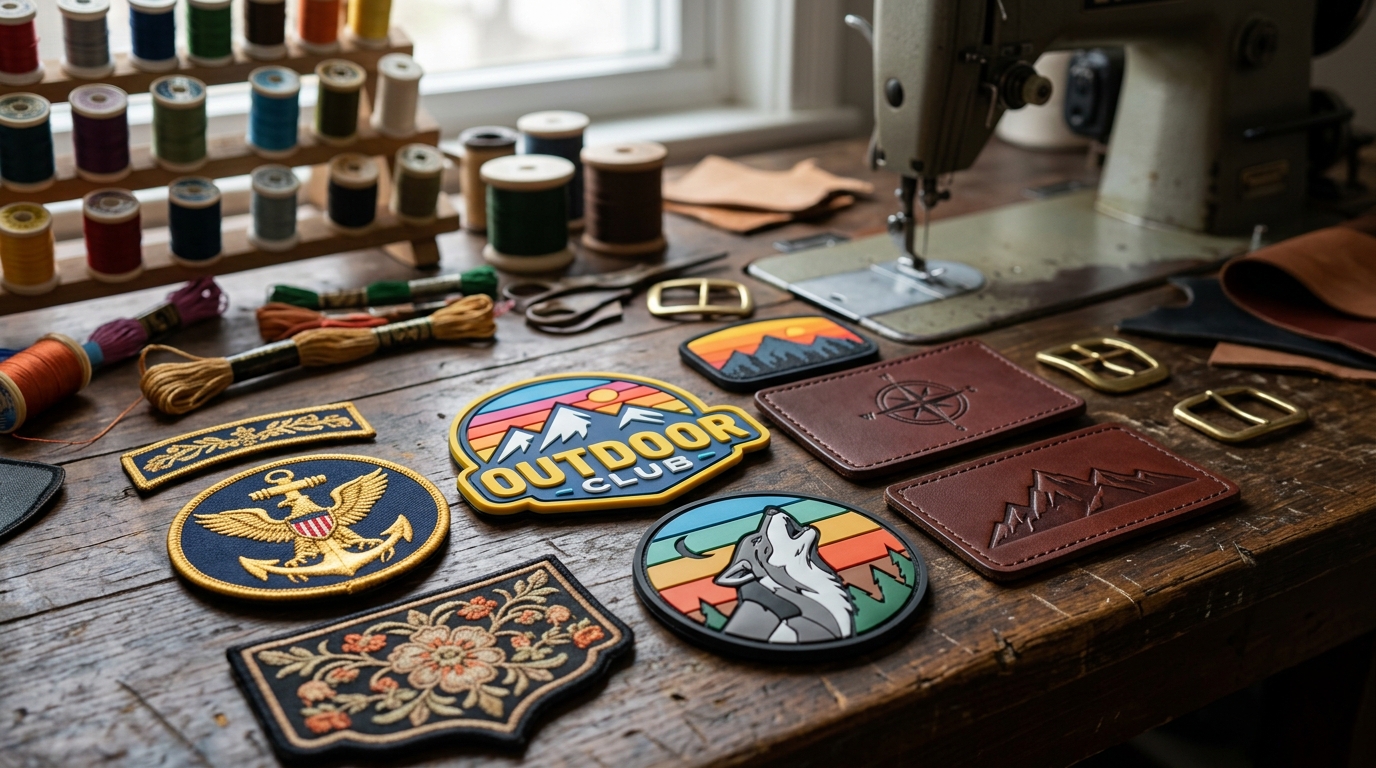
Custom patches are a simple way to give clothing, accessories, uniforms, and branded products a distinctive look. Whether you prefer the timeless texture of embroidery, the modern appearance of PVC, or the premium finish of leather, the right patch can help bring your ideas to life. With so many materials, shapes, colors, and attachment options available, it is easier to create a design that reflects your personal style, business identity, or team's personality.
What makes custom patches so useful is their versatility. A small embroidered logo can make a uniform look more professional, while a bold PVC patch can add character to a backpack or outdoor accessory. Leather patches can give denim and casualwear a refined finish, and woven patches can display detailed logos with a clean, smooth appearance. Each style offers different benefits, so choosing the right one depends on how the patch will be used and the impression you want it to create.
Custom patches are also about more than appearance. They can help businesses build brand recognition, give teams a shared identity, personalize everyday clothing, and turn ordinary products into memorable items. Because the design can be customized, you are not limited to standard shapes or ready-made artwork. You can choose the details that matter to you and create a patch that feels genuinely your own.
The key is to understand the available options before making a decision. When you know the differences between embroidery, PVC, leather, and other patch styles, you can choose a design that looks right, fits your budget, and performs well for its intended purpose.
What Are Custom Patches and Why Are They So Popular
Custom patches are specially designed pieces of material that can be attached to clothing, bags, hats, uniforms, and many other products. They may feature logos, names, symbols, illustrations, slogans, or decorative artwork. Unlike standard patches, custom designs can be made to suit a particular brand, group, event, or personal preference.
Their popularity comes from the combination of flexibility and practicality. A patch can add branding without requiring an entire garment to be redesigned. It can also refresh an existing item, cover a small worn area, or give a simple product a more distinctive appearance.
For businesses, custom patches offer a consistent way to display logos on uniforms and promotional products. Sports teams can use them to represent their colors and identity, while clothing brands can add patches as recognizable design details. Individuals can use them to personalize jackets, bags, caps, and accessories.
Another reason people choose custom patches is the variety of available finishes. Embroidered patches create a classic stitched texture, PVC patches offer raised details and defined shapes, and leather patches provide a more understated, premium look. Woven and printed options are also useful for designs that require finer lines or more complex colors.
With the right design and construction, a patch can become a small but important part of a product's overall identity.
Classic Embroidered Patches for a Timeless Look
<text> </text>
<AsyncImage query="close up embroidered custom logo patch textured stitching on dark fabric jacket" aspectRatio="16:9" width="100%" />
Embroidered patches remain one of the most recognizable patch styles. They are created by stitching thread onto a fabric backing, producing a raised surface that gives logos and designs a traditional, textured appearance.
This style works well for company uniforms, school emblems, sports teams, club jackets, caps, and workwear. It can make a logo feel established and professional while adding a tactile detail that stands out from the garment.
Why Choose Embroidered Patches?
One of the biggest advantages of embroidered patches is their classic appearance. The stitching adds depth and texture, helping simple symbols, bold lettering, and recognizable logos stand out.
They are also versatile enough for many different settings. A company can use embroidered patches on staff uniforms, a sports club can display its emblem on team jackets, and a clothing brand can add a stitched logo to hats or outerwear.
Embroidery is especially effective when the design uses clear shapes and a manageable number of colors. However, very small text, thin lines, and highly intricate artwork may need to be simplified to ensure that the finished patch remains readable.
Where Do Embroidered Patches Work Best?
Embroidered patches are suitable for:
Company and staff uniforms
School and sports team apparel
Denim and casual jackets
Caps and hats
Club and organization clothing
Promotional merchandise
If you want a traditional patch with a recognizable stitched finish, embroidery is a strong option. It offers a familiar style that can complement both everyday clothing and professional garments.
Bold PVC Patches for a Modern Appearance
<text> </text>
<AsyncImage query="custom molded PVC rubber patches raised 3D logo colorful outdoor tactical backpack patches" aspectRatio="16:9" width="100%" />
PVC patches offer a different look from fabric-based designs. Made from flexible synthetic material, they are known for their raised details, defined edges, and clean finish. They can create a three-dimensional effect that gives logos and symbols a bold, modern appearance.
These patches are often used on outdoor gear, backpacks, uniforms, caps, equipment, and accessories that benefit from a structured design.
What Makes PVC Patches Different?
PVC allows designers to create clearly defined shapes, raised lettering, layered details, and contrasting sections. This makes it suitable for logos that need a strong visual presence.
Unlike embroidered patches, PVC patches do not rely on thread to create their details. The molded material forms the design, allowing a different type of texture and finish.
PVC is also generally resistant to moisture, although performance depends on the material formulation, construction, and conditions of use. This makes it worth considering for products that may be exposed to outdoor conditions.
Best Uses for PVC Patches
PVC patches are often a good choice for:
Backpacks and outdoor bags
Outdoor and adventure clothing
Tactical-style gear
Sports accessories
Modern brand logos
Equipment and utility products
Their appearance is particularly suited to bold designs that use distinct outlines and clear visual elements. If your brand has a contemporary identity or you want a patch that looks different from traditional embroidery, PVC may be the right fit.
Before ordering, consider whether the patch's texture and finish suit the product. A modern PVC patch can look excellent on a backpack but may not match the understated style of every formal garment.
Premium Leather Patches for a Refined Finish
<text> </text>
<AsyncImage query="custom brown leather embossed logo patch on blue denim jeans close up premium leather label" aspectRatio="16:9" width="100%" />
Leather patches are popular for their natural-looking texture and understated appearance. They are commonly used on denim jeans, jackets, hats, backpacks, and lifestyle products. Depending on the material and production method, the design can be embossed, debossed, engraved, or printed.
A leather patch can make a product feel more carefully finished without relying on bright colors or heavy decoration. Its appeal often comes from the combination of simple artwork, material texture, and clean placement.
Why Leather Patches Feel Special
Leather patches can create a premium impression because they add a distinct material to the product. A simple logo pressed into a leather surface can look subtle and recognizable, making it suitable for brands that prefer a clean and understated identity.
They are particularly popular with denim and casualwear labels. A leather patch on the waistband of a pair of jeans, for example, can become a familiar part of the brand's appearance.
Leather-style patches also work well on bags, hats, and selected accessories. Depending on the intended look and material requirements, you can consider genuine leather or synthetic alternatives.
Choosing the Right Leather Option
Genuine leather and synthetic leather differ in texture, maintenance, cost, and material sourcing. The choice depends on your preferences, budget, and brand values.
You should also consider the conditions in which the patch will be used. Leather and leather-like materials may require specific care, especially when exposed to moisture, heat, or frequent washing.
If you want a patch with a refined finish and a distinctive material feel, leather is worth considering. Its simple appearance can work especially well when the design is clean and the placement is carefully chosen.
Woven Patches for Fine Details and Clean Designs
Woven patches are made by weaving thinner threads together to form the design. Their construction often allows more detailed artwork and smaller lettering than traditional embroidery, depending on the size and complexity of the design.
Unlike embroidered patches, which have a more raised surface, woven patches generally have a flatter, smoother finish. This makes them suitable for clothing labels, uniforms, detailed logos, and designs that require a neat appearance.
When Are Woven Patches the Better Choice?
Woven patches are particularly useful when your logo includes thin lines, compact lettering, or small graphic elements. They can reproduce many details without relying on the thicker stitches associated with embroidery.
For clothing brands, this can be helpful when a logo needs to remain clear at a smaller size. Businesses can also use woven patches when they want their branding to look tidy and professional.
However, the final result still depends on the artwork and patch dimensions. Even a detailed production method cannot make an overcrowded design easy to read. Simplifying unnecessary elements can improve the final appearance.
Choose woven patches when you need a clean, relatively flat design and want fine details to remain visible.
Printed Patches for Colorful and Detailed Artwork
Printed patches are useful when a design includes a wide range of colors, gradients, illustrations, or visual details that may be difficult to reproduce with stitching.
Instead of creating the entire image with thread, printing transfers the artwork onto a suitable patch surface. The result can preserve color transitions and intricate elements, depending on the printing method and material.
What Can You Create With Printed Patches
Printed patches can work well for:
Detailed illustrations
Colorful promotional designs
Complex brand artwork
Event and campaign patches
Designs with gradients
Artwork containing small visual elements
This flexibility makes printed patches a practical choice when the original artwork needs to remain visually accurate.
Before placing an order, check the design proof carefully. Colors can appear differently on a physical material than they do on a screen, and the final appearance depends on the production process. For larger orders, requesting a sample can help you assess color accuracy and overall quality.
Chenille Patches for Bold, Textured Designs
Chenille patches are known for their thick, soft, fuzzy texture. They are often used on varsity jackets, school apparel, sports clothing, and collegiate-style fashion.
Their construction creates a noticeable surface that works especially well for large letters, numbers, mascots, and simple shapes. Chenille patches can make a garment feel more expressive because the patch itself becomes a prominent design feature.
Why Chenille Patches Stand Out
Chenille is a good choice when you want a large, textured design rather than a small, subtle logo. It is often combined with embroidery to create additional outlines, lettering, and decorative details.
For example, a varsity jacket might feature a large chenille initial with an embroidered border. This combination adds depth while helping the design remain recognizable.
Because chenille is relatively thick, it is best suited to garments that have enough space to accommodate the patch. A design with too many small details may not benefit from the material's distinctive texture.
If you want a patch that creates a bold visual statement, chenille offers an option that feels different from both embroidery and PVC.
How to Choose the Right Custom Patch for Your Needs
With so many patch styles available, it helps to start with your intended purpose. The best choice is not always the most expensive or visually complex option. It is the one that suits your design, product, and practical requirements.
Consider the Purpose of Your Patch
Think about what you want the patch to achieve.
If you need to display a company logo on uniforms, an embroidered or woven patch may be suitable. If you want a modern design for outdoor equipment, PVC may be a better fit. For a clothing brand that values a premium, understated appearance, leather can be an effective option.
Personal projects may have different priorities. A jacket designed for self-expression could benefit from chenille, printed artwork, or a combination of several patch styles.
Knowing the purpose helps you narrow down the choices before you invest time in detailed artwork.
Match the Material to the Product
The item receiving the patch matters just as much as the design itself.
A lightweight shirt may work better with a relatively small, lightweight patch, while a denim jacket can often accommodate a heavier or more textured design. A backpack may be suitable for PVC or embroidered patches, depending on its surface and attachment method.
Also consider how the item will be used. Workwear that receives frequent washing may need different construction from a decorative accessory used occasionally.
Always confirm that the patch material and attachment method are compatible with the garment or product.
Think About Your Budget
The cost of custom patches can vary according to size, material, design complexity, quantity, backing, and finishing options.
A simple embroidered patch may be a cost-effective choice for some orders, while molded PVC or specialized leather designs may involve different production costs. However, pricing depends on the supplier and specifications, so it is best to compare quotations for the same requirements.
If you need patches for a large team or business, ask about minimum order quantities and bulk pricing. For a personal project or a small collection, check whether the supplier offers smaller production runs.
Rather than choosing based on price alone, consider the patch's expected use, quality, and overall value.
Check the Size and Placement
The right size helps a patch look balanced on the item. A logo on a cap needs different dimensions from a large emblem on the back of a jacket.
Measure the available area before finalizing the artwork. Make sure the patch does not interfere with seams, pockets, zippers, or other design features.
Placement also affects visibility. A small patch near a pocket can create a subtle detail, while a larger patch on the back of a jacket can become the main feature.
Whenever possible, review a mock-up showing the patch at its actual size and intended position.
Designing Custom Patches That Reflect Your Identity
A good patch design starts with a clear idea of what you want to communicate. You do not need a complicated illustration to create something memorable. A recognizable symbol, well-designed lettering, or a simple logo can be enough.
Use Colors That Work Together
Color helps people recognize a brand or understand the character of a design. If you are making patches for a business, using established brand colors can help maintain consistency across uniforms, packaging, and merchandise.
For personal designs, choose colors that complement the item and reflect your style. Strong contrast can improve readability, while a more restrained palette may create a subtle appearance.
Avoid using too many competing colors without a clear reason. A crowded palette can make a small patch harder to understand, especially when the design contains lettering.
Keep the Main Design Clear
A patch often needs to communicate its message quickly. Too many symbols, several fonts, or very small text can make the finished design difficult to read.
Identify the most important element and build the layout around it. For a company patch, this might be the logo or business name. For a team, it could be a mascot or emblem.
Supporting details should add meaning without distracting from the main design. Simplifying the artwork where necessary can help the patch look more polished.
Choose a Shape That Supports the Artwork
Custom patches can be made in many shapes, including circles, rectangles, shields, letters, and custom outlines, subject to the manufacturer's capabilities.
A rectangular shape may suit a name or wordmark, while a circular design can work well for a badge or club emblem. A custom silhouette can give the patch a more distinctive appearance when the artwork supports it.
The shape should complement the design rather than make it harder to understand. Consider how the edges will look on the garment and whether the finished patch will have enough space around the lettering.
Add Personal Details With a Purpose
Small design elements can make a patch feel more meaningful. These might include a founding year, a short phrase, a symbol connected to a hobby, or a detail that represents a team or organization.
For example, an outdoor brand might use a mountain outline, while a sports club could incorporate its mascot and establishment year. A clothing label might use a distinctive border or a simplified symbol that appears across its collection.
The strongest personal details have a clear connection to the design. They help create identity rather than simply filling empty space.
Custom Patches for Businesses and Clothing Brands
Custom patches offer businesses a flexible way to display their identity across different products. They can be used on staff uniforms, branded apparel, promotional merchandise, and accessories.
Build a Consistent Brand Image
Using the same logo and color scheme across different products helps people recognize a business. A company might use embroidered patches on uniforms, woven patches on selected garments, and leather patches on premium merchandise.
The material can vary while the core identity remains consistent. This allows the business to choose the most suitable patch style for each product without losing its recognizable look.
Give Clothing Products a Distinctive Finish
For clothing brands, a patch can become an important design detail. A leather patch on denim, an embroidered emblem on a jacket, or a woven label on a shirt can help give the product a recognizable finish.
The key is to make the patch feel connected to the garment. Its size, color, and placement should support the product's overall style.
Use Patches for Promotional Merchandise
Custom patches can be created for launches, events, customer gifts, staff recognition, and limited-edition collections. They can be attached to useful items or distributed as collectibles, depending on the purpose of the campaign.
A campaign-specific design can make merchandise feel more personal and memorable. To improve the result, choose artwork that clearly connects to the event or message and a patch style suited to the intended audience.
Create a Unified Look for Teams
Sports teams, schools, clubs, and organizations can use patches to create a shared appearance. Names, logos, mascots, and colors help members feel connected to the group.
For uniforms, readability and consistency are especially important. The design should be clear enough to identify the group without making the garment look cluttered.
Choosing the Best Attachment Method
The backing determines how a patch attaches to the product. Choosing the correct method helps the patch stay in place and makes sure it suits the intended use.
Sew-On Backing
Sew-on patches are attached with stitching. They are commonly used for jackets, uniforms, denim, bags, and workwear.
This method is suitable when a secure attachment is important or when the fabric is not appropriate for heat application. Proper stitching can help the patch withstand regular use, although the result depends on the material and quality of the sewing.
Iron-On Backing
Iron-on patches use heat-activated adhesive and can be convenient for compatible fabrics. They are often chosen for personal clothing projects because they may be applied without sewing.
However, not every fabric can tolerate the required heat. The strength of the bond also depends on the adhesive, the garment material, and whether the application instructions are followed correctly.
Check the garment's care label and the patch manufacturer's instructions before applying heat. For frequently washed or heavily used items, additional stitching may be appropriate when compatible with the patch and fabric.
Hook-and-Loop Backing
Hook-and-loop backing allows a patch to be removed and replaced when needed. It is useful for compatible uniforms, tactical-style clothing, outdoor gear, and bags.
This option is particularly helpful when the same garment needs to display different names, roles, or designs at different times.
Adhesive Backing
Adhesive-backed patches can provide a convenient option for suitable surfaces and temporary applications. However, they may not be appropriate for clothing that is washed frequently or exposed to demanding conditions.
Confirm the manufacturer's guidance before selecting adhesive backing for a specific product.
How to Order Custom Patches With Confidence
A little preparation can make the ordering process much easier and help you avoid unnecessary corrections.
Prepare High-Quality Artwork
Start with a clear version of your logo or design. Vector artwork is often useful because it can be resized without losing clarity. If you only have an image file, ask the manufacturer which formats and resolution levels it accepts.
Review the design for spelling, proportions, spacing, and color accuracy. If very small details need to be simplified for production, make sure you understand and approve the changes.
Confirm the Final Specifications
Before placing an order, confirm the patch dimensions, material, shape, backing, edge finish, and quantity. These details can affect both the final appearance and the quoted price.
Ask for a digital proof or mock-up showing the proposed design. This is especially important when the patch includes text, detailed artwork, or unusual dimensions.
Request a Sample for Larger Orders
A sample lets you evaluate the material, texture, colors, stitching, edges, and overall construction before committing to a larger quantity.
A digital proof can help you check the layout, but it cannot always show how the finished patch will feel or look in person. Testing a sample on the intended garment can also help confirm that the patch suits the fabric and placement.
Compare Suppliers Carefully
When comparing suppliers, look beyond the initial price. Check material options, production methods, minimum quantities, lead times, sample availability, shipping charges, and finishing choices.
Ask for a clear quotation that lists the specifications included in the price. This makes it easier to compare similar products and understand what you are paying for.
Review the Final Proof
Before approving production, check the logo, spelling, colors, dimensions, shape, and placement. Make sure the proof reflects the agreed specifications.
Correcting an error before production is generally easier than addressing a problem after the patches have been made. Careful review can save time and help ensure that the finished order meets your expectations.
How to Care for Custom Patches
The best way to maintain a custom patch depends on its material, backing, and the item to which it is attached. Following the correct care instructions can help preserve the design and reduce unnecessary wear.
For clothing with embroidered or woven patches, follow the garment's washing instructions and avoid excessive friction where possible. Turning the garment inside out may help protect the patch during washing.
PVC patches may tolerate moisture well, but their care requirements still depend on the specific material and construction. Leather and leather-like patches may need gentler handling and protection from conditions that can damage their surface.
Check patch edges occasionally for loose stitching or lifting adhesive. Addressing a small problem early may help prevent further separation.
For frequently used bags, uniforms, and outdoor products, inspect the patch after periods of heavy use. The appropriate maintenance routine will depend on the product and how it is used.
Most importantly, choose a patch designed for its intended purpose. A decorative patch on a fashion accessory may not need the same construction as one used on workwear or outdoor equipment.
Common Mistakes to Avoid When Ordering Custom Patches
Even a good design can lose its impact when important details are overlooked. Keeping a few common mistakes in mind can help you make better decisions.
Choosing the wrong material: Embroidery, PVC, leather, woven, and printed patches each have different characteristics. Match the material to the design and intended application.
Using too many small details: Tiny lettering and crowded artwork may be difficult to reproduce clearly. Simplify the design where necessary.
Ignoring color contrast: A logo can become difficult to read when the background and lettering are too similar. Check the color combination before approval.
Selecting unsuitable backing: The wrong attachment method can cause problems with certain fabrics and surfaces. Confirm compatibility with the manufacturer.
Overlooking the final size: A design that looks good on a computer screen may appear crowded when produced at its actual dimensions. Review a correctly sized mock-up.
Skipping the proofing stage: Spelling mistakes, incorrect colors, and layout problems are easier to address before production begins. Review every detail before approving the order.
Avoiding these mistakes does not require a complicated process. Clear communication, realistic expectations, and careful checking can make a noticeable difference to the final result.
Conclusion
Custom patches make it possible to turn simple ideas into designs that feel personal, recognizable, and practical. Whether you prefer classic embroidery, bold PVC, premium leather, detailed woven artwork, colorful printing, or textured chenille, each patch style offers a different way to express your identity.
The best choice depends on what you want to create and where the patch will be used. Consider the material, design complexity, size, attachment method, maintenance requirements, and overall budget before placing an order. These decisions help ensure that your patch looks right and performs as expected.
For businesses, custom patches can strengthen brand recognition and create a consistent appearance across uniforms and merchandise. For clothing brands, they can add a distinctive finishing detail to products. For individuals, they offer a creative way to personalize jackets, bags, caps, and other everyday items.
A successful patch design does not need to be complicated. Clear artwork, thoughtful color choices, suitable materials, and careful placement can make a simple logo or symbol stand out. By taking the time to plan the design and review the production details, you can create custom patches that suit your needs and reflect your style.
From classic embroidered designs to modern PVC and refined leather finishes, custom patches give you the freedom to make every detail your own. With the right choices, an ordinary garment or accessory can become something more distinctive, meaningful, and memorable.