Introduction
Every brand wants to create an identity that customers can recognize and remember. In a competitive market, having a good product is important, but the way a brand presents itself also influences how people perceive it. A recognizable logo, consistent colors, and distinctive design details can help a business establish a strong identity. Custom patches offer a practical way to bring these elements into clothing and accessories.
Custom patches turn a brand's logo, name, or original artwork into a physical design that can be attached to jackets, shirts, caps, bags, and other products. They provide a visible branding detail that customers can encounter in everyday life. When a patch reflects the character of a business and is designed carefully, it can help distinguish its products from similar items.
For clothing brands, patches can become signature features that customers associate with particular collections. For businesses, they can create a consistent appearance across employee uniforms. For independent designers and creative teams, they offer a way to present original artwork on wearable products.
The value of a custom patch depends on more than its appearance. Its design, material, size, placement, and construction all contribute to the impression it creates. A thoughtfully designed patch can help a brand look distinctive while keeping its products practical and appealing.
How Custom Patches Help a Brand Stand Out
Customers encounter many logos and product designs when shopping for clothing and accessories. A brand needs recognizable visual elements that help its products remain distinguishable. Custom patches provide an additional way to present those elements.
A patch gives a logo a physical presence. Instead of appearing only on a website, packaging, or advertisement, the brand identity becomes part of an item customers can wear or use. This creates another opportunity for people to notice the design.
For example, a clothing label may place a small embroidered emblem on the chest of a jacket. The same emblem can appear on a cap or backpack. When the design remains consistent across products, customers can begin to associate it with the brand.
Patches can also distinguish products within a collection. A particular shape, thread color, or placement may become a recognizable feature of a specific design. This allows a brand to develop its own visual character without changing the entire garment.
The patch should remain appropriate for the product. A design that is too large, crowded, or difficult to read may distract from the clothing. A balanced patch communicates the brand identity while complementing the garment.
Creating a Recognizable Identity Through Patch Design
A distinctive custom patch begins with a clear understanding of the brand. Before selecting materials or production methods, a business should decide what customers should recognize when they see the patch.
Some brands use their complete logo. Others choose a simplified symbol, initials, or a short brand name. The choice depends on the complexity of the artwork and the size of the patch.
A logo with fine details may need to be simplified for a small embroidered design. Removing unnecessary elements can make the central symbol easier to recognize. A brand name should also remain readable at the intended size.
Color plays an important role in recognition. Using established brand colors helps connect the patch with the business's other visual materials. A contrasting background can make the artwork easier to see, while carefully selected colors can create a distinctive appearance.
The shape of the patch can also support the identity. A circular patch may suit an emblem, while a rectangular design can provide space for a name or lettering. A custom outline can follow the shape of a symbol when that approach improves the design.
The goal is not to include every element of the brand. It is to create a clear design that customers can recognize without needing to examine it closely.
Custom Patches for Clothing Brands
Clothing brands can use patches to create signature details across their collections. A patch can become part of a garment's design rather than an additional logo placed without consideration.
Jackets provide several suitable locations for patches. A small emblem on the chest can create a subtle branding feature. A sleeve patch can add detail without occupying the main front area. A larger design on the back can become a central feature of a jacket intended to make a stronger visual statement.
Denim products are also suitable for custom patches. A clothing brand may use a woven label or leather patch near the waistband of jeans. Jackets can feature embroidered artwork that complements the denim's texture and color.
Streetwear brands often use patches to express a bold visual identity. Large symbols, distinctive lettering, and textured designs can support the style of hoodies, varsity jackets, and caps. Brands with a minimalist appearance may prefer smaller patches with restrained colors and simple artwork.
Consistency across products helps build recognition. A clothing label can use the same emblem on different garments while adjusting the patch dimensions to suit each item. This creates a connection between products without making every design identical.
Helping Business Uniforms Look Professional
Businesses can use custom patches to create a coordinated appearance for their employees. A logo patch on a uniform helps customers identify staff and connects the clothing with the organization.
Retail teams, restaurants, hospitality businesses, delivery services, workshops, and corporate departments can all use patches on suitable workwear. They may appear on shirts, jackets, aprons, caps, or other uniform items.
A uniform patch should communicate the business identity clearly. The logo should be readable, the colors should suit the uniform, and the overall design should remain professional.
Placement is important when several employees wear the same uniform. Positioning the patch consistently helps create a coordinated appearance. It also allows customers to recognize the business identity more easily.
Durability should be considered during production. Uniforms may be worn frequently and washed regularly. The patch material and attachment method should be appropriate for the garment and its care requirements.
A well designed uniform patch helps a business maintain a recognizable presentation while giving employees clothing that suits their work.
Custom Patches for Creative Brands and Independent Designers
Creative brands often rely on original artwork to communicate their identity. Custom patches allow artists and designers to turn illustrations, symbols, and lettering into physical products.
An independent clothing label may develop patches featuring artwork from a collection. A musician may use a recognizable emblem on merchandise. An illustrator may create patches based on original characters or visual themes.
These designs can be applied to jackets, bags, caps, and other accessories. They can also be offered as individual merchandise for customers who want to display the artwork on their own belongings.
A patch can preserve the main features of an illustration while adapting it to a smaller format. However, detailed artwork may require adjustments before production. Fine lines, tiny lettering, and closely spaced elements can become difficult to reproduce using thread.
Creative teams should consider how the artwork will look at its actual size. Simplifying selected details can help maintain the original idea while improving clarity.
The material and texture should also complement the artwork. Embroidery can give a design a raised appearance, while woven or printed patches may suit artwork that contains finer details.
Choosing the Right Type of Custom Patch
The production method affects the patch's appearance, texture, and suitability for different designs. Selecting an appropriate type helps a brand achieve the look it wants.
Embroidered Patches
Embroidered patches use thread stitched into a fabric base. They provide a textured appearance and work well for logos, bold symbols, and lettering.
They are commonly used on jackets, hoodies, caps, denim, and uniforms. The raised stitching can give a simple design a distinctive finish.
Embroidery is particularly suitable for artwork with clear shapes. If a logo contains very small details, the design may need to be simplified to preserve readability.
Woven Patches
Woven patches use threads arranged to create the design. Their surface is generally smoother than embroidered patches, making them useful for smaller lettering and finer visual details.
They can suit clothing labels, compact logos, and designs that require a neat appearance. A brand should select a size that allows the artwork to remain clear.
Printed Patches
Printed patches are suitable for artwork with multiple colors, detailed illustrations, or visual effects that are difficult to reproduce with stitching.
They can be useful for creative brands that want to preserve more of an original image. The printing method and material should be selected according to the design and intended garment.
Leather Patches
Leather and suitable leather alternatives can give clothing and accessories a distinctive material appearance. They are frequently used on denim, jackets, bags, and products where a textured patch complements the garment.
A logo can be embossed, engraved, or printed onto the surface, depending on the material and desired finish.
Chenille Patches
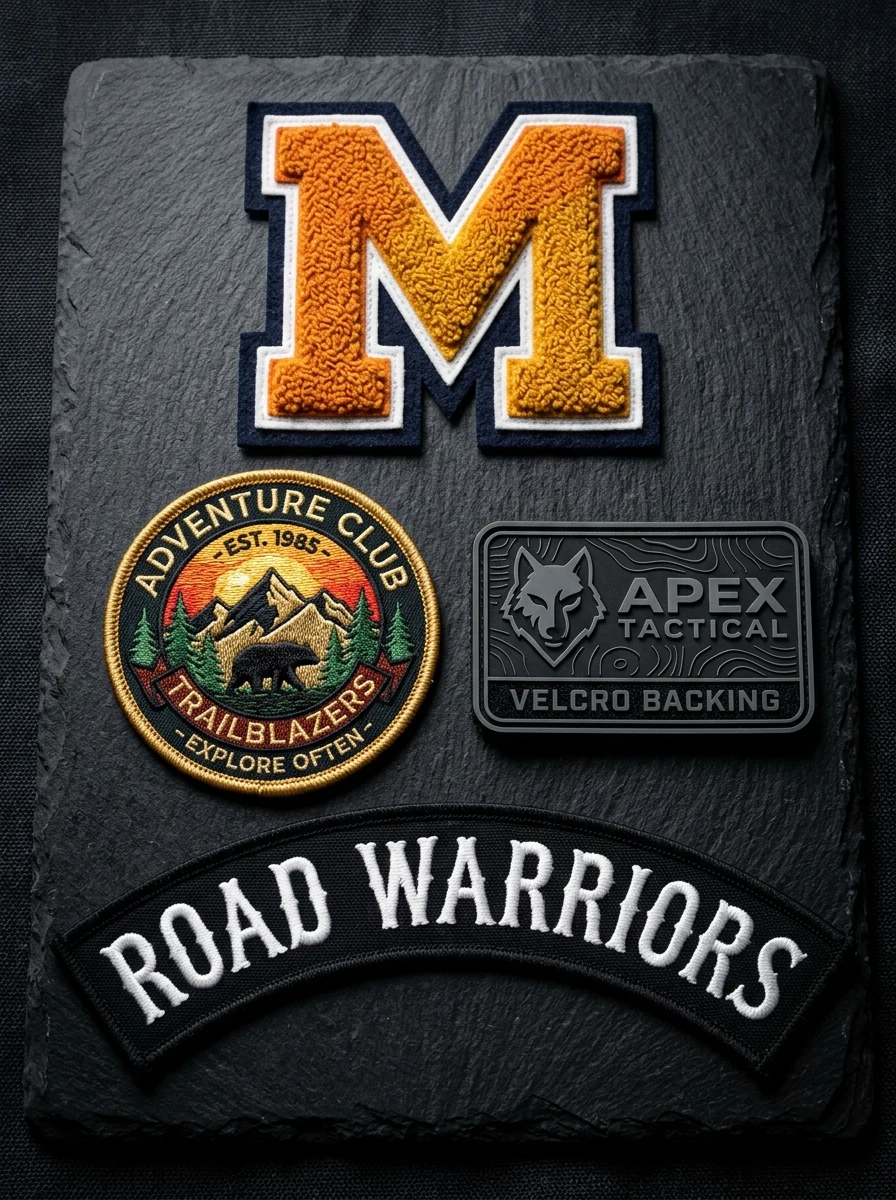
Chenille patches have a soft, raised texture that can create a bold visual feature. They are often used for varsity jackets, large letters, and designs inspired by traditional athletic clothing.
Their texture can help a patch stand out, particularly when the artwork is intended to be a prominent part of the garment.
Selecting the Right Patch Size and Placement
A patch should be large enough for its design to be recognized, but it should also remain proportionate to the garment.
Small patches are suitable for chest logos, sleeve details, pockets, and caps. Larger patches may work well on jacket backs or garments designed around prominent artwork.
The placement should complement the garment's construction. Seams, pockets, zippers, and curved surfaces can affect how a patch sits. The design should not interfere with comfort or normal use.
Brands should also consider how customers will view the patch. A logo placed on the chest may be easy to notice during everyday interactions. A patch on the back may provide more space for artwork but will be visible from a different direction.
Before approving production, the patch should be reviewed at its actual dimensions. This helps confirm that the logo, lettering, and important design elements remain clear.
Using Color and Texture to Build Recognition
Color can help customers associate a patch with a particular brand. When a business consistently uses its established colors, those colors can become part of its recognizable identity.
The contrast between the patch background and artwork should be strong enough to support visibility. Lettering that blends into the background may become difficult to read.
Texture offers another way to distinguish products. Embroidered patches provide visible stitching, woven patches create a smoother finish, and leather patches introduce a different surface.
The chosen texture should suit the brand and garment. A clean business uniform may benefit from a simple woven logo, while a bold clothing collection may use raised embroidery.
Materials and colors should work together. A patch that complements the garment creates a more intentional appearance and helps the branding feel like part of the product.
Selecting a Suitable Patch Backing
The backing determines how the patch is attached to a garment or accessory. The right choice depends on the fabric, intended use, and whether the patch needs to be removed.
Sew on patches are attached with stitching. They can be suitable for jackets, denim, uniforms, and products that receive frequent use.
Iron on patches use heat activated adhesive. They can offer convenient application when the garment material is compatible with the backing and the manufacturer's instructions are followed.
Velcro backing allows a patch to be removed and replaced. This can be useful for certain uniforms or equipment where identification needs to change.
The attachment method should be considered before production. Some fabrics are sensitive to heat, while others may require additional support to hold a patch securely.
Choosing suitable backing helps the patch remain in place and maintain the intended appearance of the product.
Maintaining Quality and Consistency
A custom patch represents the brand every time it appears on a garment. Its construction should therefore match the quality and appearance expected from the product.
Businesses should review the artwork, materials, stitching, edges, and backing before approving a production order. The finished patch should have a clear design and a suitable shape.
A sample can help confirm that the patch looks correct on the intended garment. It provides an opportunity to assess dimensions, color, texture, and attachment before producing a larger quantity.
Consistency matters when patches are used across several products. The logo, colors, and finishing should remain recognizable, even when the size or patch type changes.
Care instructions should also be considered. Garments should be maintained according to guidance suitable for both the fabric and the patch.
Custom Patches as Brand Merchandise
Custom patches can also be offered as merchandise. Customers may want to display a brand's artwork on their own clothing, bags, or accessories.
A clothing brand can create patches based on its logo or a particular collection. A creative business can offer original illustrations or symbols that reflect its work.
Patches can be sold individually or included with garments and accessories. They may also be used in promotional products when the design is relevant to the audience.
Merchandise should maintain the same design standards as the brand's main products. A clear logo, suitable material, and careful finishing can make a patch more appealing and useful.
Planning a Custom Patch That Customers Remember
A successful patch begins with a clear purpose. The brand should identify the logo, symbol, or artwork it wants customers to recognize.
The design should then be adapted to the selected patch type and intended size. Color, shape, texture, placement, and backing should all support the same visual identity.
Reviewing a sample can help identify details that need adjustment. A design that looks clear on a computer screen may require changes when produced at a smaller size or in a particular material.
Brands should also consider how the patch will appear across their products. A consistent visual element can connect different garments and accessories while allowing each product to retain its own design.
Conclusion
Custom patches can help brands stand out by turning their identity into a recognizable physical detail. They allow businesses to display logos, symbols, and original artwork on clothing and accessories in a way that complements the product.
Clothing brands can use patches to create signature features across their collections. Businesses can incorporate them into uniforms to maintain a professional appearance. Creative teams can transform original designs into wearable merchandise.
The most effective patches combine clear artwork, suitable materials, thoughtful placement, and reliable construction. Each element should reflect the brand's identity and suit the garment on which the patch will appear.
When designed with care, custom patches can become recognizable features that customers associate with a brand. They help products develop a distinctive appearance and give the brand another way to remain visible in everyday life.