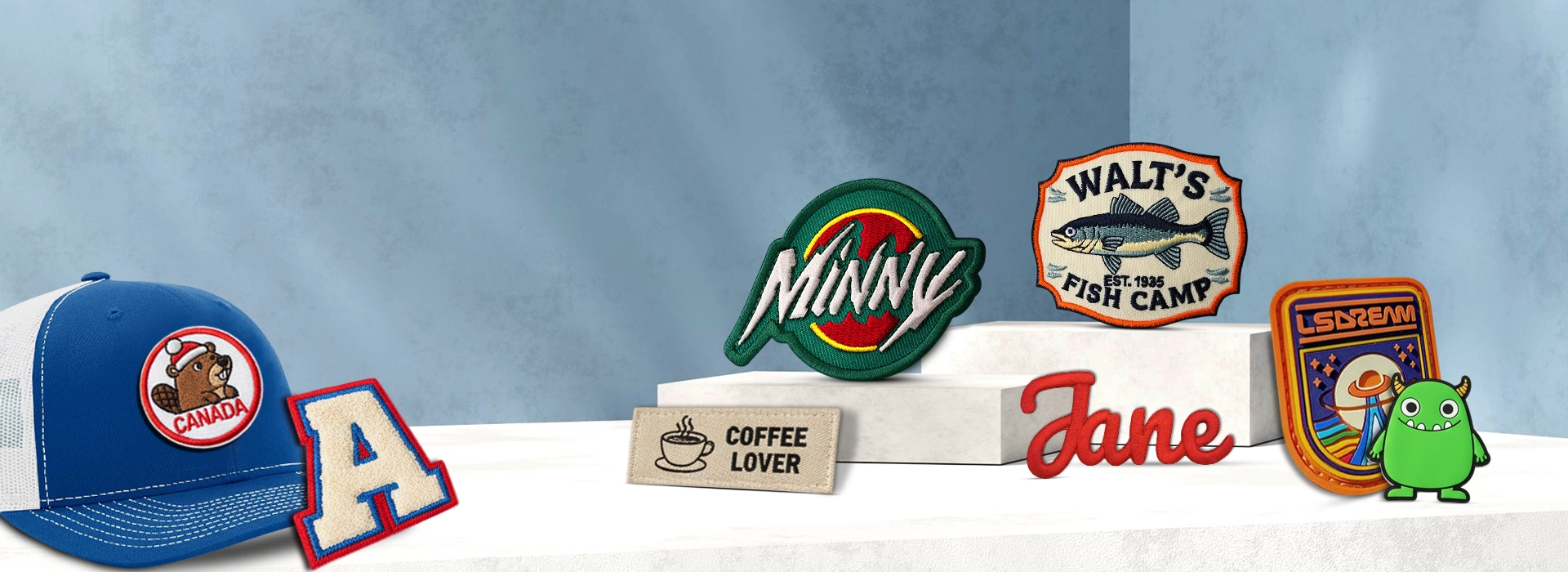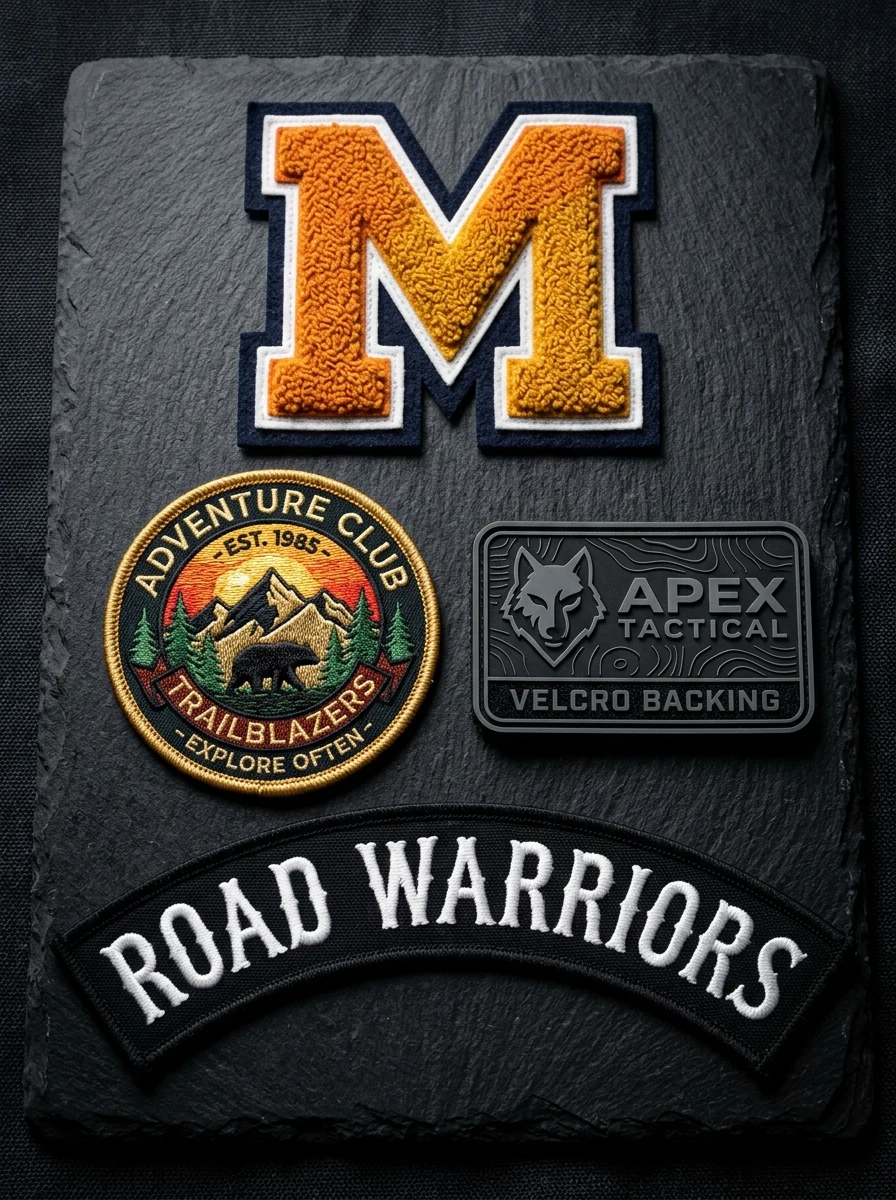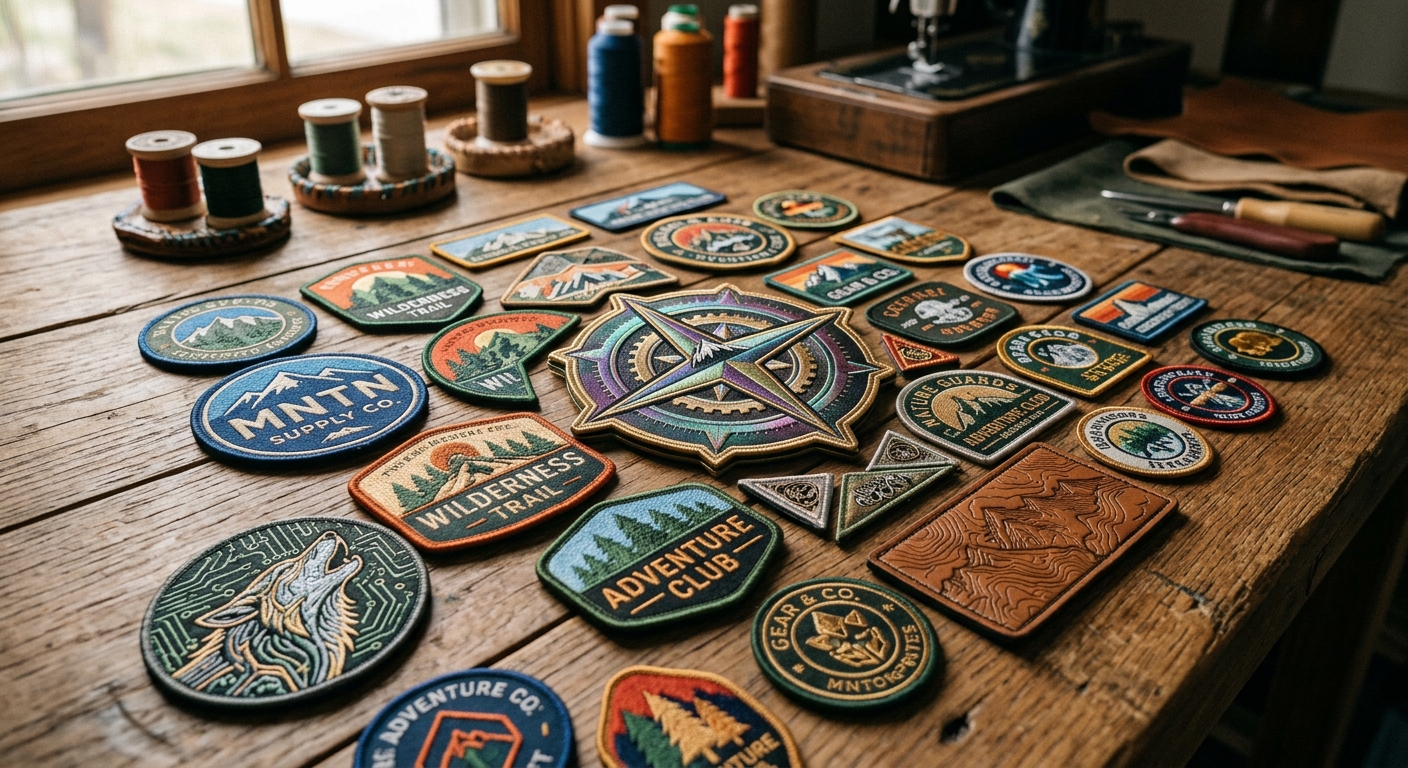
Custom patches have become an effective way for businesses, clothing brands, sports teams, motorcycle clubs, uniform suppliers, and organizations to showcase their identity. Whether you want to promote a company logo, personalize hats, upgrade uniforms, or create merchandise for your customers, custom patches offer a practical and professional solution.
From custom embroidered patches and custom PVC patches to leather patches for hats and hook-and-loop designs, there are plenty of options to match different products, industries, and branding needs. The right patch can enhance the appearance of a garment, strengthen brand recognition, and give everyday products a distinctive look.
For businesses planning large orders, working with a reliable custom patches manufacturer can also help maintain consistent quality, simplify production, and control costs. Small businesses and independent creators can benefit from flexible ordering options, while established brands may prefer custom patches wholesale services for ongoing production.
Understanding the different patch materials, attachment methods, customization options, and ordering processes makes it easier to choose the right product for your needs.
Why Custom Patches Are Popular for Businesses and Personal Projects
Custom patches provide a simple way to add personality and branding to clothing, accessories, uniforms, and promotional merchandise. Unlike printed designs that may fade or wear over time, many patches offer a textured, durable finish that helps products maintain their appearance with proper care.
Businesses use custom patches to create branded uniforms, identify employees, decorate promotional products, and build a consistent visual identity. Clothing brands use them to develop signature designs, while outdoor companies and sports organizations often rely on patches to represent teams, achievements, or membership.
Another advantage is versatility. Custom patches can be produced in different shapes, sizes, colors, and materials. They can be attached to jackets, backpacks, caps, workwear, tactical equipment, and other fabric products.
Companies that need a distinctive branding solution can order custom logo patches featuring their artwork, company name, slogan, or emblem. These patches can be designed to complement an existing brand identity or create a fresh appearance for a new product line.
For organizations that distribute merchandise at events, trade shows, conferences, and promotional campaigns, custom patches offer a compact and practical branding option. They are easy to transport, suitable for different audiences, and adaptable to many applications.
Choosing the Right Custom Patches Manufacturer
Selecting the right custom patches manufacturer is an important step when quality, consistency, and delivery schedules matter. A dependable supplier should understand your design requirements, recommend suitable materials, and explain the production process before your order moves into manufacturing.
Businesses should look for a manufacturer that offers clear artwork guidelines, sample approvals where available, transparent pricing, and realistic production timelines. These details become particularly important when ordering patches for uniforms, retail products, promotional campaigns, or customer orders.
A good manufacturer should also be able to explain the differences between embroidered, woven, PVC, and leather patches. Each material has its own strengths, so the best choice depends on the design, intended application, and overall appearance you want to achieve.
For example, embroidered patches work well for traditional logos and decorative designs. Woven patches are useful for artwork containing fine details or smaller lettering. PVC patches provide a flexible, molded appearance, while leather patches offer a premium finish that works particularly well on hats and selected apparel products.
Businesses sourcing custom patches supplier USA services may prefer suppliers that provide convenient communication, straightforward shipping arrangements, and production support for domestic customers. However, it is still important to compare the manufacturer's production capabilities, quality standards, minimum order quantities, and total delivered cost.
Rather than choosing a supplier based on price alone, evaluate the complete service. Consistent stitching, accurate colors, clean edges, secure backing, and dependable fulfillment can make a significant difference to the final product.
Custom Patches Wholesale for Growing Brands
Custom patches wholesale services are especially useful for clothing companies, promotional merchandise businesses, uniform distributors, retailers, and organizations that purchase patches regularly.
Wholesale ordering can help reduce the average cost per patch when larger quantities are purchased. It can also make inventory planning easier for businesses that need the same design across multiple products or locations.
For example, a clothing brand launching a new collection may require hundreds of matching logo patches. A uniform supplier may need consistent designs for several business clients, while a promotional products company may order different patch styles for upcoming campaigns.
A wholesale supplier can help these businesses organize their requirements, select appropriate materials, and establish a repeatable ordering process.
When comparing custom patches wholesale options, consider the quantity breaks, setup fees, artwork charges, backing choices, packaging, shipping, and potential reorder costs. A lower advertised unit price does not always represent the lowest total cost.
It is also worth checking whether the supplier can maintain the same design specifications across future orders. This is particularly important for brands that rely on consistent colors, dimensions, thread quality, and placement.
Businesses should request a detailed quotation based on their actual design and quantity. Comparing quotations with the same specifications provides a more accurate understanding of which supplier offers the best value.
Custom Patches No Minimum for Small Businesses and Creators
Not every project requires a large production run. Startups, independent designers, small businesses, event organizers, and individual creators may only need a limited number of patches to test a concept or complete a specific project.
Custom patches no minimum ordering options can make customization more accessible to these buyers. Instead of purchasing a large inventory upfront, they may be able to order smaller quantities and evaluate customer interest before committing to a bigger production run.
This approach is particularly helpful for emerging clothing brands that want to test different logos, limited-edition merchandise, or seasonal designs. It can also work for personal projects, gifts, small clubs, and local events.
However, no-minimum ordering does not necessarily mean that every patch type is available in a single piece at the same price. Some production methods involve setup costs, digitizing fees, mold charges, or minimum production requirements.
For this reason, buyers should confirm the actual minimum quantity and ask whether artwork preparation or setup costs apply to small orders.
Although the unit price may be higher for a small batch, the flexibility can be valuable. A smaller initial order helps reduce excess inventory and gives businesses an opportunity to refine their designs before placing a larger wholesale order.
Custom Embroidered Patches for a Classic and Professional Look
Custom embroidered patches remain a popular choice because they provide a traditional stitched appearance that works across many industries.
These patches are created by stitching colored threads onto a suitable fabric base. The raised thread texture adds depth to logos, lettering, emblems, and decorative artwork.
Businesses commonly use embroidered patches on work uniforms, denim jackets, team apparel, school clothing, outdoor gear, and branded merchandise. Their familiar appearance makes them suitable for companies that want a professional yet distinctive design.
Custom embroidered patches can be produced in different shapes and sizes, with options for merrowed borders, laser-cut edges, and different backing types depending on the design and intended use.
They are particularly effective for logos with bold shapes, clear lettering, and strong color contrasts. Extremely small text or highly intricate artwork may require adjustments because thread has physical limitations.
If your design contains fine lines, gradients, or very small lettering, ask the manufacturer whether a woven patch or another production method would reproduce the artwork more accurately.
Thread colors should also be selected carefully. Matching your company's brand colors as closely as possible helps maintain a consistent appearance across uniforms, hats, bags, and other promotional products.
With suitable materials and proper care, embroidered patches can provide a long-lasting branding solution for both commercial and personal applications.
Custom Logo Patches for Brand Recognition
Custom logo patches help businesses turn their visual identity into a physical product that can be attached to clothing, accessories, and merchandise.
A well-designed logo patch can make a garment instantly recognizable while giving the product a more customized finish. Businesses may use these patches on employee uniforms, branded hats, jackets, backpacks, and retail merchandise.
The design process should begin with a clear version of your logo. High-resolution artwork or vector files generally make it easier for a manufacturer to reproduce shapes, lettering, and colors accurately.
If your logo contains small text, thin outlines, or complex details, the manufacturer may recommend simplifying certain elements. This helps preserve readability when the design is converted into stitching, woven threads, molded PVC, or another material.
Custom logo patches can also support brand consistency across different product categories. For instance, the same logo can appear on embroidered uniform patches, PVC outdoor gear patches, and leather hat patches while maintaining a recognizable identity.
Companies should consider the patch's final placement before approving the artwork. A design intended for a small cap may need different proportions from a larger jacket patch.
The backing also matters. Sew-on patches are suitable for permanent attachment, while iron-on and hook-and-loop options offer different installation and removal benefits.
For businesses producing merchandise at scale, approving a physical sample when available can help verify the final size, color, texture, and overall quality before full production begins.
Custom PVC Patches for Durable, Detailed Designs
Custom PVC patches offer a modern alternative to traditional fabric-based patches. Made from flexible polyvinyl chloride, these patches can feature raised lettering, recessed details, defined outlines, and multiple molded color sections.
Their rubber-like appearance makes them popular for outdoor equipment, tactical gear, backpacks, uniforms, sports accessories, and products that benefit from a distinctive textured finish.
PVC patches are particularly useful when the artwork includes bold shapes, clearly separated colors, or dimensional details that are difficult to reproduce with embroidery alone.
Businesses may choose PVC for products that need a contemporary appearance or a design that stands out from conventional stitched branding. They are also available with different backing options, including hook-and-loop attachment, depending on the manufacturer's capabilities.
When ordering custom PVC patches, consider the intended environment and how the patch will be used. Exposure to heat, sunlight, chemicals, or repeated bending can affect performance depending on the material formulation and construction.
It is also important to review the artwork before production. Fine details must be suitable for the selected mold dimensions, and some design elements may need adjustment to remain clear at smaller sizes.
Although PVC patches can be durable, they are not automatically the best option for every application. Fabric-based patches may be more suitable for traditional uniforms or garments where a softer appearance is preferred.
The ideal choice depends on the desired look, practical requirements, budget, and intended product.
Custom Velcro Patches for Removable Branding
Custom Velcro patches, commonly described as hook-and-loop patches, are designed for applications where users need to attach and remove a patch without permanently sewing it onto the garment.
These patches are popular with tactical equipment suppliers, outdoor brands, security organizations, sports groups, and companies that use interchangeable identification labels.
A hook-and-loop backing generally consists of two complementary surfaces. The patch carries one side, while the garment or equipment has the corresponding surface.
This setup allows users to replace name tags, identification labels, team emblems, and other designs when needed. It can also simplify cleaning or maintenance when removable patches are more convenient than permanently attached alternatives.
Custom Velcro patches can be manufactured using embroidery, woven fabric, PVC, and other suitable materials. This means businesses can select the appearance they want without giving up the convenience of removable attachment.
When ordering, confirm whether the patch includes only the hook backing or also comes with a separate loop panel for sewing onto the garment. These details can affect the final price and installation process.
Buyers should also consider the intended use. Patches that experience frequent movement, friction, or repeated removal may require stronger construction and appropriate backing specifications.
For businesses that manage uniforms across different departments, removable patches can simplify identification changes and help reduce the need to replace entire garments.
Custom Iron On Patches for Convenient Application
Custom iron on patches are a practical option for customers who want to attach designs to suitable garments without sewing every patch by hand.
These patches typically use a heat-activated adhesive backing that bonds to compatible fabrics when the correct temperature, pressure, and application time are used.
They are commonly used for clothing brands, promotional apparel, uniforms, school garments, bags, and decorative projects. Businesses can use them to add logos to products or offer personalized merchandise to customers.
Before selecting an iron-on backing, consider the fabric composition and the garment's care instructions. Some synthetic materials and heat-sensitive fabrics may not tolerate the temperatures needed for proper adhesion.
The manufacturer's application guidance should always be followed. Applying insufficient heat can lead to weak adhesion, while excessive heat may damage the patch or fabric.
For products that experience frequent washing, stretching, or heavy use, additional stitching may be recommended to improve attachment security.
Custom iron on patches can also be produced in different shapes and materials, allowing businesses to choose a design that fits their product range.
However, iron-on attachment is not always suitable for every surface. Buyers should discuss their intended fabric and usage conditions with the supplier before placing a large order.
Selecting the right attachment method from the beginning can help prevent installation problems and improve customer satisfaction.
Custom Patches Bulk Order for Commercial Projects
A custom patches bulk order is often the most practical choice for companies that need consistent designs across large quantities of products.
Retail brands, uniform manufacturers, promotional merchandise suppliers, event organizers, and sports organizations frequently order patches in bulk to support their production schedules and distribution requirements.
Bulk ordering allows buyers to plan their inventory, standardize product specifications, and potentially reduce per-unit costs. It can also make repeated production runs more efficient when the same artwork is used over time.
Before placing a large order, prepare a clear specification sheet containing the patch dimensions, shape, colors, material, backing type, border style, and required quantity.
Providing these details helps the manufacturer prepare an accurate quotation and reduces the possibility of misunderstandings during production.
Artwork approval is another important part of the process. Buyers should confirm the design and review a sample or production proof where available before authorizing the full quantity.
Delivery planning should also be considered. If patches are needed for a product launch, trade show, uniform rollout, or seasonal campaign, allow sufficient time for manufacturing, shipping, and any required quality checks.
For larger projects, ask the supplier about packaging options, batch identification, reorder procedures, and quality-control standards.
A well-organized bulk order can make patch sourcing easier to manage and help businesses maintain consistent branding across their product lines.
Custom Patches With Logo for Apparel and Merchandise
Custom patches with logo designs are useful for companies that want to integrate branding into physical products without relying entirely on direct printing or embroidery on the garment itself.
A separate patch can provide greater flexibility because the same design may be applied to different products. For example, a company might use its logo patch on hats, jackets, bags, aprons, and workwear.
This approach can simplify product development when several items need a coordinated appearance.
Businesses can choose different patch materials depending on the products they sell. Embroidered patches offer a classic fabric texture, woven patches accommodate fine details, PVC provides a molded finish, and leather patches can create a premium look.
Placement should be planned according to the product's design and intended use. Small patches often work well on cap fronts, shirt pockets, and bag panels, while larger designs may be better suited to jackets or specialized uniforms.
A clear logo with appropriate spacing and readable lettering generally produces better results than an overcrowded design.
Companies should also consider how the patch will be attached. Sew-on patches offer a traditional permanent finish, while iron-on and hook-and-loop options may provide greater convenience in suitable applications.
By choosing the right combination of artwork, material, size, and backing, businesses can create custom patches with logo designs that support a consistent and recognizable brand identity.
Custom Patches Supplier USA: What Businesses Should Consider
Working with a custom patches supplier USA may appeal to companies that prefer domestic communication, straightforward delivery arrangements, or a supplier familiar with their market requirements.
However, the best supplier is not necessarily determined by location alone. Production quality, pricing, communication, available materials, and fulfillment reliability should all be considered before making a decision.
Businesses should ask whether the supplier manufactures patches directly or works with external production partners. Understanding the production arrangement can help clarify quality control, lead times, and responsibility for resolving manufacturing issues.
It is also helpful to request details about sample availability, order tracking, shipping costs, and the process for correcting defects or discrepancies.
For wholesale buyers, consistent specifications are particularly important. A supplier should be able to explain how artwork, thread colors, patch dimensions, and backing options will be maintained across repeat orders.
Companies sourcing patches for retail resale should also review packaging and labeling options. Appropriate packaging can improve product presentation and make inventory management easier.
When comparing domestic and international suppliers, calculate the complete landed cost rather than looking only at the manufacturing price. Shipping, duties where applicable, setup fees, and delivery requirements can change the overall value of an offer.
A reliable supplier relationship should support both immediate orders and future business growth.
Custom Hat Patches Wholesale for Clothing Brands
Custom hat patches wholesale services are valuable for cap manufacturers, streetwear brands, outdoor retailers, promotional product companies, and businesses creating branded headwear.
Patch-based hats have become a popular product category because they offer a distinctive alternative to direct embroidery. A separate patch can introduce different textures, shapes, and materials while allowing the hat design to remain consistent across a collection.
Businesses can select embroidered, woven, PVC, or leather patches depending on their brand identity and target audience.
Embroidered patches provide a traditional stitched appearance, while PVC designs offer a contemporary molded look. Leather patches are particularly popular for outdoor-inspired caps, workwear brands, heritage styles, and casual headwear.
The patch dimensions should be appropriate for the available front panel. A design that is too large may overwhelm the cap, while a very small patch can make lettering difficult to read.
Buyers should also consider the hat's construction and attachment method. Some panels are easier to sew than others, and heat application may not be appropriate for every material.
For bulk hat production, it is worth confirming whether the patch supplier can coordinate with the hat manufacturer or provide consistent specifications for both production stages.
Wholesale buyers should evaluate sample quality, edge finishing, color accuracy, attachment strength, and delivery timelines before committing to large quantities.
By planning these details carefully, businesses can create custom headwear that looks professional and remains consistent across different batches.
Custom Leather Patches for Hats and Premium Products
Custom leather patches for hats are a popular option for brands that want a natural, textured, and premium appearance.
These patches are often used on baseball caps, trucker hats, outdoor headwear, workwear, denim products, backpacks, and lifestyle merchandise.
Leather patches can feature embossed, debossed, engraved, or printed artwork, depending on the material and manufacturing process. Each technique creates a different visual effect, allowing brands to choose a style that complements their products.
Genuine leather offers a distinctive natural appearance, while synthetic leather can provide a more uniform look and may suit different budget or material requirements.
When selecting leather patches, consider the color, thickness, finish, edge treatment, and attachment method. These characteristics influence the patch's appearance and how well it integrates with the hat.
A simple logo often works particularly well on leather because the material itself provides visual character. Large shapes and clear lettering can create an attractive design without requiring excessive detail.
Businesses should also consider product care. Leather and leather-like materials may respond differently to moisture, heat, sunlight, and cleaning products, so appropriate care guidance can help maintain their appearance.
For brands ordering custom leather patches for hats in bulk, reviewing a physical sample is useful for checking the material, color, engraving depth, and final dimensions.
The result can be a distinctive branded product that adds character to everyday headwear and supports a premium brand presentation.
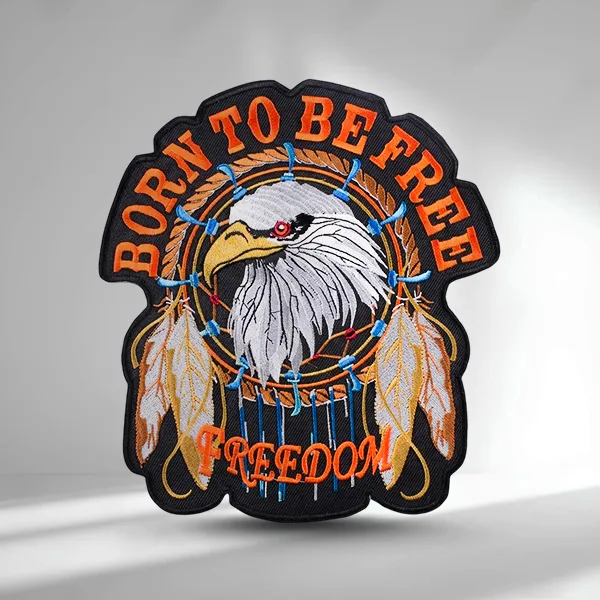
Custom Biker Patches for Motorcycle Clubs and Riding Apparel
Custom biker patches are commonly used by motorcycle enthusiasts, riding groups, clubs, and brands serving the motorcycle community.
These patches can feature club names, symbols, artwork, slogans, and other designs that reflect a group's identity. They are often attached to jackets, vests, bags, and riding apparel.
Embroidered patches are a traditional choice because their stitched texture complements denim and leather garments. Woven designs may be useful when artwork contains finer lettering, while other materials can suit different product styles.
When designing biker patches, consider readability, shape, size, and the visual relationship between the central emblem and surrounding text.
The intended garment also matters. A patch designed for a lightweight jacket may require different construction from one intended for a heavy leather vest.
For motorcycle clubs and organizations, it is important to confirm that the design follows any relevant club rules, branding permissions, or established insignia requirements. Buyers should ensure that artwork is authorized for production and does not unintentionally imitate another organization's protected identity.
Attachment methods should be selected according to the garment material and intended use. Sew-on patches are often suitable for heavy-duty apparel, although the correct stitching method depends on the product.
For clubs ordering multiple patches, consistent colors, dimensions, and embroidery quality help maintain a uniform appearance across garments.
A well-designed biker patch can represent group identity while providing a durable and visually distinctive addition to riding apparel.
How to Design Custom Patches That Look Professional
A successful patch begins with a design that works well within the limitations of the selected material and manufacturing process.
Start by identifying the purpose of the patch. A corporate logo, fashion label, motorcycle club emblem, and outdoor equipment badge may each require a different approach to typography, colors, shape, and construction.
Keep the artwork clear and easy to recognize. Simple shapes, readable text, and balanced spacing generally reproduce more reliably than highly complicated designs.
Choose colors that complement one another and match your brand guidelines where possible. If exact color matching is important, provide reference values and ask the manufacturer to explain its color-matching process.
The size of the patch should suit its intended placement. A cap patch may need a compact design, while a jacket back patch can accommodate a larger graphic and more lettering.
Material selection should follow the artwork. Embroidery works well for many bold logos, woven patches are often better for fine lines, PVC supports dimensional designs, and leather provides a distinctive textured appearance.
It is also important to choose an appropriate edge finish. Some patches use stitched borders, while others use laser-cut or molded edges. The best option depends on the material, shape, and overall style.
Before approving production, review the artwork proof for spelling, proportions, colors, and alignment. Check the final dimensions and confirm the backing type.
Taking time to finalize these details can reduce production errors and improve the finished product.
Understanding Patch Backings and Attachment Options
The backing determines how a patch is attached to a garment or accessory, so it should be selected according to the product's material and intended use.
Sew-on backing is a traditional option that allows a patch to be stitched directly onto a suitable surface. It is commonly used for jackets, uniforms, hats, bags, and heavy-duty garments.
Iron-on backing uses heat-activated adhesive and can simplify installation on compatible fabrics. However, its effectiveness depends on the material, application technique, and conditions in which the garment will be used.
Hook-and-loop backing provides a removable attachment system. It is useful when patches need to be changed, such as identification labels, interchangeable emblems, and selected tactical or outdoor applications.
Adhesive backing may be suitable for temporary applications or certain craft projects, but it should not be assumed to provide the same long-term durability as sewing.
Some patches can also be manufactured with specialty attachments or supplied with additional components. Availability varies by material and supplier.
When comparing options, consider washing frequency, exposure to moisture, physical activity, garment construction, and how often the patch may need to be removed.
For business orders, confirming the backing requirements before production helps ensure the patches are compatible with the finished products.
Pricing Factors for Custom Patches
The cost of custom patches depends on several factors, including material, size, design complexity, quantity, backing, edge finishing, and manufacturing method.
Larger patches generally require more material and production resources. Designs with numerous colors, fine details, or complicated shapes may also involve additional work.
The manufacturing method can influence the price as well. Embroidered patches, woven patches, PVC patches, and leather patches use different production processes and have different setup requirements.
Order quantity is another important factor. Wholesale and bulk orders may reduce the average price per patch, but the overall investment will naturally be higher when purchasing more units.
Small orders can be more expensive per unit because certain setup costs are distributed across fewer patches. This is why businesses comparing custom patches no minimum options should review the total price rather than focusing only on the unit cost.
Additional charges may apply for artwork preparation, digitizing, mold creation, special backing, individual packaging, rush production, and shipping.
To obtain an accurate quotation, provide the supplier with the intended material, finished dimensions, design file, backing preference, quantity, and delivery requirements.
Requesting quotations based on identical specifications makes supplier comparisons more meaningful. It also helps reveal whether a lower price excludes important services or product features.
The goal should be to find a balance between affordability, quality, and reliability rather than choosing the cheapest offer without reviewing the details.
Quality Control for Bulk Custom Patch Orders
Quality control becomes increasingly important as order quantities grow. A small inconsistency may be difficult to notice on a single patch, but the same issue can affect hundreds or thousands of units in a commercial order.
Before production begins, approve the artwork and confirm the specifications in writing. These should include dimensions, colors, material, border style, backing, and any special finishing requirements.
Where available, review a sample before authorizing the complete order. A sample can help verify the actual appearance, texture, attachment method, and overall construction.
During final inspection, check whether the patches match the approved design. Look for uneven stitching, loose threads, incorrect colors, damaged edges, inconsistent sizing, and missing components.
For PVC patches, inspect the molded details, color separation, and overall finish. For leather patches, review the material consistency, engraving, and edge quality.
Businesses ordering custom logo patches for retail resale should also confirm packaging requirements and organize the products in a way that supports inventory management.
If an order includes several designs, make sure each batch is labeled or separated clearly to reduce the risk of mixing products.
A supplier with a clear quality-control process can help businesses manage larger orders more confidently and reduce problems during distribution.
Custom Patches for Different Industries
Custom patches serve a wide range of industries because they can be adapted to different materials, branding styles, and functional requirements.
In fashion and apparel, patches can distinguish clothing collections and create recognizable product details. Streetwear brands often use embroidered or woven designs, while outdoor-inspired labels may prefer leather or PVC options.
Corporate businesses use patches for uniforms, employee identification, promotional apparel, and branded merchandise. Consistent patch specifications help maintain a professional appearance across departments and locations.
Sports teams and clubs may use patches to display team logos, membership details, achievements, or event branding. The material and backing should suit the garment and the frequency of use.
Outdoor and tactical equipment companies may select PVC or hook-and-loop patches when they need dimensional designs or interchangeable identification.
Schools, community organizations, and event organizers can use custom patches to mark participation, celebrate milestones, and create souvenirs.
Motorcycle groups may prefer traditional embroidered emblems, while hat manufacturers and lifestyle brands often explore leather patches for a distinctive finish.
For each industry, the best patch depends on the intended purpose rather than a single universal material. Considering the environment, garment type, branding requirements, and budget makes it easier to select a suitable solution.
Ordering Custom Patches Online
Ordering custom patches online can simplify the process of comparing designs, materials, and supplier services. However, providing clear information is essential to obtaining an accurate quotation and avoiding unnecessary revisions.
Begin by preparing your artwork and deciding on the patch type. Determine whether you need embroidered, woven, PVC, leather, or another suitable option.
Next, specify the dimensions, shape, border, colors, backing, and quantity. If the patches will be attached to a particular product, explain the intended application so the manufacturer can recommend compatible materials and attachment methods.
Ask for a quotation that identifies the production cost, setup charges, shipping, and estimated lead time. For larger projects, request information about sample approvals and quality-control procedures.
Review the supplier's artwork proof carefully before approving production. Confirm spelling, dimensions, colors, and all design elements.
After approval, keep a copy of the final specifications for future reorders. This can help maintain consistency if you need the same custom patches for another production run.
For businesses planning custom patches bulk order projects, it is helpful to establish a clear communication process with the supplier. Assigning responsibility for artwork approval, delivery coordination, and final inspection can make the project easier to manage.
With appropriate planning, online ordering can provide a straightforward way to source custom patches for personal projects, growing brands, and established businesses.
Building a Long-Term Relationship With a Patch Supplier
A dependable supplier relationship can make a significant difference for businesses that order patches regularly.
Once you find a manufacturer that meets your quality and delivery expectations, maintaining accurate product specifications can simplify repeat orders. Keeping approved artwork, color references, dimensions, backing details, and sample records helps reduce uncertainty during future production.
Regular communication also allows businesses to discuss new materials, alternative attachment methods, packaging improvements, and changes in order quantities.
For wholesale customers, consistent production standards are especially important because patches may appear on several product lines or be distributed through multiple retail locations.
It is useful to review supplier performance after each order. Consider whether the patches matched the approved sample, whether delivery expectations were met, and whether any production issues were resolved professionally.
Businesses should also avoid assuming that every reorder will be identical without confirmation. Material availability, production methods, and manufacturing conditions may change, so important specifications should be checked before the next order is approved.
A supplier that communicates clearly and understands your brand requirements can become a valuable partner as your product range expands.
Conclusion
Custom patches offer businesses, clothing brands, organizations, and individuals a flexible way to personalize products and create a recognizable identity. From custom embroidered patches and custom logo patches to custom PVC patches, custom Velcro patches, and custom leather patches for hats, there are options for a wide variety of applications.
Choosing the right custom patches manufacturer requires more than comparing prices. Material quality, design accuracy, backing options, production timelines, and communication all contribute to the final result. Businesses purchasing custom patches wholesale or placing a custom patches bulk order should pay particular attention to consistent specifications, sample approval, and quality control.
Smaller businesses and independent creators may benefit from custom patches no minimum options, while established brands can explore wholesale arrangements to support larger production requirements. Companies sourcing custom patches supplier USA services should compare the complete value offered by each supplier, including delivery, service, and product quality.
The best results come from matching the patch material and attachment method to the intended application. Embroidered patches provide a classic appearance, PVC patches offer dimensional details, hook-and-loop patches support removable branding, iron-on patches simplify installation on suitable fabrics, and leather patches create a distinctive finish for headwear and other products.
By planning the artwork carefully, selecting appropriate materials, and working with a reliable supplier, you can create custom patches that support your branding goals, enhance your products, and deliver lasting value to your customers.