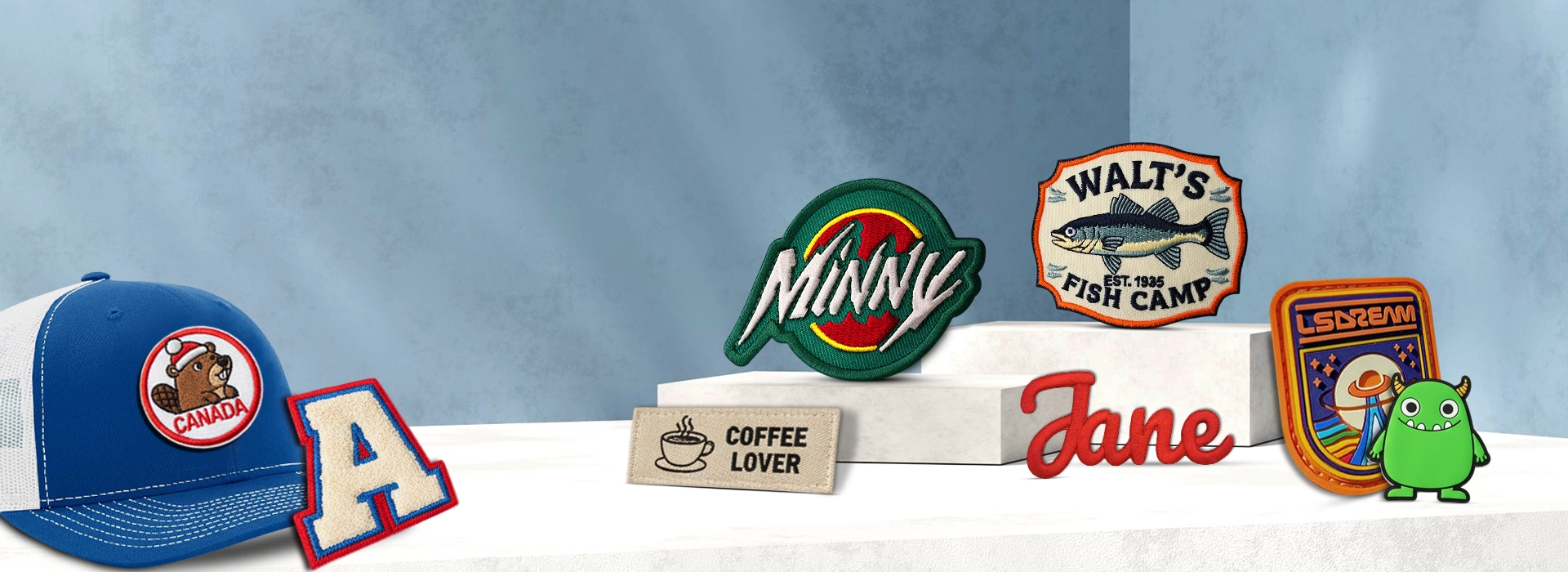
Custom patches have become more than decorative accessories. They are now an important part of modern branding, apparel design, promotional merchandise, and personalized fashion. From independent clothing labels to established businesses, brands are discovering new ways to use patches to make their products recognizable and memorable.
A well-designed patch can transform an ordinary cap, jacket, backpack, or uniform into something distinctive. It gives businesses the flexibility to display their logos, experiment with different textures, and create products that reflect their identity. Whether the goal is to launch a clothing collection or purchase patches for a large commercial project, choosing the right design and manufacturing partner makes a real difference.
With options ranging from custom embroidered patches to leather, woven, and PVC designs, buyers can find solutions for different budgets and applications. Understanding these options can help businesses make informed decisions while creating products that look professional and meet their customers' expectations.
Why Brands Are Giving Custom Patches More Attention
Brand identity is built through small details. The colors on a product, the placement of a logo, and the quality of its finishing all influence how customers perceive a business. Custom patches offer a practical way to bring these details together.
Unlike direct printing, patches add another dimension to a product through texture, stitching, molded surfaces, or specialty materials. This makes them particularly appealing to clothing brands that want their merchandise to feel different from mass-produced alternatives.
Businesses can use custom logo patches on workwear, caps, jackets, bags, and promotional products. Sports teams can display their emblems, while outdoor brands can create recognizable designs for equipment and apparel.
Patches are also useful for businesses that want consistent branding across several product categories. A single logo design can be adapted into embroidered patches for uniforms, PVC patches for accessories, and leather patches for premium headwear.
This flexibility makes custom patches a valuable option for both established companies and growing brands that want to build a recognizable identity without redesigning every product from scratch.
Finding a Custom Patches Manufacturer That Understands Your Brand
The quality of a finished patch depends heavily on the manufacturing process. Choosing a suitable custom patches manufacturer means finding a partner that understands your artwork, recommends appropriate materials, and maintains consistent production standards.
A reliable manufacturer should be able to explain the differences between patch styles and help you select an option that suits your intended application. For example, intricate lettering may be better suited to woven patches, while bold artwork can work particularly well with embroidery or molded PVC.
Communication is equally important. Before placing an order, businesses should understand the available sizes, backing options, production timelines, artwork requirements, and pricing structure.
It is also worth asking about sample approval. Reviewing a physical sample, when available, allows you to evaluate the actual colors, texture, dimensions, and finishing before committing to a larger quantity.
Companies sourcing custom patches supplier USA services should compare suppliers based on quality, communication, delivery arrangements, and overall value rather than location alone. A domestic supplier may offer convenient logistics, while another manufacturer may provide competitive pricing or specialized production capabilities.
The right partner should be able to support your current project while making future orders easier to manage.
Custom Patches Wholesale for Businesses Ready to Scale
As a brand grows, its production requirements often change. A small initial order may be enough to test a design, but successful products can quickly create demand for larger quantities.
Custom patches wholesale services help clothing companies, uniform distributors, promotional product businesses, and retailers manage these growing requirements.
Purchasing larger quantities can reduce the average cost per patch, depending on the design and supplier's pricing structure. It can also simplify inventory planning when businesses need the same branding elements across multiple products.
For example, a cap brand may require hundreds of matching patches for a seasonal collection. A corporate uniform supplier may need consistent logo patches for several clients, while a merchandise company may purchase different designs for upcoming campaigns.
Before selecting a wholesale supplier, compare the full quotation. Consider setup fees, artwork preparation, backing options, packaging, shipping, and the cost of future reorders.
Consistency is especially important when patches form part of a recognizable product line. Differences in thread colors, dimensions, or finishing can make products from separate batches look noticeably different.
Working with a manufacturer that documents approved specifications can help reduce these inconsistencies and make repeat production more predictable.
Small Orders Without the Pressure of Large Minimums
Not every business has the budget or demand for a large production run. New clothing labels, independent designers, local organizations, and individual creators often need smaller quantities while developing their ideas.
Custom patches no minimum options can help these buyers explore different designs without investing in unnecessary inventory. This flexibility is particularly useful for limited-edition merchandise, product testing, small events, and personalized gifts.
For an emerging apparel brand, ordering a small batch of custom embroidered patches can provide an opportunity to test customer interest before launching a larger collection. If the design performs well, the business can move toward wholesale ordering with greater confidence.
However, buyers should confirm the supplier's actual minimum order requirements. Some manufacturing methods involve digitizing, mold creation, or setup costs that affect the price of small orders.
The cost per unit may also be higher when fewer patches are produced. Even so, a smaller order can be worthwhile when flexibility and reduced inventory risk are more important than achieving the lowest possible unit price.
Choosing a supplier with suitable ordering options allows businesses to develop their products at a manageable pace.
Custom Embroidered Patches That Add Texture and Character
There is a reason custom embroidered patches remain a favorite among clothing brands and uniform suppliers. Their stitched texture creates a traditional appearance that works well with a wide range of garments.
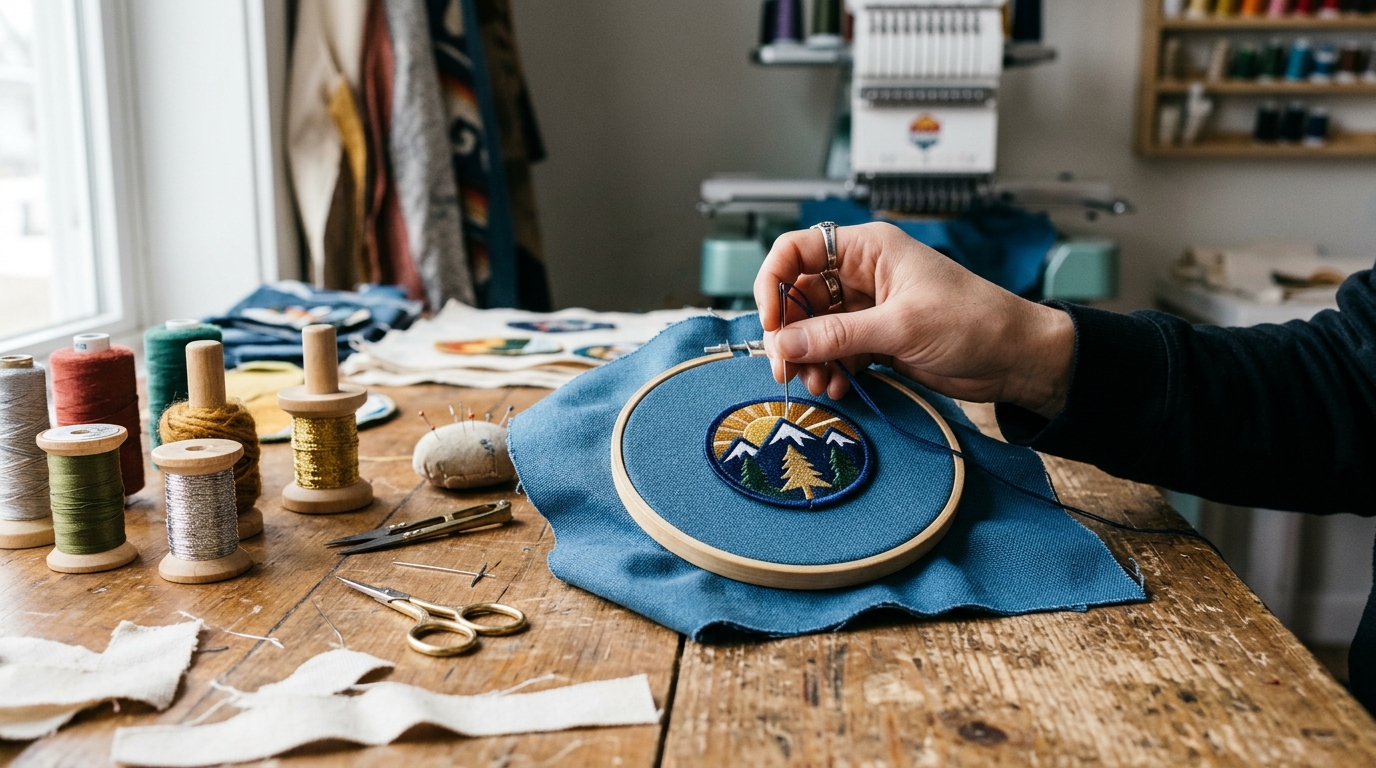
These patches are made by stitching colored threads onto a fabric base, creating a raised finish that gives logos and artwork additional depth. They are commonly used on jackets, caps, workwear, school uniforms, sports apparel, and promotional merchandise.
Embroidered designs are especially effective for bold lettering, recognizable symbols, and logos with clear outlines. They can also be produced in different shapes and sizes to suit the intended product.
When designing embroidered patches, it is important to consider the level of detail in the artwork. Extremely small lettering and fine lines may not reproduce clearly at reduced sizes, so simplifying the design can improve the finished result.
The border and backing should also be selected carefully. Sew-on patches offer a traditional attachment method, while iron-on and hook-and-loop options may suit other applications.
For businesses that want a classic appearance with visible craftsmanship, embroidered patches provide a versatile option that can be adapted to many branding styles.
Custom Logo Patches That Make Products Recognizable
A logo is often one of the first things customers notice about a brand. Turning that logo into a patch creates another opportunity to establish recognition across different products.
Custom logo patches can be attached to caps, jackets, bags, uniforms, and accessories, allowing businesses to maintain a consistent visual identity without applying the artwork directly to every garment.
The design should remain clear at its intended size. Logos with strong shapes, balanced spacing, and readable lettering are generally easier to reproduce across different manufacturing methods.
Businesses should also consider where the patch will appear. A small cap logo requires different proportions from a larger jacket emblem, even when both use the same branding.
For brands with multiple product categories, selecting complementary patch materials can create variety without losing consistency. Embroidered designs may suit uniforms, while PVC or leather versions can give accessories and headwear a different appearance.
Artwork approval is an important step before production. Confirm the colors, dimensions, spelling, and placement so the finished patches reflect the intended brand identity.
A carefully produced logo patch can become a recognizable detail that connects different products under the same brand.
Custom PVC Patches for a Modern, Distinctive Finish
Custom PVC patches are a popular choice for brands looking for a contemporary alternative to traditional fabric patches. Their flexible, rubber-like construction allows manufacturers to create raised details, recessed lettering, defined borders, and multiple color sections.
These patches are commonly used on backpacks, outdoor equipment, tactical accessories, sports products, and selected uniforms. Their molded appearance works particularly well with bold graphics and designs that benefit from a dimensional finish.
PVC patches also provide flexibility in shape and construction. Depending on the manufacturer, they may be available with sew-on, adhesive, or hook-and-loop attachment options.
When developing a PVC design, consider the size and clarity of the artwork. Very small details may need to be simplified so the finished patch remains readable.
It is also important to discuss the intended environment with the manufacturer. Temperature, sunlight, chemicals, and repeated bending can affect material performance, depending on the PVC formulation and construction.
Although PVC is a strong option for many applications, it does not suit every product. Brands seeking a softer, traditional appearance may prefer embroidered or woven alternatives.
The best choice depends on the intended design, product requirements, and overall brand aesthetic.
Custom Velcro Patches for Flexible Product Designs
Some products require branding that can be changed without replacing the entire garment or accessory. Custom Velcro patches, also known as hook-and-loop patches, provide a convenient solution for these applications.
They are commonly used for removable identification labels, tactical equipment, outdoor gear, uniforms, and interchangeable emblems.
The attachment system allows the patch to be removed and replaced when needed, provided the corresponding hook-and-loop surface is installed on the garment or product.
Businesses can choose embroidered, woven, or PVC patches with this type of backing, depending on the look they want to achieve.
Before ordering, confirm exactly what the supplier includes. Some products come with the hook side attached to the patch, while a separate loop panel may need to be purchased or sewn onto the garment.
The strength of the attachment also matters. Products exposed to frequent movement, friction, or repeated removal may require a suitable backing specification.
For organizations that need interchangeable branding or identification, hook-and-loop patches can provide flexibility without sacrificing the opportunity to customize the design.
Custom Iron On Patches for Easy Apparel Customization
Custom iron on patches are designed to simplify the process of attaching decorative or branded designs to compatible fabrics.
These patches generally use heat-activated adhesive that bonds to the fabric when the recommended temperature, pressure, and application time are followed.
They are useful for clothing brands, promotional merchandise, school apparel, craft projects, and selected uniform applications.
For businesses, iron-on patches can offer a convenient way to customize suitable garments without sewing every design by hand. They are available in different shapes and materials, depending on the supplier's production capabilities.
However, compatibility should never be overlooked. Some synthetic fabrics, delicate materials, and heat-sensitive garments may not tolerate the temperatures required for proper adhesion.
Buyers should follow the manufacturer's application instructions and consider additional stitching when the garment will experience frequent washing or heavy use.
Before placing a large order, test the attachment method on the intended fabric whenever possible. This helps confirm that the patch can be applied safely and performs as expected.
Selecting the appropriate backing from the beginning can reduce installation problems and create a better experience for the end customer.
Custom Patches Bulk Order Solutions for Large Projects
Businesses preparing for product launches, uniform rollouts, promotional campaigns, or retail distribution often need a custom patches bulk order solution.
Bulk production can help standardize designs and reduce average unit costs, depending on the order specifications. It also allows companies to organize their inventory around known quantities and delivery schedules.
Before requesting a quotation, prepare the key details of the project. These should include the patch design, dimensions, material, border style, backing, quantity, and delivery destination.
Clear specifications help manufacturers calculate costs accurately and reduce misunderstandings during production.
It is also wise to confirm whether the quotation includes artwork preparation, sampling, packaging, and shipping. These costs can affect the total investment, particularly for larger commercial orders.
For projects with strict deadlines, discuss the production schedule early. Allow enough time for artwork approval, manufacturing, shipping, and final inspection.
Businesses should also ask how the supplier handles quality issues and whether approved specifications can be retained for repeat orders.
A well-planned bulk order helps keep production organized while making it easier to deliver consistent patches across multiple products.
Custom Patches With Logo for Apparel, Accessories, and Merchandise
Custom patches with logo designs allow brands to create coordinated products across different categories.
A company might use the same logo on work shirts, jackets, caps, backpacks, and promotional accessories. Using patches instead of applying the design directly to each product can provide greater flexibility during manufacturing.
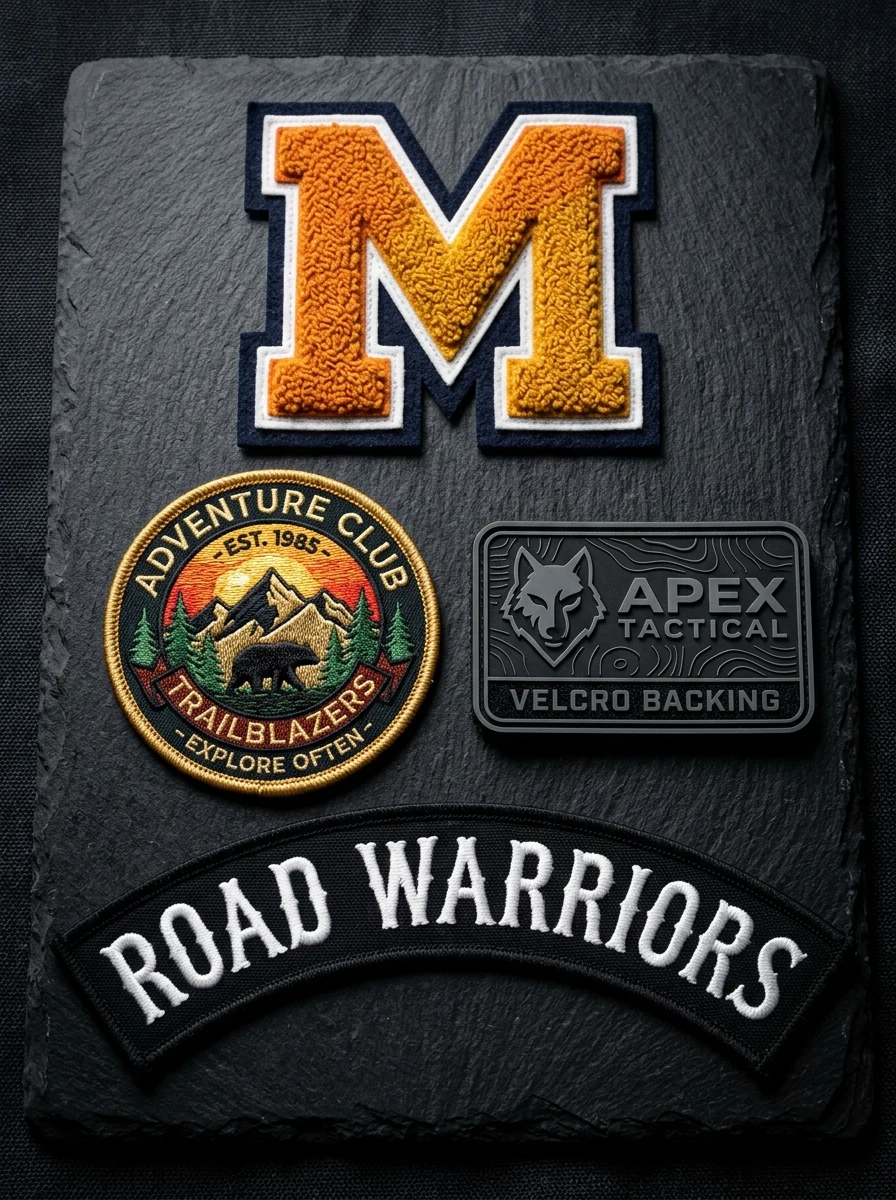
Different patch materials can also help create distinct product styles. Embroidered patches offer a traditional look, woven designs accommodate finer details, PVC provides a molded appearance, and leather adds a textured finish.
Placement is another important consideration. A patch should complement the shape of the garment rather than overpower it. Smaller designs may suit cap fronts and shirt pockets, while larger emblems can work on jackets and bags.
Businesses should consider the attachment method alongside the product material. A backing that works well on one garment may not be suitable for another.
For retail brands, maintaining consistent colors and dimensions across product lines helps create a more recognizable identity.
With thoughtful design and appropriate manufacturing, logo patches can become a practical branding element that connects different products without making every item look identical.
Custom Hat Patches Wholesale for Distinctive Headwear
Headwear has become an important category for streetwear labels, outdoor brands, promotional companies, and lifestyle businesses. Custom hat patches wholesale services allow these businesses to develop coordinated collections with distinctive branding.
Patch-based hats offer a different appearance from directly embroidered caps. The separate patch can introduce texture, contrast, and material variation while maintaining a consistent design across a product range.
Embroidered patches work well for traditional logos, while PVC patches create a more contemporary appearance. Woven patches can accommodate finer artwork, and leather patches are particularly popular for outdoor-inspired and heritage-style headwear.
When designing patches for hats, size and placement are essential. The patch should fit the front panel comfortably without interfering with the cap's shape or making the design difficult to read.
Attachment also requires consideration. Some hats are well suited to stitching, while certain materials may require a different approach.
Wholesale buyers should review samples and confirm the patch dimensions, colors, edge finishing, and attachment requirements before approving large production quantities.
Coordinating the patch specifications with the hat manufacturer can further improve consistency and simplify the production process.
For brands building a recognizable headwear collection, well-designed hat patches can add character while supporting a consistent product identity.
Custom Leather Patches for Hats That Feel Premium
Custom leather patches for hats are especially appealing to businesses that want a natural, textured, and premium-looking finish.
They are commonly used on trucker hats, baseball caps, outdoor headwear, workwear, and lifestyle merchandise. Their distinctive appearance can complement rustic designs, minimalist branding, and heritage-inspired collections.
Depending on the material and production method, leather patches can feature embossed, debossed, engraved, or printed artwork. Each technique creates a different visual effect.
Genuine leather provides natural variation, while synthetic leather may offer more uniform coloring and different pricing options.
When choosing a design, consider the patch's thickness, color, dimensions, edge finish, and attachment method. Simple logos and clear lettering often work particularly well because they allow the material's texture to remain visible.
Businesses should also consider care requirements. Leather and synthetic alternatives can respond differently to moisture, sunlight, heat, and cleaning products.
For bulk orders, approving a sample is helpful for evaluating the material and confirming that the final design matches the intended product style.
Custom leather patches for hats can give ordinary headwear a distinctive finish that supports a premium brand presentation.
Custom Biker Patches for Motorcycle Apparel and Clubs
Custom biker patches help motorcycle clubs, riding groups, apparel brands, and enthusiasts express their identity through clothing and accessories.
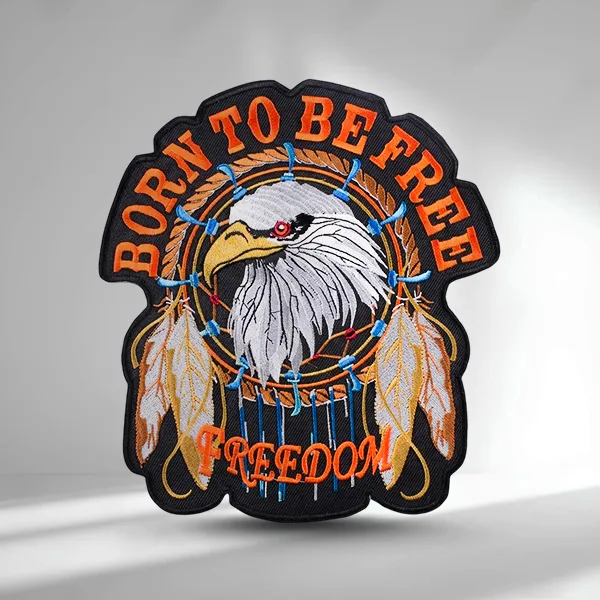
These designs often feature club names, symbols, artwork, and other identifying elements. Embroidered patches remain a popular option because their stitched texture complements denim, leather, and other traditional riding apparel.
When developing biker patches, pay attention to lettering, proportions, and overall readability. Designs with several lines of text need enough space to remain clear at the finished size.
The intended garment should also influence the material and backing. Heavy leather vests and denim jackets may require different construction considerations from lightweight apparel.
For motorcycle clubs, authorized artwork and insignia are particularly important. Businesses should confirm that the customer has permission to reproduce protected logos or other identifying designs.
A manufacturer can help determine whether embroidery, woven construction, or another suitable method will reproduce the artwork effectively.
For organizations ordering several patches, keeping colors, dimensions, and finishing consistent helps create a coordinated appearance across members' garments.
With the right design and construction, biker patches can become meaningful additions to riding apparel while maintaining a professional finish.
How to Choose the Best Patch Material for Your Product
Choosing a patch material starts with understanding how the finished product will be used.
Embroidered patches are suitable for many logos, uniforms, jackets, and traditional apparel designs. Their textured stitching gives the artwork a familiar fabric-based appearance.
Woven patches are often preferable when the design contains small lettering, fine lines, or intricate details. Their construction can reproduce certain elements more clearly than thicker embroidery.
PVC patches are useful for dimensional graphics, outdoor accessories, and products that benefit from a molded finish. Leather patches work particularly well for hats and lifestyle merchandise that call for a distinctive textured appearance.
The attachment method should be considered at the same time. Sew-on backing can provide a traditional permanent finish, iron-on adhesive may simplify application on compatible fabrics, and hook-and-loop backing supports removable designs.
Budget also plays a role. Different materials and production methods involve different setup requirements, manufacturing costs, and minimum quantities.
Rather than selecting a patch solely because it looks attractive, consider the artwork, intended placement, product material, expected usage, and desired lifespan.
Discussing these factors with your manufacturer can help you avoid unsuitable combinations and achieve a better final result.
What Influences the Cost of Custom Patches?
Custom patch pricing depends on more than the number of units ordered. Material, dimensions, artwork complexity, backing, edge finishing, and production method can all influence the quotation.
Larger patches generally require more material, while complicated designs may involve additional preparation or manufacturing work. PVC designs can require mold-related setup, and embroidered patches may involve digitizing costs.
Quantity is another important factor. Wholesale and bulk orders can reduce the average price per patch, although the total purchase cost will be higher when more units are ordered.
Small businesses exploring custom patches no minimum options should check whether setup charges or artwork fees apply to smaller quantities.
Shipping, packaging, rush production, and specialty attachments may also contribute to the final cost.
To compare suppliers accurately, provide the same design specifications and quantities to each manufacturer. Ask for a breakdown of the main charges so you understand what the quotation includes.
The lowest unit price is not always the best value. Poor stitching, inaccurate colors, unreliable delivery, or inconsistent finishing can create additional costs later.
A balanced decision considers both affordability and the quality needed for the finished product.
Quality Checks That Protect Your Brand Reputation
When customers purchase branded merchandise, they expect the product to look the way it was advertised. Poorly made patches can affect that experience, particularly when they are used on uniforms or products sold under a company's name.
Quality checks should begin before manufacturing. Confirm the approved artwork, dimensions, colors, material, backing, and finishing requirements.
A sample can provide a useful reference when available. It allows the buyer to assess the actual texture, shape, and construction before approving a larger order.
Once production is complete, inspect the patches for loose threads, uneven borders, incorrect colors, damaged edges, inconsistent sizing, and other visible defects.
PVC patches should be checked for clear molded details and consistent color sections, while leather designs should be reviewed for engraving quality and material appearance.
Businesses placing a custom patches bulk order should also verify quantities and packaging before distribution.
Keeping a record of approved samples and specifications can help maintain consistency during future production runs.
These steps are particularly valuable for brands that rely on repeat orders, retail presentation, and a consistent customer experience.
Final Thoughts: Make Every Patch Part of Your Brand Story
Custom patches offer a practical way to turn logos, artwork, and creative ideas into recognizable details on clothing and accessories. They work across industries, from fashion and corporate uniforms to outdoor equipment, promotional merchandise, and motorcycle apparel.
The best results come from choosing materials and attachment methods that match the intended application. Custom embroidered patches provide a classic appearance, custom PVC patches offer a modern molded finish, custom Velcro patches support interchangeable designs, and custom leather patches for hats create a distinctive premium look.
For businesses, choosing a reliable custom patches manufacturer is equally important. Clear communication, accurate artwork, consistent production, and realistic delivery schedules help ensure that the finished products meet expectations.
Companies with ongoing requirements can explore custom patches wholesale options, while startups and independent creators may benefit from suppliers offering smaller order quantities. Businesses planning a custom patches bulk order should prioritize detailed specifications, sample approval, and quality control.
Ultimately, custom patches are more than decorative additions. They can help businesses strengthen brand recognition, create distinctive merchandise, and maintain a consistent visual identity across different products. With thoughtful design and the right manufacturing partner, every patch can contribute to a more recognizable and professional brand.
Conclusion
Custom patches are a simple yet powerful way to give clothing, accessories, and branded merchandise a unique identity. From custom embroidered patches and custom logo patches to custom PVC patches and custom leather patches for hats, the right design can help businesses create products that stand out in a competitive market.
Choosing the right custom patches manufacturer is essential for achieving consistent quality, attractive designs, and reliable production. Whether you need custom patches no minimum for a small project or custom patches wholesale for a large business order, it is important to consider material, backing, pricing, and manufacturing standards before making a decision.
For brands looking to expand their product range, custom hat patches wholesale and custom patches bulk order solutions can make it easier to maintain consistent branding while managing production costs. Meanwhile, custom Velcro patches and custom iron on patches offer practical attachment options for different products and applications.
Ultimately, the best custom patches combine quality craftsmanship, thoughtful design, and a clear understanding of your brand's needs. By working with a reliable supplier and selecting the right patch style, you can create personalized products that leave a lasting impression and help your brand build stronger recognition over time.