Introduction
Custom patches provide a versatile way to personalize clothing, accessories, uniforms, and promotional products. Whether we are developing a clothing brand, creating merchandise for a business, designing team apparel, or adding a unique touch to our products, custom patches help us bring our ideas to life.
Ordering custom patches online makes it easier to explore different designs, compare materials, communicate our requirements, and arrange wholesale production. We can select the patch style, shape, size, colors, backing, and logo details that suit our needs.
Wholesale purchasing is particularly useful when we need patches for a clothing collection, retail inventory, uniforms, or a large promotional project. By ordering in suitable quantities, we can plan production efficiently and potentially reduce the cost per patch.
However, choosing the right patch involves more than finding an attractive design or a low price. We should consider the quality of materials, manufacturing technique, attachment method, and intended application.
In this article, we explore how to order custom patches online, understand wholesale pricing, choose custom logo designs, and prepare an order that meets our expectations.
Understanding Custom Patches and Their Uses
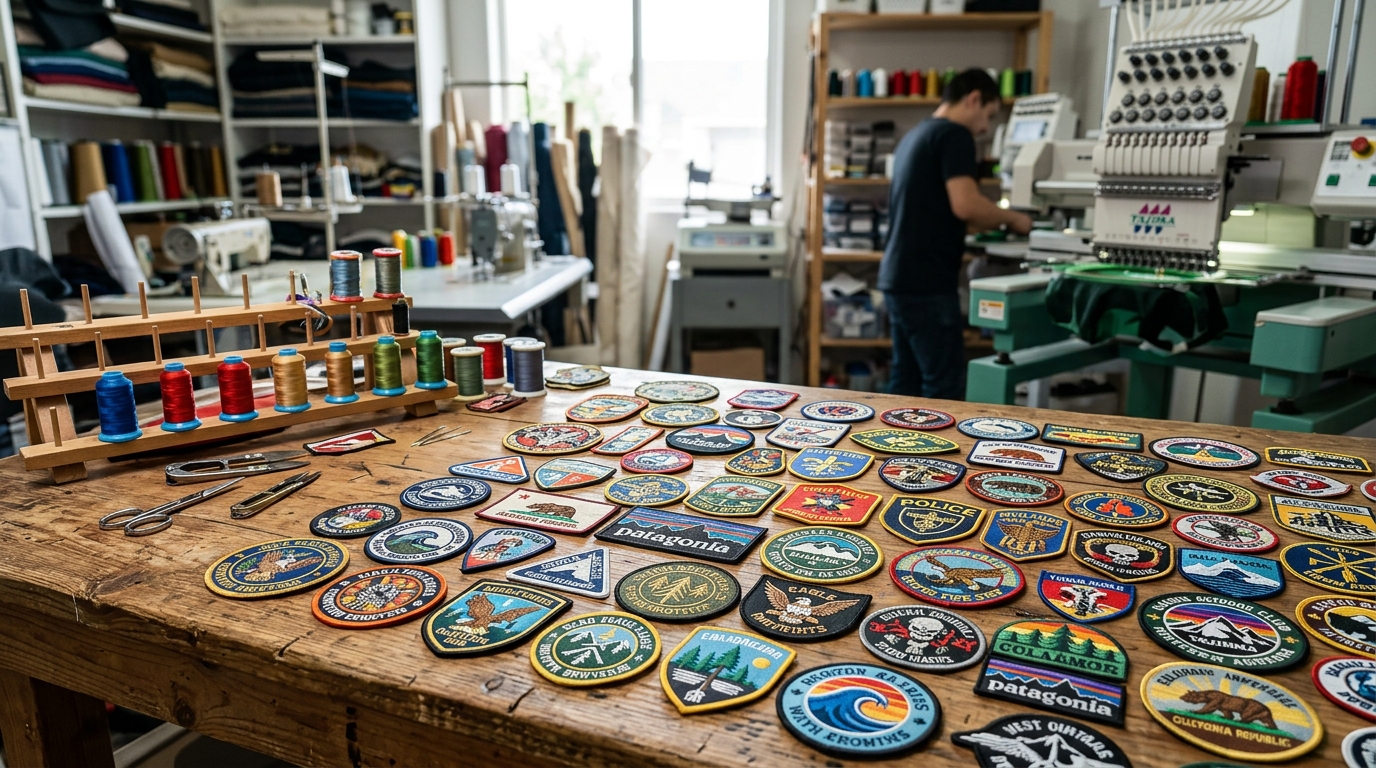
Custom patches are specially manufactured pieces featuring a logo, illustration, lettering, emblem, or other design. They can be attached to garments and accessories through sewing, heat application, hook-and-loop fasteners, or other suitable methods.
Patches can be made from embroidered fabric, woven threads, leather, synthetic materials, printed textiles, and molded PVC. Each material offers a different appearance and serves different applications.
For clothing brands, custom patches can provide a recognizable identity across jackets, hoodies, shirts, jeans, caps, and bags. Businesses can use them for uniforms, while sports teams may choose patches featuring team names, logos, or symbols.
We can also order patches for personal projects, clubs, events, promotional merchandise, and product decoration.
The flexibility of custom manufacturing allows us to adapt the design to our specific requirements. We can select a simple logo patch for understated branding or a detailed emblem for a more prominent appearance.
Before placing an order, we should identify the purpose of the patch and the material to which it will be attached. This helps us choose a design and construction method that will work well in the finished product.
Benefits of Ordering Custom Patches Online
Ordering custom patches online provides convenience and flexibility throughout the purchasing process. We can communicate our requirements, review available options, and request quotations without needing to visit a physical manufacturing facility.
Convenient Customization
Online ordering allows us to provide our artwork and specify the features we want. We can communicate our preferred dimensions, shape, colors, material, backing, and finishing.
A manufacturer can review these details and explain which options are suitable for our design.
This process allows us to develop patches that reflect our brand identity or project requirements rather than relying on standard designs.
Access to Different Patch Styles
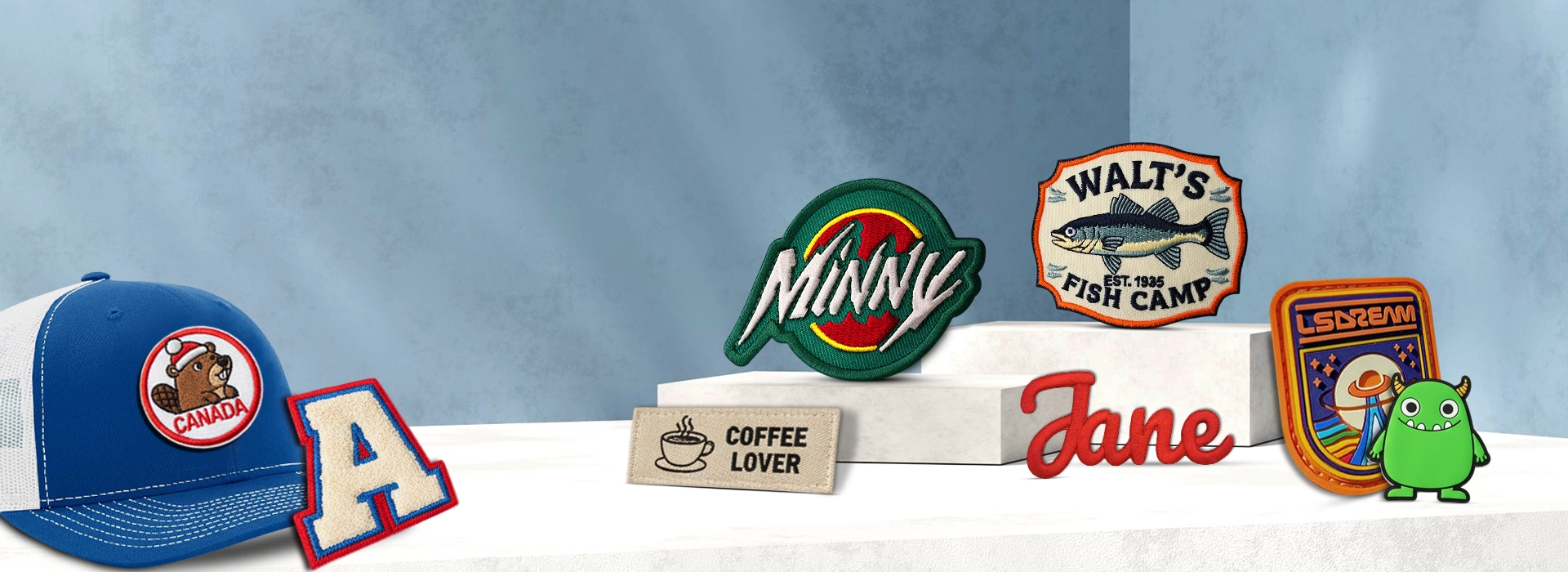
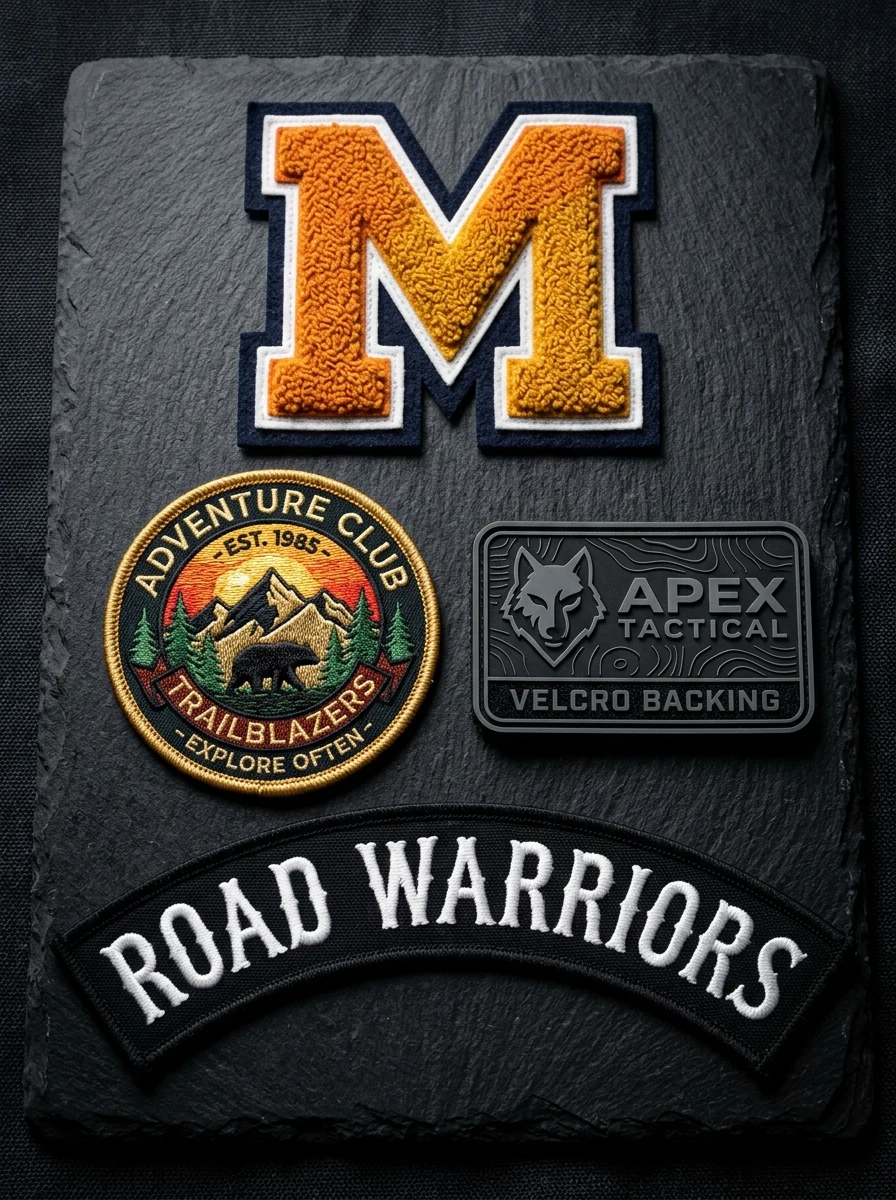
Online manufacturers may offer several patch categories, including embroidered, woven, leather, printed, chenille, and PVC patches.
We can compare these options and select the style that best suits our intended application.
For example, an embroidered patch may complement a jacket, while a woven patch may be more appropriate for a detailed logo with small lettering.
Wholesale Purchasing
Wholesale ordering can be useful when we need patches in larger quantities. Depending on the manufacturer and order specifications, purchasing in bulk may reduce the unit price.
We should compare quotations based on the same patch dimensions, materials, backing, and quantity. This makes it easier to evaluate the actual value of each offer.
Better Production Planning
When we order patches online and coordinate with our supplier, we can plan production around our garment launches, events, or inventory requirements.
We should account for artwork preparation, sample approval, manufacturing, inspection, and shipping when establishing our delivery schedule.
Access to Custom Logo Designs
Online manufacturers can often produce patches using our supplied artwork. This allows us to maintain our own visual identity and create designs for specific products or audiences.
We should provide a clear logo file and confirm how the manufacturer will reproduce it before approving production.
Types of Custom Patches Available Online
The patch style we select influences its appearance, texture, durability, and suitability for the intended product.
Embroidered Patches
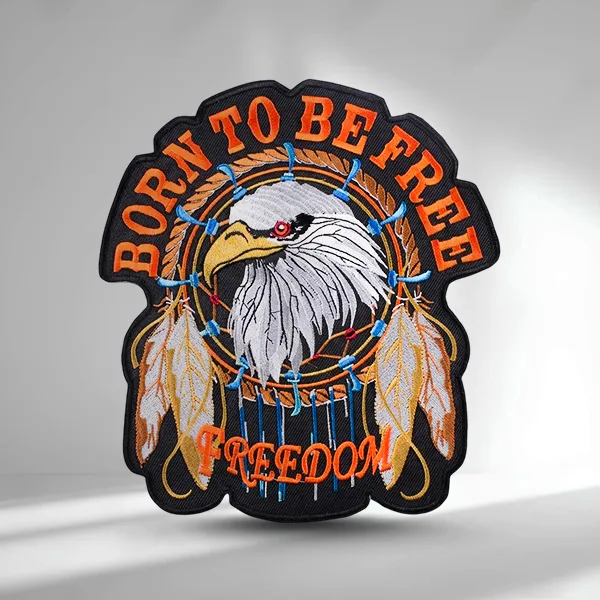
Embroidered patches are made by stitching colored threads onto a fabric base. Their raised texture makes them a popular option for clothing brands, uniforms, caps, jackets, and accessories.
We can customize the thread colors, dimensions, shape, border, and backing. Embroidery works particularly well for bold lettering, symbols, and logos that benefit from a traditional stitched appearance.
However, very small text and highly intricate details may be difficult to reproduce clearly. We should ask the manufacturer to review the artwork and recommend appropriate stitch settings.
Woven Patches
Woven patches are created by interlacing threads to form the design. They can reproduce fine lettering and detailed artwork with a relatively smooth surface.
They are suitable for clothing labels, small logos, jackets, shirts, bags, and accessories.
If our logo contains thin lines or compact lettering, woven construction may provide a cleaner result than conventional embroidery.
We should confirm the manufacturer's available weave types, color options, and minimum lettering requirements.
Leather and Faux-Leather Patches
Leather patches provide a distinctive finish for denim, outerwear, caps, and accessories. They can be produced from genuine leather or suitable synthetic alternatives.
Logos may be embossed, debossed, engraved, or printed onto the material.
We can select leather patches when we want a rugged, heritage-inspired, or premium appearance. The material should be compatible with the intended garment and its care requirements.
PVC and Rubber Patches
PVC patches are produced using molded materials that can create raised, recessed, or layered designs.
They are often used for outdoor apparel, utility clothing, sportswear, and accessories where a molded appearance is desirable.
We should confirm the material's flexibility, attachment method, and suitability for the product before placing a wholesale order.
Chenille Patches
Chenille patches feature a soft, textured surface made from yarn. They are commonly used on varsity jackets, collegiate apparel, and sports-inspired clothing.
We can combine chenille lettering with embroidered outlines to create a distinctive layered design.
This style is generally more suitable for bold letters and larger symbols than for intricate details.
Printed Patches
Printed patches are useful when our design includes gradients, numerous colors, or detailed illustrations that are difficult to reproduce through stitching.
Depending on the printing technique and material, they can provide a smooth surface and reproduce complex artwork.
We should discuss the printing method, fabric choice, color reproduction, and intended use with our manufacturer.
Custom Logo Designs for Personalized Patches
A custom logo is often the most important part of a patch because it represents our brand, organization, or project. We should develop a design that is clear, recognizable, and appropriate for the product on which it will appear.
Preparing Our Logo Artwork
Before ordering, we should prepare a high-quality version of our logo. Vector formats such as AI, EPS, or SVG are useful because they can be resized without losing their sharpness. High-resolution PNG files may also be suitable, depending on the manufacturer's requirements.
We should provide the original artwork whenever possible instead of relying on a small screenshot or compressed image.
The manufacturer may need to adjust the artwork for embroidery, weaving, printing, or molding. These adjustments should preserve the main features of our design while making it suitable for the selected production method.
Choosing the Right Colors
Colors contribute to brand recognition and the overall appearance of a patch. We should specify our preferred colors and provide Pantone references or other agreed color standards when accuracy is important.
We should remember that thread, fabric, leather, and molded materials may display colors differently from a digital screen.
Before approving production, we should review the manufacturer's design preview and, where appropriate, a physical sample.
Selecting the Shape and Dimensions
Custom patches can be produced in many shapes, including circles, rectangles, squares, shields, ovals, and custom outlines.
The dimensions should suit the intended application. A small logo on a shirt may need a compact design, while a large jacket patch may accommodate more detail.
We should provide exact measurements and confirm whether the dimensions include the border.
Simplifying Complex Designs
Some logos contain very fine lines, small lettering, or numerous decorative elements. These details may not reproduce clearly in every patch material.
We should ask our manufacturer whether the artwork needs simplification. Adjusting the spacing, lettering size, or line thickness can help improve the final result without changing the identity of our logo.
Understanding Wholesale Prices for Custom Patches
Wholesale pricing is an important consideration when ordering custom patches online. The final price depends on the manufacturing requirements rather than simply the appearance of the design.
We should request a detailed quotation that reflects the exact specifications of our order.
Order Quantity
The quantity we purchase can affect the unit price. Some manufacturing expenses, such as artwork preparation, digitizing, or production setup, may be distributed across a larger order.
This means larger orders may offer a lower price per patch. However, we should avoid ordering more than we can reasonably use.
For a new product or an unfamiliar design, a smaller initial order may help us evaluate demand and quality before committing to additional production.
Material Selection
Different materials have different production costs. Embroidered, woven, leather, PVC, and printed patches require different processes and resources.
We should compare materials according to their appearance, intended use, and manufacturing requirements.
A lower-cost material may be appropriate for promotional merchandise, while a more specialized finish may be justified for premium clothing.
Patch Size and Design Complexity
Larger patches generally require more material. Designs with intricate details, numerous colors, or specialized construction may also involve additional production work.
We should provide the same artwork and dimensions to each supplier when comparing quotations. Otherwise, the prices may reflect different products.
Backing and Finishing
The backing, border, and finishing options can affect the total cost.
For example, a patch with a specialized attachment system may require different materials or production steps from a standard sew-on patch.
We should ask whether these features are included in the quoted price or charged separately.
Shipping and Additional Charges
The quoted unit price may not include sample development, packaging, shipping, customs duties, or other applicable charges.
We should consider the total delivered cost when comparing suppliers.
A clear quotation helps us understand what we are paying for and reduces the risk of unexpected expenses.
How to Order Custom Patches Online
A well-organized ordering process helps us communicate our requirements and avoid mistakes.
Choosing a Suitable Manufacturer
We should look for a manufacturer that produces the type of patches we need and has experience with our intended application.
We can review product examples, available materials, manufacturing capabilities, and customer service information.
If we are ordering patches for clothing, we should confirm that the supplier understands garment applications and can recommend suitable attachment methods.
Providing the Design Specifications
We should send our logo artwork and describe the desired patch style, shape, dimensions, colors, border, backing, and quantity.
We should also explain where the patch will be used. A patch for a cap may require different construction from one intended for a jacket or bag.
Clear specifications allow the manufacturer to assess our requirements and provide a more accurate quotation.
Requesting a Sample
A sample can help us evaluate the patch before ordering in bulk.
We should examine its appearance, dimensions, material, stitching or surface finish, and attachment method.
If the sample does not match our expectations, we should request adjustments and review the revised version before approving production.
Approving the Final Design
Before manufacturing begins, we should confirm the artwork, colors, measurements, backing, quantity, and other agreed specifications.
We should keep a copy of the approved design and quotation for reference.
Confirming Production and Delivery
Once the order is approved, we should confirm the expected manufacturing schedule, shipping method, payment terms, and delivery arrangements.
We should allow sufficient time for production, inspection, and transportation, particularly when the patches are required for a clothing launch or scheduled event.
Choosing the Right Backing for Our Patches
Backing is an important part of patch design because it determines how the patch attaches to the garment or accessory.
Sew-On Backing
Sew-on patches are attached using stitching. They are suitable for many clothing applications and can provide a secure attachment when properly applied.
They are commonly used on jackets, uniforms, bags, denim, and other products where permanent placement is preferred.
We should confirm that the patch edges and material are suitable for sewing onto our garment.
Iron-On and Heat-Seal Backing
Iron-on patches use a heat-activated adhesive. When applied according to the manufacturer's instructions, they can provide a convenient way to attach patches.
However, the application method must be compatible with the garment fabric. Some materials may be sensitive to heat, and certain products may require additional stitching.
We should test the backing on the intended garment and follow the supplier's recommended temperature, pressure, and application time.
Hook-and-Loop Backing
Hook-and-loop backing allows a patch to be attached and removed using matching fastener surfaces.
It is useful for selected uniforms, outdoor clothing, and products where interchangeable patches are required.
We should confirm that the garment has the appropriate fastening surface and that the patch will remain securely attached during its intended use.
Adhesive Backing
Adhesive-backed patches may be suitable for temporary applications or selected surfaces.
Their performance depends on the adhesive, material, surface condition, and intended use.
We should not assume that adhesive backing will provide a permanent or washable attachment unless the manufacturer confirms its suitability.
Quality Control Before Accepting Our Order
Quality control helps us ensure that the patches we receive match our approved design and specifications.
We should inspect the delivered order before attaching the patches to our products.
The logo should be reproduced accurately, including the lettering, proportions, and agreed colors. Patch dimensions should match the order, and the border should be finished appropriately.
For embroidered patches, we should examine the stitching and check for loose threads or uneven areas. Woven patches should have clear details, while leather, printed, and PVC patches should be inspected for surface quality and finishing.
We should also confirm that the backing is correct and suitable for our intended application.
If we are purchasing patches for a large clothing collection, we should compare several pieces from the shipment to check consistency.
We can agree on quality requirements with the manufacturer before production and establish how defects or discrepancies will be handled.
For garments that will be washed frequently, we should test the patch and its attachment method under appropriate care conditions.
Common Mistakes to Avoid When Ordering Custom Patches
Ordering custom patches online can be straightforward, but unclear requirements may lead to disappointing results.
Providing Low-Quality Artwork
A small or blurry logo may not reproduce clearly. We should provide suitable artwork and ask the manufacturer which file formats it accepts.
Choosing the Wrong Patch Material
A patch designed for a heavy jacket may not be appropriate for lightweight clothing.
We should consider the garment's weight, texture, flexibility, and intended use before selecting a material.
Ignoring the Attachment Method
The backing should suit the garment and the way the product will be used.
We should confirm compatibility before production rather than assuming that every patch can be attached using the same method.
Skipping Sample Approval
A digital preview cannot always show the final texture, thickness, or color.
We should request a sample when the design, material, or order size makes physical evaluation important.
Comparing Prices Without Comparing Specifications
Different suppliers may quote different materials, sizes, or backing options.
We should compare equivalent products and consider the total delivered cost rather than selecting a supplier based only on the lowest price.
Ordering Without a Clear Delivery Schedule
Production and shipping can take time. We should confirm the schedule and allow sufficient time for any necessary corrections.
Custom Patches for Clothing Brands, Businesses, and Organizations
Custom patches can support many different types of projects.
Clothing brands can use patches to create a consistent identity across their collections. Embroidered logos may complement casualwear, while woven labels and leather patches can suit other product styles.
Businesses can order patches for uniforms, workwear, employee apparel, and promotional merchandise. A consistent logo helps identify the organization and creates a coordinated appearance.
Sports teams and clubs can use patches to display their names, emblems, or team identity. The design should suit the uniform and the intended application.
Event organizers can also use personalized patches for merchandise, commemorative products, and branded accessories.
For each project, we should consider the intended audience, garment type, design requirements, and quantity before selecting the patch style.
Maintaining Consistency Across Repeat Orders
If we plan to reorder custom patches, we should keep the approved artwork and specifications available.
Our records should include the patch dimensions, material, colors, backing, border, and manufacturing method.
Keeping an approved sample can also help us compare future production runs.
We should communicate any requested changes clearly. If we modify the logo, material, or dimensions, we should review the updated design before manufacturing.
Working with a supplier that can maintain consistent specifications may make repeat ordering easier and help us preserve our brand identity.
Conclusion
Ordering custom patches online gives us a convenient way to develop personalized designs for clothing, accessories, uniforms, and promotional products.
By choosing suitable materials, providing clear artwork, and understanding wholesale pricing, we can make informed decisions about our patch orders.
We should compare manufacturers based on their production capabilities, sample quality, communication, and ability to meet our requirements. Reviewing the specifications and approving a sample can help us avoid unnecessary mistakes.
Whether we need patches for a clothing collection, business uniforms, team apparel, or personal merchandise, careful planning helps us achieve a result that reflects our design and serves its intended purpose.
With clear requirements and a suitable manufacturing partner, we can order custom patches that meet our quality expectations and support our branding goals.