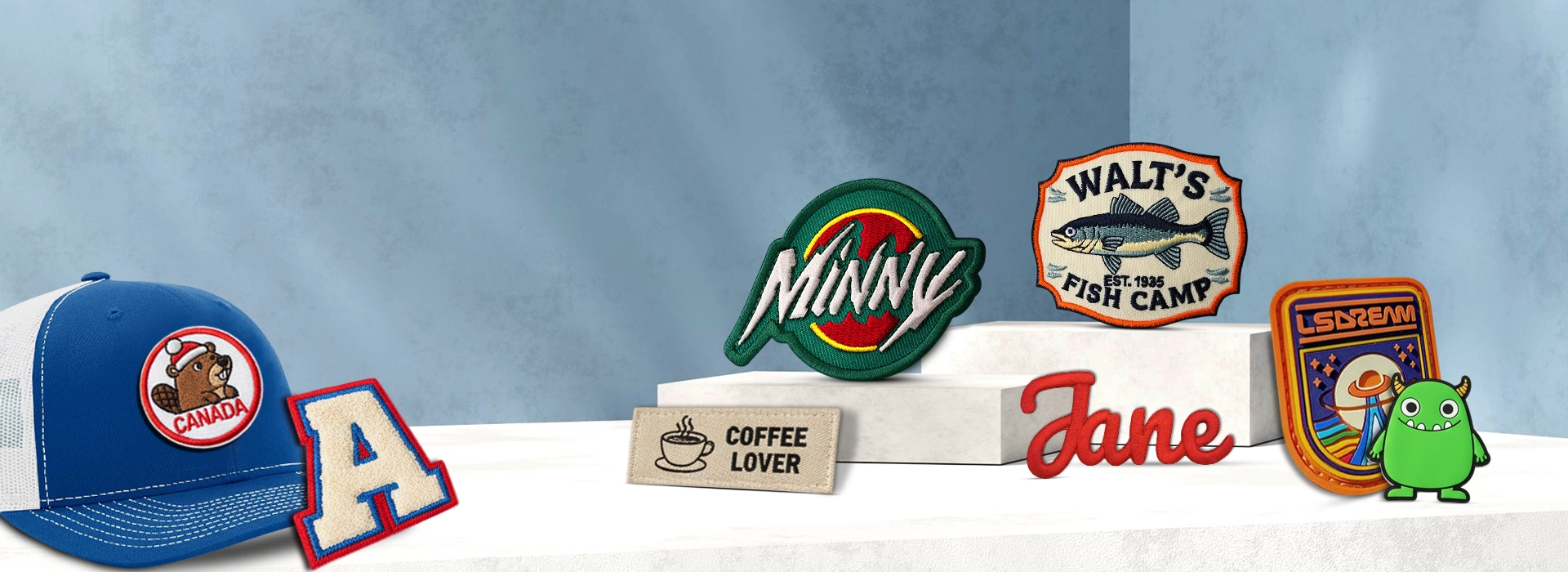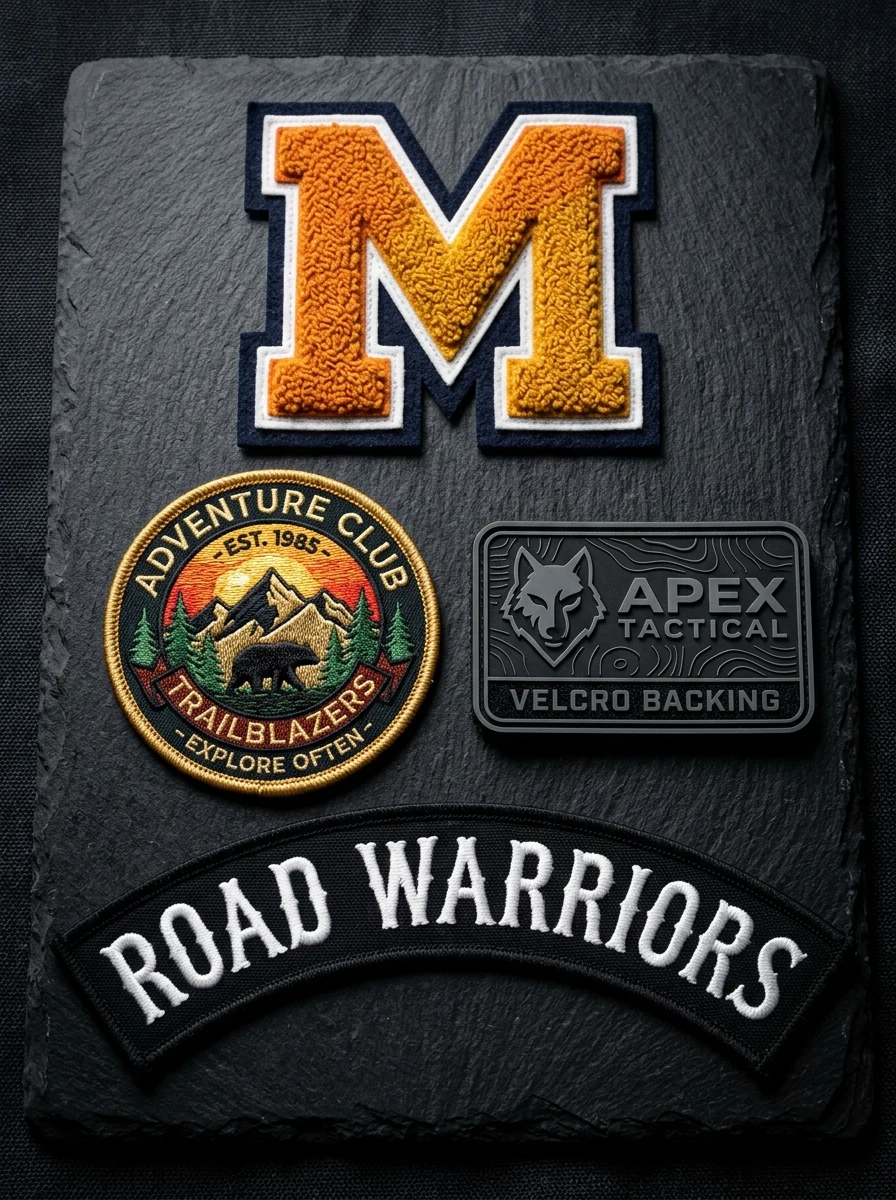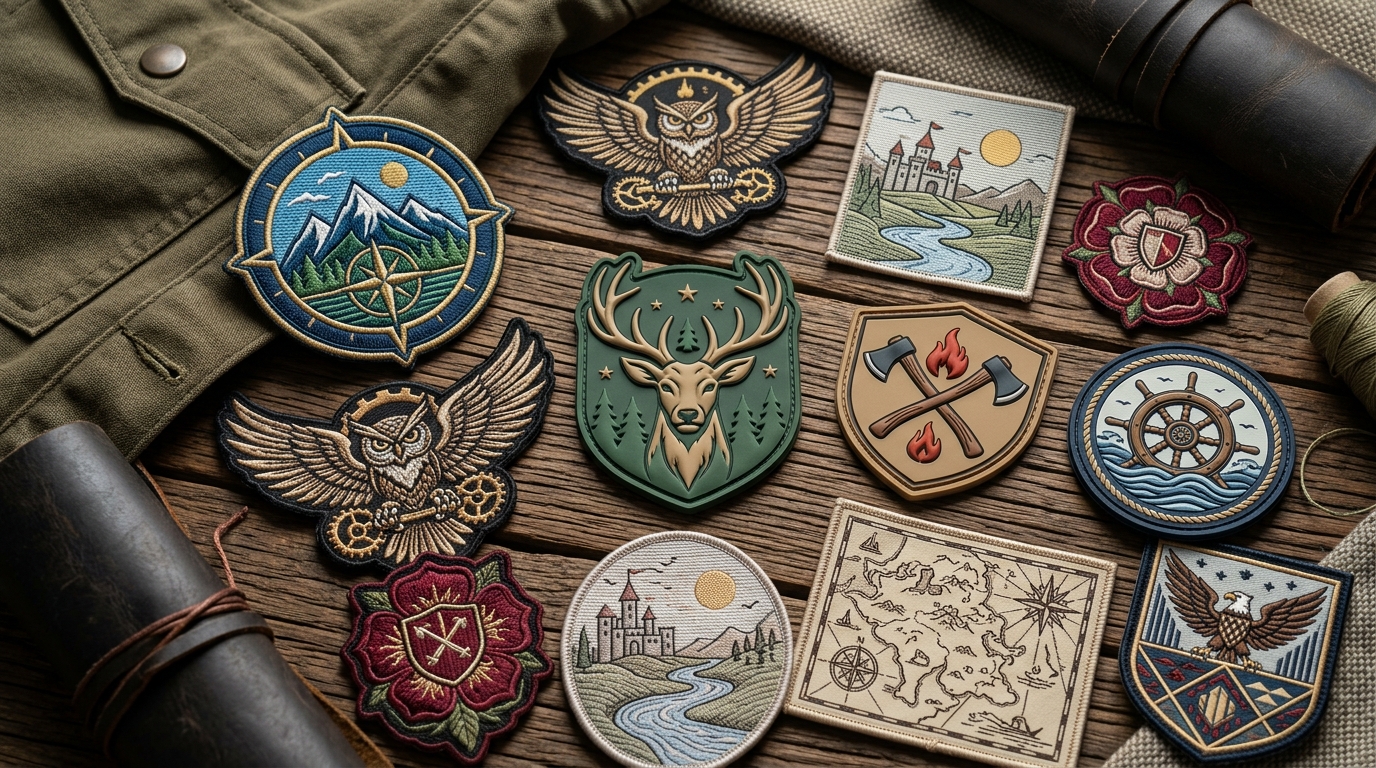
Premium custom logo patches are an excellent way to display a brand identity on clothing, uniforms, bags, hats, and accessories. They combine attractive design with practical branding, helping businesses, fashion brands, sports teams, and organisations create a recognisable appearance. Custom patches can be produced in different materials, shapes, sizes, and colours to suit a wide variety of applications.
Among the most popular options are embroidered patches, PVC patches, and woven patches. Each type has its own appearance, manufacturing process, and advantages. Embroidered patches offer a traditional stitched texture, PVC patches provide a modern moulded finish, and woven patches are ideal for designs that require fine details and small lettering.
Choosing the right patch depends on the logo design, intended application, desired appearance, and attachment method. Understanding the differences between these options helps businesses select patches that complement their products and represent their brands effectively.
What Are Premium Custom Logo Patches
Premium custom logo patches are separately manufactured emblems designed to display a company's logo, brand name, symbol, illustration, or other artwork. They can be attached to garments and accessories using different backing and fastening methods.
Unlike logos printed directly onto fabric, custom patches are produced as individual components. This allows manufacturers to create distinctive shapes, select suitable materials, and offer different finishing options.
Businesses use custom logo patches to maintain consistent branding across their products. A clothing company, for example, may use the same logo patch on jackets, caps, hoodies, and backpacks. This consistency helps customers recognise the brand across different product categories.
The quality of a premium patch depends on several factors, including the materials used, accuracy of the artwork, manufacturing technique, edge finishing, and attachment method. A well-made patch should reproduce the intended design clearly and be suitable for the conditions in which it will be used.
Custom patches can also provide flexibility for product design. Depending on the attachment method, a patch may be replaced or updated without changing the entire garment or accessory.
Custom Embroidered Logo Patches
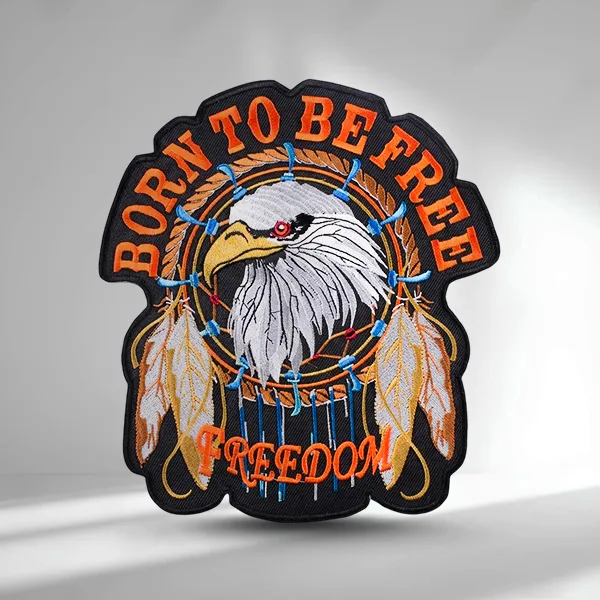
Embroidered patches are one of the most popular choices for clothing brands, uniforms, sports teams, and promotional products. They are made by stitching coloured threads onto a fabric base to create a logo or design.
The stitching produces a textured surface that gives the patch a traditional and distinctive appearance. Depending on the artwork and stitch construction, embroidery can create raised details that make the logo visually prominent.
Manufacturing Process
The production process begins with preparing the customer's artwork. The design is converted into embroidery instructions that determine the stitch types, thread colours, directions, and density.
The selected threads are stitched onto a suitable fabric backing using embroidery machinery. Once the embroidery is complete, the patch is cut into the required shape and finished with an appropriate border.
The finished patch may then receive sew-on, heat-seal, or hook-and-loop backing, depending on the customer's requirements.
Benefits of Embroidered Patches
Embroidered patches provide a classic appearance that works particularly well with uniforms, jackets, caps, and branded clothing. The thread texture gives the design depth and makes it visually different from a flat printed logo.
They are available in various colours and shapes, allowing businesses to create patches that reflect their brand identity. Embroidery is especially suitable for logos featuring bold lettering, clear shapes, and recognisable symbols.
Another advantage is their versatility. Embroidered patches can be attached to many compatible fabrics and accessories, making them useful for fashion, corporate clothing, sports merchandise, and promotional products.
However, embroidery has practical limitations. Extremely small lettering, narrow lines, and complex gradients may not reproduce clearly. The design may need to be simplified or enlarged to achieve a satisfactory result.
Premium Custom PVC Logo Patches
PVC patches are made from polyvinyl chloride, a synthetic material commonly used to create flexible, rubber-like emblems. They are popular for their smooth surfaces, defined shapes, and modern appearance.
PVC patches are manufactured using moulds that form the design into the selected material. This construction allows manufacturers to create raised lettering, recessed details, layered shapes, and clearly separated colour sections.
Manufacturing Process
The PVC manufacturing process starts with preparing the logo artwork and creating a suitable mould. The material is formed into the mould to reproduce the design.
Depending on the requirements, the patch may feature raised elements, recessed areas, multiple colours, or a combination of different surface levels.
After forming and curing, the patch is finished with the selected backing and inspected for consistency.
Benefits of PVC Patches
PVC patches are valued for their modern appearance and moulded details. Their construction can make bold logos and symbols stand out clearly.
PVC material is generally resistant to moisture and can be suitable for outdoor accessories and equipment. Its surface is also often easier to wipe clean than textured embroidery.
Many PVC patches are flexible, allowing them to be used on compatible products such as backpacks, jackets, caps, and equipment cases.
PVC patches are especially suitable for designs featuring bold shapes and simple lettering. However, very fine details may require adjustments because the moulding process has practical limits.
The complete patch's durability depends not only on PVC material but also on the backing, attachment, manufacturing quality, and conditions of use.
Custom Woven Logo Patches
Woven patches are created by interlacing threads to form a design directly within the fabric. This construction produces a relatively smooth surface and can reproduce small lettering and fine lines more clearly than traditional embroidery.
Woven patches are frequently used by clothing brands, fashion designers, accessory manufacturers, and businesses that require detailed logos.
Manufacturing Process
The customer's artwork is prepared for weaving, with the design converted into an arrangement of threads.
The threads are woven together to create the background and logo details. Once the weaving is complete, the patch is cut to the required dimensions and finished with an appropriate border and backing.
The final appearance depends on the thread selection, weaving density, artwork preparation, and finishing quality.
Benefits of Woven Patches
Woven patches are particularly useful for logos containing intricate details or smaller lettering. Their relatively flat construction can provide a refined appearance suitable for clothing labels and fashion accessories.
They can also be lightweight, making them appropriate for products where a thick or heavily textured patch is not desirable.
Woven patches are commonly used on jackets, denim products, hats, bags, and branded apparel.
Although woven construction can reproduce fine details, the result still depends on the patch dimensions and the complexity of the artwork. Extremely small elements may require adjustment before production.
Choosing Between Embroidered, PVC, and Woven Patches
Selecting the right patch material is an important decision for businesses and product designers. Each option has different characteristics that make it suitable for particular applications.
Embroidered patches are an excellent choice when the desired appearance includes visible stitching, texture, and a traditional finish. They work well for company uniforms, club badges, jackets, and caps.
PVC patches are suitable when the design requires a modern moulded appearance, distinct raised details, or a material that can handle exposure to moisture. They are frequently used for outdoor equipment, backpacks, and compatible tactical products.
Woven patches are a strong option when small lettering, intricate details, and a smooth surface are priorities. They are often selected for fashion labels, clothing brands, and detailed logo designs.
The best choice should be based on the actual artwork and intended application rather than appearance alone. Buyers should also consider how the patch will be attached, how frequently the product will be used, and what care requirements apply.
Custom Patch Shapes, Sizes, and Colours
Custom logo patches can be manufactured in many different shapes and dimensions. Common shapes include circles, rectangles, ovals, shields, and custom outlines that follow the design of a logo.
The appropriate size depends on the product where the patch will be placed. A patch intended for a cap may need to be relatively small, while a jacket or backpack may accommodate a larger design.
Colour selection is also important for brand consistency. Businesses should provide clear artwork and suitable colour references when accurate brand matching is required.
Different manufacturing methods use different materials, so thread colours, woven colours, and PVC colours may not look identical. Reviewing a sample can help buyers understand the finished appearance before approving a production order.
Custom shapes should also be considered in relation to edge finishing. Some designs require a stitched border, while others may be cut to follow the outline of the artwork.
Custom Patch Backing and Attachment Options
The backing determines how the patch is attached to a garment, bag, or other product. Choosing the correct attachment method helps ensure that the patch remains suitable for its intended use.
Sew-On Backing
Sew-on patches are attached by stitching them directly onto the product. This method is widely used for uniforms, jackets, denim, bags, and other items.
Sewing can provide a secure attachment when the stitching and base material are appropriate. It is often a practical option for products that will be used regularly.
Heat-Seal or Iron-On Backing
Heat-seal patches contain an adhesive layer that is activated using heat and pressure.
They can be convenient for clothing production and application to compatible fabrics. However, not every garment material can withstand the required temperature.
Buyers should follow the manufacturer's application instructions and check whether the selected fabric is suitable for heat-seal attachment.
Hook-and-Loop Backing
Hook-and-loop backing allows patches to be attached to compatible surfaces and removed when needed.
This option is frequently used for interchangeable identifiers, tactical equipment, bags, and uniforms designed to accommodate removable patches.
Adhesive Backing
Some patches are supplied with pressure-sensitive adhesive for specific applications.
The reliability of adhesive attachment depends on the surface, environmental conditions, and intended duration of use. It should not automatically be considered a permanent solution for garments.
Before ordering, buyers should confirm the patch backing and ensure that it is compatible with the product.
Custom Logo Patches for Fashion and Clothing Brands
Fashion brands use custom patches to add distinctive details to their garments and accessories. Patches can display a brand name, decorative symbol, collection logo, or other visual element.
Embroidered patches are popular for denim jackets, hoodies, and casual clothing because their texture complements the appearance of fabric.
Woven patches are useful for clothing labels and detailed branding, particularly when small lettering needs to remain clear.
PVC patches can create a contemporary look for sportswear, streetwear, and selected accessories.
A consistent patch design can help a clothing brand establish a recognisable identity across different product lines. When selecting a patch, the brand should consider its overall style, garment material, and intended customer.
Custom Patches for Uniforms and Sports Teams
Custom patches are widely used for company uniforms, school clothing, sports teams, clubs, and organisational apparel.
They can display company names, team logos, membership symbols, department identifiers, and other information.
Embroidered patches are often chosen for traditional uniforms because their stitched appearance is familiar and visually distinctive.
Woven patches may be appropriate when a uniform badge contains fine lettering or a detailed emblem.
The selected patch should be easy to recognise at its intended size and compatible with the garment's construction.
For uniforms that require frequent washing, buyers should consider the attachment method and follow the care recommendations provided by the patch manufacturer.
Custom PVC Patches for Outdoor Equipment
PVC patches are commonly used on outdoor clothing, backpacks, equipment bags, and compatible recreational products.
Their moulded appearance can suit bold symbols, distinctive shapes, and modern branding.
PVC material is generally resistant to moisture, which can make it appropriate for certain outdoor applications. However, the performance of the complete patch depends on the construction, attachment, and environmental conditions.
Businesses selecting PVC patches for outdoor equipment should confirm the intended temperature range, flexibility, attachment requirements, and care instructions.
The design should also be suitable for moulding. Very narrow lines and tiny lettering may need to be simplified to achieve a clear result.
Custom Logo Patches for Promotional Products
Custom patches can be used for promotional merchandise, corporate events, clubs, festivals, and marketing campaigns.
They offer a way to display a brand identity on products that customers may continue using after an event or campaign.
The patch material should be selected according to the design, intended product, and desired appearance.
For example, embroidered patches can provide a traditional promotional emblem, woven patches can accommodate detailed artwork, and PVC patches can create a modern design for selected accessories.
Before placing an order, businesses should confirm the quantity, dimensions, backing, artwork, packaging, and delivery requirements.
The Custom Patch Ordering Process
A successful custom patch order begins with clear specifications.
The first step is preparing the logo artwork. Vector artwork is particularly useful because it can be resized without losing its original proportions. If vector artwork is unavailable, a high-resolution image should be provided.
Next, the buyer selects the patch material. The decision should reflect the complexity of the logo, the desired texture, and the intended application.
The patch dimensions and shape should then be confirmed. Buyers should specify the required width, height, and cutting outline.
The backing must also be selected according to the product where the patch will be attached.
For a new design or a large production order, reviewing a sample or proof is advisable. This allows the buyer to check the artwork, colours, dimensions, border, and attachment method.
Once the design is approved, the manufacturer can confirm the quantity, quotation, production schedule, packaging, and delivery arrangements.
Clear communication throughout the process can help prevent errors and reduce the risk of receiving patches that do not match the original requirements.
Factors That Affect Custom Patch Pricing
The price of custom logo patches depends on several factors.
Patch size can influence material consumption and production requirements. Larger patches generally require more resources than smaller ones.
The manufacturing method also affects the quotation. Embroidery, weaving, and PVC moulding involve different processes and equipment.
Design complexity may influence production time and preparation costs. Detailed artwork, specialised borders, multiple colours, and unusual shapes can affect the final price.
Backing selection, sample requirements, finishing, packaging, and shipping may also contribute to the total cost.
Order quantity is another important consideration. Larger orders may reduce the unit cost because certain production expenses can be distributed across more patches.
When comparing suppliers, buyers should request quotations based on the same specifications. Comparing only the advertised unit price may not provide an accurate picture of the final cost.
Quality Control for Premium Custom Patches
Quality control helps ensure that finished patches match the approved design and are suitable for their intended purpose.
The logo should be checked for accurate proportions, lettering, and overall appearance.
Colours should be compared with the agreed references or approved sample.
Embroidered patches should have neat stitching, woven patches should reproduce their details clearly, and PVC patches should have well-defined moulded features.
The edges should be finished appropriately, and the backing should be correctly applied.
Dimensions should match the agreed specifications, while production batches should be checked for noticeable differences in appearance.
The inspection requirements may vary according to the patch type and intended application. A decorative patch for occasional use may have different requirements from a patch used on workwear or outdoor equipment.
Caring for Custom Logo Patches
Proper care can help maintain the appearance of custom patches and the products to which they are attached.
Embroidered patches should be cared for according to the garment's washing instructions. Excessively harsh treatment may affect the stitching or fabric.
Woven patches should be handled according to their material and the care requirements of the garment.
PVC patches can often be wiped clean, but unsuitable chemicals or excessive heat may affect their appearance.
Heat-seal patches require particular attention to the garment's care instructions and the manufacturer's guidance.
For products used frequently, checking the patch attachment periodically can help identify loose stitching or other issues before they become more noticeable.
Care instructions should always be appropriate to the particular patch material and attachment method.
Selecting a Reliable Custom Patch Manufacturer
Choosing a suitable manufacturer is an important part of obtaining premium custom logo patches.
A reliable supplier should be able to explain the differences between embroidered, PVC, and woven patches and recommend a suitable option for the artwork.
Buyers should confirm that the manufacturer can produce the required dimensions, shapes, materials, and backing.
It is also useful to ask about artwork preparation, sample availability, production schedules, minimum order quantities, quality inspection, and packaging.
For international orders, delivery arrangements and any applicable import requirements should be confirmed before production begins.
Clear specifications and approval of the final design help establish a productive relationship between the buyer and manufacturer.
Common Questions About Premium Custom Logo Patches
What are premium custom logo patches
Premium custom logo patches are separately manufactured emblems featuring a business logo, brand name, symbol, or custom artwork. They can be made using embroidered thread, woven fabric, or PVC and attached to clothing, bags, uniforms, and accessories.
What is the difference between embroidered, PVC, and woven patches
Embroidered patches use stitched threads to create a textured design. PVC patches are moulded from a synthetic material and can feature raised or recessed details. Woven patches are produced by interlacing threads and can reproduce fine lettering and intricate artwork.
Which custom patch type is best for detailed logos
Woven patches are often suitable for detailed logos and small lettering because their construction provides a relatively flat surface. The final result depends on the artwork, patch dimensions, and manufacturing capabilities.
Are PVC logo patches waterproof
PVC material is generally resistant to moisture, but the water resistance of the complete patch depends on its construction, backing, and attachment. Buyers should confirm the manufacturer's specifications before choosing patches for products exposed to water.
Can custom logo patches be made in different shapes
Yes. Custom patches can be manufactured in shapes such as circles, rectangles, ovals, shields, and outlines that follow a logo. The available shapes depend on the selected material and manufacturing process.
What backing options are available for custom patches
Common options include sew-on, heat-seal, hook-and-loop, and adhesive backing. The appropriate choice depends on the product, attachment requirements, and whether the patch needs to be removable.
Can custom patches be used on hats and bags
Yes. Embroidered, PVC, and woven patches can be used on compatible hats, bags, backpacks, and other accessories. Their size, backing, and attachment method should be selected according to the product.
How should artwork be prepared for a custom patch order
Provide clear artwork, preferably in vector format, and specify the patch material, dimensions, colours, shape, and backing. For detailed designs, reviewing a sample or production proof can help confirm that the finished patch matches the intended artwork.
What affects the cost of custom logo patches
Pricing depends on the patch dimensions, material, design complexity, backing, quantity, sampling, finishing, and delivery requirements. Comparing quotations with identical specifications helps buyers assess the actual cost.
How can I maintain the quality of custom patches
Follow the care instructions for the patch and the garment or accessory. Avoid unsuitable cleaning methods, excessive heat, and harsh chemicals. For products used regularly, check that the patch remains securely attached and that its surface and edges are in good condition.
Conclusion
Premium custom logo patches offer a versatile and professional way to represent a brand, organization, team, or personal identity. Embroidered patches provide a classic textured appearance, PVC patches deliver a durable and modern finish, and woven patches reproduce fine details with a smooth surface. Each style has its own strengths, making the right choice dependent on the logo design, intended use, garment, and desired appearance.
By considering material quality, construction, backing options, size, color accuracy, and application method, businesses and individuals can select patches that look polished and perform reliably. A well-designed custom patch can enhance apparel, strengthen brand recognition, and create a consistent identity across uniforms, accessories, merchandise, and promotional products.