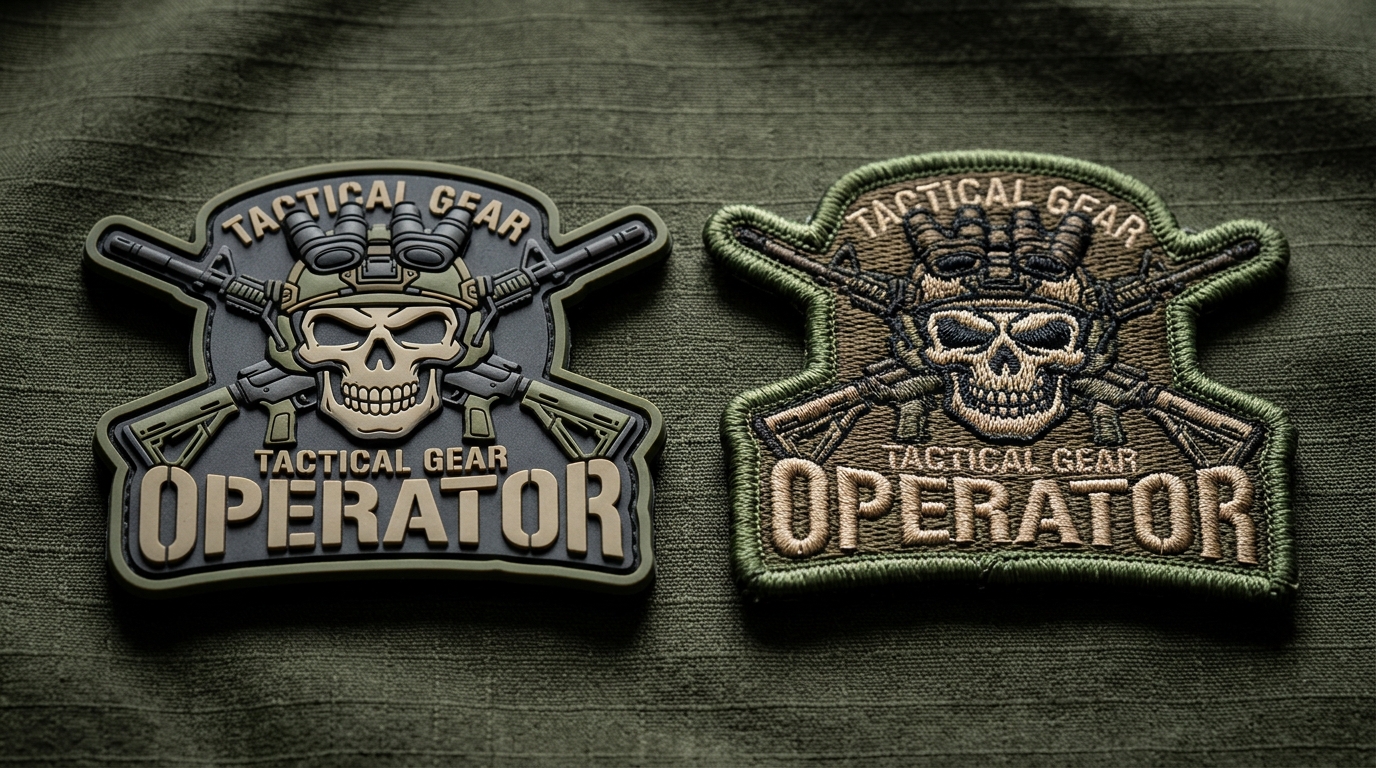
When outfitting tactical military units, law enforcement SWAT operators, search-and-rescue squads, outdoor apparel labels, or motorcycle clubs, one critical question dominates the procurement process: Should you choose modern 3D PVC rubber patches or timeless embroidered fabric patches?
Both styles represent elite manufacturing standards, but they operate under completely different material physics. Embroidered patches deliver classic tactile thread luster, collegiate heritage, and flexible garment drape, while custom PVC (polyvinyl chloride) patches offer indestructible, waterproof, mud-proof rubber sculpting that thrives in the harshest outdoor combat, maritime immersion, and extreme weather conditions.
In this comprehensive head-to-head engineering comparison by Patched Custom, we evaluate ten distinct mechanical and aesthetic dimensions—ranging from CNC mold tooling and 3D sculpturing to UV solar degradation, extreme-cold embrittlement, and washing durability—so you can specify the perfect emblem for your project.
What Are Custom PVC Patches? Chemical Composition & Molding Physics
Unlike embroidered emblems crafted with polyester twill and spun thread, custom PVC patches are manufactured using liquid Polyvinyl Chloride polymers infused with specialized plasticizers, stabilizers, and Pantone-matched color pigments. High-end modern manufacturers utilize eco-friendly, non-toxic, RoHS-compliant formulations that eliminate harmful phthalates.
- CNC Mold Engraving: A high-precision CNC milling machine carves your artwork into a solid aircraft-grade brass or aluminum master mold. This CNC tool path determines whether elements are flat (2D) or sculpted with rounded convex relief (3D).
- Micro-Injection Liquid Color Dispensing: Automated micro-dispensing syringes inject liquid colored PVC resin into individual cavities of the metal mold layer by layer. Thin metal dams (known as mold steps) separate colors to prevent bleeding.
- Bake Oven Polymerization: The filled mold enters a vulcanization oven heated between 250°F and 320°F (120°C to 160°C). The heat cross-links the vinyl polymers, converting the liquid resin into a solid, resilient, rubbery badge.
- Sewing Channel & Backing Attachment: A recessed perimeter groove (the sewing ditch) is integrated around the outer border. Hook-and-loop Velcro or adhesive backings are ultrasonic-welded or heavy-stitched to the rear.
2D vs. 3D PVC: Understanding Mold Sculpting Options
When ordering custom PVC patches from Patched Custom, you will be prompted to select between 2D Standard Relief and 3D Multi-Layer Sculpting:
When Should You Choose PVC Patches? Ideal Applications
Custom PVC rubber patches are the undisputed market standard in scenarios where gear is exposed to extreme physical abuse, wet weather, or rapid detachment:
- Tactical Military & Law Enforcement Uniforms: Plate carriers, helmet covers, chest rigs, and SWAT entry vests benefit from PVC’s non-reflective matte finish, IR (Infrared) luminescence compatibility, and hook-and-loop Velcro readiness.
- Off-Road, Overlanding & 4x4 Clubs: Mud splatters, dust storms, and heavy rain can ruin embroidered fabric. PVC patches on headliners, recovery gear bags, and winch jackets rinse clean under a garden hose.
- Marine, Scuba & Water Sports Gear: Saltwater corrodes threads and rots organic twills. PVC patches are completely impervious to seawater immersion, wetsuit neoprene stretch, and chlorine pools.
- Dog Vests & Service K9 Harnesses: Working dogs run through briars, mud puddles, and underbrush. Embroidered badges snag on twigs, while PVC slides through clean and unblemished.
- Outdoor Heavy Outerwear: Heavy ski parkas, expedition backpacks, and weatherproof fly-fishing waders.
When Should You Choose Embroidered Patches?
Despite the high-tech ruggedness of PVC, traditional embroidered patches remain the superior aesthetic and functional choice for numerous industries:
- Motorcycle Clubs & Biker Rockers: Heavy leather vests and denim cuts demand the timeless, authentic embroidery look of thick merrowed borders and satin-stitch lettering that reflects biker tradition since the 1950s.
- Collegiate, High School & Varsity Jackets: Letterman jackets and athletic awards call for vintage warmth, yarn luster, and dimensional wool or chenille combinations.
- Corporate Polo Shirts & Staff Workwear: Embroidered patches fold and flex naturally with soft cotton or poly-blend shirts, providing an executive, approachable appearance.
- Budget-Conscious Short Runs: For orders of 25 to 50 pieces, embroidered patches avoid the $70+ metal mold fee required for PVC, lowering initial capital expenditure.
- Direct Iron-On Requirements: If the end-users do not have Velcro uniforms and must iron their patches onto t-shirts or jeans at home, embroidered patches are the only viable choice.
CNC Mold Tooling Science: Aluminum 6061 vs. H62 Yellow Brass
The foundation of all custom PVC rubber patches is the master metal mold. The quality of this mold directly dictates how crisp your typography looks and whether lines blur together under mass production:
Every mold engineered at Patched Custom is cut with a standard 45-degree draft angle on cavity side walls. This microscopic slope ensures that when liquid PVC vulcanizes in the baking oven, the finished rubber emblem releases cleanly from the metal without tearing micro-details or leaving rubber flash along the borders.
Eco-PVC Chemistry & Global Safety Standards: RoHS & REACH
Historically, low-cost PVC manufacturing utilized orthophthalates (such as DEHP and DBP) as softening plasticizers. These chemicals were classified as toxic endocrine disruptors and have been strictly banned in children’s products across North America and Europe.
At Patched Custom, our custom PVC emblems are manufactured exclusively with non-toxic, eco-friendly, food-grade plasticizers (including DOTP and DINCH):
- RoHS 2.0 Compliant (EU Directive 2011/65/EU): 100% free from lead, mercury, cadmium, hexavalent chromium, and polybrominated biphenyls.
- REACH Annex XVII Compliant: Certified non-toxic under strict European chemical safety regulations.
- California Proposition 65 Compliant: Zero toxic chemical off-gassing, making our PVC emblems safe for infant apparel, school gear, and medical equipment.
Bio-Hazard, Marine & Tactical Sanitization Protocols
One of the greatest operational advantages of PVC rubber patches over fabric embroidery is the ease of decontamination in hazardous environments:
- Hospital & Paramedic Bio-Clean: PVC patches can be scrubbed with hospital-grade CaviCide, chlorhexidine, or 10% sodium hypochlorite bleach solutions without fading color pigments.
- Off-Road & Mud Decontamination: After crawling through clay mud or swamp water, simply spray your tactical vest or headliner patches with a high-pressure garden hose or pressure washer at 1,500 PSI from 12 inches away.
- Marine Salt Crust Removal: Saltwater leaves abrasive salt crystals that shred embroidery threads. PVC rubber is completely immune to saltwater corrosion; a 5-second rinse under tap water restores full factory luster.
Total Cost of Ownership: 5-Year Operating Cycle Comparison
While PVC patches involve a one-time mold setup charge ($50 to $90), their lifetime durability makes them vastly cheaper over a multi-year equipment lifecycle: