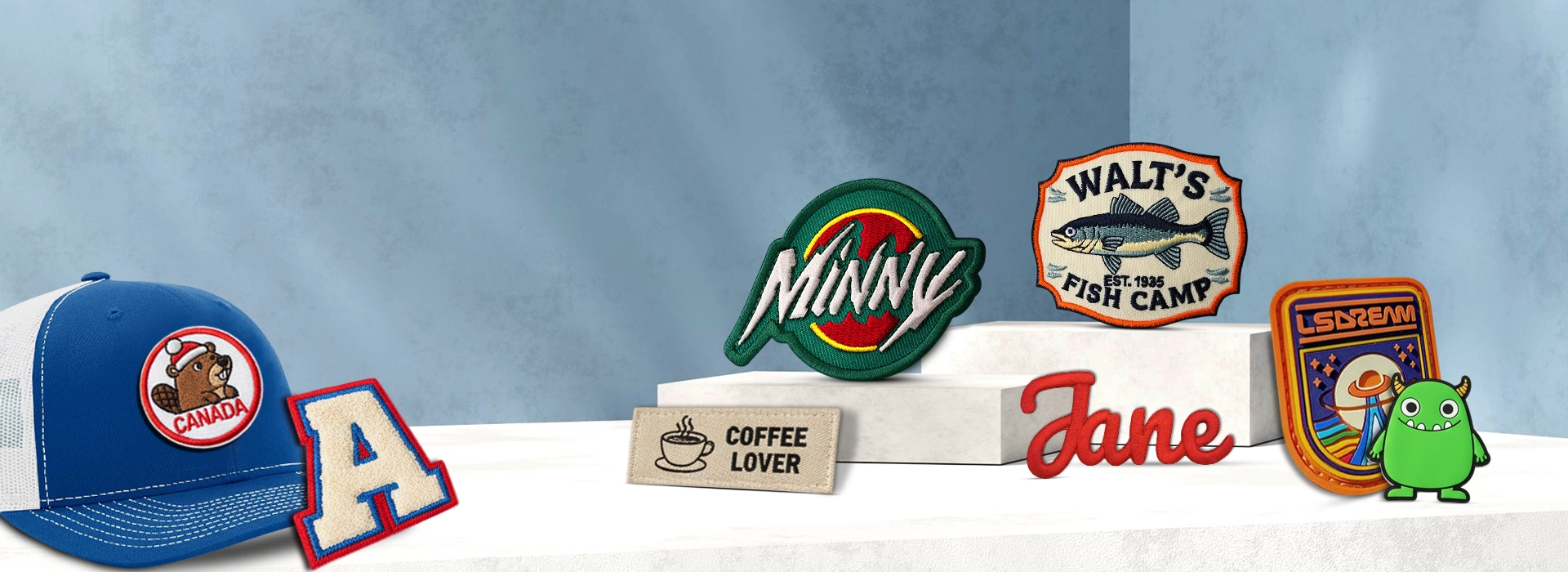
Custom embroidered patches are a simple and effective way to make clothing, uniforms, and accessories look more professional and recognizable. From small clothing brands and local businesses to motorcycle clubs, sports teams, and workwear companies, many organizations use custom patches to display logos, names, symbols, and unique designs. They offer a practical way to personalize garments without investing in completely custom-made clothing.
Whether you need custom embroidered patches for a new fashion collection, company uniforms, jackets, hats, or promotional products, choosing the right design and patch style can make a noticeable difference. The right patch can help communicate your brand identity, improve the appearance of your products, and create a consistent look across different garments.
In this guide, we will explore the benefits of custom patches, explain how to choose the right materials and designs, and share practical ideas for using embroidered patches in fashion, business, and everyday applications.
Why Custom Embroidered Patches Are Popular
Custom embroidered patches have remained popular because they combine a traditional appearance with modern customization options. They can be produced in different shapes, sizes, colors, and finishes, making them suitable for a wide range of personal and commercial projects.
Unlike printing directly onto fabric, embroidery creates a textured design using stitched threads. This raised appearance gives logos and artwork a distinctive look that works particularly well on jackets, uniforms, hats, bags, and other fabric products.
For businesses, embroidered patches offer an opportunity to display branding consistently. A company can use the same logo patch across employee uniforms, outerwear, caps, and promotional merchandise. For clothing brands, patches can add personality to otherwise simple garments and help create a recognizable product style.
Another reason people choose custom patches is flexibility. Instead of ordering an entirely new garment for every design, businesses can often apply patches to existing clothing. This can be useful when updating team uniforms, replacing a damaged logo, or introducing a new design to an existing collection.
Custom Patches for Clothing Brands
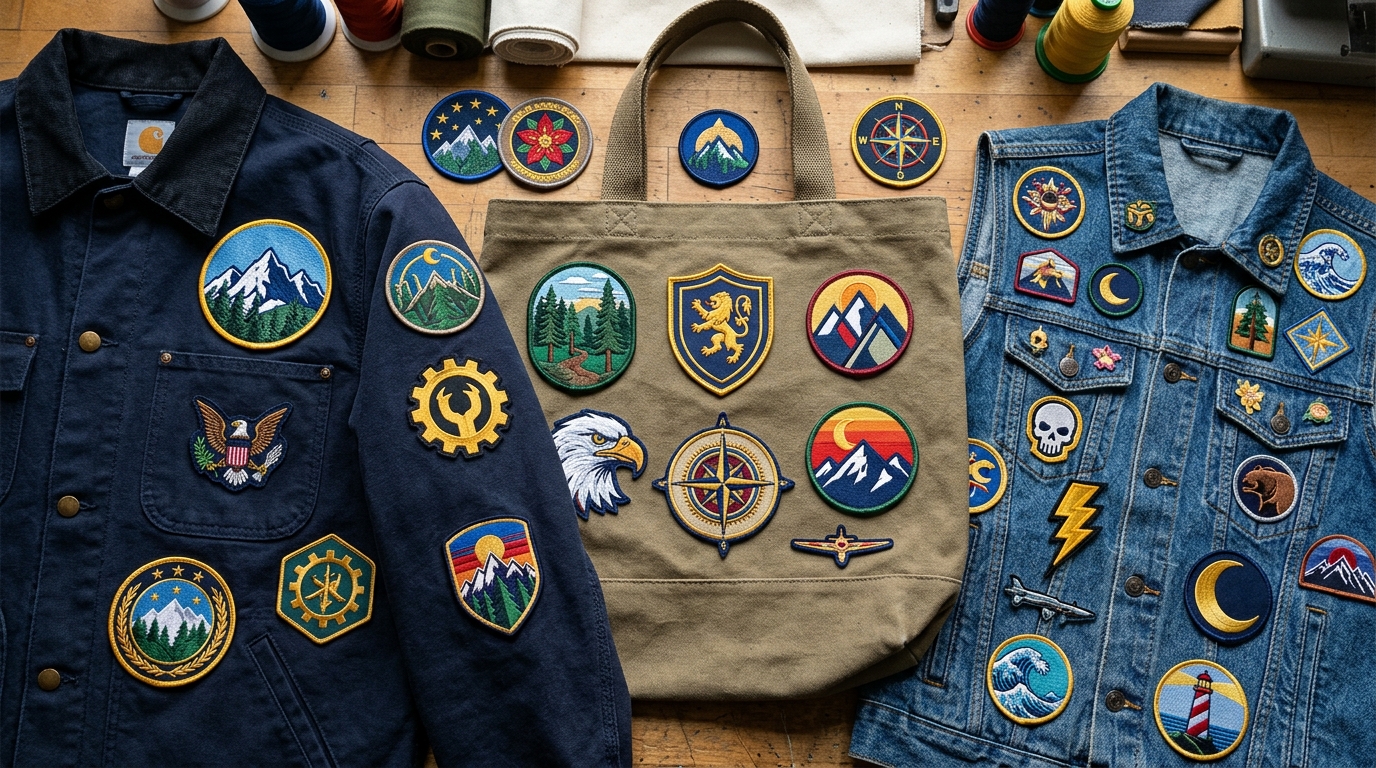
Independent clothing brands often look for affordable ways to make their products stand out. Custom patches can help achieve this by adding distinctive details to jackets, hoodies, jeans, shirts, caps, and accessories.
A well-designed patch can become part of a brand's visual identity. For example, a streetwear brand might use bold embroidered lettering on denim jackets, while a minimalist clothing label may prefer a small logo patch on the sleeve or chest.
Patches also allow brands to experiment with different product styles without redesigning every garment from scratch. A single patch design can be used across several products, helping create a consistent appearance throughout a collection.
Add a Recognizable Brand Logo
A custom logo patch can help customers identify your brand more easily. It can feature a company name, symbol, initials, or a combination of text and artwork.
For a clean and professional result, choose a design that remains readable at the intended size. Small details may look attractive on a computer screen but become difficult to reproduce when stitched onto fabric.
Consider the placement carefully. Chest patches are common on jackets and work shirts, while sleeve patches can create a more subtle branded appearance. Larger back patches are often suitable for denim jackets, varsity jackets, and streetwear pieces.
Create Limited-Edition Clothing
Custom embroidered patches can also be used for seasonal collections, collaborations, and limited-edition releases. A clothing brand might create a special patch for a particular collection, event, or anniversary.
This approach gives products a distinctive detail without requiring an entirely different garment design. Removable patches can also give customers more flexibility when personalizing bags, jackets, or other accessories.
Improve the Appearance of Basic Garments
Simple garments can sometimes benefit from a carefully placed patch. A plain cap, sweatshirt, or denim jacket may look more distinctive with a small embroidered logo or decorative design.
The key is to choose a patch that complements the garment rather than overwhelming it. Consider the fabric color, garment style, and overall design before selecting the patch size and thread colors.
Choosing the Right Type of Custom Patch
Not every patch is suitable for every application. The best option depends on your design, budget, intended use, garment material, and preferred appearance.
Understanding the differences between popular patch styles can help you make a more informed decision.
Custom Embroidered Patches
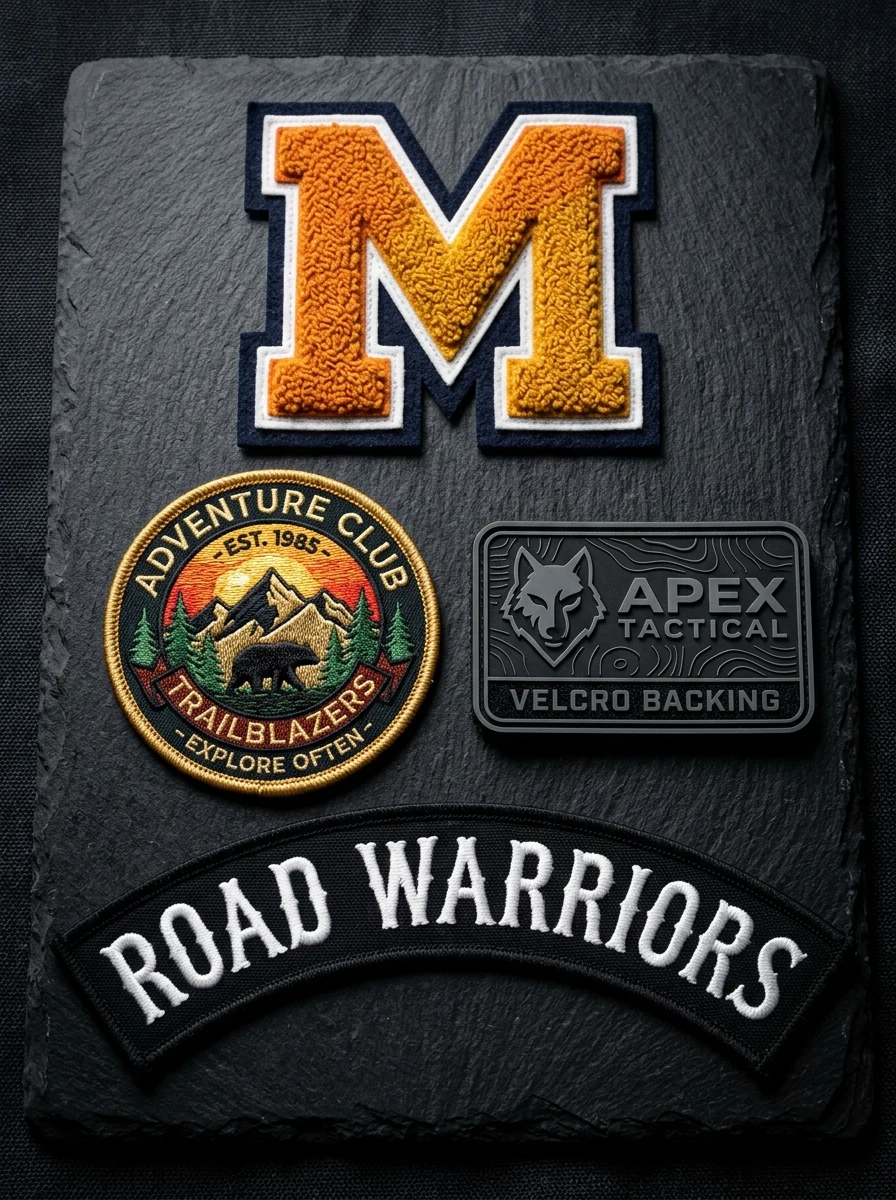
Custom embroidered patches are a popular choice for traditional branding, uniforms, clubs, and fashion products. They use stitched thread to create a textured surface that gives logos and lettering a classic appearance.
These patches work particularly well for designs with clear outlines, bold text, and recognizable shapes. They are commonly used on work shirts, jackets, hats, school uniforms, sportswear, and promotional clothing.
Embroidery can create a premium-looking finish, although extremely small text and complex gradients may be difficult to reproduce accurately. If your artwork contains many fine details, discuss the design with your patch manufacturer before production.
Custom Woven Patches
Custom woven patches use finer threads to create a flatter surface. Because the design is woven rather than built up through traditional embroidery, woven patches can capture smaller details and finer lettering.
They are a useful option for clothing labels, lightweight garments, bags, and products where a clean, detailed appearance is important.
If your logo includes thin lines or small text, a woven patch may provide better clarity than a heavily embroidered design. The best choice will depend on the actual artwork and the finished patch size.
Custom PVC Patches
Custom PVC patches are made from flexible synthetic material and are often used for outdoor gear, tactical equipment, backpacks, and products that require a different look from traditional embroidery.
They can feature raised details, distinct colors, and clearly defined shapes. PVC is also useful when a design needs a molded appearance rather than a stitched surface.
These patches are particularly popular for tactical accessories, outdoor equipment, and certain types of uniforms. Before choosing PVC, consider whether the material and finish suit the garment or product where the patch will be attached.
Custom Leather Patches
Custom leather patches are frequently used on denim, jeans, hats, bags, and premium casual clothing. Depending on the product and manufacturing method, they may feature embossed, debossed, engraved, or printed designs.
Leather patches can give clothing a rugged or refined appearance. They are especially suitable for brands that want a distinctive label on denim products, canvas accessories, or structured caps.
You can choose genuine leather or suitable synthetic alternatives based on your design, budget, and product requirements. Always check material compatibility and care instructions before attaching a leather patch to a garment.
Custom Chenille Patches
Custom chenille patches are known for their soft, textured appearance. They are often associated with varsity jackets, school apparel, sports teams, and retro-inspired fashion.
Their thick, fuzzy surface works well for large letters, initials, numbers, and bold shapes. Chenille patches can make a garment feel more distinctive, particularly when combined with embroidered borders or additional lettering.
Because the texture is more pronounced, chenille is generally better suited to bold designs than tiny, highly detailed artwork.
Custom Patches for Business Uniforms
A consistent uniform helps employees look organized and makes it easier for customers to recognize staff members. Custom patches provide a practical way to add company branding to work shirts, jackets, caps, aprons, and other uniform items.
Businesses in hospitality, construction, retail, logistics, maintenance, and customer service may use embroidered logo patches to create a more consistent appearance across their teams.
Make Company Branding Consistent
Using the same logo patch across different garments helps maintain a recognizable company identity. Employees can wear different types of clothing while still displaying consistent branding.
For example, a company might use embroidered patches on summer shirts and heavier jackets for colder weather. Matching the logo colors and design helps the uniforms look coordinated.
When ordering patches for a business, check that the logo is clear at the selected size. The company name, symbol, and any essential text should remain easy to recognize.
Add Employee Names and Job Titles
Some businesses use personalized patches to display employee names, departments, or job roles. This can be helpful in environments where customers need to identify staff members quickly.
Name patches should prioritize readability. Choose a suitable font, adequate spacing, and enough contrast between the text and background.
For larger organizations, consider creating a consistent layout for names and job titles. This keeps the uniform system organized while allowing individual details to vary.
Choose Patches for Everyday Work
The right patch should suit the working environment. Uniforms used in offices or retail stores may require a different finish from garments worn in workshops, warehouses, or outdoor settings.
Consider how frequently the clothing will be washed, how much friction it will experience, and whether employees work outdoors. These factors can influence the patch material, attachment method, and placement.
For uniforms exposed to demanding conditions, ask your supplier about durability testing and care recommendations before placing a large order.
Custom Patches for Motorcycle Clubs and Automotive Groups
Motorcycle clubs and automotive communities often use patches to express identity, commemorate events, and create a coordinated appearance among members.
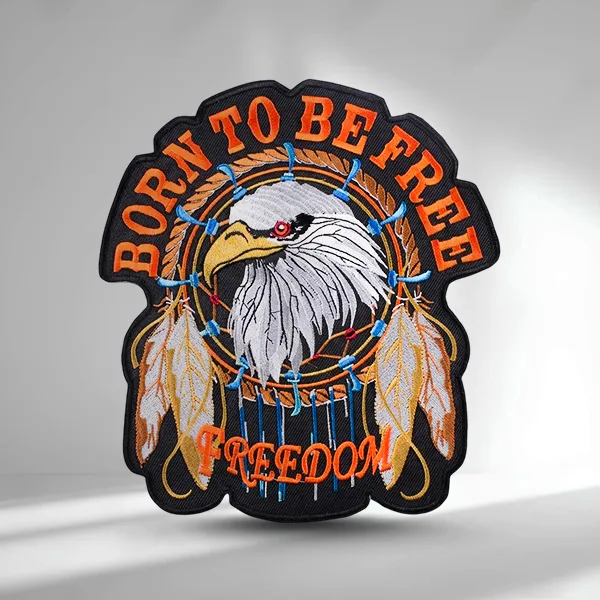
Custom embroidered patches can be applied to club jackets, riding vests, caps, bags, and other accessories. Designs may include club names, symbols, slogans, or artwork connected to a particular group.
When designing motorcycle patches, consider the size of the artwork and the surface where it will be attached. Larger jacket-back designs may accommodate more detail, while smaller chest or sleeve patches usually benefit from simpler artwork.
For garments exposed to changing weather conditions, select materials and attachment methods appropriate for the intended use. If a jacket is made from leather or a specialized protective textile, confirm that the chosen attachment process is suitable for that material.
It is also important to ensure that the design reflects the intended organization's identity and that you have permission to use any third-party logos or protected artwork.
Custom Patches for Hats, Bags, and Accessories
Custom patches are not limited to jackets and uniforms. They can also be used on caps, backpacks, tote bags, travel accessories, and promotional merchandise.
These products provide additional opportunities for businesses to display their logos and for clothing brands to create coordinated collections.
Custom Patches for Hats
Embroidered patches are a popular choice for baseball caps, trucker hats, beanies, and other headwear. A patch can give a hat a more structured, branded appearance without requiring the logo to be embroidered directly into the fabric.
When choosing a hat patch, consider the available surface area and the shape of the front panel. Small logos, initials, and simple symbols often work well on caps.
The attachment method is also important. Some hats have curved or structured surfaces, so the patch must fit properly to avoid wrinkles or uneven edges.
Custom Patches for Backpacks
Backpacks are useful for displaying logos, team designs, outdoor graphics, and personalized artwork. Depending on the backpack material and intended use, embroidered or PVC patches may be suitable options.
Some bags include hook-and-loop panels that allow patches to be attached and removed easily. This is particularly useful for customers who want to change designs without permanently altering the bag.
For bags without attachment panels, sewn or adhesive-backed patches may be options, depending on the material and expected use.
Custom Patches for Promotional Products
Businesses can use patches on promotional bags, event merchandise, branded caps, and giveaway items. They can also be included in product packaging or sold separately as branded merchandise.
A useful promotional patch should feature a recognizable design that reflects the company or event. Simple artwork can often be easier to reproduce consistently across larger orders.
Before placing a bulk order, request a sample or approve a production proof when possible. This allows you to review the size, colors, and overall appearance before committing to a larger quantity.
How to Design Custom Patches That Look Professional
A good patch design balances visual appeal with practical manufacturing requirements. Even a creative logo may lose clarity if the text is too small or the design contains too many fine details.
Planning the design carefully can help you avoid unnecessary revisions and achieve a better finished product.
Start With Clear Artwork
Use a high-quality logo or artwork file whenever possible. Vector files are particularly helpful because they can be resized without losing their clean edges.
If you only have a low-resolution image, ask the manufacturer whether the artwork needs to be recreated or simplified before production.
Make sure the design communicates its main message clearly. For business branding, this may mean prioritizing the logo and company name. For fashion patches, the emphasis may be on a symbol, illustration, or distinctive lettering.
Select Colors Carefully
Thread and material colors affect how a patch looks on the finished garment. Choose colors that complement the fabric and provide enough contrast for the design to remain visible.
For example, dark thread on a dark jacket may create a subtle appearance, while lighter thread can make the logo more noticeable.
If brand consistency matters, provide the manufacturer's official color references where available. Keep in mind that thread and physical materials may not match digital colors perfectly, so reviewing a sample can be helpful.
Choose the Right Shape and Size
Custom patches can be made in many shapes, including circles, rectangles, shields, ovals, and custom outlines.
The shape should support the artwork rather than restrict it. A horizontal logo may work best on a rectangular patch, while a badge-style design may suit a shield or circle.
Size should be based on the placement and intended viewing distance. A patch on a hat usually needs a different layout from a large design on the back of a jacket.
Think About the Finished Garment
Before approving a design, consider the garment fabric, seams, pockets, and overall construction. A patch that looks balanced on a digital mockup may appear too large or too close to a seam when applied to the actual product.
If you are ordering patches for a clothing collection, test the design on the intended garment whenever possible. This helps ensure the finished product looks the way you expect.
Choosing the Best Patch Attachment Method
The attachment method influences how a patch is applied, how easily it can be removed, and how well it suits the intended garment.
Different methods have different advantages, so the right choice depends on your product and how the patch will be used.
Sew-On Patches
Sew-on patches are attached to the garment with stitching. They are a common choice for workwear, jackets, club clothing, uniforms, and other products where a permanent attachment is preferred.
This method can be suitable for many fabric garments, although the stitching process must be appropriate for the material. Thick fabrics, delicate textiles, and specialized protective clothing may require extra care.
Sew-on patches are worth considering when the garment will be worn regularly or washed frequently, provided the patch and attachment are suitable for those conditions.
Iron-On Patches
Iron-on patches have a heat-activated adhesive backing. They can be convenient for certain garments because they do not always require a separate sewing process.
However, not every fabric can safely tolerate the heat needed to attach an iron-on patch. Some materials may become damaged, distorted, or discolored.
Follow the manufacturer's instructions and test the method on a suitable area when possible. For garments exposed to frequent washing or heavy use, additional stitching may be recommended if compatible with the fabric.
Hook-and-Loop Patches
Hook-and-loop patches are designed to attach to compatible panels. They are often used on tactical clothing, outdoor gear, backpacks, and accessories where users may want to change patches.
This method is useful for interchangeable designs, such as name patches, identification labels, or personalized graphics.
Before ordering, confirm that the garment or accessory includes the matching attachment surface. A hook-and-loop patch will not attach securely to an ordinary fabric surface without a compatible panel.
Adhesive-Backed Patches
Adhesive-backed patches may be useful for temporary applications, crafts, packaging, or products where sewing is not practical.
Their performance depends on the adhesive, the surface, and the conditions in which the product is used. They may not be suitable for garments that experience frequent washing, stretching, or heavy friction.
Ask the supplier whether the adhesive is intended for fabric and whether the patch is designed for temporary or longer-term use.
What to Consider Before Ordering Custom Patches in Bulk
Ordering custom patches in bulk can help businesses maintain consistent branding across large product ranges. However, it is important to confirm the details before approving production.
Start by determining how many patches you need and where they will be used. A small fashion collection may require a different order size from a company outfitting hundreds of employees.
Next, confirm the artwork, patch dimensions, material, colors, border style, and attachment method. These details influence the appearance, production process, and overall cost.
Compare More Than the Price
When comparing custom patch suppliers, look at the complete offer rather than choosing solely on the lowest price. Consider the quality of the sample, available customization options, communication, production requirements, and shipping arrangements.
A lower-priced patch may not be the best value if the design is difficult to read or the attachment method does not suit the garment.
Ask for a clear quotation that explains the quantity, specifications, setup charges if applicable, production timeline, and delivery costs.
Request a Sample or Digital Proof
A digital proof can help you review the layout, proportions, and intended colors before production. A physical sample provides a better opportunity to assess the actual texture, stitching, backing, and finish.
This step can be particularly useful for large orders or designs that include small lettering and intricate details.
Review the proof carefully and confirm that the final version matches your requirements. Making corrections before production can help reduce avoidable errors.
Confirm Production and Delivery Times
If you need patches for a product launch, uniform rollout, event, or seasonal collection, confirm the expected timeline before placing your order.
Production time may vary according to the design, quantity, material, and manufacturer's workload. Shipping can add additional time, particularly for international orders.
Allow a reasonable margin for revisions and delivery delays rather than scheduling your project around an overly optimistic estimate.
How to Care for Clothing With Custom Patches
Proper care can help maintain the appearance of embroidered patches and the garments they are attached to.
The best care routine depends on the patch material, attachment method, and fabric. Always follow the manufacturer's instructions for both the patch and the garment.
For clothing with embroidered patches, turning the garment inside out before washing may help reduce friction against the stitched surface. Use a suitable washing cycle and avoid excessive heat when the garment's care label recommends gentler treatment.
Inspect patches occasionally for loose edges or damaged stitching. Addressing minor issues early may help prevent further separation.
For leather and PVC patches, follow material-specific care guidance. Some cleaning products, heat sources, or chemicals may damage the surface or affect the adhesive.
If a garment is part of a work uniform or protective clothing system, follow the garment manufacturer's care and safety instructions. Do not assume that every patch or attachment method is compatible with specialized protective equipment.
Common Mistakes to Avoid When Ordering Custom Patches
A few common mistakes can make a custom patch order more expensive or less effective than expected.
One frequent issue is choosing artwork with too much detail for the finished size. Fine lines and small text may become difficult to reproduce, particularly on heavily embroidered patches. Simplifying the artwork can improve readability.
Another mistake is selecting a patch material based only on appearance. A patch that looks attractive in a product photograph may not be appropriate for a garment exposed to heat, moisture, or frequent washing.
Ignoring the attachment method can also create problems. For example, an iron-on patch may not suit a heat-sensitive fabric, while a hook-and-loop patch requires a compatible surface.
Finally, avoid approving a bulk order without reviewing the specifications. Confirm the size, colors, shape, backing, and quantity before production begins.
Taking time to check these details can help you get patches that meet your expectations and suit the intended application.
Why Custom Patches Are a Practical Branding Investment
Custom patches offer businesses and clothing brands a flexible way to add identity to a wide variety of products. They can be used across uniforms, outerwear, hats, bags, promotional merchandise, and fashion collections without requiring every garment to be manufactured with a permanently integrated design.
For small brands, patches can help introduce recognizable visual details across different product categories. For established businesses, they can support consistent uniform branding and provide a convenient way to update selected garments.
The long-term value of a patch depends on its quality, design, suitability, and attachment method. Choosing appropriate materials and clear artwork can help ensure the finished patch performs as intended.
Rather than treating patches as a minor finishing detail, consider how they fit into your broader product or branding strategy. A carefully designed patch can connect different products through a consistent visual identity.
Conclusion
Custom embroidered patches provide a versatile way to personalize clothing, strengthen brand recognition, and create distinctive products. From custom logo patches for business uniforms to leather labels for fashion brands and PVC patches for outdoor accessories, there are options to suit many different applications.
The best results come from choosing a patch style that matches your artwork, selecting suitable materials, and considering how the patch will be attached to the finished garment. Clear designs, appropriate sizing, reliable production, and proper care can all contribute to a better final result.
Whether you are launching a clothing brand, updating company uniforms, creating merchandise for a club, or personalizing everyday accessories, custom patches can help bring your ideas to life. Take the time to compare patch types, review your design, and confirm the production details before ordering.