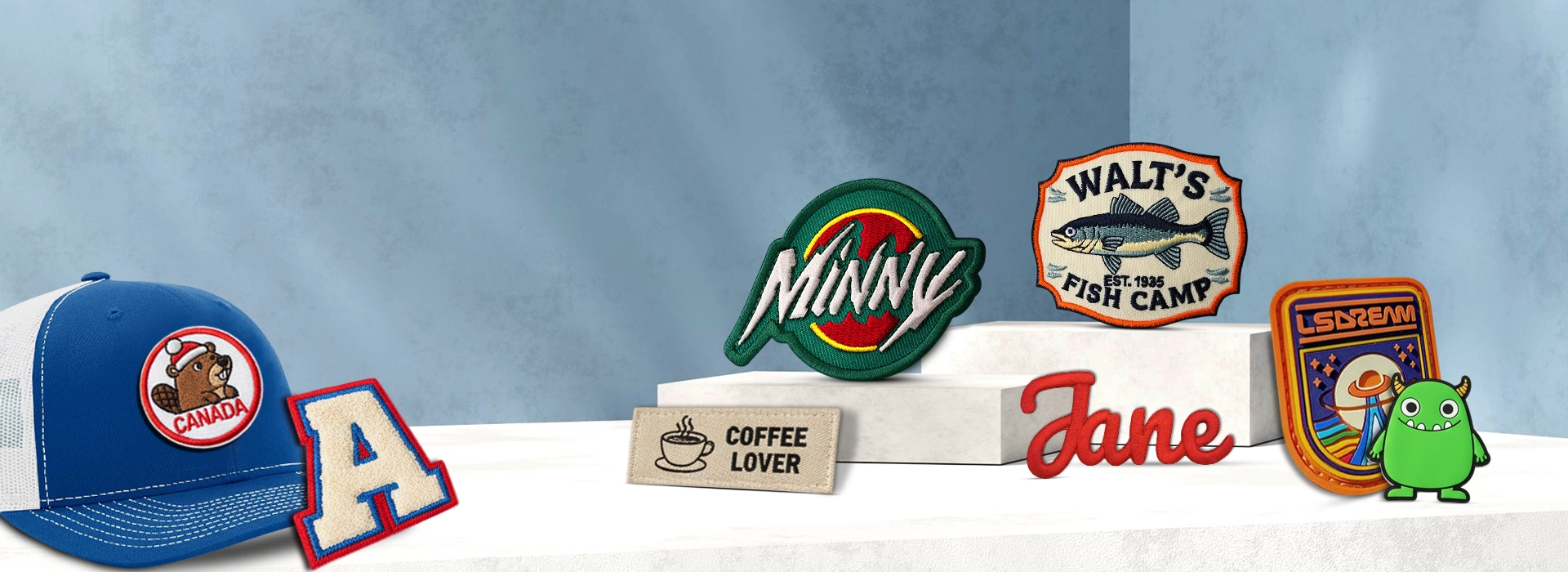
Building a recognizable brand takes more than choosing a logo and putting it on a website. Customers notice the small details that make a business look professional, consistent, and memorable. From product packaging to employee uniforms, every branded item can help communicate what a company stands for. One practical way to create that consistency is by using custom patches.
Custom patches give businesses a flexible way to display logos, names, symbols, and other visual elements on clothing and accessories. They are used by independent clothing labels, restaurants, construction companies, sports teams, motorcycle clubs, retail stores, and many other organizations. Whether you need embroidered logo patches for staff uniforms or decorative patches for merchandise, the right design can help your brand stand out.
For small businesses, custom patches can be especially useful because they allow branding to be added to different products without completely changing how those products are manufactured. A single logo patch may work on jackets, hats, bags, work shirts, and promotional clothing, helping create a consistent appearance across multiple items.
In this guide, we will explore how custom patches support business branding, which patch styles work for different industries, and how to choose designs that look professional while meeting your practical needs.
Why Brand Identity Matters for Small Businesses
Brand identity is the way a business presents itself to customers. It includes the logo, colors, typography, visual style, and other elements people associate with the company.
A strong brand identity helps customers recognize your business and understand what makes it different. It can also create a more professional impression when your visual identity remains consistent across your website, products, packaging, and employee clothing.
Small businesses often have limited marketing budgets, so it makes sense to look for practical ways to reinforce their branding. Custom patches offer one option because they can be applied to products that customers and employees already use.
For example, a local coffee shop might use embroidered patches on staff aprons or caps. A landscaping company could add its logo to work jackets. A clothing brand might use woven labels or embroidered patches to give its products a distinctive finish.
These applications serve different purposes, but they share one important benefit: they help connect everyday products with the business behind them.
Custom Logo Patches for Professional Business Uniforms
Employee uniforms are one of the most visible ways a business presents its brand. When staff members wear coordinated clothing with recognizable company logos, customers can identify them more easily.
Custom logo patches can help create that coordinated appearance without requiring every uniform to be manufactured with the logo already embroidered into the fabric.
Create a Consistent Look Across Your Team
Businesses often use different types of clothing throughout the year. Employees may wear lightweight shirts during warmer months and jackets or sweatshirts when the weather becomes colder.
Using the same custom embroidered patches across these garments helps maintain consistent branding. The logo can appear on a chest area, sleeve, hat, or another suitable location, depending on the uniform design.
This flexibility is useful for businesses that purchase clothing from different suppliers or replace individual uniform items over time.
Make Employees Easier to Recognize
In customer-facing environments, branded uniforms help distinguish employees from visitors. This can be useful in restaurants, retail stores, hotels, repair services, and event operations.
A clear company logo on a shirt or jacket provides a simple visual identifier. If needed, businesses can also use separate name patches to display employee names or job roles.
For the best result, choose a patch size that makes the logo easy to recognize without overpowering the garment. Good contrast between the patch and uniform fabric can also improve visibility.
Support a More Professional Appearance
Customers often notice whether a business looks organized. Coordinated uniforms, clean garments, and consistent branding can contribute to a professional overall impression.
Custom embroidered patches can help achieve this by giving uniforms a finished appearance. However, the design should suit the industry. A corporate service provider may prefer a simple logo patch, while a construction business might choose a more visible design for work jackets and outerwear.
The goal is to create branding that feels appropriate for the business and comfortable for employees to wear.
Custom Patches for Clothing Brands and Independent Designers
For independent fashion labels, product details can make a significant difference. Customers may compare several garments with similar shapes and colors, so distinctive branding can help a product feel more recognizable.
Custom patches allow clothing brands to add their own identity to jackets, jeans, hoodies, hats, bags, and other merchandise.
Give Basic Clothing a Distinctive Finish
A simple garment can become more interesting with a well-placed embroidered patch. A small chest logo, a sleeve emblem, or a large back design can change the overall appearance without requiring a completely different garment pattern.
Streetwear brands may prefer bold lettering and larger graphics, while minimalist labels may choose smaller patches with simple symbols or initials.
When designing patches for clothing, consider the garment's style and intended audience. The patch should complement the fabric, fit, and overall appearance rather than look like an afterthought.
Create a Recognizable Signature Detail
Some brands develop a signature visual element that appears across multiple products. This could be a distinctive symbol, a specific shape, or a recognizable arrangement of lettering.
Using the same custom patch design across several garments can help create continuity within a collection.
For example, a clothing label might use a woven logo patch on shirts, an embroidered version on jackets, and a leather patch on denim products. Although the materials differ, the consistent logo helps connect the items to the same brand.
Explore Limited-Edition Designs
Custom patches can also support special releases, collaborations, and seasonal collections. A brand might create a unique patch for a launch event, anniversary, or limited-edition product.
This approach provides a way to introduce a new visual detail without redesigning every element of the garment.
Before production, make sure the patch artwork is suitable for the selected manufacturing method. Fine lettering, gradients, and complex illustrations may need adjustments to reproduce clearly.
Choosing the Best Patch Style for Your Business
Different patch materials create different appearances and offer different practical advantages. Choosing the right option depends on the artwork, the garment, the intended use, and the overall style of your brand.
Custom Embroidered Patches
<text color="secondary" size="sm">Best for traditional logos, uniforms, jackets, and branded merchandise.</text>
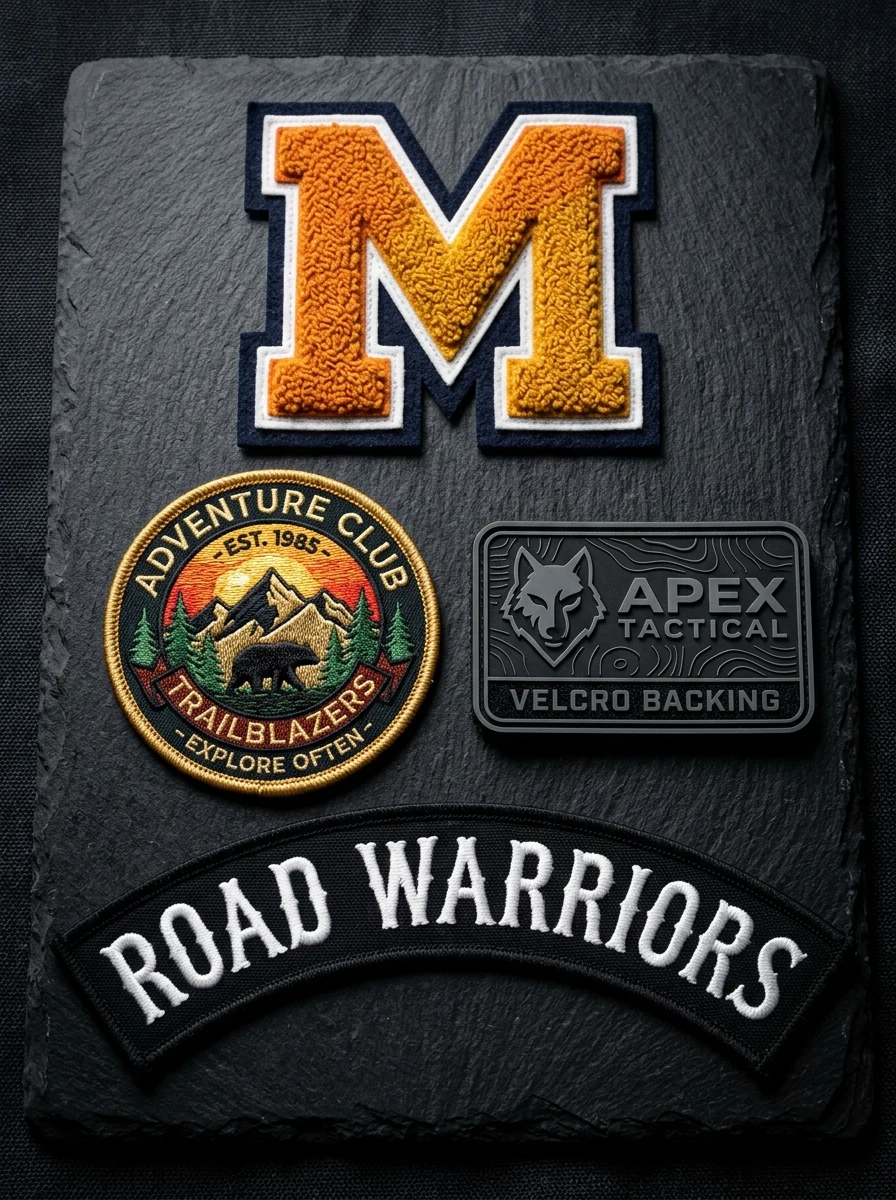
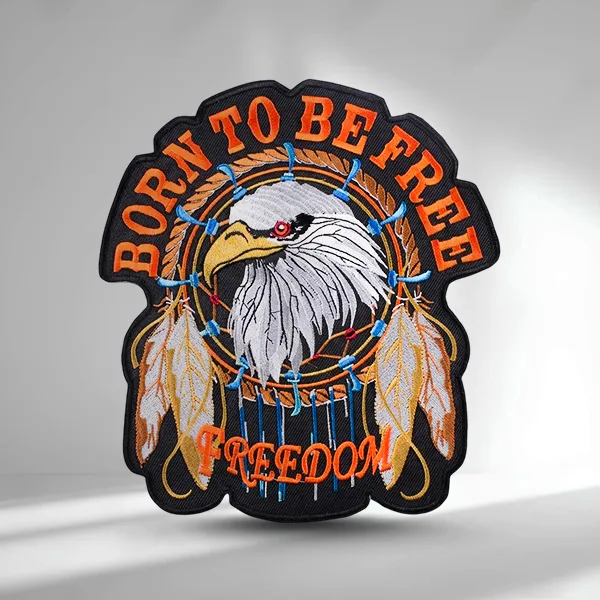
Custom embroidered patches use stitched thread to create a textured design. Their raised appearance gives logos and lettering a classic finish that works well across many types of clothing.
Businesses often choose embroidered patches for staff uniforms, work shirts, outerwear, team apparel, and promotional products.
They are especially effective for bold shapes, simple illustrations, and readable lettering. However, very small text or highly detailed artwork may require simplification to achieve a clear result.
If your business needs a traditional, professional-looking logo patch, embroidery is a strong option to consider.
Custom Woven Patches
<text color="secondary" size="sm">Best for detailed logos, clothing labels, and smaller designs.</text>
Custom woven patches use fine threads to produce a flatter surface than traditional embroidery. This construction can make it easier to reproduce small details and thinner lettering.
They are suitable for fashion labels, lightweight garments, bags, and products where a neat, compact appearance is important.
Woven patches may be a good choice when your logo contains details that would be difficult to reproduce with thicker embroidery threads.
Custom PVC Patches
<text color="secondary" size="sm">Best for outdoor equipment, tactical accessories, and modern branding.</text>
Custom PVC patches are made from flexible synthetic material and can feature clearly defined shapes, raised elements, and bold colors.
They are commonly used on backpacks, outdoor gear, tactical-style clothing, and certain types of uniforms.
PVC patches create a different look from fabric-based patches, so they are worth considering when your brand needs a modern or equipment-focused appearance.
Always check that the material is appropriate for the intended product and environment.
Custom Leather Patches
<text color="secondary" size="sm">Best for denim, premium casual clothing, hats, and bags.</text>
Custom leather patches can add a rugged or refined detail to clothing and accessories. Depending on the material and production method, the design may be embossed, debossed, engraved, or printed.
They are popular with denim brands, outdoor-inspired labels, casual clothing companies, and accessory manufacturers.
Genuine leather and synthetic alternatives offer different characteristics, so compare appearance, cost, care requirements, and compatibility with your products before choosing.
Custom Chenille Patches
<text color="secondary" size="sm">Best for varsity jackets, sports apparel, and bold fashion designs.</text>
Chenille patches have a soft, textured surface that makes them stand out visually. They are often used for large letters, initials, numbers, and decorative emblems.
Schools, sports teams, fashion labels, and organizations creating varsity-inspired merchandise may find chenille patches particularly suitable.
Because of their thick texture, they are generally better for bold artwork than tiny text or intricate details.
Custom Patches for Different Industries
One advantage of custom patches is that they can be adapted to many business environments. The right design depends on what the organization does and how the patch will be used.
Restaurants, Cafes, and Hospitality Businesses
Restaurants and cafes can use custom embroidered patches on aprons, shirts, jackets, and caps. A consistent logo helps connect the employee uniform with the restaurant's visual identity.
For hospitality businesses, the design should be easy to recognize and suitable for garments that require regular laundering.
Consider the placement carefully so the patch remains visible without interfering with pockets, seams, or the practical function of the uniform.
Construction and Trade Businesses
Construction companies, electricians, plumbers, mechanics, and other trade businesses may use custom logo patches on work shirts, jackets, and outerwear.
These patches can help identify employees and present a consistent company image when staff members visit customer sites.
The work environment should guide the material and attachment choice. Clothing that experiences heavy wear, frequent washing, or exposure to outdoor conditions needs an appropriate patch and a suitable attachment method.
For protective garments, confirm compatibility with the garment manufacturer's requirements before making any modifications.
Retail Stores and Customer Service Teams
Retail businesses benefit from clothing that helps customers recognize staff members. A custom logo patch can be used on shirts, aprons, jackets, and caps to support a coordinated appearance.
The design can be simple and understated, especially if the business already has a strong color scheme or visual identity.
For larger teams, using consistent patch dimensions and placement across uniforms helps keep the branding organized.
Sports Teams and Clubs
Sports teams, hobby groups, and community clubs often use custom patches to show membership, team identity, or participation in an event.
Patches may be applied to jackets, bags, warm-up clothing, caps, and team merchandise.
For these applications, consider whether the design should emphasize the team name, emblem, year, or another recognizable feature. Bold shapes and readable lettering often work well for patches that need to be identified from a distance.
Outdoor and Adventure Businesses
Outdoor brands, camping groups, and adventure organizations may use custom patches on backpacks, jackets, equipment bags, and other accessories.
Embroidered patches can provide a traditional fabric-based appearance, while PVC patches may suit products that need a molded design.
Choose the patch material according to the actual product requirements. If equipment will be exposed to moisture, abrasion, or changing temperatures, discuss the expected conditions with your supplier before ordering.
How to Design Custom Patches That Match Your Brand
A patch should reflect your brand identity while remaining practical to manufacture and use. The best designs are not necessarily the most complicated. Often, a simple, well-balanced logo is easier to recognize and more versatile across different products.
Use Your Existing Brand Elements
Start with the logo, colors, and typography your business already uses. Keeping these elements consistent can help customers connect the patch with your other branded materials.
If your logo has several versions, select the one that works best at the intended patch size. A simplified version may be more effective for small patches, while a more detailed design may suit larger applications.
Choose Readable Text and Clear Shapes
Small patches have limited space, so avoid adding unnecessary text. A long company name, slogan, website address, and detailed illustration may be difficult to fit into one compact design.
Focus on the most important elements. If additional information is necessary, consider using a separate patch or placing that information elsewhere on the garment.
Ask your manufacturer to review the artwork before production, particularly if the design contains small lettering or narrow lines.
Match Colors to Your Products
Color choices affect how the patch looks against the garment. A patch should complement the fabric while providing enough contrast for important design elements to remain visible.
For example, a light logo on a dark background may stand out clearly, while similar shades can create a more subtle effect.
If your business uses specific brand colors, provide color references when possible. Physical thread and material colors can differ from what appears on a screen, so reviewing a sample or production proof can help set realistic expectations.
Select a Suitable Patch Shape
Common patch shapes include circles, rectangles, shields, ovals, and custom outlines. The best shape depends on the logo and the area where the patch will be placed.
A horizontal company name may suit a rectangular patch, while a badge-style emblem may look better in a circle or shield.
Consider how the finished shape will sit on the garment. A patch should fit naturally within the available space and avoid overlapping seams, zippers, or pockets.
Choosing the Right Patch Backing
The backing determines how the patch attaches to a garment or accessory. Selecting the correct option is important because even a well-made patch may not perform as intended if the attachment method is unsuitable.
Sew-On Backing
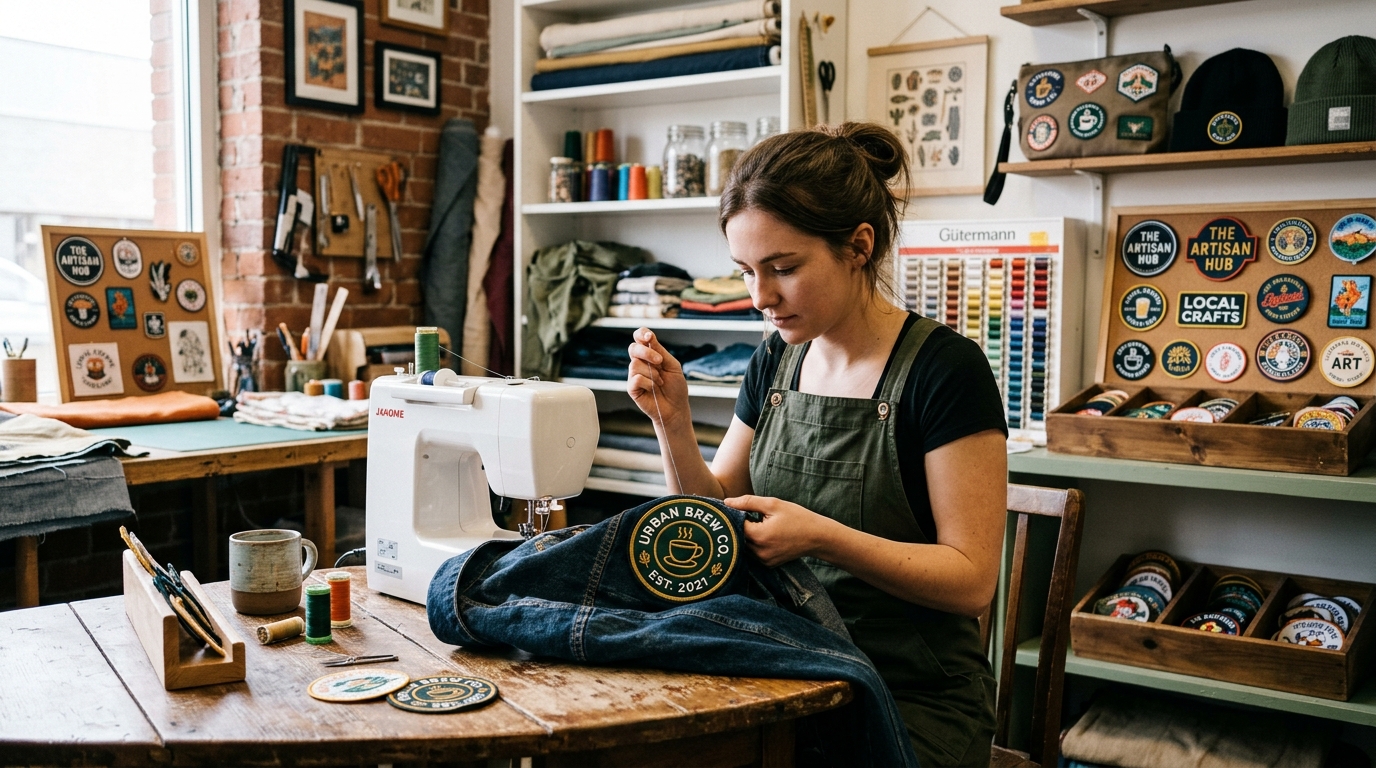
Sew-on patches are attached using stitching. They are commonly used on uniforms, jackets, bags, and garments where a secure, long-term attachment is preferred.
This method can work well across many fabric products, although the garment's thickness and construction should be considered before application.
Iron-On Backing
Iron-on patches use a heat-activated adhesive. They can be convenient for suitable fabrics, but not every garment can safely tolerate the required heat.
Always check the care label and follow the manufacturer's instructions. For items exposed to frequent washing or heavy use, ask whether additional stitching is recommended and whether it is appropriate for the fabric.
Hook-and-Loop Backing
Hook-and-loop backing allows a patch to be attached to a compatible panel and removed when needed.
It is useful for interchangeable name patches, club designs, equipment labels, and certain outdoor or tactical-style products.
Confirm that the garment or bag includes the matching attachment surface before placing an order.
Adhesive Backing
Adhesive-backed patches may suit temporary applications, craft projects, or products where sewing is impractical.
Their suitability depends on the adhesive and the surface. They should not automatically be assumed to withstand regular laundering, stretching, or harsh conditions.
Explain your intended use to the supplier so they can recommend an appropriate attachment option.
How Much Do Custom Patches Cost?
The cost of custom patches varies according to several factors, including patch size, material, design complexity, quantity, backing, and production requirements.
A small, simple embroidered logo may have different production costs from a large patch with multiple colors, detailed lettering, or specialized materials.
Ordering a larger quantity may reduce the cost per patch, depending on the supplier's pricing structure and setup requirements. However, ordering more than you can realistically use may tie up money in unnecessary inventory.
To compare quotations fairly, make sure each supplier is pricing the same specifications. Check the patch dimensions, material, backing, border, quantity, and delivery charges.
It is also worth asking whether artwork preparation, sample production, or setup fees are included.
Rather than selecting a supplier based only on the lowest price, consider the quality of the finished patch, communication, available customization options, and the suitability of the proposed production method.
Ordering Custom Patches for Your Business
A clear ordering process can help prevent mistakes and make it easier to receive patches that meet your expectations.
Prepare Your Artwork
Provide a high-quality logo file whenever possible. Vector artwork is often useful because it can be resized without losing clarity.
If you only have a small image or a photograph of the logo, ask whether the supplier can recreate or simplify it for production.
Confirm Your Requirements
Before requesting a quotation, determine the approximate quantity, dimensions, patch style, colors, backing, and intended application.
You do not need to know every technical detail in advance, but having a clear idea of your goals makes it easier for the supplier to recommend suitable options.
Review a Proof or Sample
A digital proof helps you check the design layout before production. A physical sample can provide a more realistic view of the stitching, material, border, and overall finish.
Review the details carefully and confirm any corrections before approving a bulk order.
Check the Delivery Schedule
If you need patches for an upcoming event, uniform rollout, or product launch, confirm the production and shipping schedule in advance.
Allow time for artwork revisions, sample approval, and potential delivery delays. This is particularly important when ordering from an international supplier.
Common Custom Patch Mistakes Businesses Should Avoid
Even a straightforward patch order can create problems if important details are overlooked.
One common mistake is using a design that contains too much detail for its size. Tiny text and thin lines may become difficult to reproduce, so simplify the artwork where necessary.
Another mistake is selecting a patch material without considering its intended environment. A fashion patch for a casual jacket may have different requirements from a patch used on outdoor equipment or frequently washed uniforms.
Choosing the wrong backing can also lead to problems. Heat-sensitive fabrics may not be suitable for iron-on patches, and hook-and-loop patches require a compatible panel.
Finally, businesses sometimes approve large orders without carefully checking the proof. Confirm the spelling, logo proportions, colors, dimensions, and attachment method before production begins.
Taking a little extra time during planning can help reduce avoidable errors and improve the finished result.
How Custom Patches Can Support Long-Term Branding
Custom patches can become a useful part of a business's broader branding strategy. Once a company has an approved design, it can use that design across several products and applications.
For example, the same logo patch might appear on staff uniforms, promotional caps, customer merchandise, and branded bags. This creates a visual connection between different products without requiring every item to use the exact same manufacturing process.
Businesses can also develop variations for different departments, collections, or events while keeping the main logo consistent.
The important point is to use patches intentionally. Choose designs that reflect your brand, materials that suit your products, and attachment methods that meet the needs of the people who will use them.
Custom patches are not a replacement for every other form of marketing, but they can be a practical way to bring branding into everyday clothing and accessories.
Conclusion
Custom patches offer small businesses a flexible way to build a recognizable brand identity across uniforms, clothing collections, hats, bags, and promotional merchandise. Whether you choose custom embroidered patches for professional workwear, woven patches for detailed clothing labels, PVC patches for outdoor accessories, or leather patches for denim products, the right design can help your brand maintain a consistent appearance.
Start by identifying where the patches will be used and what you want them to communicate. Then select an appropriate patch style, prepare clear artwork, choose suitable colors and dimensions, and confirm the backing before production.
Reviewing samples, comparing complete quotations, and checking production details can also help you make a more confident purchasing decision.
With thoughtful planning, custom logo patches can become more than a decorative feature. They can help connect your products, uniforms, and merchandise through a consistent visual identity that customers and employees can recognize.