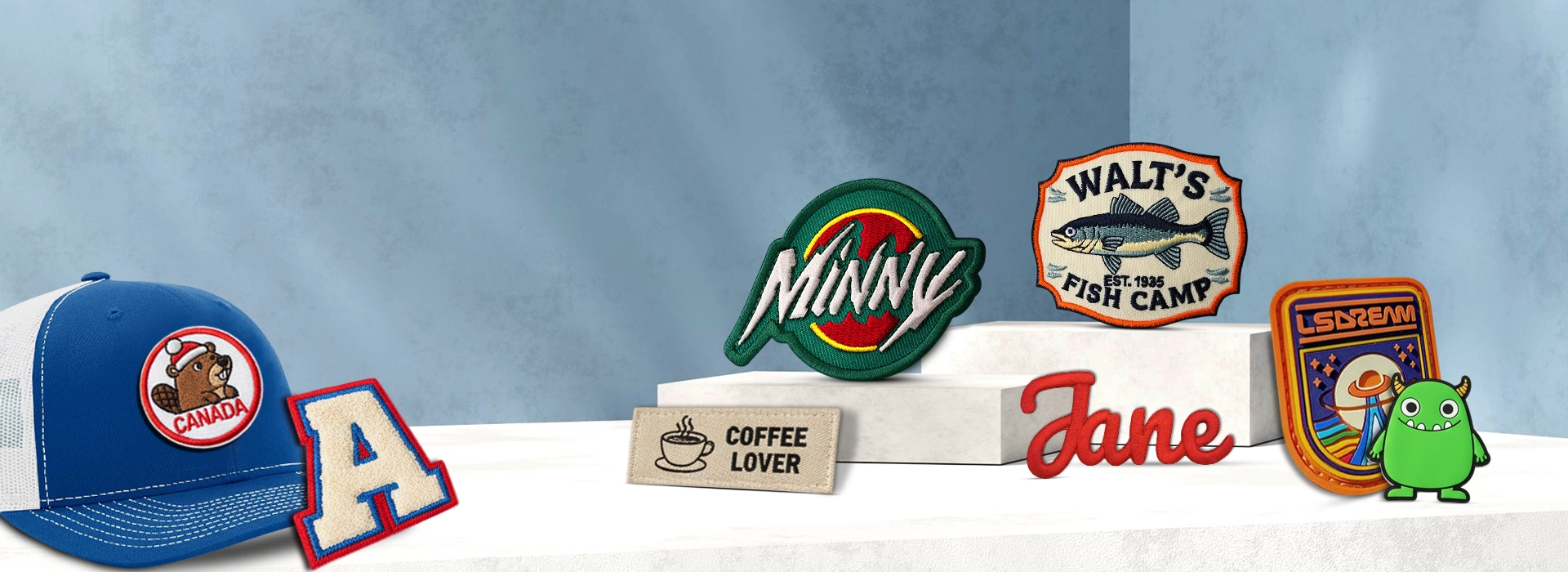
Building a clothing brand is about more than creating attractive garments. The small details, including labels, stitching, logos, and finishing touches, help customers recognize a brand and understand its style. Custom patches have become a popular choice for businesses that want to add personality to their products without changing the entire garment design.
From independent streetwear labels to established apparel manufacturers, businesses use custom patches for branding, decoration, and product identification. They can be attached to jackets, hoodies, caps, work uniforms, bags, and other fabric products, making them a versatile option for different industries.
Choosing the right patch, however, requires more than picking a design you like. You need to consider the material, size, backing, durability, quantity, and overall appearance. A patch designed for a lightweight T-shirt may not be the best option for heavy workwear, while a detailed clothing label may require a different construction method from a bold embroidered jacket logo.
Whether you are starting a new clothing business or updating an existing collection, understanding these differences can help you make better purchasing decisions. This guide explores the most popular custom patch styles, their practical uses, and the factors that matter when ordering patches for your products.
Why Custom Patches Matter for Clothing Brands
Brand recognition develops through consistent visual details. When customers repeatedly see the same logo, colors, and design elements across your products, they become more familiar with your brand.
Custom logo patches offer a practical way to create that consistency. Instead of printing a logo directly onto every garment, you can use a patch that suits different fabrics and product styles.
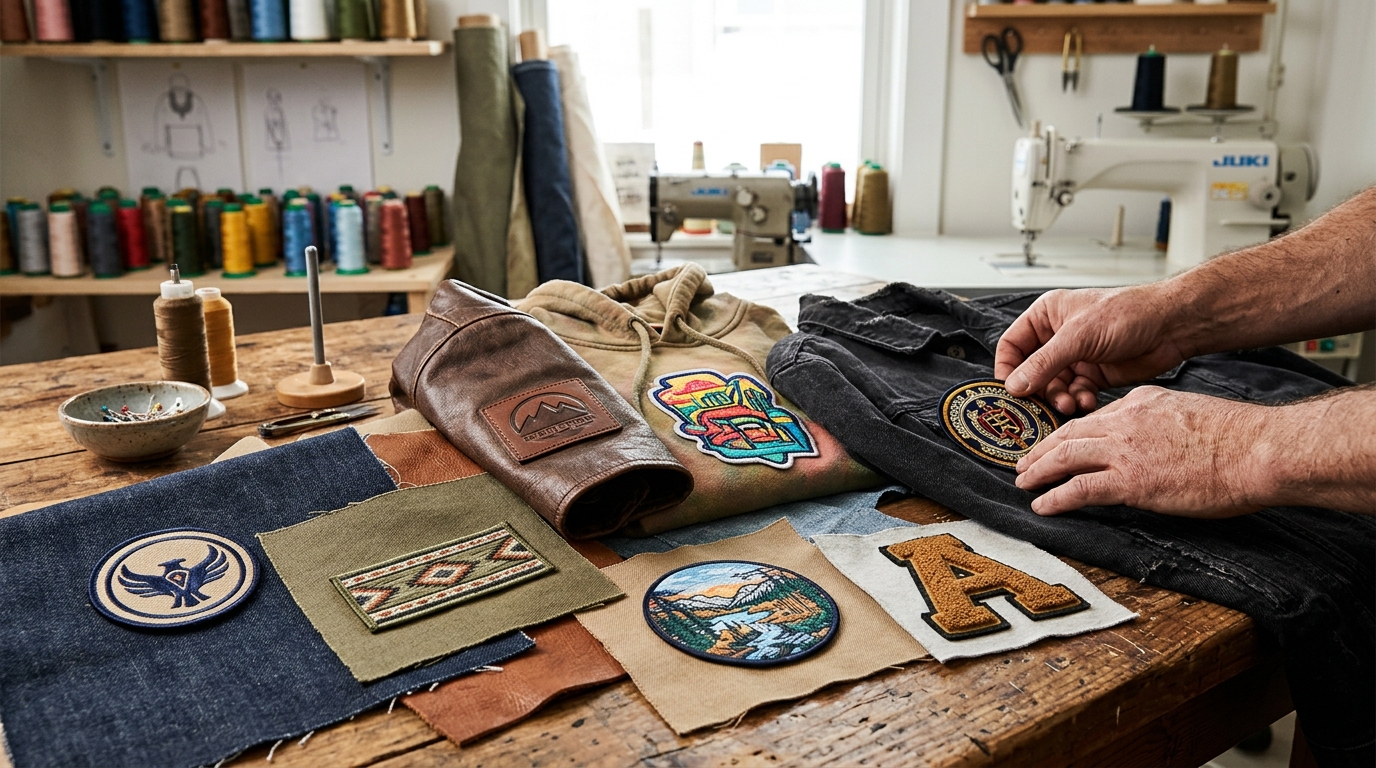
For example, a clothing company might use embroidered patches on denim jackets, woven labels on T-shirts, and leather patches on caps. Although the products look different, the consistent branding helps connect them to the same business.
Patches also add texture and dimension. Embroidery creates a raised thread finish, woven designs can reproduce fine details, and leather patches provide a more structured appearance. These differences allow brands to choose a style that complements their products rather than relying on a single decoration method.
For small businesses, custom patches can also make product development more flexible. You can test a logo on a small batch of garments, collect customer feedback, and refine the design before expanding production.
Understanding the Different Types of Custom Patches
Not every patch is made using the same process. Each material has its own appearance, strengths, and limitations, so understanding the available options is an important part of choosing the right product.
Custom Embroidered Patches
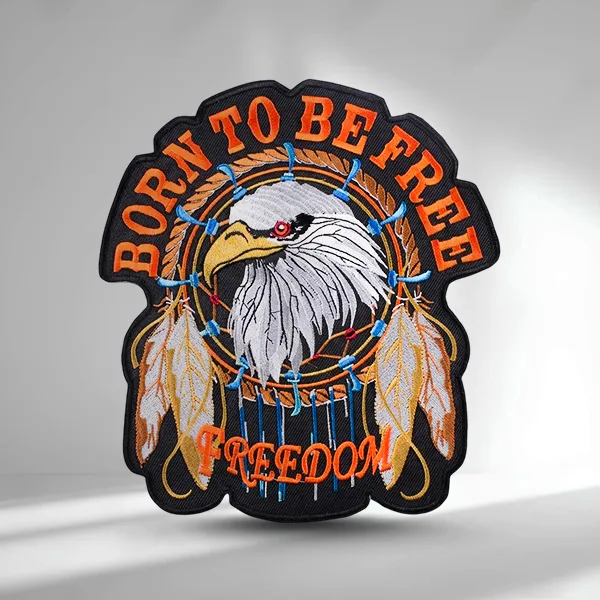
Custom embroidered patches remain a popular option for clothing brands, sports teams, businesses, and organizations. They are created by stitching colored threads onto a fabric base, producing a textured design that works well for logos, lettering, and decorative graphics.
Embroidered patches are particularly suitable for denim jackets, hoodies, uniforms, caps, and workwear. Their traditional appearance makes them a good match for both casual clothing and professional apparel.
They can be produced in a variety of shapes and sizes, with different border finishes and backing options. However, very small lettering and complicated artwork can be difficult to reproduce clearly.
If your logo includes fine lines or tiny text, ask the manufacturer whether the artwork needs simplifying. A slightly adjusted design can often produce a cleaner result without changing the overall identity of your brand.
Custom Woven Patches
Woven patches are useful when the design contains small lettering, thin lines, or detailed symbols. Instead of stitching over a fabric base, the artwork is created by interlacing threads.
This construction generally produces a flatter surface than traditional embroidery. It can be particularly useful for clothing labels, compact logos, and designs that require precise details.
Custom woven labels and patches are commonly used on shirts, jackets, bags, and other apparel products. Some are attached to the outside of a garment, while others are incorporated into seams or necklines.
When selecting woven patches, consider the edge finish and intended attachment method. A label designed to be sewn into a seam may require a different finish from a patch attached to the front of a jacket.
Custom PVC Patches
PVC patches offer a distinctive alternative to fabric-based designs. They are made from flexible synthetic material and can feature raised lettering, layered shapes, and clearly separated colors.
Custom PVC logo patches are often used on compatible bags, outdoor gear, backpacks, and tactical-style accessories. Their molded appearance makes them suitable for bold graphics and designs that benefit from raised details.
PVC patches can also be produced with hook-and-loop backing, allowing them to be removed from compatible panels and replaced with another design.
If you plan to use PVC patches on outdoor products, ask the manufacturer about material quality and suitability for the conditions in which the product will be used. Performance can vary according to the material formulation and manufacturing process.
Custom Leather Patches
Leather patches are often associated with premium headwear, outdoor apparel, denim products, and workwear. They create a structured appearance that can complement both traditional and contemporary clothing designs.
Custom leather hat patches with logos can feature engraved, embossed, debossed, or printed artwork, depending on the material and production method.
Real leather has natural variations in grain and texture, while synthetic leather may offer a more uniform finish. The right choice depends on your budget, design preferences, and product requirements.
For a clean result, keep the logo simple enough to remain recognizable at the chosen size. Small lettering and complicated graphics may not reproduce as clearly as bold shapes and straightforward typography.
Before approving production, check how the patch will fit on the intended hat or garment and confirm that the attachment method is compatible with the material.
Custom Chenille Patches
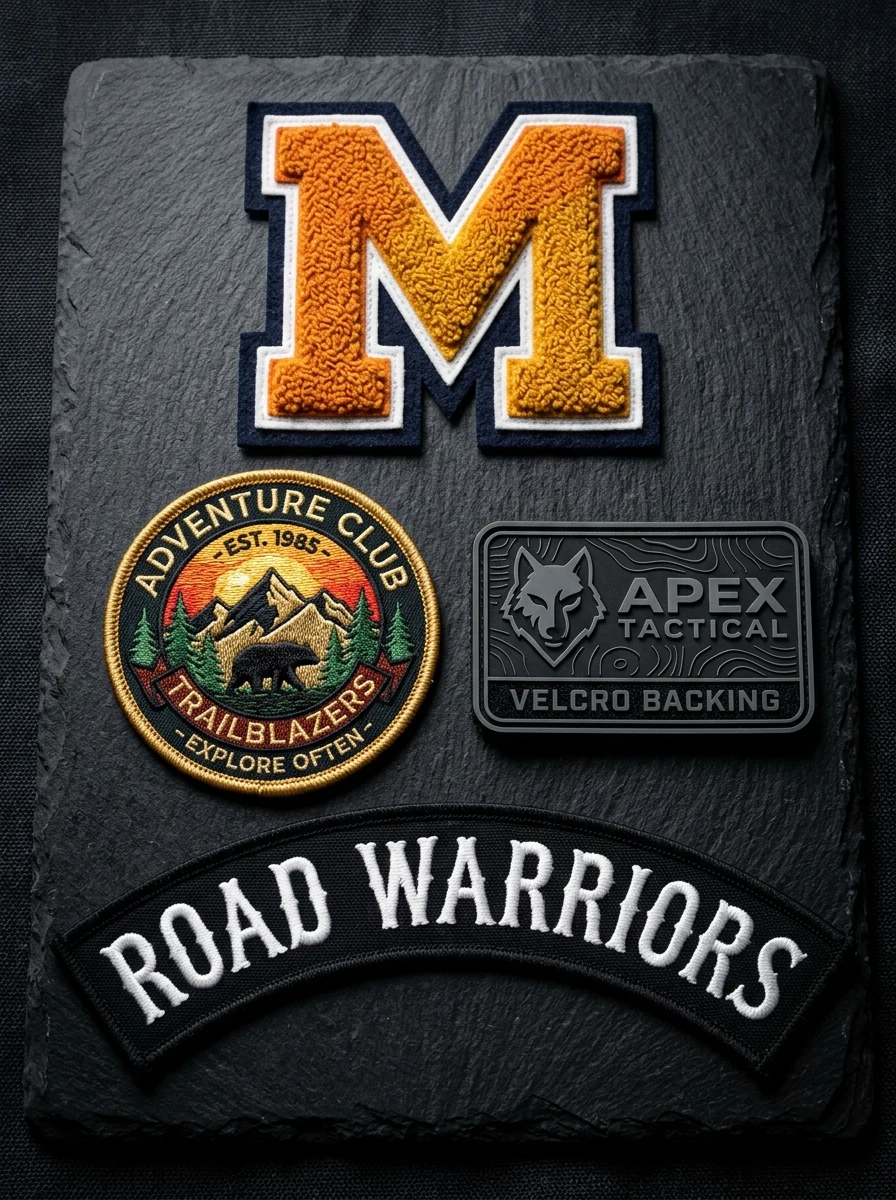
Chenille patches are known for their soft, raised texture. They are commonly used on varsity jackets, school apparel, sports clothing, and fashion pieces inspired by traditional collegiate designs.
Custom chenille letter patches can feature large initials, team names, decorative symbols, and other bold designs. They often combine a textured yarn surface with an embroidered border.
The thicker construction creates a distinctive appearance, but it also means that the patch may require a suitable attachment method and enough space on the garment.
If you are ordering chenille patches for a clothing collection, review the dimensions, border, color combination, and placement before production. A sample can help you judge how the finished patch looks against the actual fabric.
Choosing the Right Patch for Your Products
The best patch style depends on the product you are creating and the impression you want to make.
For minimalist clothing, a small woven label or understated embroidered logo may work well. A streetwear brand might prefer a bold embroidered design, while an outdoor clothing company could choose PVC or leather patches for selected products.
Think about the garment before finalizing your design. The patch should complement the fabric, fit the available space, and remain recognizable when the product is worn.
It is also worth considering how the garment will be used. Clothing that experiences frequent washing or heavy movement may require a different backing and attachment method from a decorative item worn occasionally.
A patch should look good, but it should also be appropriate for the product's intended purpose.
Custom Patches for Small Clothing Brands
Small clothing brands often work with limited budgets, especially during the early stages of product development. Ordering large quantities before testing a design can tie up money in inventory that may not sell.
Custom embroidered patches with no minimum order can be useful when a supplier offers genuine single-piece or small-quantity production. They allow new businesses to test designs, create samples, and produce limited collections without immediately committing to a large order.
For example, an independent designer might start with a small embroidered chest logo for a hoodie collection. After reviewing customer feedback, the designer could introduce a larger back patch or a different color combination.
This approach makes it easier to refine the product based on actual demand.
Before ordering, confirm the supplier's minimum quantity, setup fees, and pricing structure. A small order may have a higher cost per patch than a bulk order, so compare the total cost rather than relying on the advertised unit price alone.
Custom Patches for Streetwear and Fashion Collections
Streetwear brands often use visual details to establish a recognizable identity. Logos, graphics, typography, and distinctive placement all contribute to the overall look of a collection.
Custom embroidered patches for streetwear brands can be used on hoodies, denim jackets, caps, overshirts, cargo garments, and accessories.
A small logo patch can create a subtle branded finish, while an oversized design can become the focal point of a statement jacket. Woven patches may be more suitable for detailed artwork, especially when the design includes compact lettering.
For limited-edition collections, patches can also help distinguish one product release from another. Different colorways, special graphics, and collaborative designs provide opportunities to experiment with branding without redesigning the entire garment.
Keep the customer in mind when choosing the style. A patch that suits a minimalist fashion label may not fit a brand built around bold graphics and oversized silhouettes.
The most effective designs feel connected to the rest of the product rather than added simply for decoration.
Selecting the Best Backing for Custom Patches
Backing affects how a patch attaches to a garment or accessory. Choosing the wrong option can make installation difficult or reduce the patch's suitability for its intended use.
Sew-On Patches
Sew-on patches are attached with stitching and are commonly used on jackets, uniforms, denim, bags, and workwear.
They are a practical option for many garments that experience regular use. The strength of the finished attachment depends on the fabric, stitching technique, patch construction, and quality of the work.
Sew-on backing is often worth considering when long-term attachment is more important than quick installation.
Iron-On Patches
Iron-on patches use a heat-activated adhesive that bonds to compatible fabrics when applied according to the manufacturer's instructions.
They can be convenient for selected casual garments, promotional apparel, and craft projects. However, not every fabric is suitable for heat application.
Some synthetic materials can be damaged by high temperatures, while textured or coated surfaces may not provide reliable adhesion.
Before applying an iron-on patch, check the garment's care instructions and test the application on a suitable sample. Additional stitching may be appropriate for certain garments and uses.
Hook-and-Loop Backing
Hook-and-loop backing allows a patch to be removed and replaced when used with a compatible attachment panel.
It is commonly selected for tactical-style bags, equipment, and certain uniforms or accessories.
When ordering custom patches with Velcro backing, confirm whether the hook component alone is included or whether a matching loop panel is supplied as well.
This is particularly important if the patch will be attached to a new product that does not already have a compatible panel.
Why Digital Proofing Is Important Before Production
A digital proof gives you an opportunity to review the proposed design before the manufacturer starts making your patches.
Custom patches with free digital proof can be helpful for both small and large orders, provided the supplier includes the service without an additional fee.
Review the design carefully rather than approving it at a glance. Check the spelling, proportions, dimensions, colors, border, and overall layout.
If the patch contains a small logo or detailed lettering, consider whether the design will remain readable at its actual size. Ask the supplier to explain any details that may need to be simplified.
A digital proof is a useful preview, but it may not perfectly reproduce the texture or color of the finished physical product. Thread, material, lighting, and manufacturing tolerances can affect the final appearance.
For complicated designs or large orders, you may want to ask whether a physical sample is available.
Before approving production, make sure you understand the revision policy and whether changes made after approval will incur extra charges.
What Affects the Cost of Custom Patches
The price of custom patches depends on several factors, including the size, material, design complexity, quantity, backing, and finishing method.
A small embroidered logo with a simple design may cost less per piece than a large patch with many colors, intricate details, or specialty materials.
Quantity also matters. Larger production runs may reduce the unit cost, but they require a greater upfront investment.
When comparing quotes, ask whether the price includes artwork preparation, digitizing, digital proofing, backing, packaging, and shipping. Some suppliers include certain services in their quoted price, while others charge separately.
It is also worth considering the intended retail price of the finished garment. If you are a clothing brand, your patch cost should fit within your product's overall production budget.
The cheapest patch is not always the best value. Inconsistent stitching, poor color matching, unsuitable backing, or delayed delivery can create additional costs later.
Look for a balance between quality, price, and reliable production.
How to Prepare Your Artwork for a Custom Patch Order
Good artwork helps manufacturers understand what you want and reduces the risk of unnecessary revisions.
Whenever possible, provide your logo in a high-quality vector format. If that is unavailable, send the clearest image you have and ask whether it is suitable for production.
Include the intended patch dimensions, preferred colors, material, border, and backing. If the patch will be attached to a specific garment, provide information about the fabric and placement.
Avoid assuming that every detail in a digital logo can be reproduced at any size. Small lettering, thin lines, and intricate shapes may need adjustments depending on the patch construction.
If you have a particular color palette, provide reliable color references. Keep in mind that thread and physical materials may not match a digital screen exactly.
Before approving the final proof, check every detail carefully. Correcting an error before production is generally easier than addressing it after the order has been manufactured.
Finding a Reliable Custom Patch Manufacturer
A dependable manufacturer should offer clear communication, understandable pricing, appropriate product options, and realistic production estimates.
Start by reviewing examples of previous work. Look for consistent stitching, neat borders, clear lettering, and suitable finishing. If you need PVC, chenille, leather, or woven patches, review examples of the specific construction method you intend to order.
Ask about minimum order quantities, setup charges, proofing, production times, shipping, and policies for incorrect or damaged items.
If you need rush custom embroidered patches for an event or product launch, confirm that the supplier can accommodate your deadline. Include delivery time in your planning rather than focusing only on the manufacturing period.
For businesses that expect to reorder, ask whether approved artwork and specifications can be retained for future production. This can help maintain consistency between batches.
Customer reviews may provide useful information about communication and reliability, but pay attention to detailed feedback rather than ratings alone.
A good supplier should be willing to explain material limitations and help you choose a suitable product for your needs.
Conclusion
Choosing the best custom patches for your clothing brand involves balancing design, material, functionality, and budget. The right patch should complement your garments, communicate your brand identity, and suit the conditions in which the product will be used.
Embroidered patches offer a classic textured finish, woven designs work well for many detailed logos, leather patches create a distinctive look, chenille adds dimension, and PVC provides a molded alternative for selected applications.
Before placing an order, review the available backing options, prepare clear artwork, request a digital proof, and confirm the complete cost and delivery schedule. If you are launching a new brand, starting with a smaller order can help you test your designs before committing to larger quantities.
Ultimately, custom patches work best when they are chosen with a clear purpose. By paying attention to the details and working with a reliable manufacturer, you can create branded products that look consistent, feel thoughtfully designed, and reflect the identity of your business.