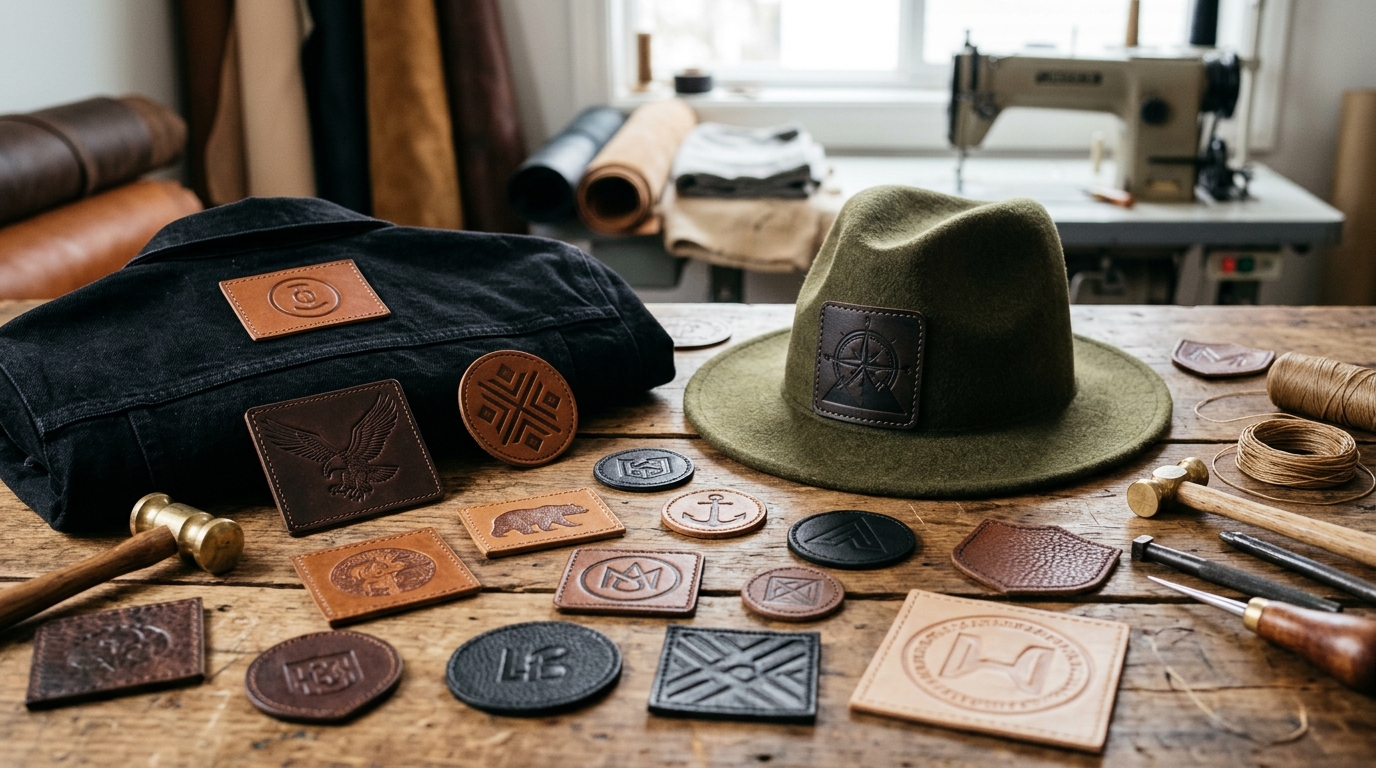
Custom leather patches have become a popular choice for businesses, clothing brands, hat manufacturers, and individuals who want to add a distinctive touch to their products. With their textured surfaces, refined appearance, and versatile design possibilities, leather patches can transform ordinary clothing and accessories into recognizable branded items. From stylish caps and denim jackets to workwear and promotional merchandise, these patches offer an attractive way to display logos, names, and custom artwork.
Whether you are launching a clothing line, upgrading your company's uniforms, or creating personalized accessories, choosing the right leather patch can help establish a consistent visual identity. Customers can select genuine leather or synthetic alternatives, explore different shapes and colors, and choose from engraving, embossing, debossing, and other finishing techniques.
Custom leather patches for hats are particularly popular among lifestyle brands and outdoor businesses, while custom patches for clothing brands provide opportunities to create unique designs across different garments. With suitable materials and professional production, leather patches can become a valuable part of your branding strategy.
Why Custom Leather Patches Are Popular for Premium Branding
Leather patches offer a distinctive appearance that combines texture, simplicity, and sophistication. Unlike conventional printed graphics, leather patches create a separate design element that stands out against fabric and other materials.
Businesses often use leather patches to communicate craftsmanship, durability, and attention to detail. They are especially suitable for brands that produce denim clothing, casual apparel, outdoor accessories, caps, jackets, and workwear.
Another advantage is design flexibility. Leather patches can feature minimalist logos, detailed symbols, brand names, or decorative artwork. Depending on the material and production method, the design can appear engraved, raised, recessed, or printed.
Customers can also select different edge shapes, dimensions, colors, and attachment methods. This makes leather patches suitable for both subtle branding and more prominent decorative applications.
For businesses seeking a premium presentation, a well-designed leather patch can add value to a product while helping maintain a recognizable brand identity.
Custom Leather Patches for Hats and Caps
Custom leather patches for hats are widely used by clothing brands, promotional merchandise suppliers, outdoor businesses, and retailers. They are commonly applied to baseball caps, trucker hats, casual headwear, and other cap styles.
A leather patch can display a company logo, brand name, mountain illustration, monogram, or distinctive symbol. The natural texture of genuine leather creates a traditional appearance, while synthetic leather options can provide a more uniform finish.
The shape and size of the patch should complement the front panel of the hat. Rectangular, circular, oval, and custom-cut designs can all work well, depending on the logo and available space.
Attachment is another important consideration. Stitching is a common choice because it can provide a secure connection when the patch and hat materials are compatible. Other attachment methods may be available depending on the manufacturer's production process.
When ordering leather hat patches, customers should consider the material, logo placement, color contrast, and expected use of the finished product.
Custom Hat Patches With Leatherette Logo for Modern Brands
Custom hat patches with leatherette logo designs offer an attractive alternative to genuine leather. Leatherette is a synthetic material developed to provide a leather-like appearance, making it useful for businesses seeking a consistent finish across multiple products.
These patches are popular with streetwear labels, outdoor brands, promotional merchandise companies, and manufacturers of casual accessories.
Leatherette can support several logo treatments, including engraving, embossing, debossing, and printing, depending on the material's specifications. This allows brands to create clean, recognizable designs without relying exclusively on traditional embroidery.
Another benefit is consistency. Synthetic materials may offer more uniform color and surface characteristics across a production batch than natural leather, although the results depend on the particular material and manufacturing process.
Customers should compare available finishes and request a design proof before production. Selecting an appropriate patch size and attachment method can help create a polished result that complements the hat.
Custom Patches With Company Logo for Professional Identity
A recognizable logo is essential for building brand awareness. Custom patches with company logo designs allow businesses to display their identity on hats, jackets, uniforms, bags, and other merchandise.
Leather patches can be especially effective for companies that want a refined or rugged appearance. Outdoor retailers, construction businesses, lifestyle brands, and workwear manufacturers may incorporate leather logo patches into their products.
For example, a clothing company might use leather patches on denim jackets, while an outdoor brand could add them to caps and equipment bags. A small business might use branded patches on promotional merchandise to create a consistent presentation.
To achieve the best results, companies should provide clear artwork and confirm the correct dimensions, material color, and logo treatment. Fine details may need to be simplified when the design is engraved or embossed on a small patch.
Maintaining consistent logo specifications also helps businesses reproduce the same design across future orders.
Custom Leather Patches No Minimum Order for Small Businesses
Small businesses and independent designers often need limited quantities while developing new products. Ordering a large batch before testing customer demand may create unnecessary inventory costs.
Custom leather patches no minimum order services can help customers explore personalized production in smaller quantities when the supplier offers this option.
Small orders are useful for product samples, limited-edition caps, personalized gifts, startup merchandise, and replacement patches. They also allow customers to compare materials and finishes before investing in a larger production run.
For example, a new hat brand might order a small batch of leatherette logo patches to evaluate their appearance on different cap colors. A local business could order a limited quantity of branded patches for an upcoming promotional event.
Minimum quantities vary between suppliers, and some production processes involve setup fees even for small orders. Customers should confirm pricing, artwork charges, and production requirements before placing an order.
Custom Leather Patches for Clothing Brands and Denim Products
Custom leather patches for clothing brands are particularly popular in denim and casual fashion. They can be placed on jeans, jackets, shirts, hoodies, and other garments to add a distinctive branding element.
A leather patch can display a brand name, monogram, emblem, or decorative graphic. Its texture contrasts with the fabric and can help create a recognizable product identity.
Denim manufacturers frequently use leather or leather-like patches as a finishing detail on jeans and jackets. Fashion labels can also incorporate them into limited collections, workwear-inspired apparel, and streetwear designs.
When selecting a patch, brands should consider the garment's fabric, washing requirements, and intended lifespan. Some leather materials require more careful maintenance than synthetic alternatives.
The attachment method should also be compatible with the garment. Stitching may be appropriate for many applications, while other methods may be suitable depending on the material and design.
Custom Embossed and Debossed Leather Logo Patches
Embossing and debossing are popular techniques for creating distinctive leather patch designs.
Embossing creates raised elements on the material's surface, while debossing presses the artwork into the surface to create a recessed appearance. Both techniques can produce clean logos and lettering when the material is suitable for the selected process.
These finishes work well for minimalist branding, initials, company names, and simple graphic symbols. They are commonly used on hats, bags, jackets, and premium accessories.
Customers should consider the size of the lettering, the depth of the design, and the contrast between the artwork and the material. Highly detailed graphics may require adjustments to remain clear after production.
A digital proof or sample can help customers evaluate the overall appearance before approving a larger order.
Custom Engraved Leather Patches for Detailed Branding
Custom engraved leather patches provide another option for brands seeking a distinctive finish. Engraving creates a design on the material's surface using a suitable engraving process, allowing logos, text, and selected graphics to become part of the patch's appearance.
This technique is useful for minimalist logos, decorative illustrations, and designs that benefit from a precise outline.
Engraved leather patches can be used on hats, backpacks, bags, jackets, and promotional accessories. They can also support personalized gifts and small merchandise collections.
The final appearance depends on the material, engraving method, artwork, and depth of the design. Customers should provide clear artwork and confirm that the selected material is compatible with the intended process.
For small patches, simplifying fine lines and very small lettering can help preserve readability.
Custom Leather Patches Wholesale Bulk Order for Growing Brands
Businesses producing large quantities of hats, clothing, and accessories may benefit from custom leather patches wholesale bulk order services.
Wholesale production is useful for clothing manufacturers, cap suppliers, retailers, promotional merchandise distributors, and established fashion labels. Ordering larger quantities may reduce the average cost per patch, depending on the supplier's pricing structure and production requirements.
Before ordering, businesses should finalize the material, color, dimensions, artwork, edge treatment, and attachment method. They should also confirm packaging requirements and delivery schedules.
For larger projects, requesting a sample can help verify the material's appearance and the quality of the logo treatment before full production begins.
Maintaining consistent specifications is particularly important for brands that reorder patches regularly. Keeping approved artwork and material details on file can help ensure consistency across future collections.
Custom Leather Patches for Workwear and Outdoor Apparel
Leather patches are often used on workwear and outdoor clothing because their appearance complements rugged and practical product designs.
Businesses can incorporate leather patches into work jackets, caps, aprons, bags, and other accessories. Outdoor brands may use them to display logos on casual clothing and merchandise.
When selecting a patch for workwear, customers should consider the garment's working conditions, washing instructions, and exposure to moisture, heat, or friction. Not every leather material is suitable for every environment.
Synthetic leather alternatives may be preferable when a consistent appearance or particular maintenance characteristics are important. Genuine leather may appeal to brands that value natural texture and variation.
Customers should also check that the patch's attachment method is compatible with the garment and its intended use.
Custom Leather Patches With Stitching and Finished Edges
The edge treatment and attachment method can significantly affect the appearance of a leather patch.
Some designs feature simple cut edges, while others use stitched borders or shaped outlines to complement the artwork. A stitched border can provide a decorative detail and may contribute to attachment security when properly constructed.
The most suitable edge depends on the patch material, shape, thickness, and intended application. Rounded rectangles, circles, ovals, and custom-cut shapes can all be considered.
Customers should discuss edge finishing with the manufacturer to determine which options are appropriate for their selected material.
For hats and garments that experience regular wear, the patch should be securely attached using a method compatible with both the patch and the underlying fabric.
Custom Leather Patches With Free Design Proof
Custom patches with free design proof services allow customers to review their proposed artwork before production begins.
A design proof may show the patch shape, dimensions, logo placement, lettering, and selected material color. It provides an opportunity to identify mistakes and request changes before manufacturing.
This step is especially useful for leather patches because engraved, embossed, and debossed designs may appear differently depending on the material's surface and texture.
Customers should provide high-quality artwork and clearly communicate their preferences for the patch's size, finish, and attachment method.
It is also important to confirm what the supplier includes in its free proof service. Digital mockups may be included without charge, while physical samples or extensive artwork revisions may involve additional fees.
Reviewing the proof carefully can help reduce production errors and improve the final result.
How to Choose the Right Leather Patch Material
Selecting the right material is one of the most important decisions when ordering custom leather patches.
Genuine leather offers natural variations in texture and color, creating an individual appearance for each patch. It may suit premium accessories, traditional workwear, and brands that appreciate natural materials.
Leatherette provides a synthetic alternative with a leather-like finish. It can be useful when consistency across a large batch is a priority or when a specific appearance is required.
Other factors include flexibility, thickness, resistance to the intended conditions, and compatibility with the garment. Customers should consider how the patch will be cleaned and maintained throughout its expected use.
Requesting material samples, when available, can help customers compare options before committing to production.
Tips for Ordering High-Quality Custom Leather Patches
A successful leather patch project starts with a clear design and accurate product specifications.
Begin by deciding whether genuine leather or leatherette is more appropriate for your application. Then select the patch shape, dimensions, color, logo treatment, edge finish, and attachment method.
Provide a clear logo file and confirm that the artwork is suitable for engraving, embossing, debossing, or printing. Very small lettering and intricate graphics may need adjustments to achieve a readable result.
Ask the supplier about minimum order quantities, setup fees, production timelines, sample availability, and shipping arrangements. If you are ordering in bulk, review a sample or approve a proof before manufacturing the full quantity.
Finally, confirm the manufacturer's care recommendations and quality-control procedures. Clear communication can help avoid misunderstandings and produce patches that meet your expectations.
Conclusion
Custom leather patches offer an attractive way to enhance hats, clothing, workwear, and accessories with distinctive branding. Whether you choose genuine leather for its natural texture or leatherette for a consistent finish, the right patch can help your products stand out and create a recognizable identity. From custom leather patches for hats and embossed logo designs to wholesale orders for clothing brands, there are solutions for different business sizes and creative projects. By choosing suitable materials, reviewing your artwork carefully, and working with a dependable manufacturer, you can create high-quality leather patches that complement your products and support your long-term branding goals.
Discussion & Feedback 0
Write a CommentNo comments yet
Have a question or feedback regarding this topic? Be the first to share your thoughts below!
Leave a Reply
Your email address will not be published. Required fields are marked *