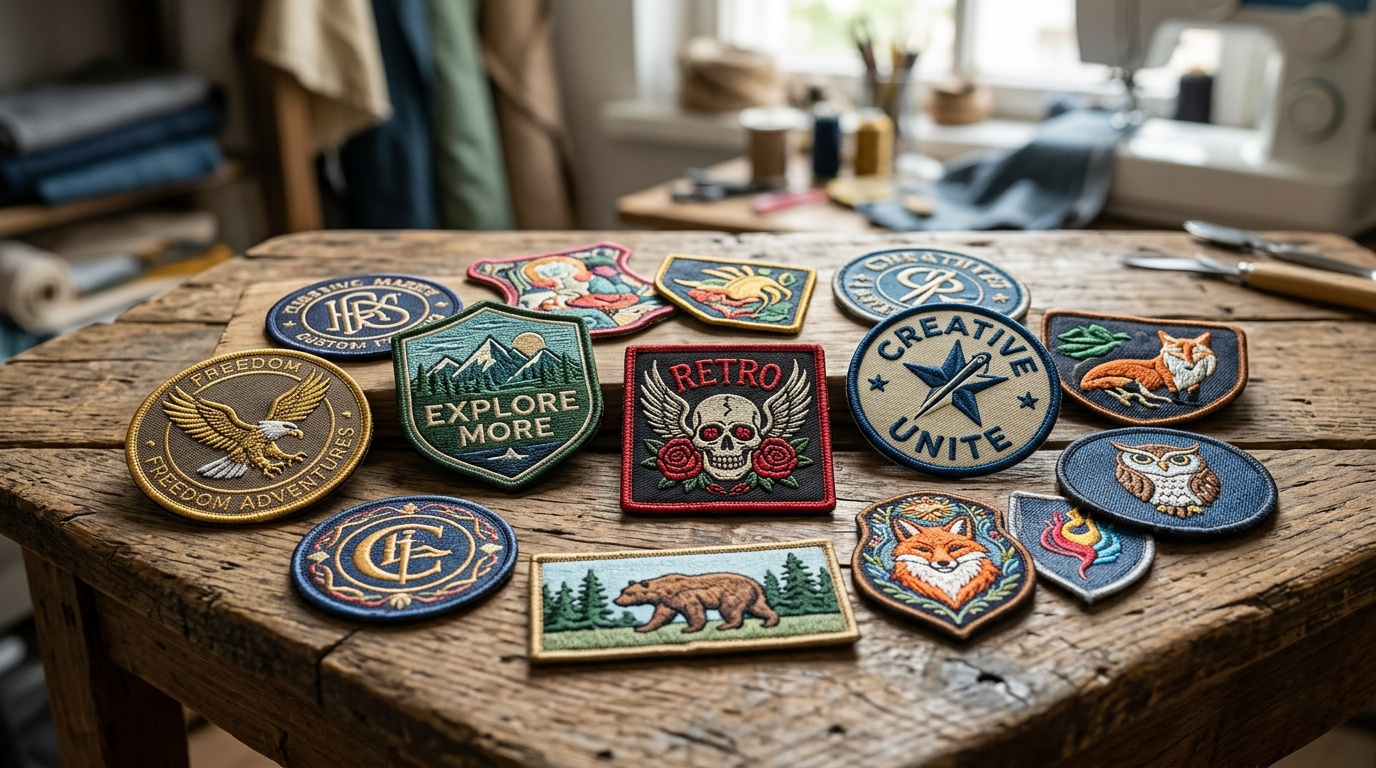
Custom patches are a practical and stylish way to add personality, identity, and professional detail to clothing, accessories, uniforms, and promotional products. From independent fashion labels to established apparel manufacturers, businesses use custom patches to create recognizable branding and give their products a distinctive appearance. Whether you need custom embroidered patches with detailed stitching, durable PVC patches with Velcro backing, or premium leather patches for hats, the right design can help your products stand out in a competitive market.
Today, custom patches are available in different materials, shapes, sizes, colors, and attachment styles. Businesses can order small quantities for product testing or purchase wholesale patches for larger manufacturing runs. With options such as free artwork proofing, rush production, and multiple backing types, finding patches that match your brand identity and budget has become easier.
For clothing brands, motorcycle clubs, uniform suppliers, sports teams, and promotional businesses, custom patches offer a flexible solution for combining functionality with visual appeal. Choosing the right patch style depends on your design, intended use, production quantity, and the overall look you want to achieve.
Why Custom Patches Are Popular Among Clothing Brands
Custom patches have become an important branding element for apparel businesses because they provide a professional finish without requiring every design to be printed directly onto a garment. They can be attached to jackets, hoodies, hats, shirts, bags, workwear, and other textile products.
For fashion startups, patches offer a convenient way to develop a recognizable brand identity. A small embroidered logo on a cap or a leather label on a denim jacket can create a premium appearance while keeping the garment design simple. Established clothing manufacturers also use patches to maintain consistency across collections and product lines.
Another advantage is versatility. Custom patches can be sewn onto garments during manufacturing, attached with iron-on backing for convenient application, or produced with hook-and-loop backing when removability is important.
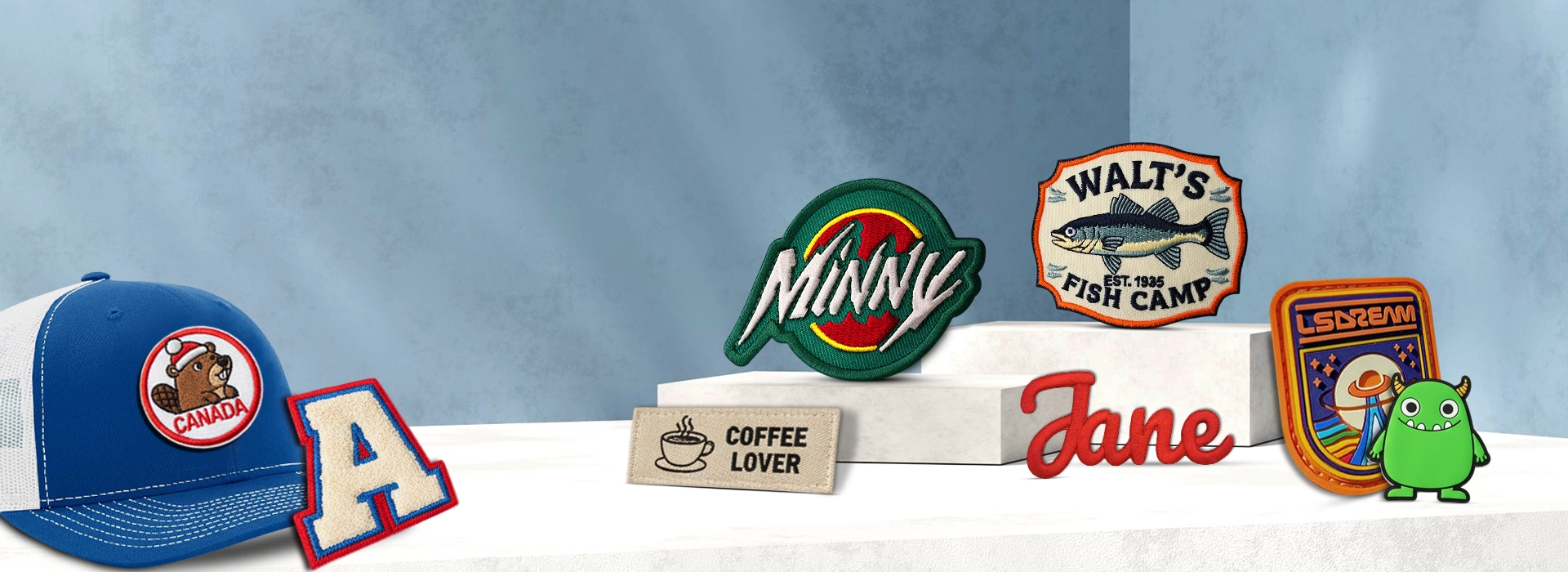
Businesses can also choose from embroidered, woven, PVC, chenille, and leather options depending on the style of their products. Each material creates a different visual effect, allowing brands to select a finish that complements their clothing.
Custom Embroidered Patches No Minimum for Small Businesses
Ordering custom embroidered patches no minimum is an attractive option for small businesses, independent designers, creators, and new clothing brands. Not every business needs hundreds or thousands of patches at the beginning of a project. Sometimes, a small batch is enough to test a design, create product samples, or prepare limited-edition merchandise.
Low-quantity ordering allows entrepreneurs to experiment with different logo placements, thread colors, shapes, and patch sizes before committing to a large production run. This can be especially useful when launching a new collection or developing seasonal apparel.
Custom embroidered patches are created by stitching colored threads onto a fabric base. The raised texture gives the design depth and creates a traditional, premium appearance. They work particularly well for logos, symbols, lettering, and illustrations with clearly defined shapes.
When looking for custom patches with no minimum order, it is important to confirm the supplier's actual quantity policy. Some manufacturers accept single-piece orders, while others have minimum quantities that vary according to the patch style, size, and backing.
Small orders may have a higher price per patch than bulk orders, but they can help reduce unnecessary inventory and make product testing more affordable.
Custom Logo Patches for Clothing Brands
Custom logo patches for clothing brands provide an effective way to establish a consistent visual identity across different products. Instead of relying entirely on printed graphics, brands can use embroidered, woven, PVC, or leather patches to create a recognizable signature detail.
A streetwear brand might choose bold embroidered lettering for hoodies and jackets, while a premium denim label may prefer a leather logo patch on the waistband. Outdoor apparel companies can use durable woven patches for technical garments, while sportswear businesses may select lightweight patches that complement performance clothing.
The best logo patch starts with a design that remains recognizable at its intended size. Small text, thin outlines, and intricate details may require adjustments before production. Simplifying unnecessary elements can improve clarity and help the finished patch match the original concept.
Material selection is equally important. Embroidered patches provide texture and traditional craftsmanship, whereas woven patches are better suited to fine lines and smaller lettering. PVC patches offer a modern, molded appearance, and leather patches create a rugged or premium aesthetic.
For clothing businesses, custom logo patches can also support consistent branding across hats, bags, jackets, uniforms, and accessories. Using the same logo colors and proportions across products helps create a cohesive collection.
Custom PVC Patches With Velcro Backing
Custom PVC patches with Velcro backing are popular for applications that require durability, flexibility, and easy attachment or removal. PVC patches are made from soft or flexible polyvinyl chloride, allowing designs to feature raised details, recessed areas, and distinct color sections.
Unlike traditional embroidery, PVC does not rely on individual threads to create the design. This makes it suitable for bold graphics, outdoor-themed logos, tactical accessories, equipment bags, and products that benefit from a rubber-like finish.
Velcro backing typically consists of a hook component that attaches to a compatible loop surface. This system allows the patch to be removed and replaced without sewing it permanently onto the item each time.
These patches are often used for tactical gear, outdoor equipment, backpacks, team identification, and certain uniforms. They are also useful for organizations that need interchangeable names, insignia, or role identifiers.
When ordering custom PVC patches, consider the thickness, shape, color accuracy, backing quality, and intended environment. A detailed design should be reviewed carefully to ensure that raised elements and small text remain clear.
For garments and equipment exposed to frequent movement, check that the hook-and-loop backing is appropriate for the intended surface. The patch itself may be durable, but the quality of the attachment system also affects everyday performance.
Bulk Custom Embroidered Patches Wholesale
Bulk custom embroidered patches wholesale orders are ideal for apparel manufacturers, promotional product companies, uniform suppliers, and established fashion labels. Purchasing larger quantities can reduce the cost per patch and help businesses maintain consistent inventory for ongoing production.
Wholesale patches are especially useful when a design will be used across multiple products or repeated manufacturing runs. A clothing brand may need the same logo patch for several jacket styles, while a uniform supplier may require matching patches for a large team or organization.
Before placing a wholesale order, businesses should confirm the patch dimensions, thread colors, border style, backing type, and total quantity. Providing clear specifications helps reduce misunderstandings and makes it easier to compare supplier quotations.
Artwork approval is another important part of the process. A digital proof allows buyers to review the layout before manufacturing begins. It is worth checking the spelling, proportions, colors, and small design elements carefully because correcting an approved design after production may be more difficult.
Businesses should also consider lead times and shipping schedules. Large orders may require additional production capacity, especially when several patch styles are being manufactured together.
A reliable wholesale supplier should clearly explain pricing, production timelines, quality standards, and any setup fees. These details make it easier to plan inventory and protect profit margins.
Custom Patches With Free Artwork Proof
Custom patches with free artwork proof can make the ordering process easier, particularly for businesses that need precise branding. An artwork proof is a digital representation of the proposed patch that allows the customer to review the design before production.
This step helps identify potential problems with text, spacing, color combinations, logo proportions, and overall appearance. It also gives the customer an opportunity to request changes before the design is finalized.
For embroidered patches, artwork preparation may involve adjusting fine lines or simplifying small details so that they can be reproduced using thread. Woven patches can often accommodate finer lettering, while PVC patches may need adjustments to raised sections and recessed lines.
When requesting a proof, provide a high-quality logo file whenever possible. Vector formats such as AI, EPS, or SVG are often useful, although the supplier should confirm which formats it accepts. High-resolution image files may also work for many designs.
Free artwork proofing can be a valuable service, but businesses should check what the offer includes. Some suppliers provide a digital proof at no additional cost, while major redesigns or specialized artwork preparation may have separate charges.
Reviewing the proof carefully helps ensure that the final patch represents the brand accurately and meets the project's expectations.
Custom Patches Rush Order for Tight Deadlines
Custom patches rush order services are useful when a business needs patches for an upcoming launch, trade show, uniform rollout, promotional campaign, or special event. Standard production timelines may not always fit urgent projects, making expedited manufacturing an important consideration.
Rush production availability depends on the patch material, order quantity, design complexity, artwork approval, and shipping destination. A simple embroidered logo may have different production requirements from a multilayer PVC design or a detailed chenille patch.
If a deadline is approaching, share the required delivery date with the supplier before confirming the order. Ask whether the quoted timeline includes artwork approval, manufacturing, quality checks, and shipping.
It is also helpful to submit final artwork and specifications as early as possible. Revisions can add time, especially if the design needs to be adjusted for stitching or molded construction.
Some suppliers offer expedited production for an additional charge, but rush manufacturing does not automatically guarantee a specific delivery date. Confirm the production schedule in writing and allow for possible shipping delays.
For urgent apparel projects, choosing a readily available material and a straightforward design may improve the chances of meeting the deadline.
Custom Woven Patches for Clothing Labels
Custom woven patches for clothing labels are an excellent option when a design includes fine lettering, thin lines, or small details. They are manufactured by weaving threads together rather than creating the image primarily through raised embroidery stitches.
This construction allows woven patches to reproduce compact text and intricate artwork with a relatively smooth surface. As a result, they are frequently used for brand labels, garment identification, fashion accessories, and detailed logos.
Clothing brands may use woven patches inside garments, on jacket sleeves, along hems, or as visible exterior labels. They are particularly useful for minimalist branding, where clean lines and legible text are more important than a heavily textured finish.
Woven labels can also be designed with different shapes, folded edges, and attachment methods depending on how they will be used. Some are intended to be sewn into a seam, while others are made as separate decorative patches.
When preparing artwork, consider the final dimensions and the amount of text included. Even though woven construction supports finer detail than many embroidered designs, extremely small lettering can still become difficult to read.
Choosing a suitable thread palette and providing clear artwork helps create a neat, consistent result that complements the garment.
Custom Leather Patches for Hats
Custom leather patches for hats are widely used by outdoor brands, workwear companies, lifestyle labels, and businesses that want a rugged or premium appearance. Their textured surface creates a distinctive contrast against cotton, canvas, denim, and other hat materials.
Leather patches are often applied to trucker hats, baseball caps, beanies, and structured caps. Designs may feature engraved logos, embossed lettering, debossed symbols, or printed graphics, depending on the material and production method.
Genuine leather offers a natural texture that can vary from piece to piece, while synthetic leather provides an alternative for brands seeking a more uniform appearance or specific material requirements. Businesses should review the available options and confirm the material composition before ordering.
A good leather patch design is usually bold and easy to recognize. Large lettering, simple symbols, and clean borders tend to work well because they complement the texture of the material.
Attachment methods also deserve attention. Sewing creates a traditional finish, while suitable adhesive methods may be available for particular hat constructions. The right method depends on the cap fabric, patch material, and expected use.
For clothing brands, custom leather hat patches can help create a consistent product identity across headwear collections, outdoor accessories, and coordinated apparel.
Custom Chenille Patches for Letterman Jackets
Custom chenille patches for letterman jackets are known for their soft, raised texture and classic varsity appearance. They are commonly associated with school jackets, college merchandise, sports teams, club apparel, and retro-inspired fashion collections.
Chenille is created using yarn loops that produce a plush surface. This makes it especially suitable for large letters, school initials, team symbols, and bold decorative shapes.
Letterman jackets often combine chenille designs with embroidered borders, felt backgrounds, or additional stitched details. These combinations create depth and make the finished patch more visually distinctive.
When designing chenille patches, it is important to choose artwork that suits the material. Large lettering and simple shapes generally work better than very small text or extremely intricate illustrations. Fine details may require separate embroidery or a different patch construction.
Businesses should also consider the jacket fabric, patch dimensions, and attachment method. Larger patches may need careful placement and secure stitching to maintain their appearance during regular wear.
For fashion brands producing varsity-inspired collections, chenille patches can add heritage styling and a strong visual identity. They also work well for personalized jackets, team merchandise, and commemorative apparel.
Custom Military Name Patches With Velcro
Custom military name patches with Velcro are designed for situations where clear identification and convenient attachment are important. They may be used on compatible tactical clothing, training uniforms, equipment bags, and other garments that feature hook-and-loop panels.
These patches commonly display names, short identifiers, or approved organizational details. The text should remain legible, with suitable spacing and a background that provides enough contrast.
Hook-and-loop backing allows the patch to be removed when a garment is washed, reassigned, or used for a different activity. It can also simplify the replacement of worn identification patches.
When ordering these products, confirm the required dimensions, font style, color scheme, backing orientation, and material. If the patch is intended for an official uniform, check the relevant organization's regulations before finalizing the design.
A commercial patch supplier may offer embroidered, woven, or PVC construction. Embroidery provides a traditional stitched look, woven material supports finer text, and PVC offers a molded appearance for certain applications.
Durability should be evaluated according to the intended environment. Frequent handling, exposure to moisture, and repeated attachment can affect both the patch and its backing over time.
Selecting the correct construction and confirming all specifications before production helps ensure that the finished patch serves its intended identification purpose.
Custom Motorcycle Club Back Patches
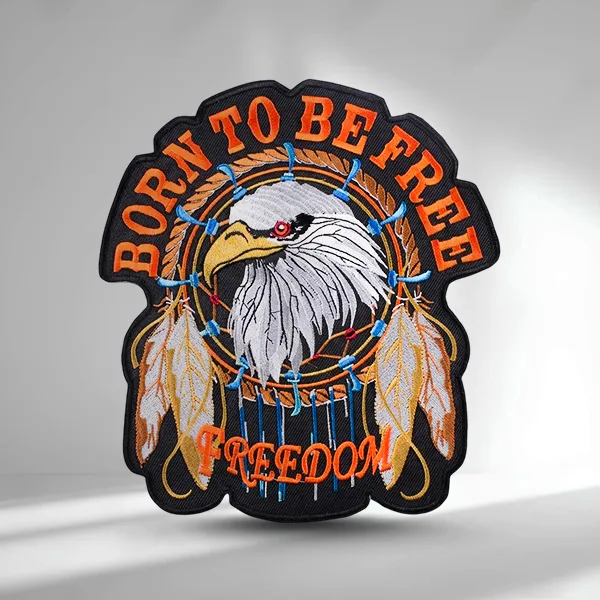
Custom motorcycle club back patches are a prominent feature of motorcycle apparel and personalized riding gear. They are often designed for the back of a vest or jacket, where a larger format provides room for club names, artwork, symbols, and other decorative elements.
Because these patches can be considerably larger than standard logo patches, artwork preparation is especially important. The design should balance lettering, central imagery, borders, and background elements so that everything remains visually clear.
Embroidered patches are a popular choice for their traditional stitched texture, while woven options may be suitable for certain detailed designs. Other construction methods can be considered according to the desired appearance and garment requirements.
Material selection should account for the jacket or vest fabric. Heavy denim, leather, and textile riding gear may require different attachment methods and stitching considerations.
Businesses ordering patches for clubs or group merchandise should confirm the approved artwork, spelling, dimensions, and color placement before production. Larger designs may require additional review to ensure that the final layout looks balanced.
A well-made back patch can help create a distinctive appearance for club apparel, commemorative merchandise, and custom riding gear.
Custom 3D Puff Patches for Hats
Custom 3D puff patches for hats provide a raised, dimensional appearance that helps logos stand out. They are particularly attractive for streetwear labels, sports-inspired collections, promotional caps, and fashion brands that want a bold visual effect.
Three-dimensional designs can be produced using specialized embroidery techniques or other constructions intended to create height. The exact method depends on the supplier and the type of patch being ordered.
Raised lettering is often effective for short brand names, initials, and simple logos. However, very thin lines and intricate artwork may not reproduce well when the design relies on a thick, raised structure.
Before ordering, discuss the desired height, lettering style, border, backing, and final patch dimensions. If the patch will be attached to a curved cap panel, confirm that its construction is suitable for that placement.
Color selection can also influence the overall effect. Contrasting thread colors make lettering easier to read, while matching colors create a more subtle, textured finish.
For brands focused on premium headwear, 3D puff patches offer an alternative to flat embroidery and can help create a recognizable product style.
Custom Sew-On Patches for Uniforms
Custom sew-on patches for uniforms provide a durable, traditional way to display names, logos, departments, team identification, and organizational insignia. They are widely used in hospitality, retail, education, manufacturing, sports, and various professional environments.
Sew-on attachment creates a permanent connection between the patch and the garment when the stitching is appropriate for the materials involved. This makes it a practical choice for uniforms that are used regularly and need reliable attachment.
Embroidery is suitable for many uniform logos because it creates a textured, professional appearance. Woven patches may be preferable for smaller text or intricate symbols, while other materials can be selected for specialized applications.
When ordering uniform patches, consider the garment color, patch dimensions, placement, and washing requirements. Workwear that undergoes frequent laundering may require different construction and thread choices from occasional-use event uniforms.
Consistency is especially important for businesses ordering patches for large teams. Keeping logo proportions, colors, lettering, and placement uniform across the order helps create a professional appearance.
Before production, confirm the approved design and request a sample when the project involves a large quantity or demanding use conditions.
Small Quantity Custom Logo Patches for New Brands
Small quantity custom logo patches are useful for entrepreneurs who want professional branding without committing to large inventory purchases. New clothing labels, online stores, local businesses, and independent designers can use smaller orders to test their products before expanding production.
A limited batch can support product photography, sample garments, influencer packages, pop-up shops, or an initial product launch. It also allows businesses to evaluate customer feedback before deciding whether to order more.
Small orders are particularly valuable when experimenting with different materials. A brand may compare embroidered patches on jackets with woven labels on shirts or leather patches on hats to determine which style best suits its customers.
When requesting a small quantity, provide clear specifications and ask whether setup fees apply. Some suppliers charge a design or digitizing fee even when the patch quantity is low.
It is also worth comparing the total cost rather than focusing exclusively on the unit price. Artwork preparation, shipping, backing options, and packaging can influence the final order value.
By choosing a suitable patch style and ordering a manageable quantity, new brands can develop a consistent identity while keeping their initial production costs under control.
Custom Patches Wholesale for Apparel Brands
Custom patches wholesale for apparel brands help businesses maintain consistent branding across larger product collections. Wholesale ordering is particularly relevant for clothing manufacturers, fashion retailers, merchandise companies, and brands that reorder the same design throughout the year.
A wholesale supplier should be able to discuss production capacity, material options, quality control, and delivery schedules. Clear communication becomes increasingly important as order quantities grow and multiple designs are included in the same project.
Businesses should prepare a detailed specification for each patch. This may include artwork, finished size, shape, border style, material, backing, thread colors, quantity, and packaging requirements.
It can also be useful to establish a sample approval process. Reviewing a physical sample provides an opportunity to assess texture, color, stitching, flexibility, and overall construction before a larger order is manufactured.
For recurring production, keeping approved artwork files and specifications organized can help maintain consistency across future orders. This is particularly valuable for brands that use the same logo across hats, jackets, bags, and uniforms.
Wholesale purchasing can improve cost efficiency, but businesses should also evaluate reliability, product quality, and communication. A lower unit price is less beneficial if inconsistent production causes delays or requires expensive replacements.
Choosing the Right Custom Patch Material
Selecting the correct material is one of the most important decisions when ordering custom patches. Each construction method has its own appearance, texture, and practical advantages.
Embroidered patches are suitable for bold logos, traditional branding, and designs that benefit from visible stitching. They are frequently used on jackets, caps, uniforms, bags, and promotional garments.
Woven patches are useful when small text and fine details are important. Their smoother surface works well for clothing labels, minimalist logos, and compact brand identifiers.
PVC patches offer a molded, flexible finish that can accommodate raised details and distinct color sections. They are often selected for outdoor accessories, equipment, and designs that call for a modern rubber-like appearance.
Leather patches provide a textured, premium, or rugged look. They are particularly popular for hats, denim products, workwear, and lifestyle apparel.
Chenille patches create a soft, raised surface that suits varsity jackets and bold decorative designs. Three-dimensional puff styles are another option for brands that want raised lettering or a dimensional effect on headwear.
The best material depends on the design, garment, intended use, and budget. Considering these factors before production helps ensure that the patch complements the product rather than competing with it.
Understanding Patch Backing Options
The backing determines how a patch attaches to a garment or accessory. Choosing the correct option can influence installation, durability, and whether the patch can be removed later.
Sew-on backing is a reliable option for many clothing applications. It is suitable for permanent attachment and is commonly used for uniforms, jackets, bags, and heavier garments.
Iron-on backing includes a heat-activated adhesive designed for suitable fabrics. It can make application more convenient, although compatibility depends on the material, temperature tolerance, and manufacturer's instructions. Additional stitching may be advisable for items that experience frequent wear or washing.
Hook-and-loop backing allows patches to be removed and replaced on compatible surfaces. It is especially useful for identification panels, tactical accessories, and equipment that requires interchangeable patches.
Adhesive backing may be available for temporary applications or particular surfaces, but it is not suitable for every garment or washing condition.
When choosing a backing, consider how the patch will be used, how often it will be handled, and whether the fabric can tolerate the attachment method. Confirming these details with the supplier can prevent avoidable application problems.
How to Prepare Artwork for Custom Patches
Good artwork preparation helps ensure that a custom patch looks professional and accurately represents the original design. A logo that works well on a computer screen may need adjustments before it can be reproduced through embroidery, weaving, or molded PVC.
Start with a clear logo file and identify the intended patch size. The artwork should be reviewed at its actual production dimensions so that small text, narrow lines, and tight spacing can be evaluated properly.
For embroidered patches, thread-based construction can limit the reproduction of extremely fine details. Simplifying small elements or increasing the size of lettering may improve readability.
Woven patches can support finer details, but the design still needs enough space for the intended text and symbols. PVC patches require clear separation between raised elements and recessed areas.
Color selection is another important consideration. Screen colors may not match thread or physical material colors exactly, so reviewing a production proof is helpful.
Before approving artwork, check spelling, alignment, proportions, borders, and color placement. Confirm that the supplier has understood the attachment method and finished dimensions.
A careful review reduces the risk of errors and helps the production team manufacture patches that meet the project's requirements.
Factors That Influence Custom Patch Pricing
Custom patch pricing depends on several variables, including the material, dimensions, quantity, design complexity, backing, and production method.
Larger patches generally require more material and may involve additional production time. Detailed artwork can also affect cost, particularly when it requires specialized construction, multiple colors, or extra production steps.
Order quantity is another major factor. Bulk custom embroidered patches wholesale orders often have a lower price per piece because setup and production costs can be distributed across more units. Small quantity orders may have a higher unit price, even when the total order cost remains manageable.
Backing selection can influence the quotation as well. Sew-on, iron-on, and hook-and-loop options may have different material and manufacturing requirements.
Artwork services should also be considered. Some suppliers include basic digitizing or digital proofing in their quotations, while others charge separately for specialized preparation or revisions.
Shipping, packaging, taxes, and expedited production may increase the total cost. For this reason, businesses should request an itemized quotation whenever possible.
Comparing suppliers on total value rather than price alone helps buyers make informed decisions. Quality, communication, production reliability, and the ability to meet deadlines are all important when choosing a long-term patch supplier.
Quality Control for Custom Patches
Quality control helps ensure that custom patches meet the expected standards for appearance, construction, and performance. This is particularly important for clothing brands and businesses purchasing large quantities.
A patch should be reviewed for accurate spelling, consistent dimensions, suitable color placement, clean borders, and secure construction. Embroidered designs should be checked for stitching consistency and loose threads, while woven patches should be examined for legibility and neat edges.
PVC patches should be reviewed for clean molding, clear design separation, and consistent thickness. Leather patches should be checked for suitable material quality, engraving clarity, and attachment compatibility.
Backing quality matters too. A well-made patch may still be unsuitable if its attachment method does not work with the intended garment or surface.
For large orders, businesses may want to approve a physical sample before authorizing full production. This provides a practical opportunity to compare the finished product with the approved artwork.
Clear specifications and documented approvals can also make it easier to resolve discrepancies. By establishing quality expectations before manufacturing, buyers can reduce uncertainty and improve consistency across repeat orders.
Custom Patches for Different Industries
Custom patches serve a wide range of industries because they can be adapted to different materials, styles, and practical requirements.
Fashion and streetwear brands often use embroidered logos, woven labels, leather hat patches, and raised designs to create recognizable products. The patch material becomes part of the overall garment aesthetic.
Sports teams and schools may choose chenille patches for varsity jackets, embroidered patches for team apparel, and durable identifiers for bags or uniforms.
Corporate businesses and service providers can use custom sew-on patches for uniforms, helping staff members display company logos and departmental identification.
Outdoor and tactical product companies may prefer PVC patches with Velcro backing because they can be attached to compatible equipment and replaced when necessary.
Motorcycle clubs and lifestyle communities often use larger embroidered patches for jackets and vests, creating distinctive designs for group merchandise and personal apparel.
Promotional product companies can also benefit from wholesale ordering when supplying branded merchandise for events, campaigns, and business clients.
Understanding the intended industry helps determine which materials, backing methods, and design features are most appropriate for the finished product.
Working With a Reliable Custom Patch Supplier
Choosing a reliable supplier is an important part of the custom patch ordering process. The right manufacturing partner can help businesses select suitable materials, prepare artwork, confirm specifications, and manage production schedules.
Start by reviewing the supplier's available patch types and attachment methods. A manufacturer that offers embroidery, weaving, PVC, chenille, and leather options may provide greater flexibility for businesses with varied product requirements.
Ask for clear pricing and production information before placing an order. The quotation should explain the quantity, dimensions, material, backing, artwork services, and any additional fees.
Artwork proofing is another useful service to discuss. A digital proof gives buyers an opportunity to verify the design before production begins.
For urgent orders, confirm whether rush manufacturing is available and ask how shipping time is calculated. For wholesale projects, discuss sample approval, quality standards, and repeat-order procedures.
Communication is particularly important when dealing with detailed artwork or multiple patch designs. A supplier should be able to clarify technical requirements and explain any adjustments needed to make the design suitable for production.
Businesses should also review available customer feedback, sample quality, and relevant production experience before making a decision.
A dependable supplier relationship can help simplify future orders, maintain consistent branding, and support the growth of an apparel business.
Conclusion
Custom patches offer clothing brands, manufacturers, clubs, and businesses a versatile way to strengthen branding and improve the appearance of apparel and accessories. From custom embroidered patches no minimum for small creative projects to bulk custom embroidered patches wholesale for large production runs, there are options for different budgets, quantities, and business requirements.
Custom logo patches for clothing brands help establish a recognizable identity, while custom woven patches for clothing labels provide a clean finish for detailed designs. Custom leather patches for hats create a premium look, chenille patches bring a classic varsity style, and custom PVC patches with Velcro backing offer a practical solution for removable identification.
Businesses can also benefit from custom patches with free artwork proof, small quantity custom logo patches, and custom patches rush order services when flexibility and deadlines matter. Choosing the right material, backing, artwork, and supplier helps ensure that the finished product meets both visual and functional expectations.
For apparel brands planning to grow, custom patches wholesale for apparel brands can support consistent production and more efficient inventory management. By reviewing specifications carefully, approving artwork before manufacturing, and prioritizing quality, businesses can create custom patches that complement their products and communicate their brand identity effectively.
Whether the goal is to launch a new clothing line, upgrade uniforms, develop branded headwear, or produce merchandise for a community, custom patches provide a flexible and professional branding solution that can adapt to changing business needs.
Discussion & Feedback 0
Write a CommentNo comments yet
Have a question or feedback regarding this topic? Be the first to share your thoughts below!
Leave a Reply
Your email address will not be published. Required fields are marked *