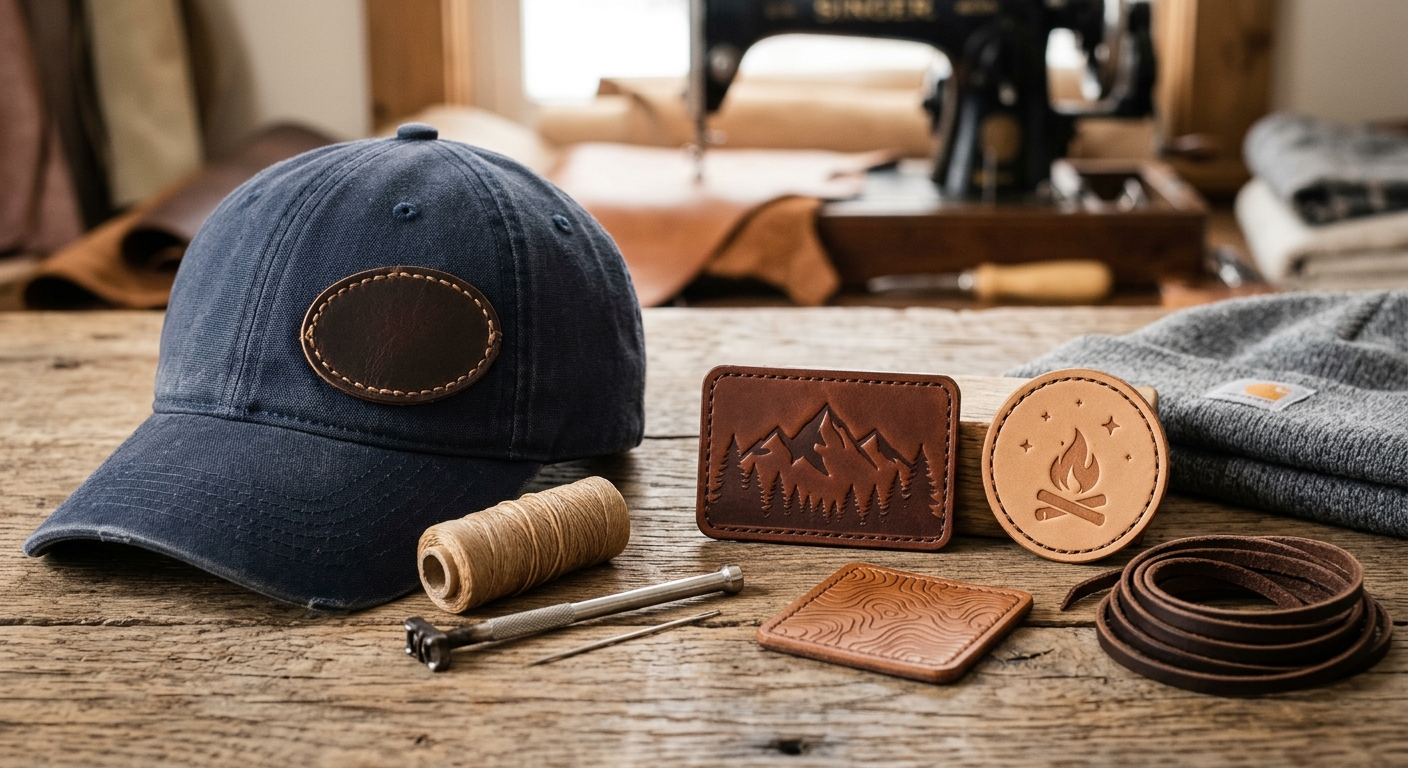
A great clothing brand stands out through the details. From the fabric and stitching to the logo and finishing touches, every element helps shape how customers see a product. Custom leather patches have become a popular choice for brands that want to create a distinctive look without relying entirely on printed graphics or traditional embroidery.
Whether you sell trucker hats, denim jackets, casual clothing, outdoor accessories, or handmade products, leather logo patches can add character to your collection. Their textured surface and versatile appearance make them suitable for everything from rugged workwear to modern streetwear.
For small businesses and established apparel manufacturers, custom leather patches offer a practical way to display a logo, create consistent branding, and make everyday products more recognizable. With different materials, shapes, engraving styles, and attachment options available, businesses can develop patches that match their products and target audience.
Why Clothing Brands Are Choosing Custom Leather Patches
Branding is not always about using large graphics or bright colors. Sometimes, a small and carefully placed detail creates a stronger impression. Custom leather patches provide that detail by adding texture and a professional finish to clothing and accessories.
Many fashion brands use leather patches on hats, jeans, jackets, and bags because they complement different materials without overwhelming the design. A simple logo engraved into a brown leather patch can look just as effective as a bold graphic on a streetwear cap.
Leather patches are also versatile enough to suit different brand identities. Outdoor brands may prefer a rugged finish, while premium clothing labels might choose a clean design with subtle lettering.
Another advantage is consistency. Businesses can use the same custom leather logo patches across multiple products, helping customers recognize their branding wherever it appears.
For brands that want to improve their product presentation, leather patches offer a simple customization option that combines visual appeal with practical branding.
Custom Leather Patches for Trucker Hats and Everyday Headwear
Trucker hats remain a popular option for lifestyle brands, outdoor businesses, promotional merchandise, and streetwear collections. Adding a leather patch gives these hats a distinctive front-panel design that helps them stand apart from ordinary branded caps.
Custom leather patches for hats can feature a company logo, short brand name, initials, slogan, or original artwork. Rectangular and oval shapes are common choices, but custom shapes can also be considered depending on the design.
The most effective hat patches are designed with the available space in mind. A logo should be large enough to remain readable without making the cap look crowded. Bold lettering and clean shapes usually work well for this purpose.
Material selection also influences the final appearance. Genuine leather provides natural texture and variation, while synthetic leather may offer a more consistent surface and additional color choices.
Attachment is another important consideration. Sewing is a common option for securing leather patches to suitable hats. Other attachment methods may be available, but compatibility should be confirmed before production.
For businesses selling branded headwear, a well-designed leather patch can become a signature feature across different cap styles.
Custom Leather Logo Patches for Streetwear Brands
Streetwear branding often relies on distinctive details that customers can recognize immediately. Custom leather logo patches provide an alternative to oversized prints, making them suitable for brands that prefer a more textured or understated look.
These patches can be used on hoodies, jackets, caps, cargo clothing, denim products, and accessories. Their appearance can be adapted to match minimalist designs, vintage-inspired collections, or contemporary fashion.
A streetwear label might choose a black leather patch with a simple embossed logo, while another brand could prefer a tan patch with engraved lettering. Both options can create a strong identity when the design complements the garment.
When developing custom leather patches for clothing brands, it is important to consider how the logo will look at its actual size. Small lettering and complicated illustrations may need to be simplified to remain clear.
Color, shape, and placement should also work with the rest of the garment. A patch that looks balanced on a jacket may need different dimensions for a hat or bag.
By maintaining consistent logo proportions and design elements, brands can use leather patches to connect different products within the same collection.
Genuine Leather and Faux Leather Patches for Different Needs
Choosing between genuine leather and faux leather is an important part of the customization process. Both materials can create attractive patches, but they offer different characteristics.
Genuine leather has a natural grain and may show subtle variations in texture. These characteristics can make each patch look slightly different, which appeals to businesses that want an authentic material appearance.
Faux leather is manufactured to resemble leather and can provide a more uniform finish. Depending on the product, it may be available in different colors and surface textures.
The right option depends on the intended application, brand preferences, budget, and material requirements. Businesses should confirm the exact composition of the patch before placing an order.
It is also important to consider the planned finishing method. Engraving, embossing, and printing may work differently across materials, so not every leather-like surface is suitable for every production technique.
For clothing manufacturers, understanding these differences makes it easier to select a material that matches the product design and expected use.
Engraved Leather Patches for Clean and Lasting Branding
Custom engraved leather patches are ideal for businesses that want a clear logo with a refined appearance. Engraving marks the surface of the material to create lettering, symbols, or decorative artwork.
This technique is particularly effective for simple logos, initials, and brand names. It can create an attractive contrast between the design and the surrounding surface, depending on the material and engraving process.
Engraved patches work well on trucker hats, denim jackets, bags, and casual accessories. They are also suitable for businesses that prefer a more understated alternative to colorful embroidered logos.
Artwork preparation is essential for achieving a clean result. Thin lines, small text, and intricate details may not reproduce clearly at smaller sizes. A design with readable lettering and balanced spacing is generally easier to reproduce.
Before approving an order, ask the supplier whether the selected material is compatible with the engraving process. Reviewing a sample can also help you understand the actual finish.
With the right material and artwork, engraved leather patches can provide a distinctive branding detail for a wide range of apparel products.
Embossed Leather Patches for a More Dimensional Look
Embossed leather patches add dimension by creating a raised design on the material's surface. This technique can make a logo or brand name more noticeable without requiring additional colors or printed graphics.
Embossing works particularly well for simple symbols, initials, and bold lettering. It can be used on hats, jackets, bags, and selected accessories where a textured finish complements the product.
Debossed leather patches offer a different appearance by pressing the design into the surface. Both methods can look professional, but the final effect depends on the material, design, and production technique.
When choosing between embossed and debossed finishes, consider the overall style of your brand. Raised lettering may suit a bold logo, while an indented design can create a subtle and understated appearance.
It is also important to keep the artwork suitable for the patch dimensions. Clear shapes and adequate spacing help the finished design remain recognizable.
For apparel brands seeking a more distinctive alternative to standard labels, embossed and debossed patches offer additional opportunities for customization.
Custom Leather Patches for Denim Jackets and Jeans
Denim and leather work naturally together, which is why custom leather patches remain popular with jeans manufacturers and casual clothing brands.
A leather patch on the waistband of a pair of jeans creates a familiar, traditional finish. On a denim jacket, a smaller patch can provide a subtle branding detail without competing with other design elements.
Businesses can choose different shapes, colors, and finishes depending on the garment. Brown and tan patches often complement classic blue denim, while black patches can suit darker or more contemporary collections.
The attachment method should match the garment construction. Sewing is commonly used for denim products because it can provide a secure connection when applied correctly.
For garments that will be washed frequently, the material and attachment method should be selected with care. Always follow the supplier's recommendations for cleaning and maintenance.
Clothing brands can also use the same leather patch design across jeans, jackets, and bags to create a coordinated collection.
Small Quantity Custom Leather Patches for New Businesses
Launching a new apparel brand can involve a lot of experimentation. Before investing in large production quantities, many business owners want to test their logo, materials, and product presentation.
Small quantity custom leather patches can help make this process more manageable. A limited order can be used for sample garments, product photography, initial sales, or a small collection of branded hats.
When searching for custom leather patches with no minimum, check the supplier's actual order requirements. Some manufacturers accept small batches, while others require minimum quantities depending on the production process.
The cost per patch may be higher for smaller orders, so it is worth comparing the total price, including setup fees and shipping.
Small orders also provide an opportunity to evaluate the finished product before expanding production. You can check the logo clarity, texture, dimensions, and attachment quality on an actual garment.
For startups and independent designers, this approach can reduce inventory risk while helping establish a consistent brand identity.
Wholesale Custom Leather Patches for Growing Apparel Brands
As a clothing business expands, ordering wholesale custom leather patches can help maintain consistent branding across larger product ranges.
Wholesale orders are suitable for hat manufacturers, clothing labels, promotional merchandise companies, and retailers that use the same patch design regularly. Larger quantities may reduce the unit cost, although the final price depends on several production factors.
Before confirming a wholesale order, provide the supplier with clear artwork and specifications. These should include patch dimensions, material type, shape, finish, quantity, and attachment method.
A sample approval process can be particularly useful for larger orders. Reviewing a physical sample helps you check the quality and confirm that the patch matches the intended design.
Businesses should also consider production timelines and shipping arrangements. If patches are needed for a product launch or seasonal collection, confirm the expected schedule before placing the order.
Choosing a supplier based on quality, communication, and reliability rather than price alone can help prevent inconsistencies between production batches.
Custom Leather Patches With Logo for Promotional Products
Leather patches are not limited to clothing brands. They can also be used for promotional products, corporate merchandise, handmade gifts, and branded accessories.
Businesses may add custom leather patches with logo designs to backpacks, caps, travel accessories, tool bags, and selected fabric products. These applications allow companies to display their branding in a more textured format.
Promotional products often benefit from simple, recognizable designs. A company name or logo with clean lettering can work well across different product sizes.
Material selection should reflect how the product will be used. An accessory designed for outdoor activities may have different requirements from a decorative item intended for occasional use.
It is also important to confirm that the attachment method is compatible with the product surface. A patch intended for a fabric bag may require a different approach from one used on a structured cap.
For businesses ordering merchandise in bulk, consistent specifications and artwork approval help ensure that the finished products look coordinated.
Choosing the Right Shape, Size, and Color
The appearance of a custom leather patch depends on more than the logo itself. Shape, dimensions, and color all influence how the finished design looks on a garment.
Rectangular patches are commonly used on hats and jeans because they provide a practical space for lettering. Oval and circular shapes can work well for badges and decorative logos, while custom outlines may suit distinctive brand symbols.
The patch size should match the available space on the product. A patch that is too large can overwhelm a cap or jacket, while one that is too small may make the logo difficult to read.
Color selection should complement the garment material. Brown and tan patches often create a classic appearance, while black and other darker finishes may suit contemporary designs.
Before finalizing the design, review how the patch will look against the actual fabric color. A digital proof can help you assess the layout, although the physical material may have a different texture or finish.
Careful attention to these details helps create a patch that looks balanced and professional.
How to Order Custom Leather Patches Without Unnecessary Delays
A smooth ordering process starts with clear information. Before contacting a supplier, prepare your logo file, desired dimensions, quantity, preferred material, and attachment requirements.
Explain where the patch will be used, whether on hats, jackets, jeans, or another product. This information helps the supplier recommend a suitable construction and finish.
Request a quotation that includes the main production costs and any additional fees. If artwork proofing is offered, check whether revisions are included.
Review the digital proof carefully before approving production. Confirm the spelling, logo proportions, dimensions, color, and overall design.
If you have a specific delivery deadline, communicate it at the beginning of the process. Ask the supplier to confirm the production schedule and shipping estimate rather than assuming that a standard turnaround will meet your needs.
Keeping your specifications organized can also make repeat orders easier. Once the design has been approved, save the final artwork and product details for future reference.
Conclusion
Custom leather patches are a versatile way to give hats, jackets, denim products, and accessories a distinctive brand identity. Their textured appearance and flexible design options make them suitable for independent designers, growing clothing brands, and established apparel manufacturers.
From engraved leather patches for minimalist logos to embossed designs for a more dimensional finish, businesses can choose a style that complements their products. Genuine and faux leather options provide additional flexibility, while different shapes, sizes, and attachment methods help meet specific requirements.
Small quantity ordering can be useful for testing new designs, while wholesale custom leather patches support larger production needs. Careful artwork preparation, appropriate material selection, and clear supplier communication all contribute to a better finished product.
Ultimately, the best leather patch is one that suits the garment, represents the brand accurately, and maintains its intended appearance with proper care. By focusing on these details, businesses can create branded products that look professional and remain recognizable across their collections.
Discussion & Feedback 0
Write a CommentNo comments yet
Have a question or feedback regarding this topic? Be the first to share your thoughts below!
Leave a Reply
Your email address will not be published. Required fields are marked *